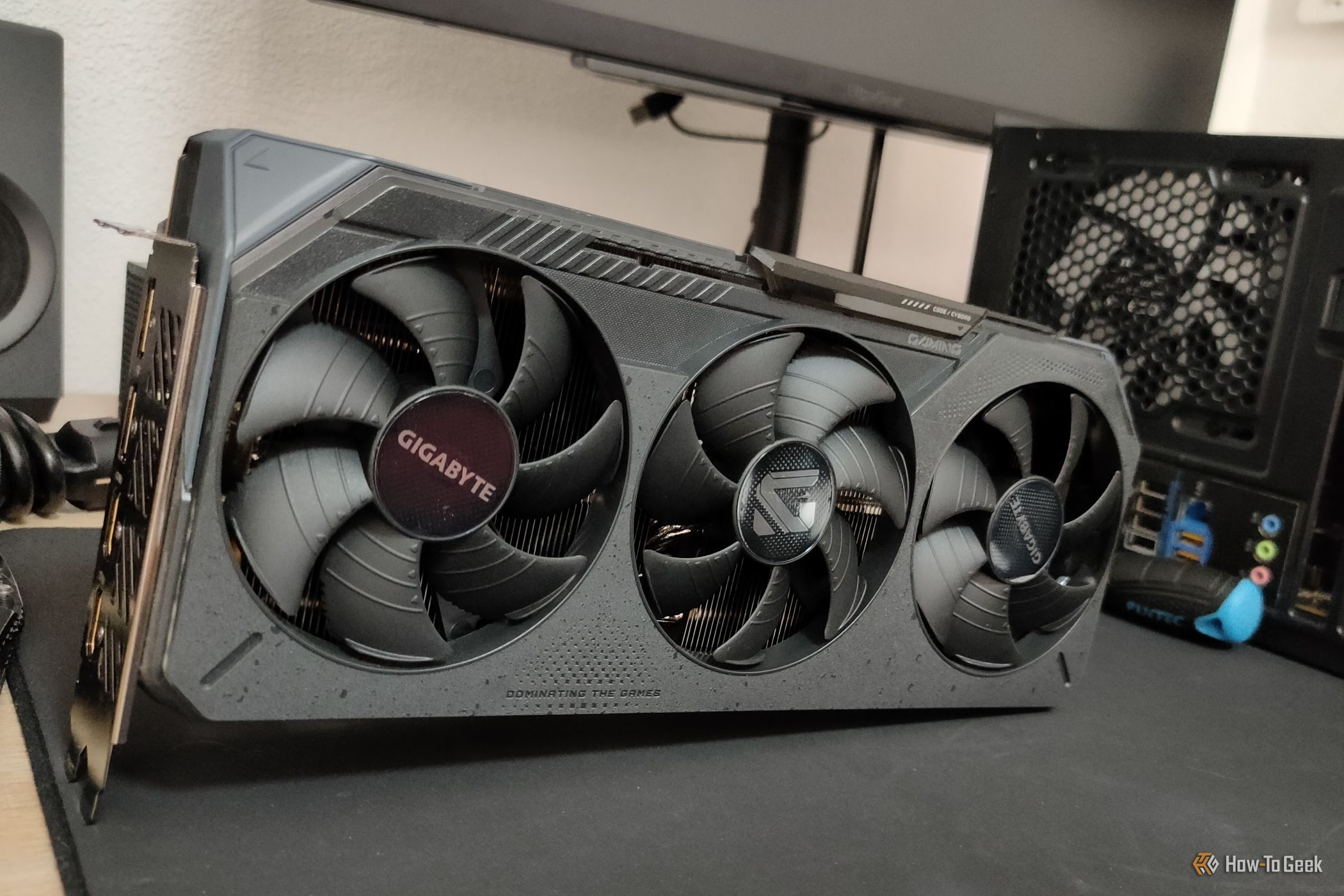
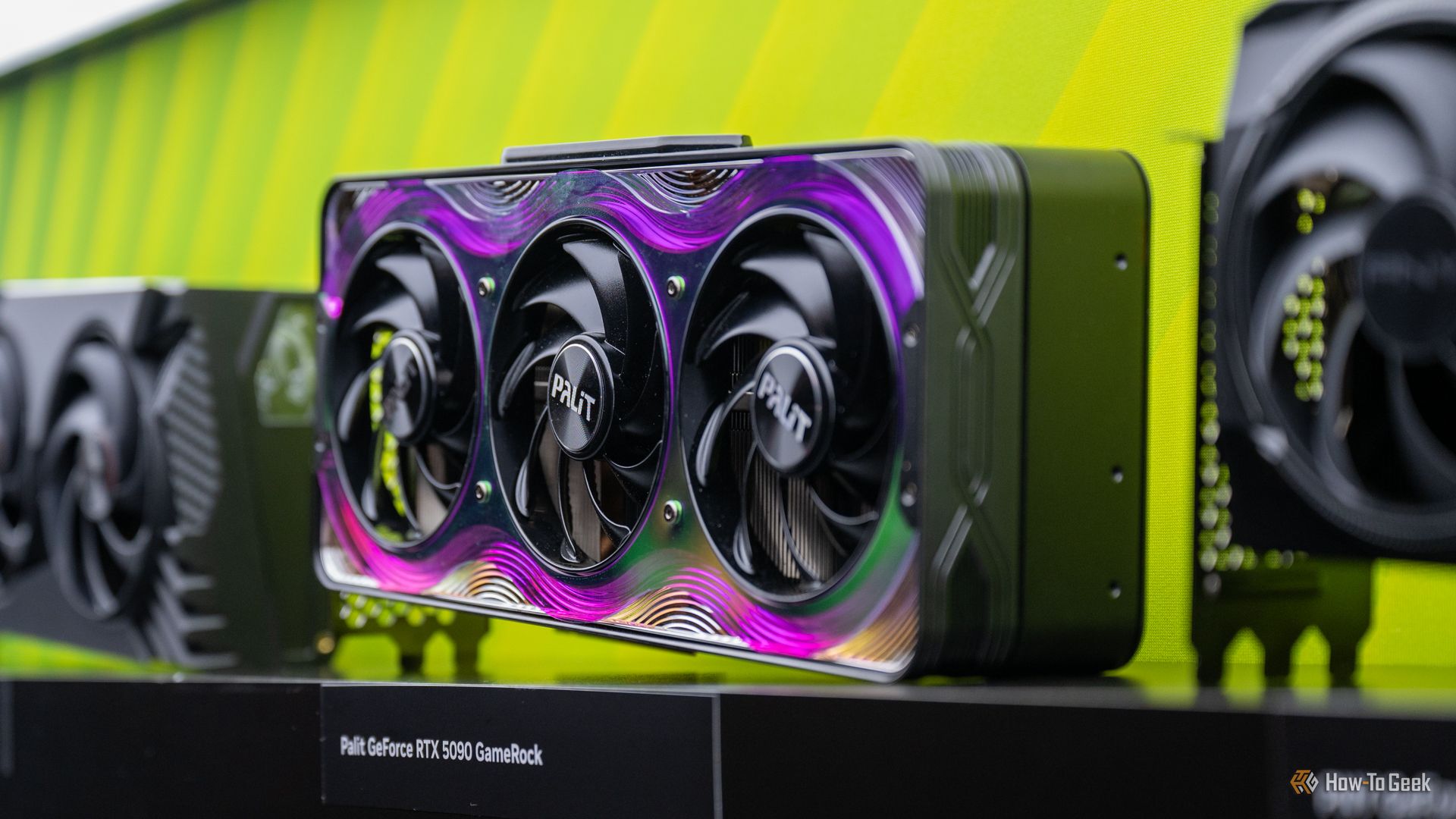
Let's face it, GPUs aren't cheap right now. If you own one, be it the RTX 5090 or something from 10 years ago, you want to make the most of it. Unfortunate, then, that just one slider can absolutely wreck your GPU performance, but if you check it out, you might be able to turn things around for the better.
Donald Trump apparently is so aligned with Nvidia CEO Jensen Huang—who has become the president’s key advisor on AI—that he ignored intelligence indicating that Huang was the target of a “Chinese spy plot,” and did so partly to protect Nvidia’s stock.
The New York Times spoke with people briefed on US intelligence agencies’ surveillance and granted them anonymity to discuss findings drawn from “classified intelligence.” According to sources, about a year ago, Trump was briefed that “Beijing was getting reports from someone with direct access” to Huang. That “someone” was Alice Huang, or Huang Le, a Chinese citizen and former top executive at a Singapore cloud company called Megaspeed.
According to sources, the US had already suspected that Alice Huang—who is not related to Jensen Huang—was helping China evade export controls to gain access to high-end Nvidia chips through Megaspeed. But it alarmed investigators to discover that she may have used her role at Megaspeed to gain direct access to Jensen Huang. It’s now believed she may have leveraged that closeness to feed China intel not only on one of America’s leading AI companies, but also to influence Trump’s thinking on AI. As Treasury Secretary Scott Bessent noted last month ahead of Trump’s AI talks with China President Xi Jinping, “the president is completely aligned with Jensen Huang, the CEO of Nvidia.”
A top executive of a Singapore AI cloud company that was accused of illegally selling Nvidia chips to China could also have been a Chinese spy, sources have told the New York Times.
Nvidia just released a free speech-to-text model that can transcribe up to 40 languages, but it only works on recordings, not live audio, so it’s a big step for meeting and medical transcription tools while still leaving real-time use to rivals like ElevenLabs.
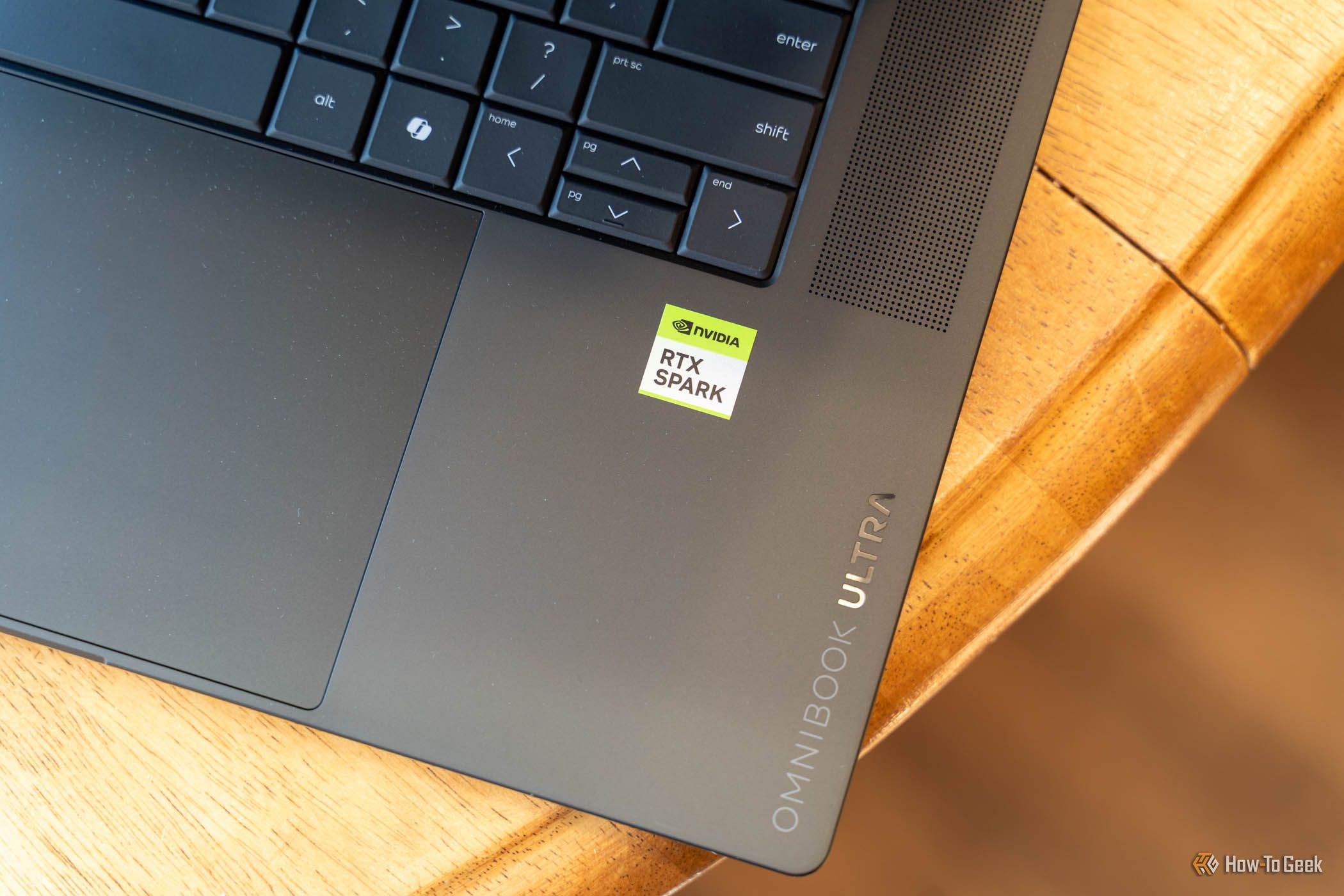
HP’s first RTX Spark laptops are here, and I've spent the past two weeks with the 32GB OmniBook Ultra 16. It really is a fantastic laptop in almost every way. I was able to game on it with basically no issues, and both its keyboard and OLED screen are among the best I’ve used. Then I asked it to do the thing NVIDIA is pitching hardest: run AI agents locally. With only 32GB of memory, that’s where this laptop hits a wall.
NVIDIA’s RTX Spark could give Windows on Arm the boost it needs, and Qualcomm Snapdragon laptops might be among the biggest winners. Here’s why NVIDIA’s entry could reshape gaming, local AI, and app compatibility.
I drew flak for saying the Apple TV 4K fills the shoes of Nvidia's Shield TV, and not without some merit. If you love Android or simply prefer the Shield's flexibility, no amount of apps or hardware brawn will make you switch. It's a good media streaming device—its age and the modern app landscape just work against it.
Nvidia's DLSS 5 came at a time when little else was going on in the GPU world, and it shook its very foundations. People loved it, people hated it. It had several big problems, and the AI slop was not even the worst of it.
Nvidia and Agile Robots unveiled Agile ONE SN, a compact humanoid with Jetson Thor computing and Isaac GR00T training tools. Here's what it can do, its specifications, and when it launches.
Nvidia's 64GB DGX Spark launches at $4,999 with the same GB10 chip as the 128GB version. Compare memory limits, model support, clustering costs, and what IT buyers should verify.
Nvidia and Hugging Face show how a $399 duck-shaped robot learns to walk using AI simulation. Here's how Microduck works, what it costs, and when buyers may get one.
I've dedicated the better part of the last decade to covering graphics cards. New launches, new features, new capabilities. Disappointments and amazing developments. Ever-rising prices, worse in 2026 than we've ever seen them.
You'd think that having a discrete GPU gives you all the freedom in the world. Enjoy every game you like at any given time, provided your graphics card can actually handle it (and for those that can't, there's always DLSS 5 in its entire AI-slop-esque glory).
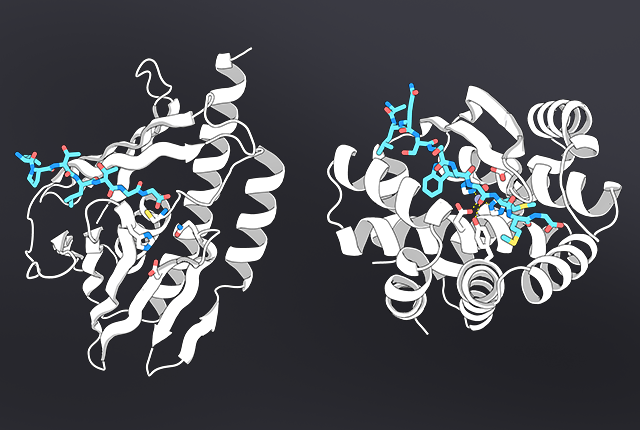
Structural models of two enzymes created using models developed at the UW Medicine Institute for Protein Design. (IPD Image / Benedicte Rossi)
The UW Medicine Institute for Protein Design (IPD) today released a new open-source model for creating proteins with specific functions, called RFD4-Proteina. It is the first AI protein model the University of Washington has co-developed with semiconductor giant Nvidia.
The release comes on the heels of a major computing boost. Earlier this month, IPD announced it had received a large grant of computing power from Nvidia CEO Jensen Huang and his wife, Lori Huang, through their foundation. In June, the institute began accessing Nvidia graphics processing units, or GPUs, through cloud company CoreWeave. The grant is expected to support the institute for a year.
“RFD4-Proteina will open the door to new solutions in medicine, sustainability, materials and biotechnology,” David Baker, director of IPD and a 2024 Nobel laureate in chemistry, said in a statement. He earlier told GeekWire that the foundation’s grant has been “transformational” for the institute’s work.
IPD has used deep learning to develop and release a series of tools, including RoseTTAFold for predicting protein structures and RFdiffusion (RFD) for designing new proteins. The new model’s name nods to RFD and references Nvidia’s Proteina-Complexa computational models.
The team is touting RFD4-Proteina as “a considerable improvement over previous methods” that is faster and requires significantly less computational power.
The models have allowed researchers to design proteins never imagined before, with potential as drugs for challenging diseases or as tools for managing environmental waste such as toxic chemicals and plastics, among other applications. The IPD lists 11 spinout companies, including vaccine developer Icosavax and protein-design startup Archon Biosciences.
Seth Woodbury used RFD4-Proteina in his enzyme work as a , a UW bioengineering predoctoral candidate. “In just a few days we designed a pesticide-degrading enzyme that performs many fold better than my previous best, which took months to design,” he said. Woodbury last year published a paper in Nature on enzyme research.
At IPD, the RFD4-Proteina work was led by UW doctoral students Nathaniel Corley, Maxwell Kazman and Rafi Brent, along with Kieran Didi, a visiting student from the University of Oxford.
RFD4-Proteina is available through Berkeley Software Distribution.

 Login