Login
Login
How UW’s solar vehicle team harnessed the sun and hard work to shine on the national stage
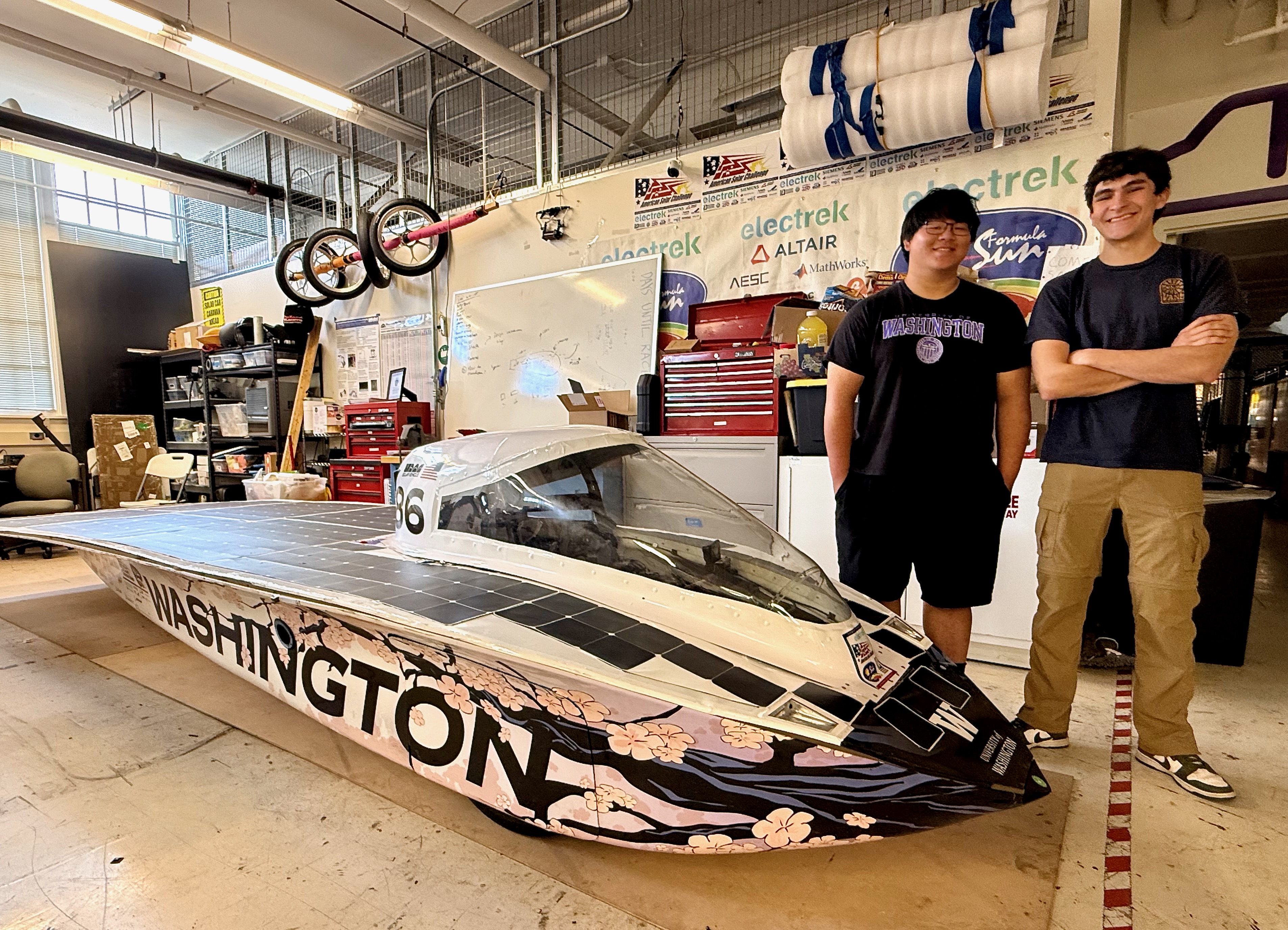
In a cramped corner workspace in a mechanical engineering building at the University of Washington, a team of students is working to harness the power of the sun.
They operate on a fraction of the budget of elite international programs, fitting build hours around class schedules and other extracurriculars. Yet this summer, the scrappy crew took their handmade, solar-powered car — dubbed Sakura — out of the shop and onto the open road.
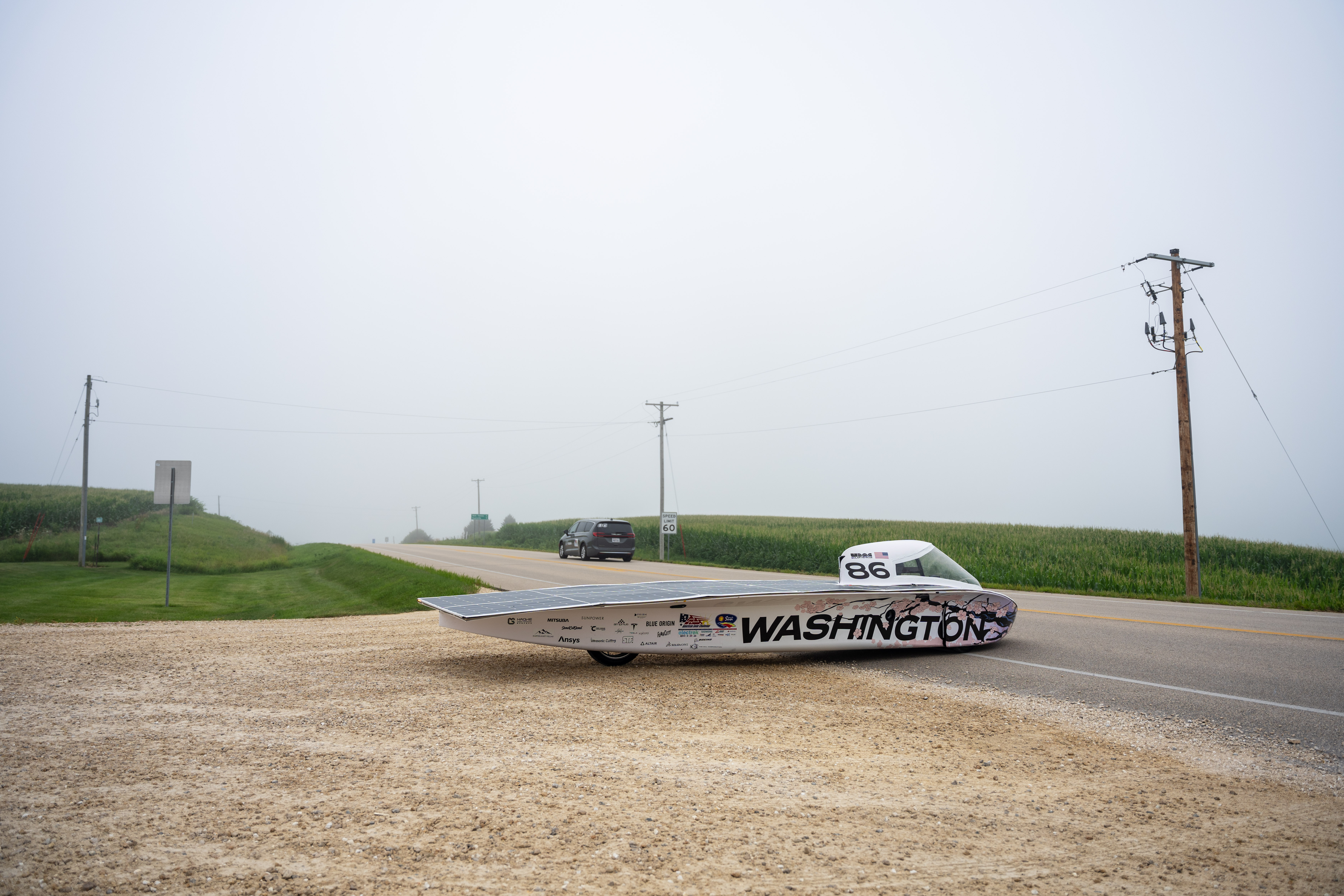
Over seven days in July and 1,778 miles from Minnesota to Texas, they outpaced nearly every competitor to finish fourth overall and cross the line as the top-ranking American team in the American Solar Challenge.
Now entering its fourth year, the Solar Vehicle Team at UW (SVTUW) is still a relative newcomer to collegiate solar racing. Officially affiliated with the university’s Mechanical Engineering Department, the roughly 50-person group has evolved into a broader interdisciplinary effort spanning electrical engineering, computer science, business, aerodynamics, and more.
Operated entirely by undergrads, the club handles every aspect of the operation in-house — from sponsor outreach and logistics to hands-on fabrication.
While top international competitors rely on multi-million dollar budgets and years of development, the Huskies assembled their vehicle (named after the Japanese word for cherry blossom) in just 11 months — a lightning-fast turnaround for a machine built entirely from scratch.
For team president Rudy Heredia-Jantz, an electrical and computer engineering senior, even making it to the starting line felt like a triumph.
“Frankly, we have no idea [how we pulled it off],” Heredia-Jantz said. “This car — it was a little bit of a miracle. We did not have it up and running until the day before we left for competition. We didn’t even have it moving. We just spun the rear motor, threw it in the trailer, and figured we’ll blow something up eventually.”
Things did indeed blow up — 12 tires in total along the way — but the Huskies kept rolling. For a third-year program competing against seasoned international juggernauts, simply keeping the car on the road was an achievement; outpacing them was a statement.
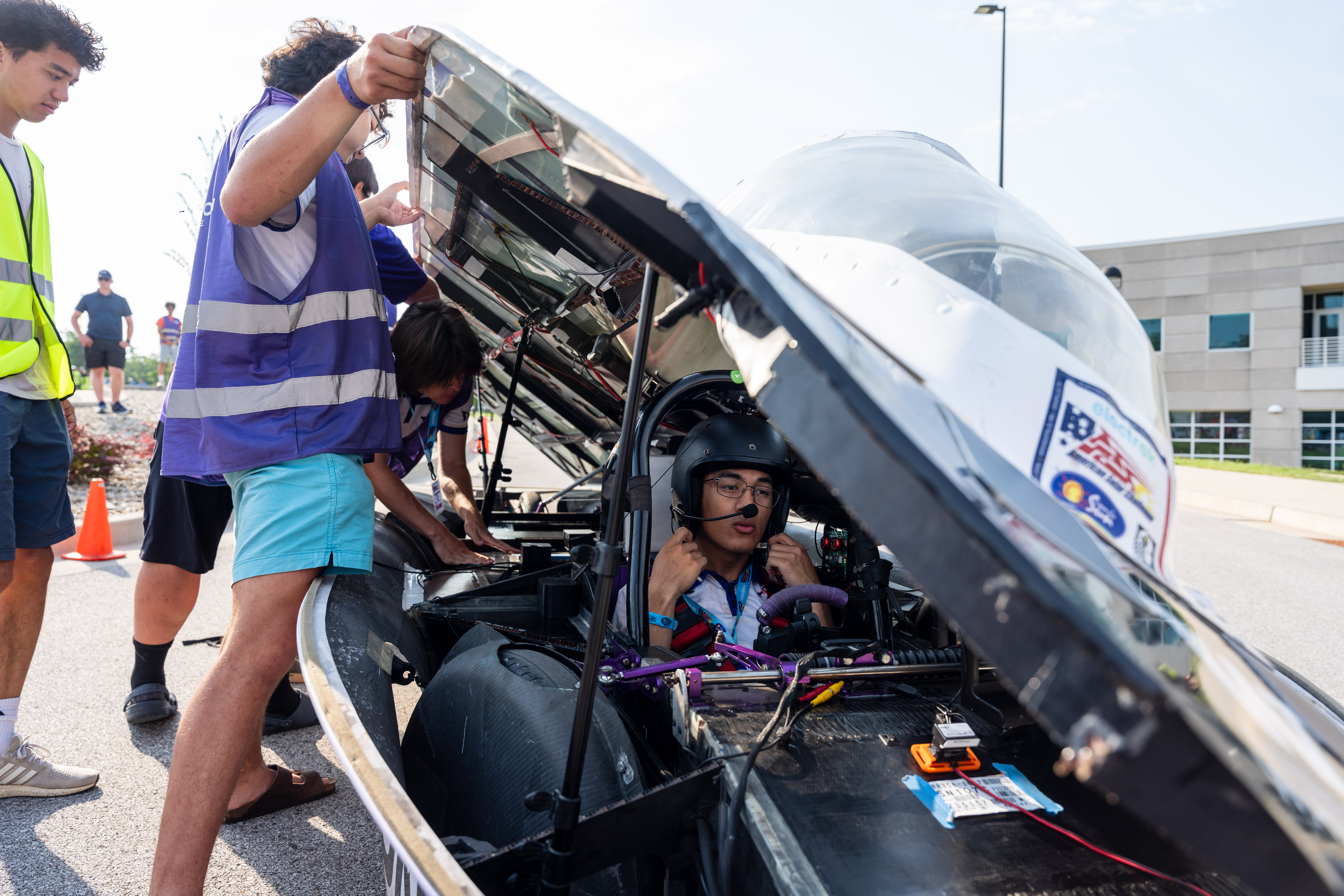
UW didn’t just survive the route to Texas — they blew past expectations for a young club, clinching the Aesthetics Award and Spirit of the Event Award alongside their top-four finish.
For second-year mechanical engineering student Elijah Yan, who serves as the team’s mechanical lead, the learning curve was immediate.
“Building a car is just not something I’ve done before, so it’s very new to me, and it’s super cool to learn that type of stuff — suspension stuff, how to do vehicle dynamics,” Yan said.
That hands-on engineering paid off when Sakura hit highway speeds on open pavement. Designed to maximize efficiency, the ultra-lightweight vehicle — weighing roughly 500 pounds with a driver inside — stretches 19 feet long to fit its array of solar panels while keeping its profile as narrow as possible.
Under the hood, Sakura is a blend of precision engineering and strict energy conservation:
- Solar array: 386 Maxeon Gen 7 photovoltaic cells covering six square meters, producing up to 1,540 watts of max power output directly from sunlight.
- Battery pack: A student-built 5.125 kWh lithium-ion battery in a 36S9P cell configuration (121V nominal), supplemented by a secondary backup battery used solely for system startups.
- Drivetrain and motor: Powered by a 2 kW Mitsuba 2096-III hub motor capable of pushing the 500-pound vehicle up to 65 mph on open highways.
- Data and cockpit: A custom steering wheel equipped with push-to-talk comms, digital telemetry displays, and regenerative braking controls, paired with an onboard Samsung Galaxy smartphone that streams real-time battery and motor analytics back to the pit crew.
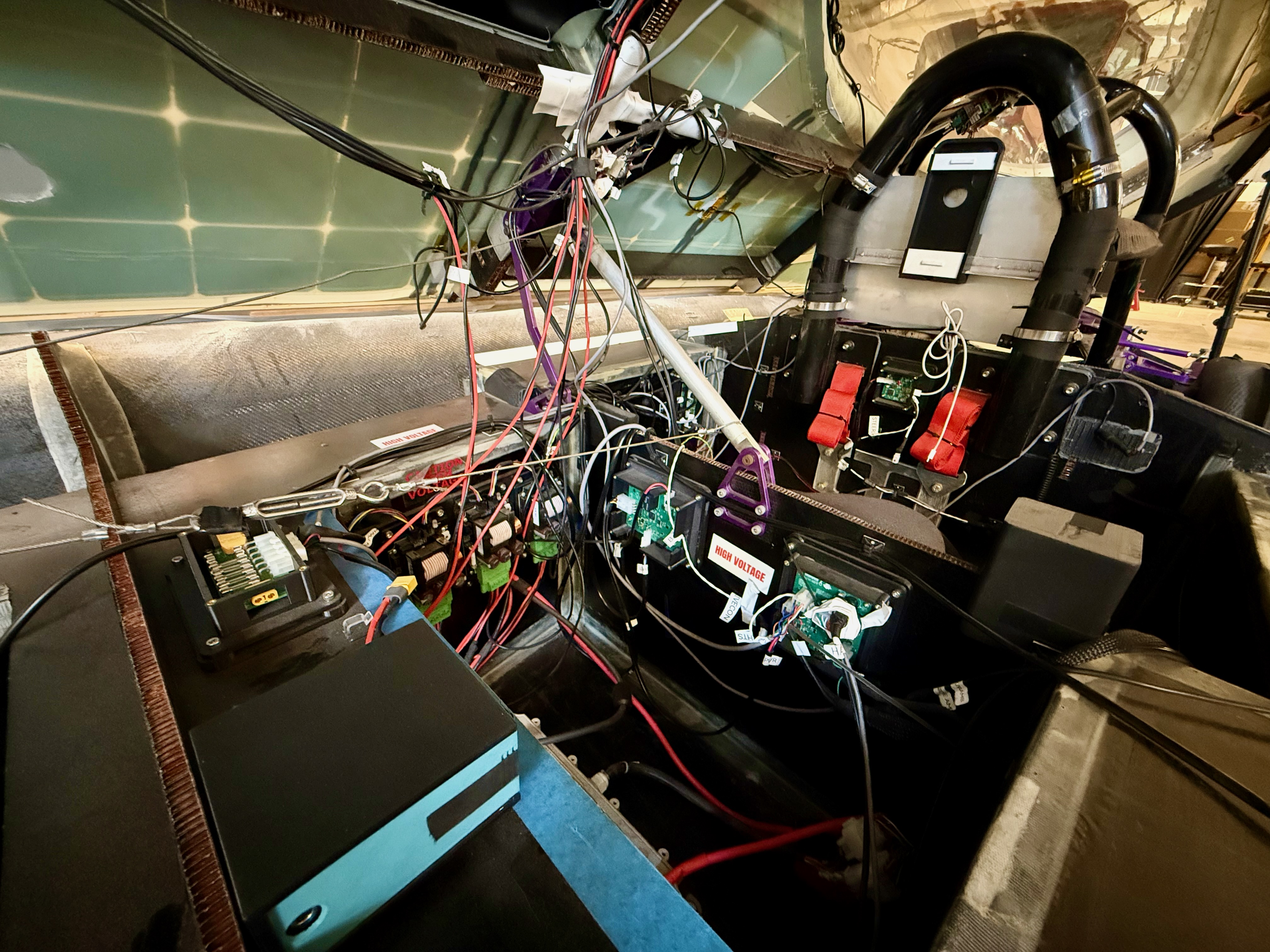
To pull off a competitive build on a shoestring budget, the team combined its resourcefulness with local industry support. The vehicle’s lightweight frame, for instance, relies on carbon fiber sandwich panel flooring donated by Boeing, held together with specialized fiberglass tape.
“It’s the perks of being a Seattle-based team — we work with some amazing materials,” Heredia-Jantz said.
Yet even with aerospace-grade composites, bringing a prototype car across the finish line required plenty of improvised shop hustle.
“The car is held together with cardboard and duct tape, essentially,” Yan joked.
And managing the technical hardware on the road is as much a game of data processing as it is driving.
During the race, a dedicated strategy team monitors Sakura‘s health in real time. Using a custom dashboard that feeds off the onboard smartphone’s data stream, students track battery state-of-charge, individual array voltages, and motor temperatures from a trailing support vehicle.
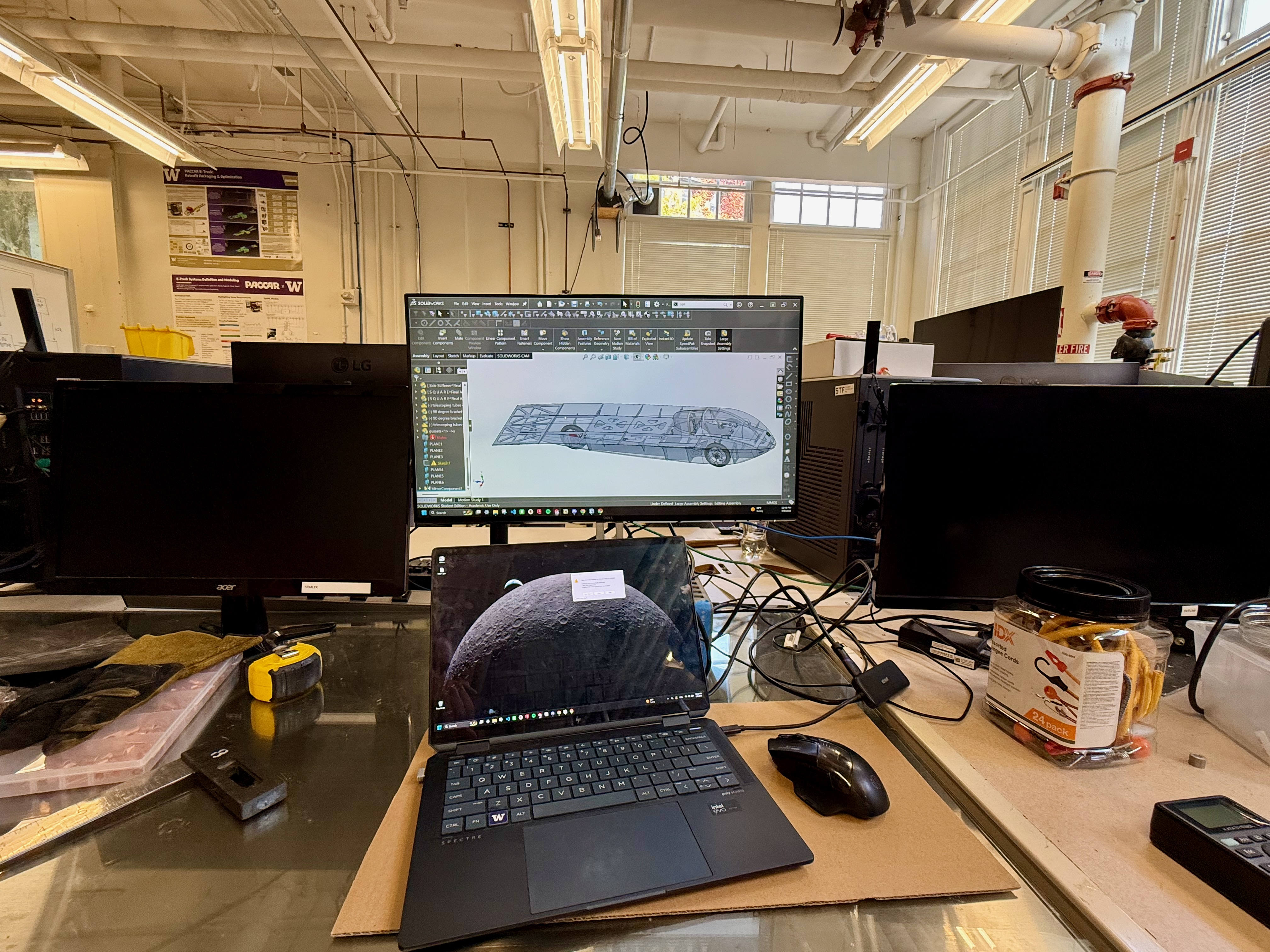
By pairing live telemetry with incoming weather forecasts, the crew calculates optimal cruise speeds on the fly — relaying instructions to the driver via walkie-talkie so they can balance energy consumption, leverage regenerative braking, and avoid tripping the battery’s protection systems on steep climbs or hard accelerations.
That real-time power management was also put to the test right before the cross-country journey, when the team competed in the Formula Sun Grand Prix — an annual three-day track race where cars run on a single initial charge and whatever sunlight they can harvest along the way. Despite navigating a track that pushed their power distribution system to its limits, the track time gave the team crucial baseline data and momentum before taking on the road race.
Now the club is already preparing for its next evolution. While repairing Sakura for upcoming competitions, students are designing their next-generation vehicle from scratch — overhauling power distribution, reinforcing the chassis, and building a new solar array.
For a club building sun-powered technology in a city known for grey skies, the project is ultimately driven by something deeper than weather.
“I believe this team is building something special in the early morning hours on UW’s campus: talent that shows up before sunrise, a refusal to wait for better resources before doing great work, and a stubbornness that looks a lot like faith,” said Caoilin Krathaus, the team’s administrative lead. “It reminds me of the story behind Boys in the Boat, and what I’ve always thought of as the true Husky experience.”