 Login
Login
Kalshi demands Netflix take down trailer for ‘Prediction Games’ documentary
Kalshi claims the trailer is “defamatory” and contains “both fabricated documents and false and misleading statements.”


This week on the GeekWire Podcast: Seattle startup funding drops 40% in the first half of the year while AI money floods everywhere else. We dig into the implications for the region.
Plus: a Seattle judge deals Kalshi a setback, Impinj marks a decade on the Nasdaq after a 26-year climb, and nearly 40 Seattleites trade smartphones for flip phones for five weeks.
Venture funding drops in Seattle area as AI boom reshapes startup world
Helion raises $465M at $15.5B valuation as it aims to commercialize fusion
UK data center startup Nscale bets big on Bellevue for U.S. engineering hub
Anthropic expands in Seattle as AI boom offers hope for struggling office market
Seattle judge deals blow to Kalshi, rejects prediction market’s federal defense
How Impinj has survived 26 years in a market that’s ‘just getting going’
Ditch your smartphone for a flip phone for a month?
Edited and produced by Curt Milton.

A judge in Seattle issued a preliminary injunction against Kalshi, finding that Washington state is likely to prove that the fast-growing prediction market is running illegal online gambling.
The ruling by King County Superior Court Judge John McHale, issued Monday, does not immediately halt Kalshi’s operations in the state. McHale granted the injunction in the case brought by Washington AG Nick Brown, but deferred the specifics until early next month.
McHale rejected Kalshi’s argument that oversight by the U.S. Commodity Futures Trading Commission preempts state gambling laws. That has been the basis of Kalshi’s defense against regulators across the country. Washington is the latest state where a court has shot it down.
Kalshi quickly pushed back on the ruling.
“States don’t have jurisdiction to regulate prediction markets. Many courts — including the Third Circuit — have made this clear,” spokesperson Jacki McGavick said in a statement. “We’re disappointed to see Washington State continue wasting taxpayer dollars.”
In his ruling, McHale said Kalshi “willfully ignored” a December 2025 notice from the Washington State Gambling Commission that event-based contracts were not authorized in the state, and cited a Kalshi ad showing a text exchange where one user tells another: “I found a way to bet on the NFL even though we live in Washington.”
Kalshi’s platform lets users bet “yes” or “no” on thousands of events across sports, elections, entertainment, and so-called “mention markets” — wagers on whether public figures will say specific words. The New York-based company, which markets itself as a federally regulated “prediction market,” takes a transaction fee on each bet.
Washington has some of the strictest gambling laws in the country: the legislature banned internet gambling in 2006, and while the state allows a lottery, horse racing, and tribal-casino gambling, online betting is broadly prohibited and sports wagers are legal only in person on tribal lands.
The order requires Kalshi to preserve all records tied to Washington users, including logs, communications, geolocation data and marketing materials.
The specific operational terms of the injunction are still being determined: McHale gave both sides until Aug. 3 to submit proposed language, with a full order to follow by Aug. 5.
Kalshi is a high-tech prediction market that allows people to "forecast the future" (their term). It is about contracts and information, the company says, making its offerings more like a soybean futures contract than a round of blackjack or a pull on the one-armed bandit.
Still, prediction markets look a lot like betting if you squint, which is why states like New York have tried to regulate them under gambling laws. To head this off, Kalshi has sought federal protection under the Commodity Futures Trading Commission (CFTC). Yes, this means regulation for Kalshi, but it also means the CFTC will sue states like Kentucky, Minnesota, Illinois, and Rhode Island, trying to pre-empt their laws in favor of a single national standard that the CFTC controls.
While this battle plays out, government insiders continue to generate insider trading stories after using their work knowledge to place bets "forecast the future" and make huge sums of money. The classic example, of course, was Gannon Ken Van Dyke, a US soldier who participated in planning the capture of Venezuela's Nicolas Maduro and then made $410,000 from that knowledge on the prediction site Polymarket. Van Dyke was arrested in April.
© Getty Images
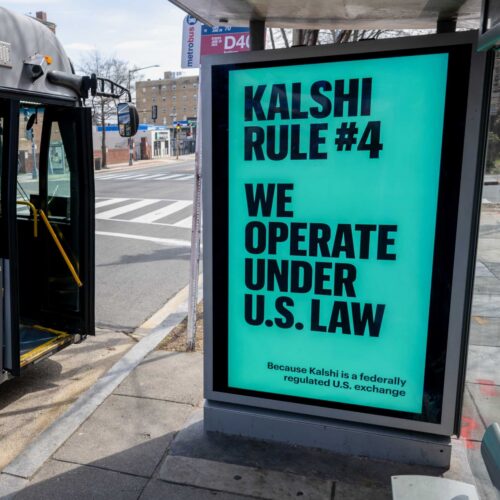
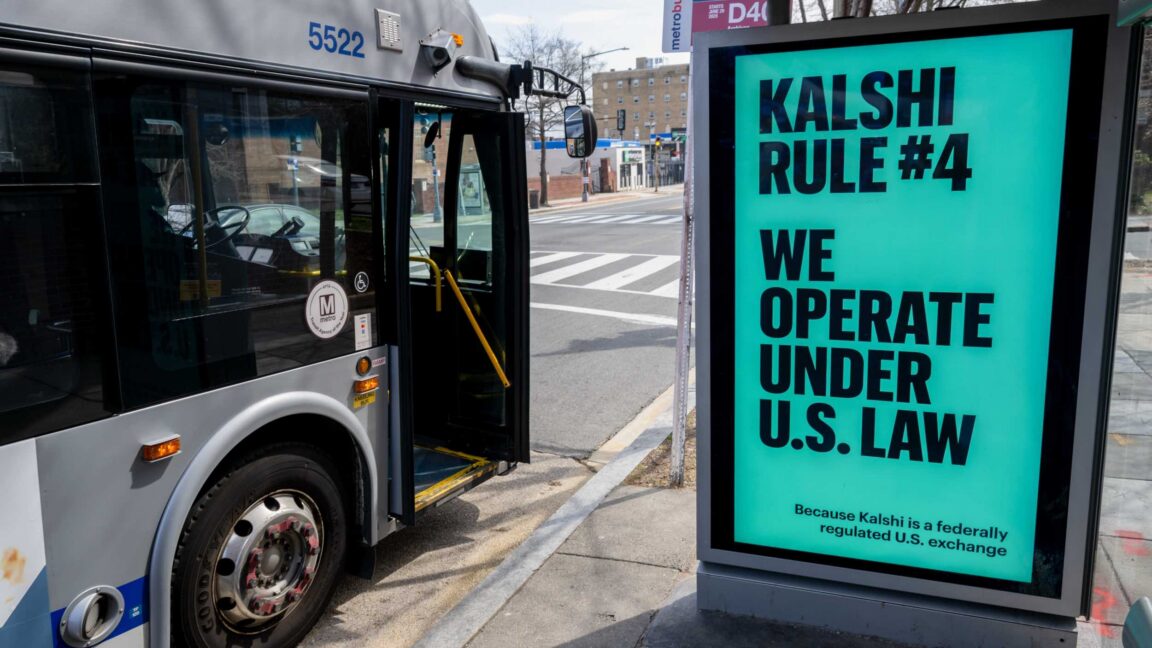
Kalshi lost an attempt to override New York's state gambling laws yesterday, with a federal judge rejecting the prediction market operator's request to prevent enforcement of the rules.
Kalshi is appealing the decision to a higher court. This is one of numerous cases in which judges must decide whether state laws are preempted by federal regulation of prediction markets.
New York Governor Kathy Hochul and Attorney General Letitia James issued a joint statement on the ruling today. “New York’s gambling laws are designed to protect consumers," they said. "Kalshi tried to ignore them. Yesterday, they lost in court. We will continue to hold all gambling platforms accountable to the law—and that includes prediction markets.”
© Getty Images | Bloomberg
