❌

Reading view

There are new articles available, click to refresh the page.

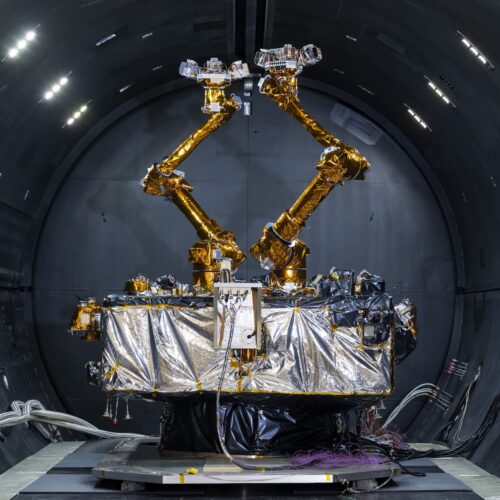
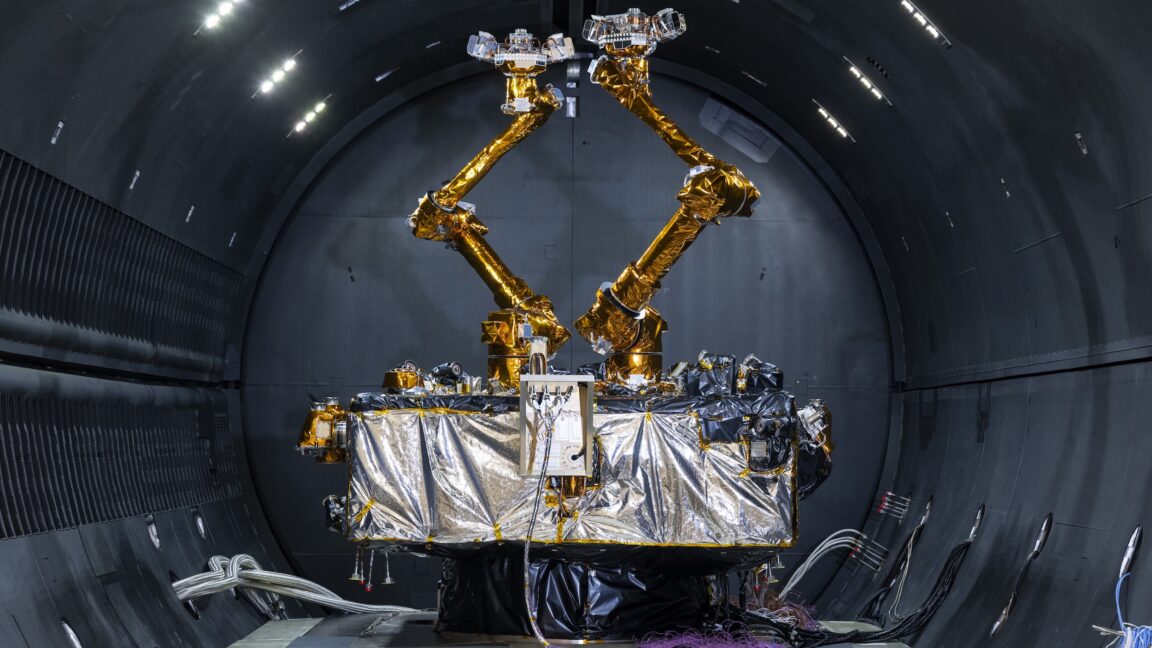
This is the world's most advanced robotic servicing satelliteβ€”that we know about

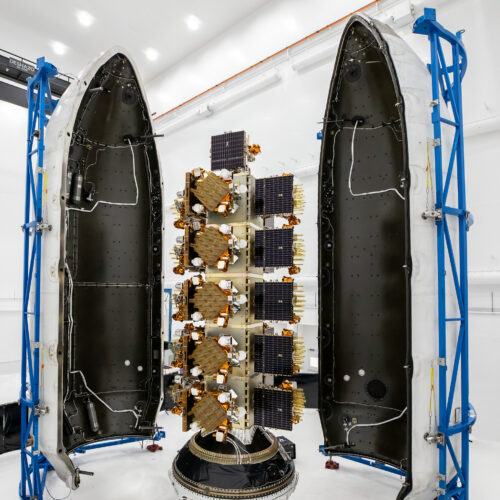
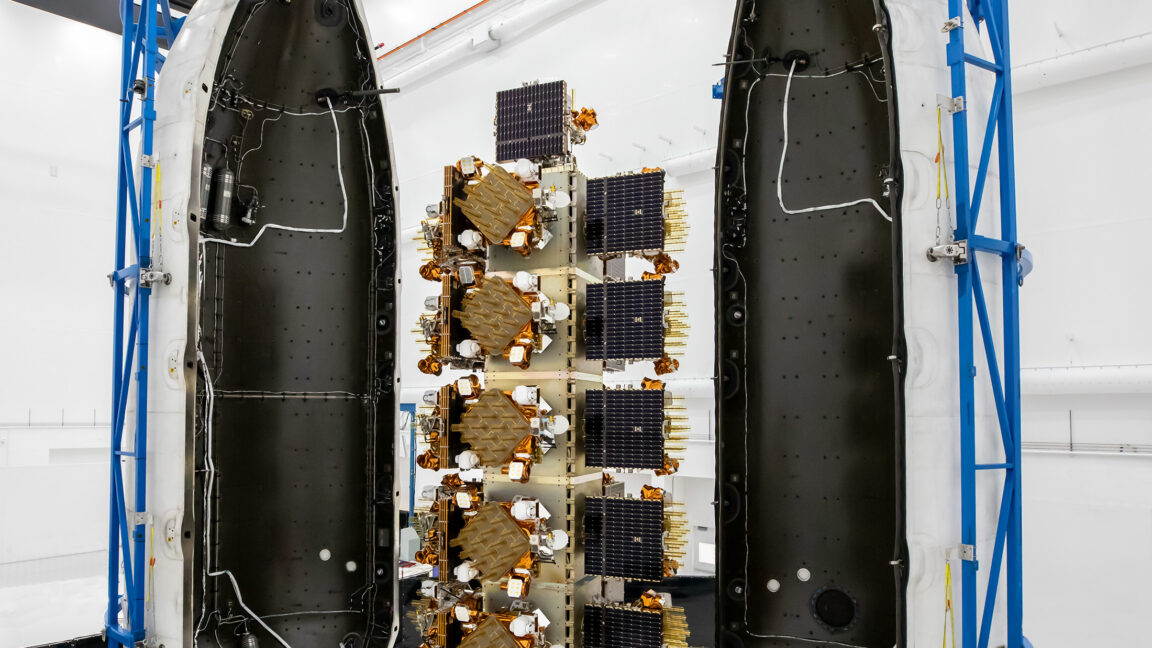
A spacecraft fitted with two flexible robotic arms is on the way to geosynchronous orbit after launching earlier this week on a SpaceX Falcon 9 rocket, kicking off a planned decade-long mission to open new frontiers in satellite servicing.

The Mission Robotic Vehicle, owned and built by Northrop Grumman, rocketed into orbit from Cape Canaveral Space Force Station in Florida on Tuesday. Three small propulsion pods, each functioning as standalone spacecraft, accompanied the MRV aboard the Falcon 9 rocket.

The Falcon 9 deployed all four payloads within about an hour of liftoff. It will take about a year for the satellites to maneuver from their initial elliptical drop-off orbit into a circular orbit more than 22,000 miles (nearly 36,000 kilometers) over the equator. At this altitude, the MRV and the three Mission Extension Pods (MEPs) will travel in lockstep with Earth's rotation, operating in the same kind of orbit as numerous civilian and military communications satellites, missile warning platforms, and a growing number of spy satellites.
Read full article

Comments

Β© US Navy/Sarah Peterson

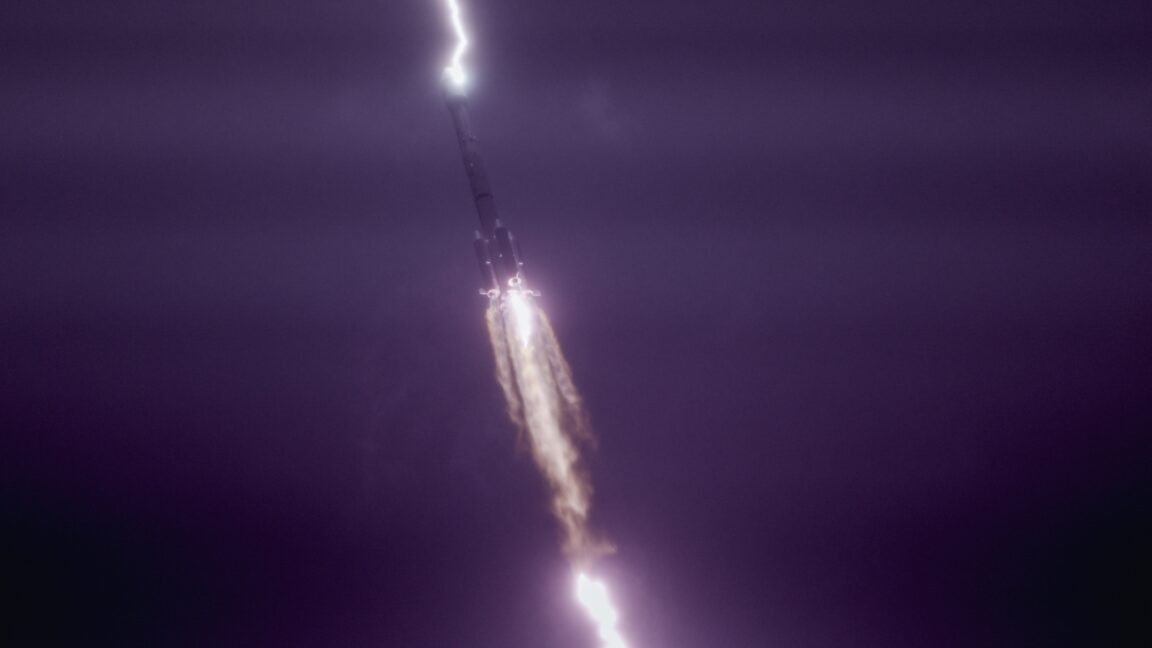
Rocket Report: Lightning strikes in China; Starship launch on deck

Welcome to Edition 9.04 of the Rocket Report! We've had to wait an extra week for SpaceX to get its 13th Starship test flight off the ground. A last-second abort on July 16 led engineers to roll the booster back to its hangar in South Texas to swap out engines. Starship is now back on the launch pad. Liftoff is set for Friday evening. A flawless launch and reentry will put SpaceX on the cusp of an orbital flight later this year. Ars will have a comprehensive recap story after the completion of the test flight.

As always, we welcome reader submissions. If you don't want to miss an issue, please subscribe using the box below (the form will not appear on AMP-enabled versions of the site). Each report will include information on small-, medium-, and heavy-lift rockets, as well as a quick look ahead at the next three launches on the calendar.

India's first private rocket reaches orbit. Indian space officials celebrated the debut flight of Skyroot Aerospace’s Vikram-1 rocket, India’s first fully commercial satellite launcher, as a β€œgrand success” Saturday after an on-target climb into a 280-mile-high orbit following liftoff from an island spaceport in the Bay of Bengal, Ars reports. The Vikram-1 lifted off from India’s primary spaceport on Sriharikota Island around midday local time. The launch was delayed more than a half-hour to resolve a last-minute technical problem. The countdown resumed, culminating in the command to ignite Vikram-1’s solid-fueled first stage booster to propel the rocket off the launch pad.

Read full article

Comments

Β© Zhou Quan/VCG via Getty Images

The Pentagon's Space Development Agency hasn't moved as fast as anyone would like

The Space Development Agency was established in 2019 to help speed up the deployment of US military space systems by sidestepping the Pentagon's traditional sluggish bureaucracy.

Seven years later, SDA is finally launching its first batches of operational satellites, just as the Pentagon plans to shutter the semi-autonomous agency and fold it back into the Space Force's procurement pipeline, newly reorganized under several program acquisition executives in a bid to streamline weapons buying.

SDA's fate is not a surprise, and lawmakers in both houses of Congress have backed the agency's closure in drafts of this year's National Defense Authorization Act.

Read full article

Comments

Β© SpaceX

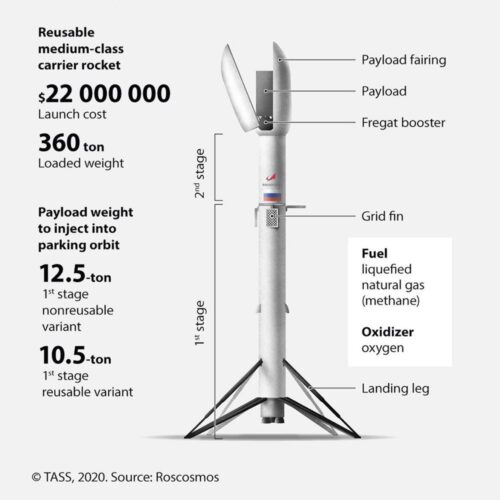
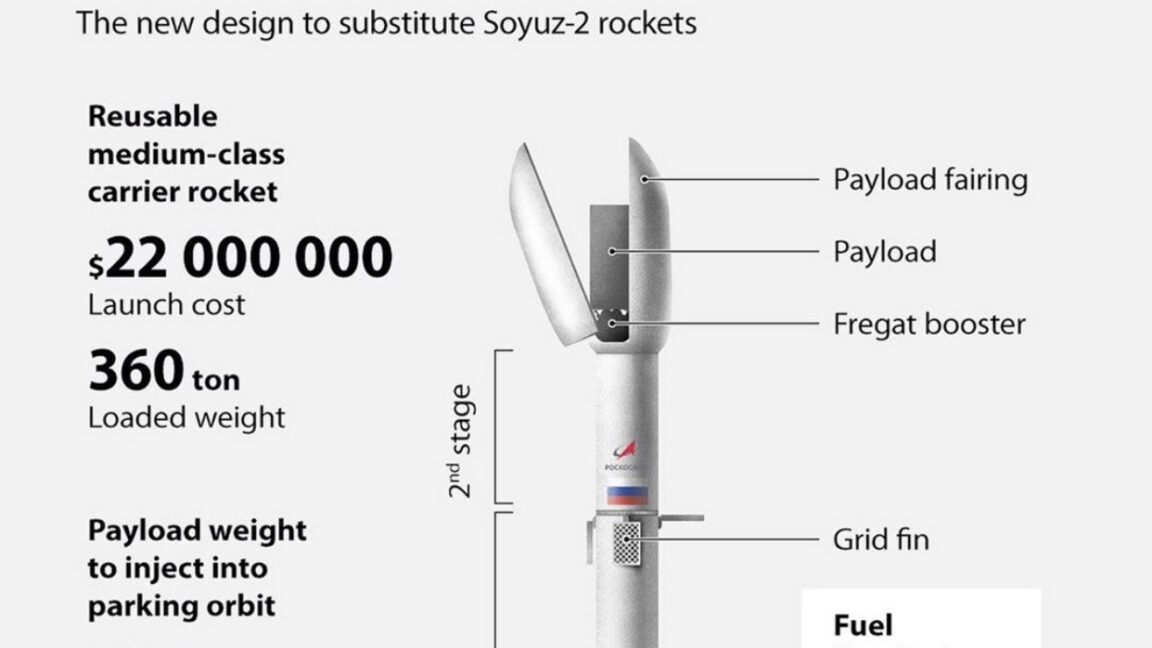
Will Russia's answer to the Falcon 9 rocket ever take flight?

Everyone seems to be launching and landing rockets these days.

Last week, China joined the club of countries that have launched an orbital mission and brought its booster safely back to Earth, which is just the beginning of public and private ventures in that country aggressively pushing into rocket reuse. Also in Asia, Japan's space agency has been conducting hop tests, and Honda recently performed vertical reuse tests.

In the United States, of course, SpaceX launches and lands reusable rockets every few days. Blue Origin, although its New Glenn booster is temporarily grounded, has also demonstrated the ability to both land and re-launch a large orbital booster. Other US companies, including Stoke Space, Rocket Lab, and Relativity Space, are all making credible progress toward partially or fully reusable rockets.

Read full article

Comments

Β© GK Launch Services

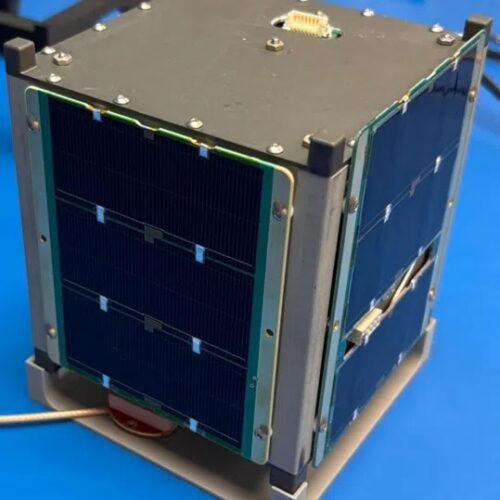
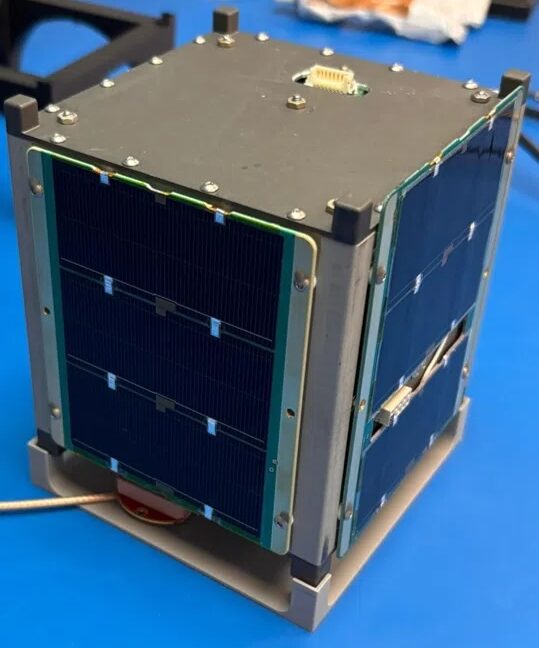
Miami-based City Labs achieves a first for commercial nuclear power in space

The proliferation of nuclear power in space got a little more real Tuesday with the launch of a small satellite developed by a Florida-based company specializing in nuclear micro-power technology.

It's a long way from launching a bona fide nuclear reactor, a breakthrough that could help power a permanent Moon base and efficiently drive rockets throughout the Solar System. But you have to start somewhere.

The satellite from Miami-based City Labs is named BOHR, short for Betavoltaic Orbital High-Reliability, and it launched on a SpaceX rideshare mission Tuesday alongside 80 other payloads. SpaceX's Falcon 9 rocket released the BOHR satellite into an orbit between 350 and 400 miles (nearly 600 km) in altitude.

Read full article

Comments

Β© City Labs

❌