Oracle’s proposed investment in 2 gigawatts of renewable energy projects for New Mexico comes as local opposition could delay development of the Project Jupiter data center that Oracle is building for OpenAI.
The two tech companies are developing the $165 billion Project Jupiter data center in Santa Teresa, New Mexico, as part of the broader Stargate AI infrastructure project announced by President Donald Trump in 2025. But Project Jupiter faces local protests and court battles over concerns about its environmental impacts—and the latest Oracle announcement on September 8 seeking proposals for renewable energy projects does not change the fact that the data center will be powered by fuel cells that consume natural gas.
“Like all matching programs, this would be synthetic in the sense that 2 GW of renewables wouldn't directly power the data center,” wrote Michael Thomas, CEO of the Cleanview data platform that tracks renewable energy and data center projects, in a LinkedIn post.
They joined as part of a funding round that totals $13 million, according to a Form D filed with the Securities and Exchange Commission. NLM has reported at least $26 million in funding since 2018, according to SEC filings.
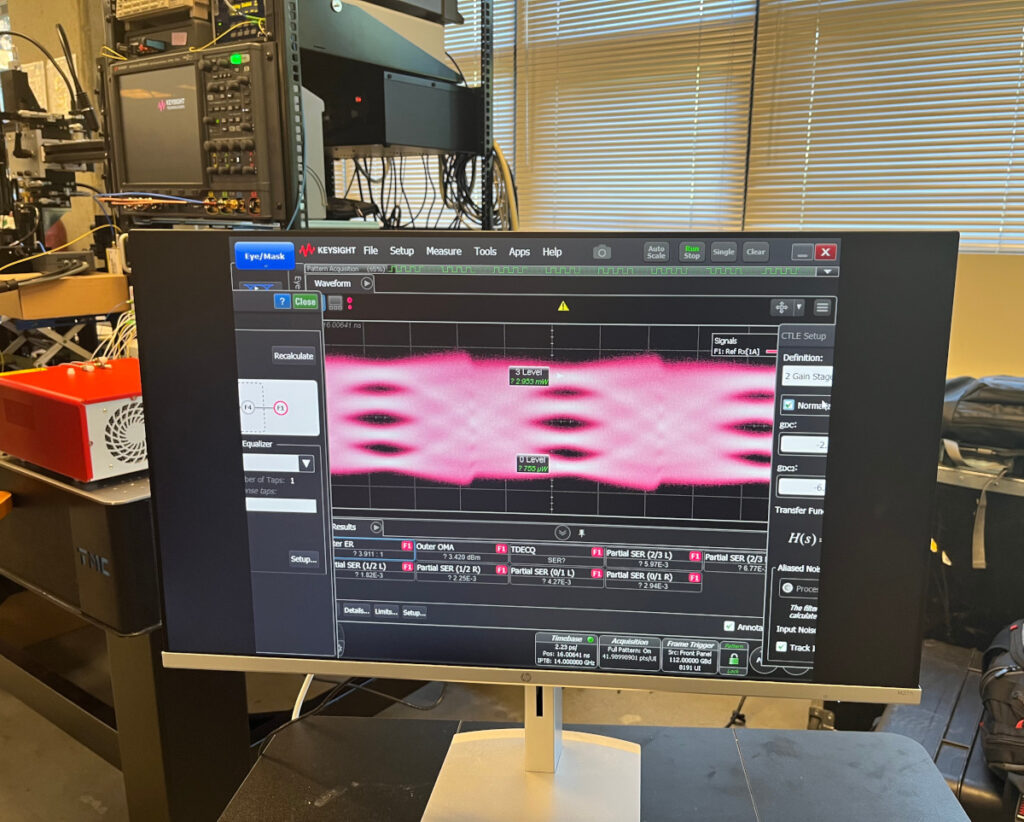
The company offers a way to move more data without burning more power. Inside a data center, information travels between chips and servers as pulses of light. The part that puts the data onto the light beam, called a modulator, is normally made of silicon. It limits how much data a link can carry, and how much power that takes.
NLM’s technology, sold under the name Selerion, is an organic electro-optic material that goes on as a liquid and hardens in place on the chip, taking over the modulator’s job from the silicon underneath. The company says it does the work 10 to 15 times more efficiently.
Applications for the technology include fiber-optic networking equipment and the links between servers in AI data centers. NLM says it could also be used in quantum computing.
Five existing investors participated in the round, which the company described as a Series A2: Emerald Technology Ventures, Oregon Venture Fund, Idemitsu, Tokyo Ohka Kogyo and StoryHouse Ventures. Private investors and company employees also took part.
Pangaea Ventures, which has offices in Canada, the United States and Japan, backs startups built on advances in materials, chemistry and biology. It says it has invested in more than 40 companies over more than 20 years. David Weekes of Pangaea is joining NLM’s board, which already includes Frank Balas of Emerald.
Diamond Edge Ventures, led by president Curtis Schickner, has $200 million to invest through 2030. It backs companies in Mitsubishi Chemical’s core markets, including advanced materials, polymers and electronics, and its portfolio includes Boston Materials, DigiLens and Eridan.
Hamamatsu Photonics, which invested previously, is not part of this round but is still a shareholder, according to the company.
The company was incorporated in 2018 as Nonlinear Materials Corp. It licensed its patents from the University of Washington, building on 25 years of research there in the labs of chemists Larry Dalton and Bruce Robinson. Robinson is one of the company’s co-founders, as is Lewis Johnson, a longtime UW researcher who is chief technology officer.
Pack Ventures, the UW-affiliated venture fund, is an investor in NLM and is also listed among the advisors to its board.
GeekWire covered NLM’s launch in 2019, when the company was raising a $1.25 million seed round and running a small production lab on campus.
NLM Photonics CEO Brad Booth. (NLM Photo)
Brad Booth, who spent nine years at Microsoft and joined NLM’s board in 2023, took over as CEO in 2024 from co-founder Gerard Zytnicki, who is now a corporate advisor to the company. The company raised $1 million from Tokyo Ohka Kogyo and Hamamatsu in 2023.
Last year NLM said outside testing confirmed that a 1.6-terabit chip combining silicon with its materials ran at 224 gigabits per second on each of eight channels. It started sending samples of 1.6- and 3.2-terabit chips to customers in March.
NLM is not alone in trying to build a better modulator. Lightwave Logic, a publicly traded Colorado company also working with organic materials, named NLM among its smaller competitors in its annual report for 2024.
Some of the company’s rivals have raised a significant amount of funding. HyperLight, a Harvard spinout that uses a crystal called lithium niobate instead of an organic material, has raised $117 million, including $80 million in June led by MediaTek.
NLM has worked to get its materials onto other companies’ production lines. In March the company said the chips going out to customers were made at GlobalFoundries, and that it had built modulators using Tower Semiconductor’s high-volume silicon photonics process.
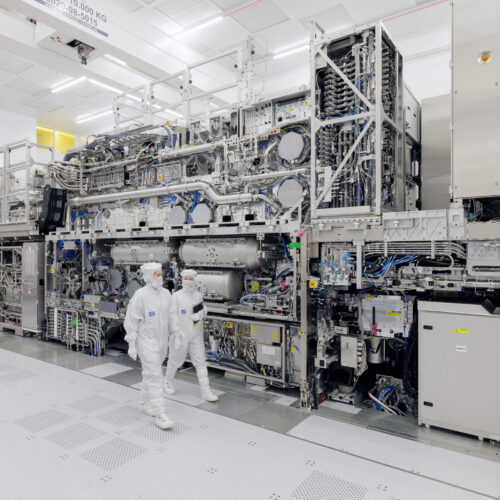
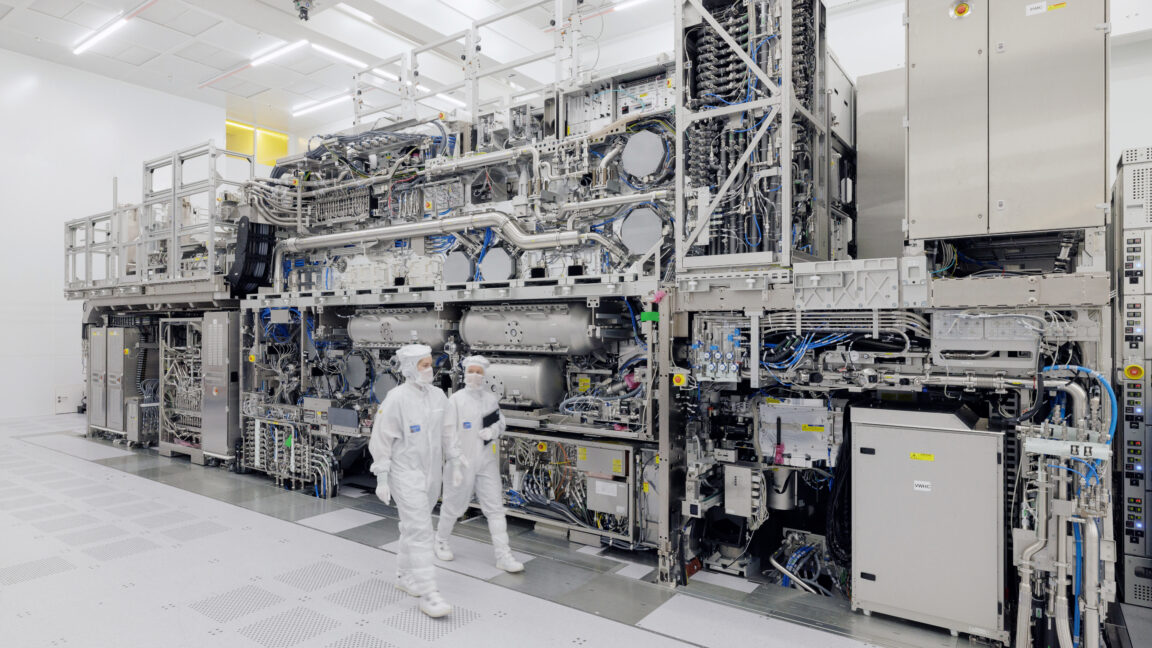
Leading chipmakers Samsung Electronics and Taiwan Semiconductor Manufacturing Co. announced plans to adopt ASML’s latest chipmaking machines in the next several years—and they also joined Intel in agreeing to a crucial technology change that could boost chip production on the new machines by 40 percent.
This signifies the semiconductor industry’s broader embrace of high NA EUV photolithography technology that can cost up to $400 million per machine and is only provided by the Dutch technology company ASML, Bloomberg reports. The technology would allow chip designers to implement even smaller features in potentially more powerful and efficient next-generation chips produced for AI data centers and consumer electronics such as smartphones, tablets, and laptops.
ASML’s EUV (extreme ultraviolet) lithography machines enable chipmakers to use powerful laser light to imprint patterns in silicon wafers, layer by layer, and gradually form the computer circuitry that makes silicon chips work. Compared to older deep ultraviolet lithography, EUV technology harnesses a more powerful source of light with a shorter wavelength to create even smaller features on silicon wafers.
Patagonia is attracting multibillion-dollar AI data center plans, but power infrastructure and connectivity gaps could determine which projects get built.
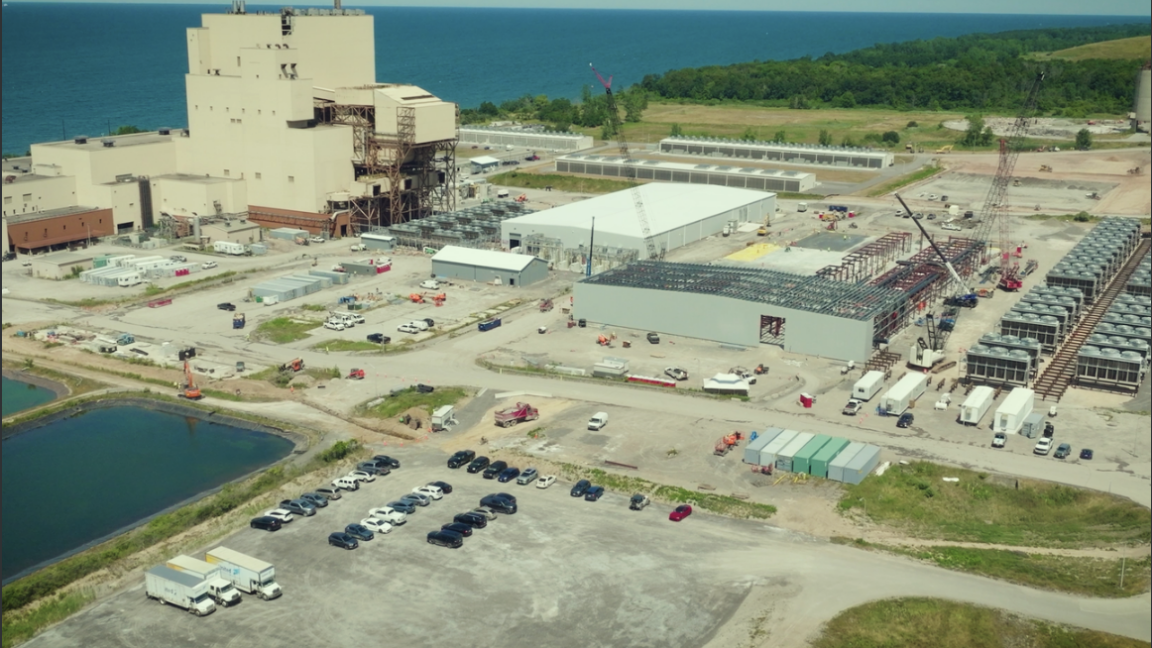
In early June, a fire broke out in a still-unfinished building at the Lake Mariner data center in Somerset, New York, exposing just how little the local fire department knew about what it was walking into. Firefighters reportedly found no working alarm, no suppression system, and three dead hydrants; the safety documents they’re legally entitled to see reportedly burned up in the blaze.
Steve Matisz, chief of the Barker Fire Department, said his crew went into the building “kind of blind,” facing heavy black smoke from chemicals they couldn’t identify because the safety sheets meant to inform them had apparently burned up. “It’s been a difficult situation,” Matisz said. He wasn't sure what to think about the claim that the safety sheets had burned in the fire.
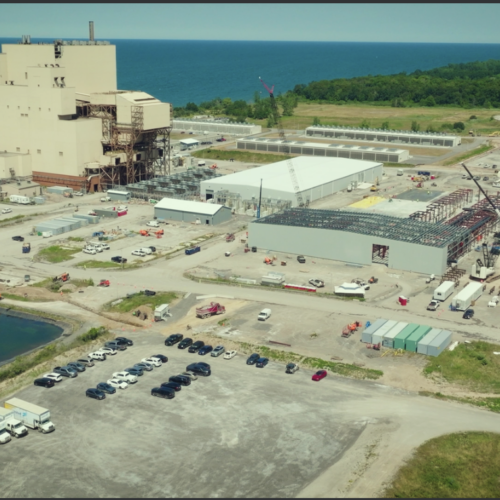
The site is a former coal mine on Lake Ontario. The $3.2 billion campus is one of the largest AI data center buildouts in New York, and it has many stakeholders. A company called TeraWulf owns and operates the data center on land it leases from a company owned by its own CEO; Fluidstack, a UK-based AI company, will run the center; Google holds warrants for a future 14 percent equity stake and has agreed to guarantee Fluidstack’s lease payments; and Anthropic is among the AI companies whose compute demand the facility exists to serve.
In early June, a fire broke out in a still-unfinished building at the Lake Mariner data center in Somerset, New York, exposing just how little the local fire department knew about what it was walking into. Firefighters reportedly found no working alarm, no suppression system, and three dead hydrants; the safety documents they’re legally entitled to see reportedly burned up in the blaze.
Steve Matisz, chief of the Barker Fire Department, said his crew went into the building “kind of blind,” facing heavy black smoke from chemicals they couldn’t identify because the safety sheets meant to inform them had apparently burned up. “It’s been a difficult situation,” Matisz said. He wasn't sure what to think about the claim that the safety sheets had burned in the fire.
The site is a former coal mine on Lake Ontario. The $3.2 billion campus is one of the largest AI data center buildouts in New York, and it has many stakeholders. A company called TeraWulf owns and operates the data center on land it leases from a company owned by its own CEO; Fluidstack, a UK-based AI company, will run the center; Google holds warrants for a future 14 percent equity stake and has agreed to guarantee Fluidstack’s lease payments; and Anthropic is among the AI companies whose compute demand the facility exists to serve.
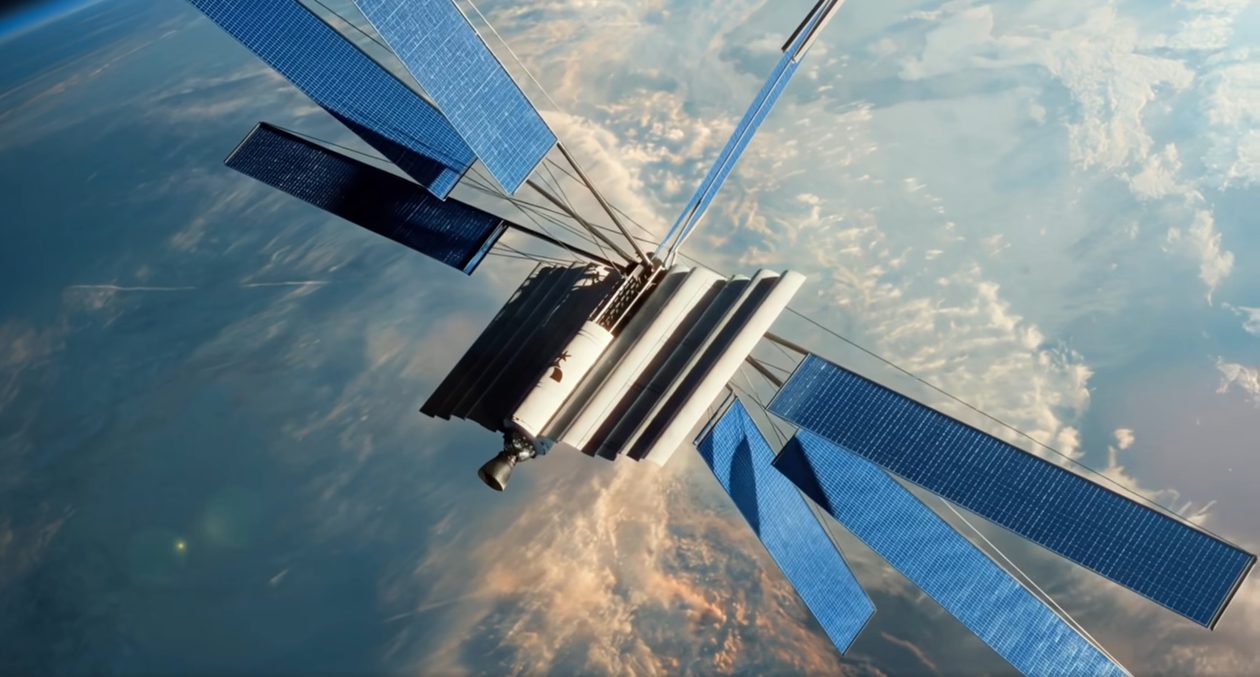
An artist’s conception shows one of Cowboy Space’s data centers in Earth orbit. (Cowboy Space via LinkedIn)
California-based Cowboy Space is leasing a 291,035-square-foot industrial facility in Kent, Wash., to support the production of hardware for its planned constellation of AI data center satellites, according to the company that arranged the lease.
“According to Newmark Research, the transaction is the largest industrial lease in the Puget Sound region year-to-date,” Newmark, the real estate broker for the deal, said in a news release. Newmark represented CenterPoint Properties, Cowboy’s new landlord.
The facility at 7650 S. 228th St. previously served as a Costco distribution and delivery center. “This building was originally designed for large-scale logistics users, but Cowboy Space recognized the opportunity to reimagine it as a highly specialized production facility,” said Taylor Hoff, a vice chairman at Newmark’s office in Bellevue, Wash.
Newmark said Cowboy Space plans to convert the facility into a manufacturing operation supporting space and rocket development. The operation is expected to add 300 jobs, Newmark said. Cowboy is currently listing 46 Kent-based positions in its careers database.
The city of Kent, which is about 20 miles south of Seattle, is one of the hotspots for space companies in the Pacific Northwest. Boeing’s Kent Space Center remains active more than 50 years after building NASA’s Apollo moon rovers. The city also hosts Jeff Bezos’ Blue Origin space venture and Stoke Space, which was founded by Blue Origin alumni.
Cowboy Space, previously known as Aetherflux, plans to send its own rockets into low Earth orbit starting as early as 2028, with the upper stages outfitted to serve as solar-powered orbital data centers. The Stampede constellation is one of several planned projects aimed at getting around the land, power and water constraints that have made ground-based AI data centers increasingly controversial.
“We are building what I call the last big clean-sheet launch vehicle in my lifetime, so it’s going to be a very big heavy-lift vehicle, and we’re working every day to bring it to reality,” Warren Lamont, Cowboy Space’s head of launch and propulsion, said this week in a LinkedIn video. Lamont, who previously worked for IonQ and Blue Origin, is one of the executives heading up Cowboy Space’s engineering hub in the Seattle area.
Update for 3:30 p.m. PT Sept. 13: Cowboy Space confirmed the opening of its Kent facility in a post to LinkedIn. “Kent will be our launch vehicle and satellite design hub, and we will be building our rocket engines and solar systems here too,” the company said:
Anthropic reportedly signed a $35 billion Lambda cloud deal tied to a Texas data center leased by Nvidia and developed by Hut 8 for Claude computing capacity.
Nvidia invests $3.5 billion into Taiwanese chipmaker MediaTek. The deal shows how Nvidia plans to stay essential to AI infrastructure as Big Tech begins to build its own AI chips.
Meta is testing robots that can plug in cables, reset servers, and handle other tasks inside its data centers, according to several current and former workers familiar with the projects. The ongoing effort, which has not been previously reported, may eventually allow Meta to operate its rapidly expanding data center footprint with fewer humans, keeping labor costs in check as its spending on AI infrastructure soars.
Meta is using robots and related hardware from several different vendors, including Watney Robotics, Kinova, and ABB, according to the same workers, who asked to remain anonymous because they weren’t authorized to speak to the media. Kinova and ABB declined to comment. Watney didn’t respond to requests for comment.
In one experiment, Meta is evaluating whether a Kinova Gen3 robotic arm could be used for power cycling or cutting off electricity to servers. The company is also testing a different robot to swap networking cables. One Meta data center worker estimates that if it’s successful, the bot could replace up to 80 percent of some people’s workloads. “We thought those of us performing the physical tasks were safe for a while, but not anymore,” says the worker. “It’s coming for us all, unfortunately.”

 Login
Login