
❌

Reading view

There are new articles available, click to refresh the page.

Drone meets bobcat: Police find novel use for UAV after wild animal breaks into Seattle-area home
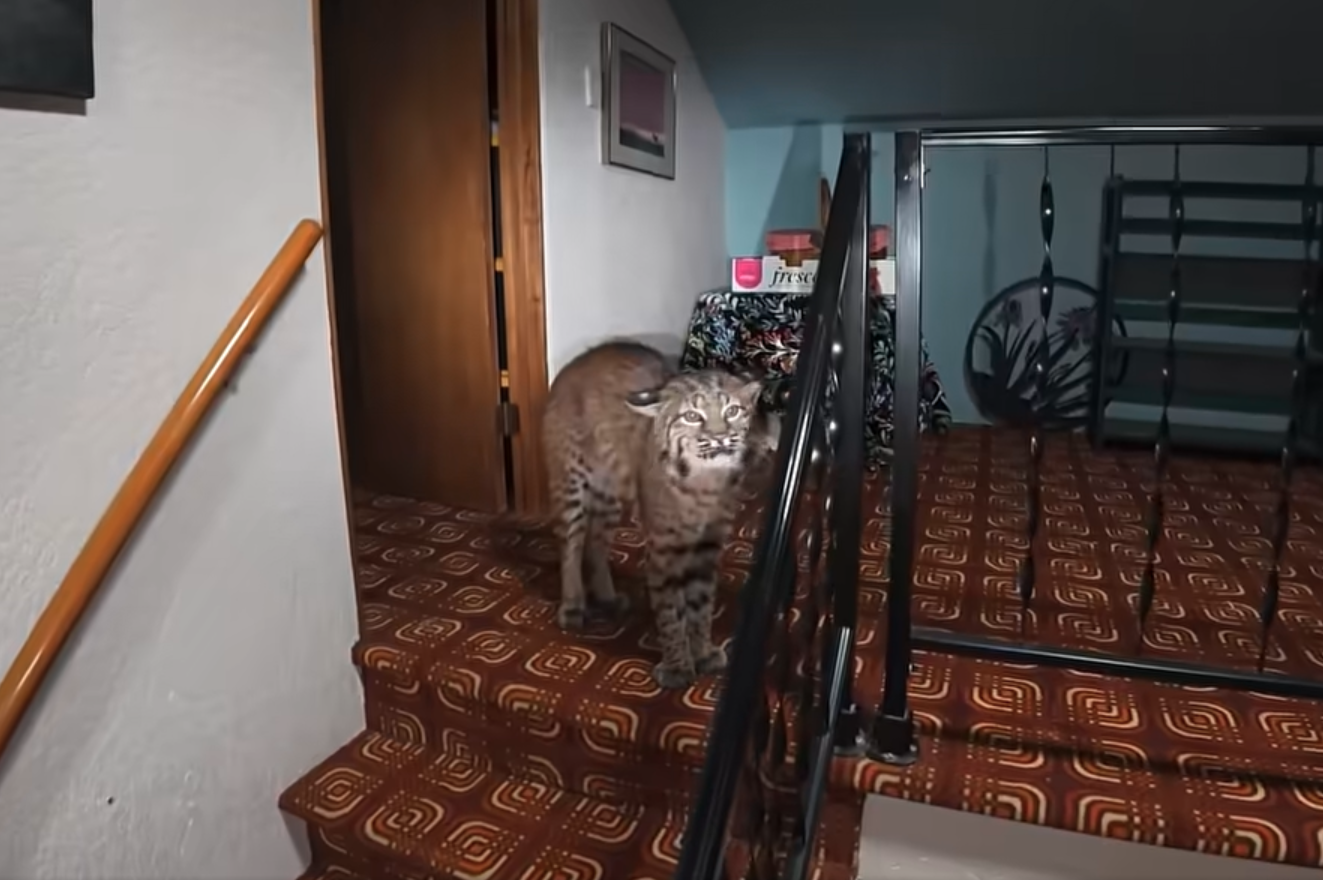
A bobcat inside a home as seen on video captured by a Kirkland Police Department drone. (Kirkland Police Department Image)

Most high-tech police drones are deployed for high-speed chases or search and rescue missions, but officers in Kirkland, Wash., recently launched one indoors for a wilder reason: tracking a live bobcat sitting at the top of a resident’s staircase.

According to a Kirkland Police Department Facebook post, the incident unfolded in the Moss Bay neighborhood last week after a resident heard loud banging inside their home and called 911 to report a break-in.

Responding officers expecting a human burglar were surprised to find the intruder was a bobcat.

In order to maintain a safe distance and manage the response, officers deployed an unmanned aircraft to monitor the cat’s movements inside the home.

The bobcat was corralled into an isolated room until the Washington Department of Fish and Wildlife arrived, according to the Facebook post. The bobcat was sedated and later released near Forbes Creek, close to the natural habitat where it was found.

The bobcat is believed to have climbed a tree and jumped through an open window to gain entry possibly drawn inside by the resident’s cat, which was later found unharmed.

The indoor operation highlights how Kirkland has expanded its use of aerial technology since launching a public safety drone program in 2022. Managed centrally across the city’s Police, Fire, and Public Works departments, the program maintains five aircraft and 17 FAA-licensed pilots specifically trained for tactical searches, search-and-rescue missions, and scene documentation.

Police recommend that if a bobcat enters your home, move people and pets away from the area and call 911.
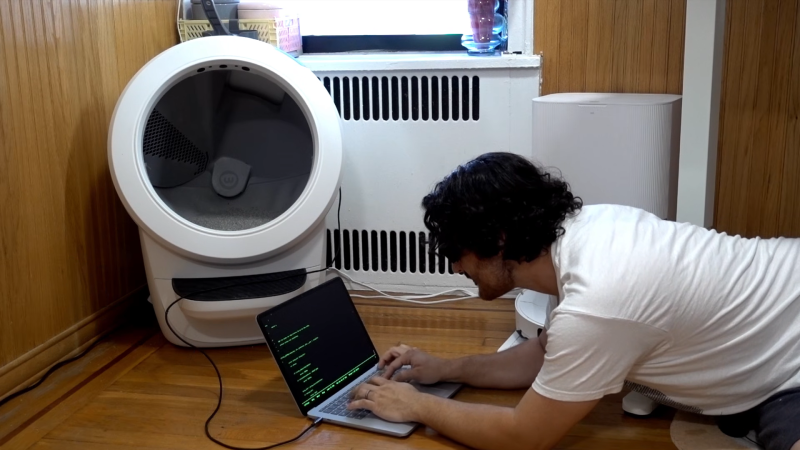
Hacking A Cat Litter Box

[Joseph DiGiovanni] is the owner of a Litter Robot 4. It’s a convenient mechanized litter box for cats that can clean itself to reduce unwelcome odors inside the home. He wanted to run automations based on the operation of the litter box, but was not eager to use the manufacturer’s cloud service to do it. Instead, he set about reverse engineering the device for his own ends.

Since the Litter Robot 4 relies on an ESP32 microcontroller for external connectivity, it was entirely possible for [Joseph] to whip up a custom firmware for the device instead. He started with ESPHome as a base, which is a popular firmware used for building smarthome devices based on Espressif hardware. The architecture of the Litter Robot 4 helped in this regard. It uses a PIC microcontroller to handle the low level hardware control, while the ESP32 is responsible for connecting to the cloud over WiFi. This allowed [Joseph] to mess with the connectivity features and get the device hooked up to Home Assistant without compromising the basic mechancial functionality of the device or any of the safety features.

All [Joseph] had to do was figure out how the original hardware’s ESP32 talked to the PIC and emulate that in his own firmware, which was achieved with some snooping and data capture and processing with an LLM. This was used as a basis to whip up an ESPHome firmware that could integrate the hardware neatly with Home Assistant.

Files are on Codeberg for those eager to tinker. It’s not the first time we’ve looked at cat litter management, and it won’t be the last. Video after the break.

❌