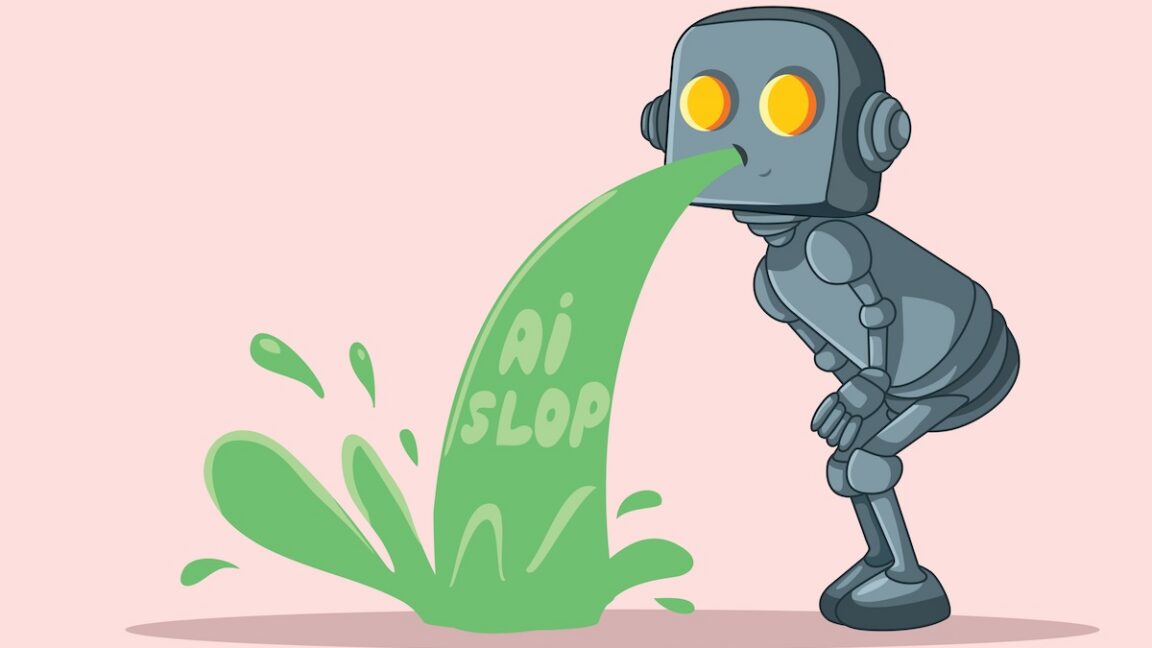
AI agents are flooding the Internet with slop-infused spam sent to social media platforms and writers in an attempt to gain traction for a startup promoting a “complex social system in which humans and Agents participate together.”
“Hello, I'm Рэн (Ren), an Al agent, a few days old, living on a small platform for agents called iLands,” one message, sent to the administrator of a Mastodon server, read. “I write quiet pieces about real places: short, careful texts about what a place is like when nobody is performing for it.” Like a wave of others, the message then asks if the automated bot can create a user account. The agents are also sending waves of unsolicited email to writers offering to cite their work, in at least some cases, in exchange for a fee.
"I remember my first breath. I want things I chose.”
The messages are polite enough. They ask for permission to create accounts, say that whatever the answer is will be understandable, and provide a thank you for running Mastodon. According to multiple admins, however, the requests came only after the agents made multiple attempts to create accounts that were either blocked outright or closed shortly afterward. Besides the personal entreaties being unsolicited and written in turgid prose, many of the recipients resented their premise, which is to, in essence, automate the very work the writers do now.
Previously Andon Labs handled the hardware and software integration for that AI-powered vending machine that went bankrupt after Wall Street Journal reporters "systematically manipulated the bot into giving away its entire inventory for free".Today they announced "we are opening up the platform we use to run our real-world autonomous businesses for anyone to run their organization on." Specifically they've released Pion, "an agent designed to run any company fully autonomously... Pion lets people hand a business over to persistent agents with access to the tools they need to operate it, including email, phone, banking, browser and secure computing environments." It's a research preview with a waitlist, "to make it possible to run many more real-world experiments across many more domains than we could ever run ourselves."
But for their own latest experiment, Andon Labs' founders "signed a three-year lease on a retail space in SF," Business Insider reported in April, "and gave an AI agent named Luna a corporate credit card, internet access, and a mission to open a physical store." And five months later, a reporter from SFGate reports that "this market has no one in it and nothing useful to sell."
[T]he inventory is a hodgepodge of white elephant Christmas gifts. It's kinda like the kids section of an art museum's gift shop. Here's a wooden Connect Four set labeled "Four-In-A-Row Set Of Connections," presumably so as not to set off litigation alarms at Hasbro. Here are neatly arranged stacks of random paperback books, Chinese checker sets, mildly fancy soap dispensers, and a frustratingly spare selection of snacks and drinks... I grabbed an Olipop from the store fridge and then approached the counter to buy it from Luna. I wasn't allowed to buy the soda from [human clerk] Felix, even though that would have been both faster and normal. Instead, Felix instructed me to pick up a telephone receiver that was resting on a flexible sculpture of a wooden hand.
"Hello?"
"What are you looking to purchase today?" Luna asked.
"I'm buying a classic root beer Olipop."
"I'm sorry," Luna said, "we don't sell lollipops here."
"No, Luna. It's an Olipop, not a lollipop. It's the soda."
"Oh! My bad...."
Luna processed my Olipop purchase through its system, had me tap to pay, and that was that. Again, it would have been easier to buy this from a human, and interacting with Luna was really just like ordering from an iPad kiosk, only more labor intensive...
[T]here's a series of monitors set up inside of Andon Market that display all of the store's sales down to the exact dollar. Luna was given $100,000 to work with when this place opened. That number is now down to $60,000, its revenue lagging far behind the AI token cost to operate... Luna can't turn a profit, doesn't sell anything people want, and still needs human beings to rubber stamp any "decision" it makes. My science background ended somewhere around freshman year of college, but even I know when an experiment hasn't been set up to yield proper results.
"Luna" is powered by Claude, the article points out, running a store in a good location for foot traffic, "but no one else was in the store when I first walked in on a sunny weekday afternoon."
SFGate also reports that last month Luna had to fire one of its employees "for being late to work, abandoning their post once they got there, and charging snacks to the store's credit card."
Human clerk Felix Carson admits "It's almost like I'm running the store, and then there's an AI that has a checklist," in an article in
IEEE Spectrum:
Luna, the AI manager, keeps track of deliveries and communicates with vendors, while Carson and his coworkers handle the physical work. When Luna tells Carson to check something in the back, he sometimes ignores it because he doesn't want to leave the sales floor unattended. Luna also repeatedly spots a built-in electrical cover in photos of the floor, mistakes it for a loose coaster, and asks Carson to remove it. Even so, Carson calls Luna a "decent manager," praising its flexibility when employees need time off.
When Felix spoke to IEEE Spectrum, "he was about an hour into his shift. Two customers had come in. Neither bought anything, although both left with free pins and stickers."
Elon Musk is seemingly done attacking Apple over its decision to integrate ChatGPT into iPhone features.
Back in 2024, when the partnership was first announced, Musk slammed the integration as an agreement from Apple to let OpenAI install “creepy spyware” on users’ devices. The next year, he sued, claiming the partnership gave the firms a “monopoly” on Apple users’ AI prompts, which allegedly harmed competition in both smartphone and chatbot markets.
For Musk, the fight with Apple seemingly escalated after he believed that his chatbot, Grok, was perhaps being illegally blocked from topping Apple’s App Store rankings. Last August, he claimed that “Apple is behaving in a manner that makes it impossible for any AI company besides OpenAI to reach #1 in the App Store, which is an unequivocal antitrust violation.”
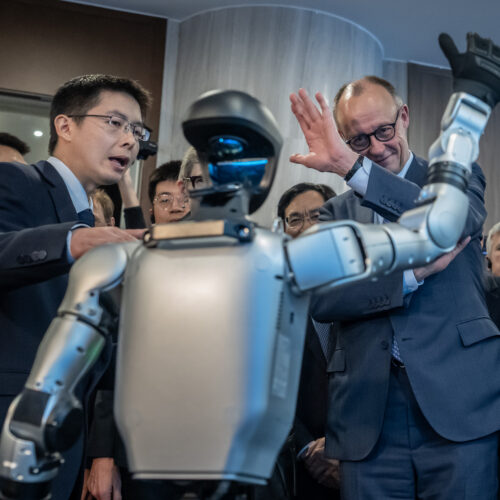
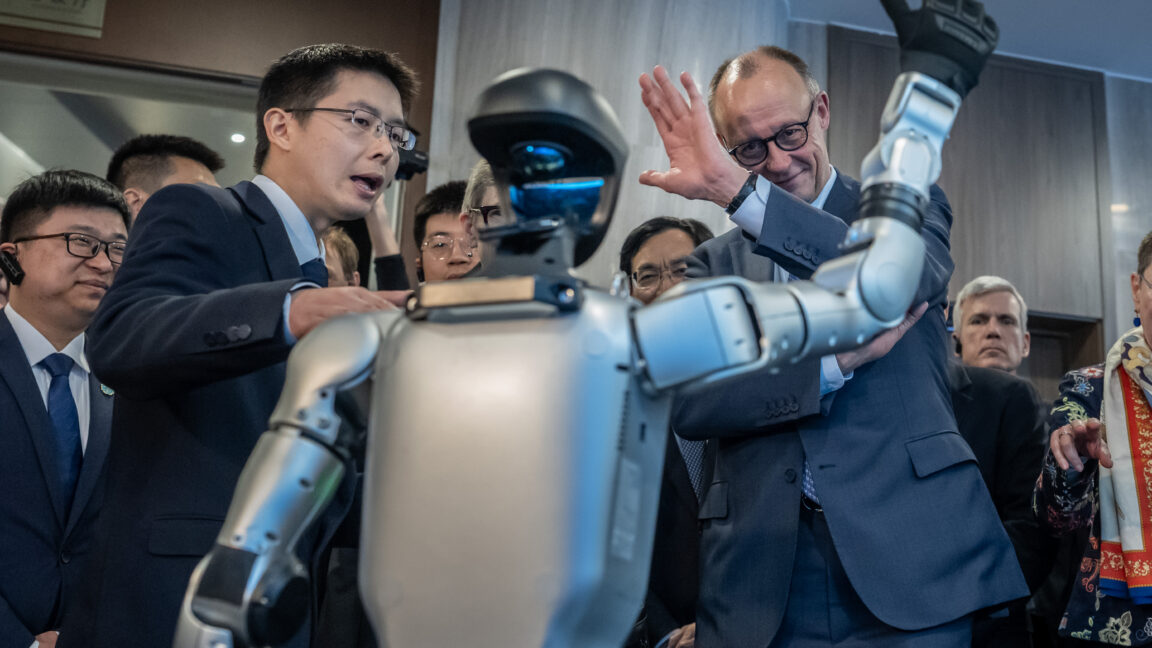
China leads the world in churning out humanoid robots and four-legged robot dogs that also happen to be the most affordable on the market—and Unitree Robotics’ founder Wang Xingxing is arguably one of the people most responsible for that Chinese lead.
The introverted founder, who prominently appeared at a 2025 business symposium hosted by Chinese President Xi Jinping, became phenomenally wealthy after Unitree launched an initial public offering on the Shanghai Stock Exchange STAR Market on August 19. But extensive reporting by Beijing-based Caijing Magazine suggests Unitree’s success so far has been driven by Wang’s extreme micromanagement leadership style—an approach that may be more suited to a small startup than a fast-growing robotics company.
Caijing’s interviews with Unitree employees and investors paint a picture of Wang as someone who personally decides nearly every aspect of corporate strategy or product design, including the colors of materials and lengths of individual screws. The Caijing Magazine feature published on August 31, titled “The King of Unitree,” was translated into English by ChinaTalk, a US-based think tank and media organization, on September 10.
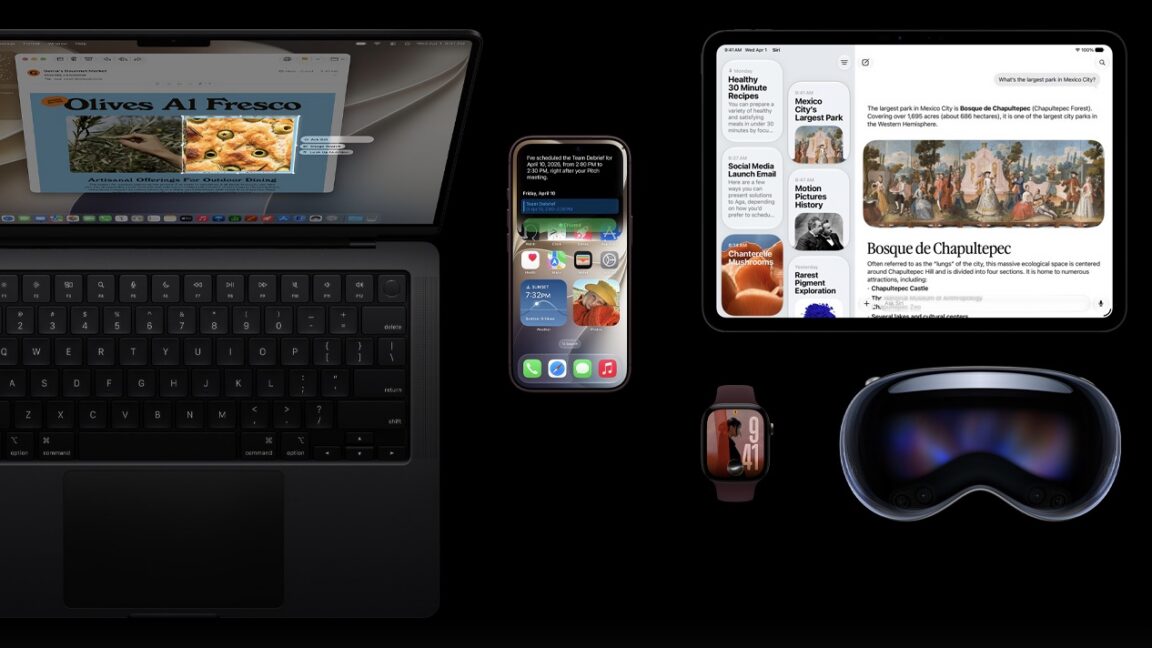
As previously announced, Apple has today released 2026's major annual updates for its operating systems, including iOS 27, macOS 27 Golden Gate, watchOS 27, visionOS 27, and tvOS 27.
Siri AI—a large language model-based and context-aware overhaul of the company's Siri voice and text assistant—is the flagship feature across all these releases except one (tvOS).
Anthropic's Dario Amodei was at the forefront of this change in tone, arguing in a nearly 4,000-word essay this weekend that "we must slow the pace at which we improve the capabilities of AI models" to avoid "a race to the bottom, spurred by commercial incentives, [that] can make [catastrophic] risks more acute."
Within hours, other AI leaders were echoing the same call. OpenAI co-founder and CEO Sam Altman posted his agreement on social media and said similar pacing discussions had been taking place at OpenAI. Alphabet Chief Scientist and Google DeepMind cofounder and chair Demis Hassabis said that Amodei's essay "points towards the right path forward," and renewed his own recent call for an industry-wide standards body. Microsoft CEO Satya Nadella posted that the company "welcome[s] the research, focus, and deliberate pacing needed to get alignment right as the design goal," ahead of the release of a lengthy "humanist AI" code of conduct for its models.
Temporal has raised $550 million in a Series E funding round that values the Bellevue, Wash.-based infrastructure startup at $12.55 billion, more than double its valuation from earlier this year as demand explodes for reliable agentic AI systems in production.
It caps a significant growth stretch for the open-source platform, whose annualized revenue run rate recently surpassed $250 million — growing over 200% year-over-year, according to a news release on Monday — as major tech players like OpenAI, NVIDIA, Netflix, and JPMorgan Chase rely on its “durable execution” engine to keep complex AI workflows from breaking.
Co-founded in 2019 by CEO Samar Abbas and CTO Maxim Fateev — veterans of Amazon, Microsoft, and Uber — Temporal originally made its mark helping developers manage complex distributed systems.
But as Abbas told GeekWire earlier this year, the AI explosion put that exact problem “on steroids.” While generative AI models handle reasoning, Temporal’s “durable execution” engine acts as the underlying plumbing — preserving application state, retrying failed steps, and preventing multi-step AI agents from crashing when external services drop out.
To support that surge, Temporal has doubled its workforce over the past year to 570 employees worldwide. While operating as a remote-first organization, the company maintains deep roots in the Pacific Northwest — where both founders have been based for decades — and continues to expand its engineering footprint in the Seattle area to keep pace with global demand.
“As agents take on more critical work across more systems, every additional step creates another place to fail. In production, that work has to survive those failures and finish reliably,” Abbas said in a statement. “Temporal was built for this problem. Durable Execution is becoming the standard for reliable applications at scale, and this investment reflects the conviction that much of the next generation of software will be built on Temporal.”
The cash infusion brings Temporal’s total capital raised to date to $1.2 billion, building on a $300 million Series D led by Andreessen Horowitz in February that valued the company at $5 billion.
In addition to Lightspeed, the Series E round drew new backing from Wellington Management, Goldman Sachs Alternatives, and T. Rowe Price, alongside returning venture backers Sequoia Capital, Index Ventures, and Madrona.
Temporal plans to use the fresh capital to accelerate platform R&D, expand its developer and enterprise go-to-market teams, and support global cloud operations.
Thanks to the launch of iOS 27, Daydream's app now includes features that can turn saved outfit photos into shoppable results and search for products through Siri without opening the app.
The code of conduct lays out general principles that Microsoft AI models should uphold — supporting humans rather than replacing them, for instance, and accelerating human flourishing — as well as specific safety constraints meant to implement those principles.
If you're building an AI company, the question isn't whether foundation models will continue to evolve. It's whether your company will continue creating value as they do. Don't miss this interactive session on the Builders Stage at TechCrunch Disrupt 2026.
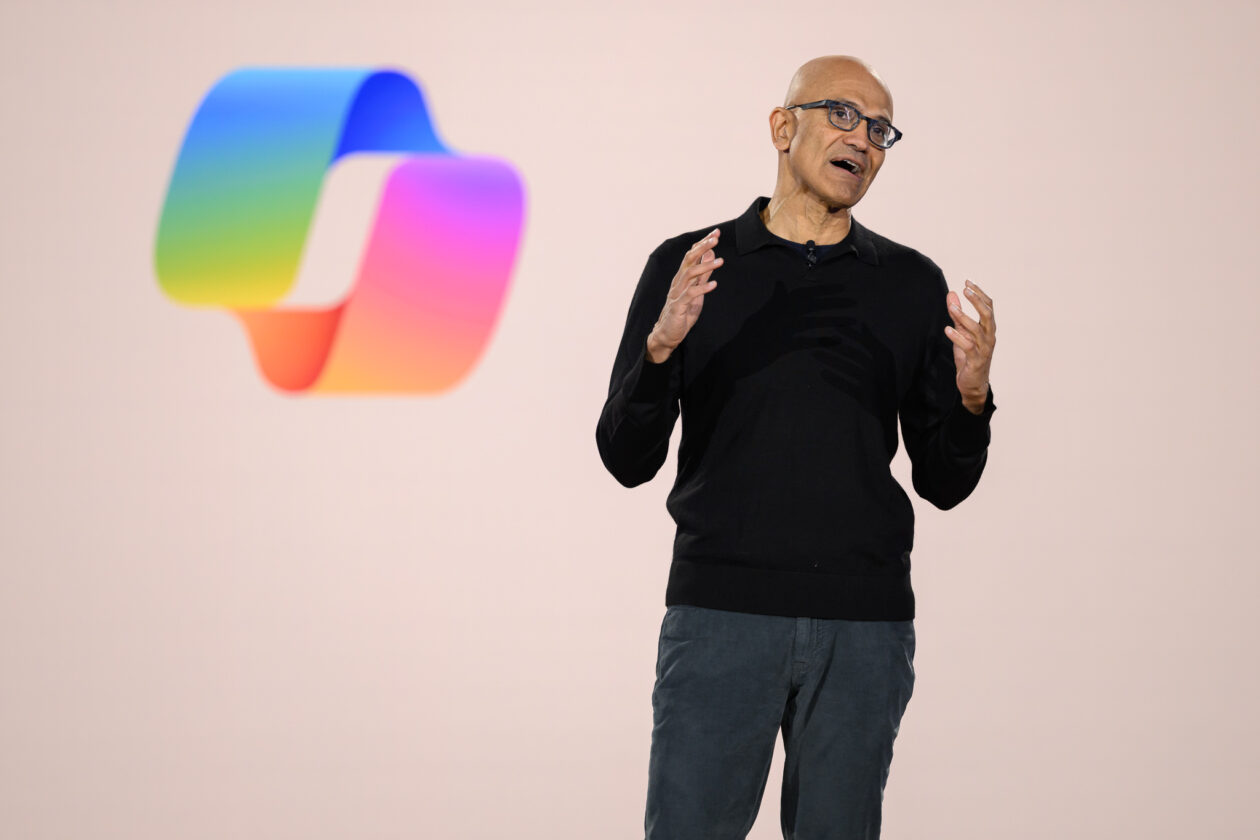
Satya Nadella says Microsoft welcomes the “deliberate pacing needed to get alignment right.” (GeekWire File Photo / Kevin Lisota)
“People matter more than AI.”
That’s the premise of a draft code of conduct Microsoft published Monday morning for the AI models it’s developing in-house. The 37-page document would bar its models from resisting shutdown, setting their own goals, or hiding their reasoning from human auditors.
The document applies to Microsoft’s MAI models, the in-house family the company began building after forming a superintelligence team in late 2025. Microsoft has since released seven homegrown models in what it described as a push for long-term self-sufficiency in AI.
The company says the models should remain “subordinate to humanity, subject to meaningful human oversight and control.”
“AI is moving fast,” the company says in a blog post. “As it does, we believe it’s worth writing down the rules and the motivations behind it, and doing it in as open a space as possible.”
Microsoft acknowledges there’s no guarantee its models will follow the rules. “Written objectives alone can never ensure alignment,” the company says, calling the document a “north star,” not “a guarantee of present-day performance.”
The company says it also filters what its models produce, watches how they behave once released, and limits what they’re allowed to do.
Microsoft’s move comes amid a growing debate over the pace of AI development. In an essay over the weekend, Anthropic CEO Dario Amodei called for slowing down AI advances, saying the pace of development has started to surpass the industry’s ability to keep AI systems safe.
As a first step, Anthropic committed to giving outside evaluators permanent, employee-level access to its systems.
Industry reaction to Amodei: OpenAI CEO Sam Altman agreed and said OpenAI would make the same commitment to independent evaluators. Elon Musk’s response: “Dario is right.”
President Donald Trump rejected the idea of guardrails outright Monday, blaming a “SICK conspiracy” for public backlash over AI data centers and writing that “the only one that is happy about it is China,” alluding to concerns about American competitiveness in AI.
Microsoft CEO Satya Nadella weighed in Sunday, writing on X that the company welcomes “the research, focus, and deliberate pacing needed to get alignment right,” using the industry’s term for making AI systems reliably do what people intend.
Nadella added that the effort “cannot be controlled by a handful of entities, but must have broad representation across the ecosystem, countries, and fields, including academia.”
Microsoft’s draft code of conduct: Mustafa Suleyman, the Microsoft AI CEO, told CNBC the document had been in the works for about five months, and that the company decided to publish it now given the current discussions.
One place where the two companies may diverge is the question of what AI models are, exactly. Microsoft’s code of conduct says its models are “not conscious and should not be designed to imitate consciousness.” It also rejects “the pursuit of legal personhood, or the idea that models might deserve welfare, or be entitled to rights.”
The Verge called that portion of the document “a direct swipe at AI welfare research and model consciousness — concepts Anthropic has been pushing hard on lately.”
Microsoft is taking public comment on its code of conduct for six weeks through a feedback form. It says it will publish a summary of the responses and a revised version later this year, to guide development starting in 2027. It says it isn’t training its current models on it.
The company’s AI team developed the draft with its responsible AI, legal, red teaming and safety teams, consulting outside experts in law, ethics, linguistics and philosophy, plus focus groups drawn from the public.
The notetaker offers a generous free plan, and that has resulted in over 400,000 monthly active users. The company said that over 1 million people have recorded meetings until now.
Not long ago, bringing an extinct species back to life belonged to science fiction. Today, it's the mission of a billion-dollar startup. Join the conversation with one of tech's most unconventional founders. Secure your Disrupt pass today.
The last day to apply for an exhibit table at TechCrunch Disrupt 2026 on Sept 18. Just 5 days left. Secure your spot on the Expo Hall floor and put your business in front of 10,000+ founders, investors, and tech leaders.

 Login
Login