❌

Reading view

There are new articles available, click to refresh the page.

Pentagon IG refuses to investigate Starlink/Starshield slowdown in Ukraine

The Pentagon inspector general's office declined a request from US senators to investigate restrictions recently imposed on the Ukraine military's use of SpaceX's satellite network.

Ukraine, which uses SpaceX's Starlink service and the military version known as Starshield, said earlier this month that military drones lost satellite connectivity when traveling above 161 kilometers per hour (100 miles per hour). The limit was removed after about 10 days.

Five Democratic and four Republican senators sent an October 15 letter to Department of Defense Inspector General Platte Moring, asking for a probe into the reported disruptions of Starlink and Starshield. The letter asked, among other things, "whether any restrictions on Starlink or Starshield services were directed, authorized, or implemented by SpaceX, the Department of Defense, or other US government entities; whether such restrictions were consistent with applicable US government contracts, and what actions, if any, the Department of Defense took in response."


Read full article

Comments

© Getty Images | Bloomberg

Musk accuses Ukraine of violating Starlink terms with deadly drone strikes

Elon Musk accused Ukraine of violating Starlink terms of service by using it for lethal drone strikes.

Musk said Ukraine used the Starlink commercial service for offensive drone strikes. Musk's comment on Saturday came after SpaceX imposed a restriction preventing Ukraine from using the satellite technology on drones flying above certain speeds.

One current and one former Ukraine official denied Musk's accusation and said previous limits imposed by SpaceX already prevented Ukraine's military from using Starlink in the way Musk described. Ukraine officials have accused Musk of throttling their use of Starshield, the military variant of Starlink that Ukraine has access to through a deal with the US government.

Read full article

Comments

© Dmytro Smolienko/Ukrinform/Future Publishing via Getty Images

Ukraine learns to fight without Starlink as Musk plays politics with satellites

Elon Musk’s Starlink satellite service has played a pivotal role in supporting Ukraine’s successful resistance to Russia’s full-scale invasion for years. But with Starlink having become increasingly unreliable due to Musk’s political inclinations and the latest surprise disruptions to service in Ukraine, the Ukrainians and Europe as a whole are now facing urgent questions about how to move forward without it.

As the world’s largest communications satellite network, Starlink can typically support high-speed Internet and data streams for any user or vehicle equipped with a relatively compact Starlink terminal. This has enabled Ukraine to maintain vital communications for both civilian purposes and military operations—and has also expanded the Ukrainian military’s capability to remotely control or provide guidance to drones used in both air defense against Russian attacks and for striking back at Russian targets.

“Starlink currently offers some of the best satellite coverage available, with virtually no competitors when you consider the combination of cost, availability, and ease of use,” according to the head of hardware R&D at the Ukrainian defense company BlueBird Tech, who provided comments to Ars anonymously for security reasons. “In practical terms, the main limitation is the need to position the antenna so it can receive signals from the satellites.”

Read full article

Comments

© Dmytro Smolienko/Ukrinform/NurPhoto via Getty Images

Report: Musk ordered Starlink slowdown in Ukraine, then blamed it on Trump

A Wall Street Journal report said SpaceX CEO Elon Musk ordered the Starlink throttling that blindsided Ukraine's air assault forces last week, despite Musk's claim that all decisions on the military version of Starlink are made by the US military and President Trump.

Trump denied ordering the restrictions. While Musk may have spoken to Trump and administration officials before the decision, The Wall Street Journal reported yesterday that Musk made the final call. The decision came after both Musk and Trump criticized Ukraine for attacking Russian diesel refineries.

"Elon Musk ordered the slowdown of a military-grade version of Starlink relied on by Ukraine, a decision that sparked panic in Kyiv and confusion inside the Trump administration," the WSJ wrote, citing unnamed US officials and people familiar with the matter. The report said that "Musk capped the speeds at which Ukrainian hardware could stay connected to the satellite-based network... rendering some offensive drones and interceptor drones virtually useless."

Read full article

Comments

© Getty Images | Bloomberg

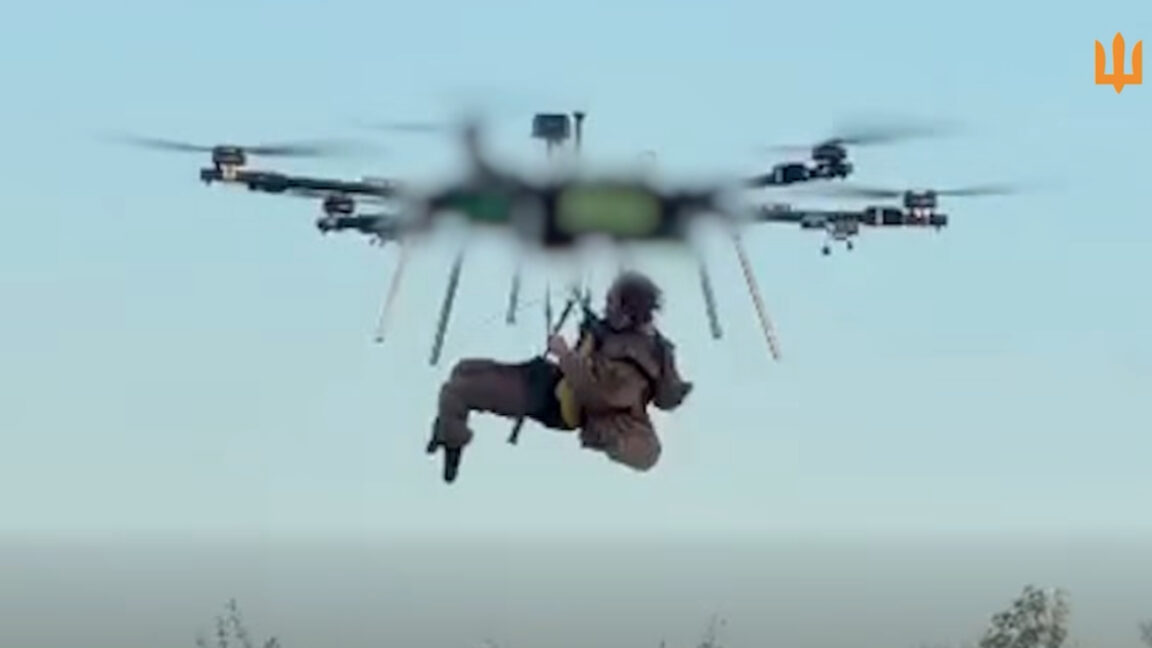
Ukraine’s drone rescue of wounded soldier puts much touted idea into practice

Ukraine’s unprecedented drone rescue of a wounded soldier from the battlefield has shown once again how battlefield necessity can spur innovation. The operation was revealed just days after separate Ukrainian drones designed for casualty evacuation were deployed for frontline testing—taking a step beyond the US military’s decades of experimentation with similar concepts.

The drone evacuation of the injured soldier took place at an undisclosed time and place on the frontline where the presence of Russian drones and landmines made it impractical to send in a wheeled ground robot, according to The Kyiv Independent. On October 19, Ukraine’s Army shared a video of the drone evacuation, showing the wounded soldier securing himself in a harness suspended beneath a heavy hexacopter drone with six rotors before being flown to safety.

“This is a historic event, the next stage of evacuating the wounded, which we will all come to,” said Napalm, a programmer of the 92nd separate assault brigade's unmanned ground systems company, who went by his callsign per Ukrainian military practice, in a statement. “Now the serious systematic work begins, so that such missions are carried out constantly.”

Read full article

Comments

© 92nd Separate Assault Brigade of the Ukrainian Ground Forces

Black Sea drone attacks enter NATO country's territorial waters for first time

Russian drones are suspected of sinking a cargo ship and leaving chemical tankers ablaze near the Black Sea coasts of Bulgaria and Romania, respectively. The latest attacks mean that at least seven ships have been attacked in the exclusive economic zones of NATO member countries—and even within Romania's territorial waters if Russian involvement is confirmed in the case of the chemical tankers.

Such attacks have spurred requests for NATO to redeploy counter-drone systems to provide more protection. In a social media post on October 15, NATO Secretary General Mark Rutte stated that NATO had increased "counter-drone capabilities" along the alliance's eastern flank after meeting with the leaders of Bulgaria and Romania.

The latest attacks this week occurred within 24 hours between October 14 and October 15, when the two chemical tankers were set afire after Russian drones were detected in Romanian airspace, according to Deutsche Welle. Both ships were sitting at anchor near the mouth of the Sulina canal that connects the Black Sea to the Danube River, which has become a crucial shipping export route for Ukraine, Reuters reported.

Read full article

Comments

© Hristo Rusev/Getty Images

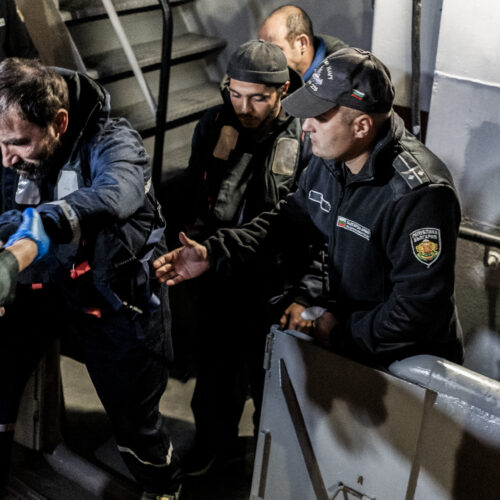
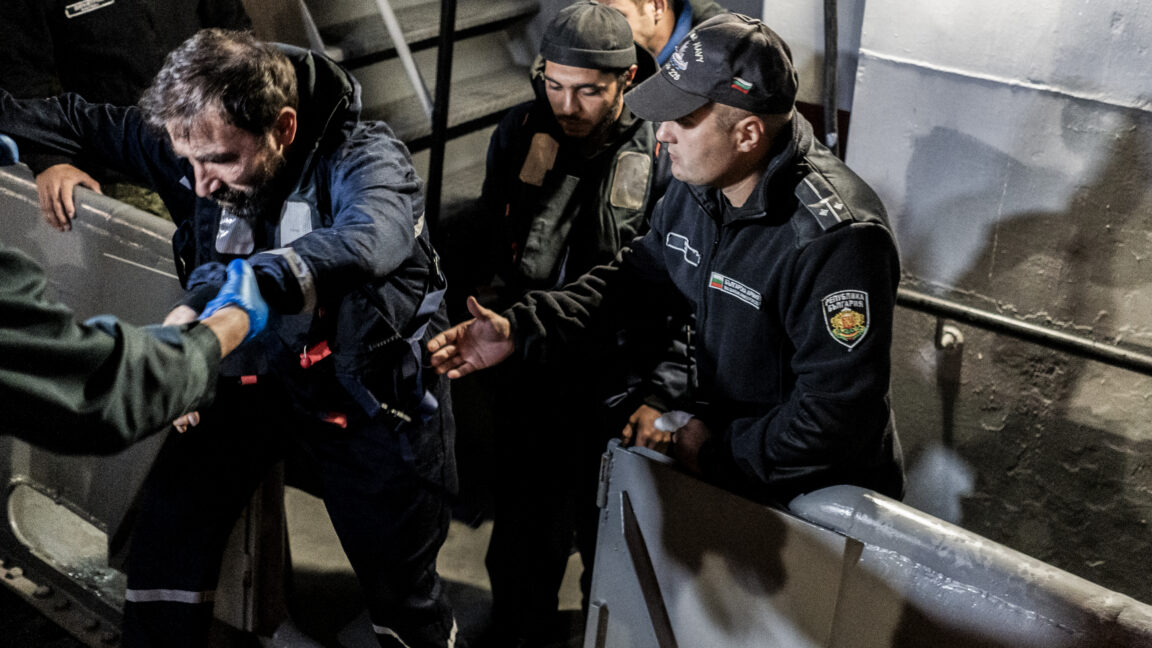
NATO may redeploy anti-drone defenses as attacks sink more Black Sea shipping

Suspected Russian drone attacks sank a cargo ship and forced the evacuation of another vessel within two dozen miles of the coast of Bulgaria in the Black Sea on October 13. The latest attacks mean that five ships have been attacked in the exclusive economic zones of NATO member countries—spurring requests for NATO to redeploy counter-drone systems to provide more protection.

Although there is no hard proof that the drone attacks originated from Russia, one of the ships that came under attack was the Ukrainian-operated coastal freighter Chelsea 3, registered under the flag of Malta. Bulgarian Prime Minister Rumen Radev told the Russian ambassador in Sofia that “it makes no sense for Ukraine to destroy its own ships in the Black Sea, and the results of these strikes favor Russia’s interests,” according to The Associated Press.

All 15 members of the Ukrainian-owned Chelsea 3 were safely evacuated by Bulgarian rescue operations after the ship was reportedly struck by three aerial drones.

Read full article

Comments

© Hristo Rusev/Getty Images

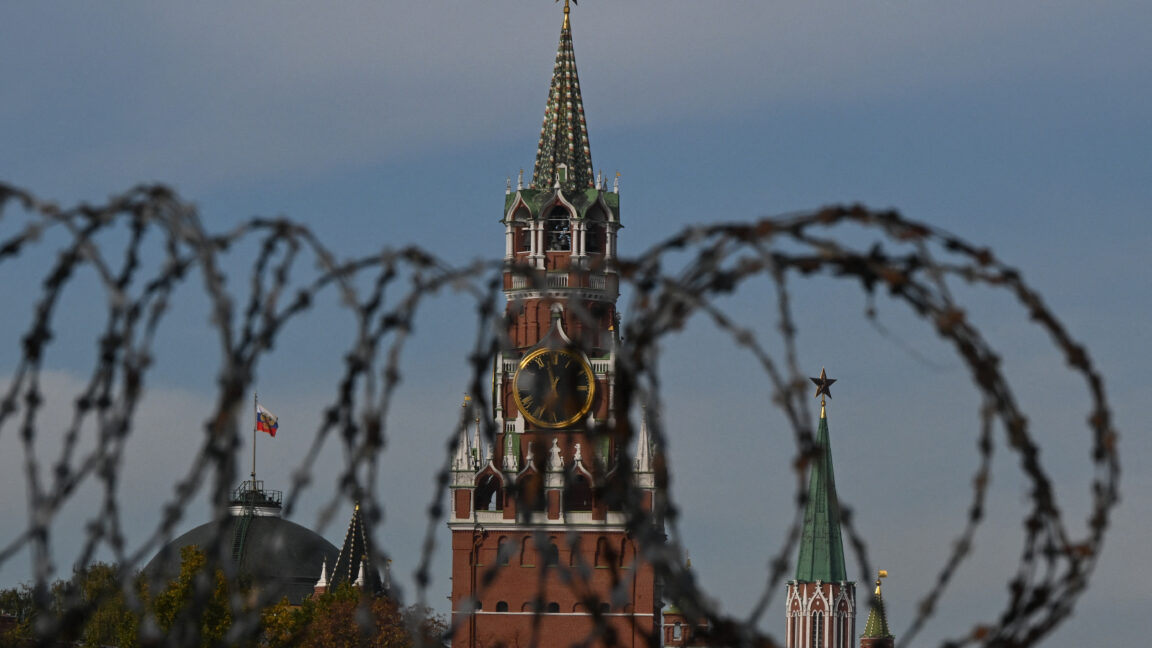
Russia was not ready for the data center war it started with Ukraine

When Russia began attacking Ukrainian data centers and telecommunication infrastructure, it apparently failed to prepare for possible retaliation. Now Russia’s digital services are facing widespread outages after Ukrainian drone strikes knocked out three of the largest data centers owned by Russian tech giant Yandex within several days.

Pro-Kremlin bloggers are warning that Russia’s centralized digital economy could collapse because the country is not prepared for the “data center war” it started, according to posts translated by the pseudonymous independent researcher ChrisO_wiki. The Russian commentators also suggested that Ukraine’s decentralized digital services could prove more resilient than Russia’s system if the countries continue trading such blows.

Russia initially launched a drone strike campaign targeting Ukrainian data centers and mobile phone networks in late September. The attacks temporarily disrupted Internet and cell phone service for up to 100,000 households in the Ukrainian capital of Kyiv and came as part of a broader long-range strike campaign that has involved Russian missiles and jet-powered drones hitting Ukraine’s power grid infrastructure, transportation hubs, and even residential apartment building blocks.

Read full article

Comments

© Igor IVANKO / AFP via Getty Images

❌