Reading view

There are new articles available, click to refresh the page.

Tech Moves: Microsoft, Amazon and Kestra promotions; Gradial names CMO; Yoodli adds VP
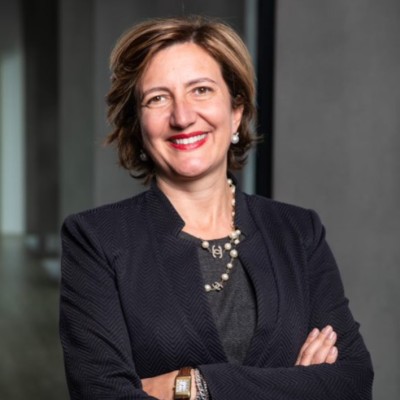
Silvia Candiani. (LinkedIn Photo)

Silvia Candiani has been named corporate vice president of Worldwide Telco & Media within the Microsoft Frontier Company, a $2.5 billion initiative launched by the tech giant in July to embed engineers inside customers to build and run AI systems. In her new role, Candiani will lead Microsoft Frontier Company’s work with some of the largest telecommunications operators and media conglomerates.

“The momentum across our industry is extraordinary, and I believe we are only at the beginning of what AI can make possible,” said Candiani, who is based in Milan.

Before joining Microsoft in 2010 as a general manager, Candiani was a marketing director for Vodafone in Italy for more than a decade.
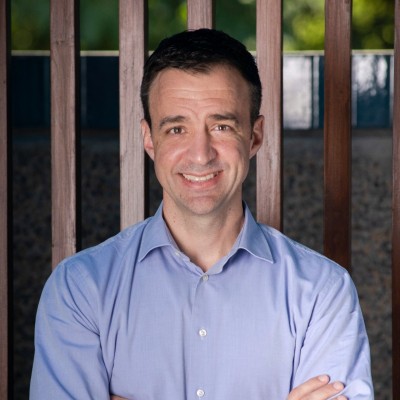
Kevin Frey. (LinkedIn Photo)

Kevin Frey has been appointed vice president and chief impact officer of Microsoft Elevate, the company’s philanthropic effort providing technology support, donations, sales and AI training for educational organizations and nonprofits. Frey joined from UNICEF, where he was the first CEO of Generation Unlimited, the organization’s skills and employment initiative.

Frey said he was joining Microsoft because it’s “one of the only organizations in the world with the scale, scope and influence to bend the arc of the AI-powered future we are entering.”

“I will be spending my time and energy trying to ensure that the benefits of AI are shared broadly and safely across society — by every teacher, every student and every worker — regardless of their postal code,” he added.

— And while we’re on Microsoft, Anne Linge has been promoted to director of communications for commercial and consumer experiences after nearly 10 years with the company. She previously worked in communications at Weber Shandwick and Waggener Edstrom Worldwide, which has since rebranded as We.
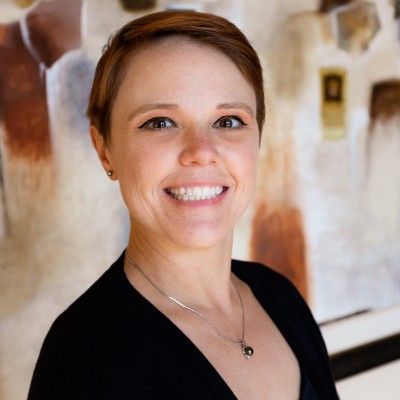
Alexis Bateman. (LinkedIn Photo)

Alexis Bateman has been promoted to director of global sustainability at Amazon Web Services after more than five years with the company. She was director of the MIT Center for Transportation & Logistics for 14 years before coming to Amazon.

Her work with AWS has given her the chance to help “shape sustainability at enormous scale,” Bateman said. “AI and cloud are transforming technology and society at an unprecedented pace, creating both enormous challenges and incredible opportunities for sustainability.”
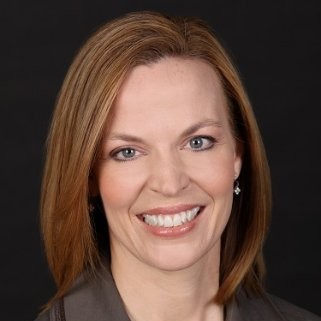
Lynn Girotto. (LinkedIn Photo)

Gradial has appointed Lynn Girotto as chief marketing officer. In June, the Seattle startup announced $65 million in new funding for its agentic AI platform that automates enterprise marketing. The company is No. 127 on the GeekWire 200, a ranked index of the Pacific Northwest’s top startups.

Girotto joins from Qualtrics, where she was CMO for two years. She has previously led marketing teams at companies including Vimeo, Tableau and Getty Images, and was a senior director at Microsoft for nine years earlier in her career.

“The best marketers I know want to build ideas and customer relationships, not manage processes,” Girotto said. “Gradial is the first company I’ve seen that’s built to give them that time back.”
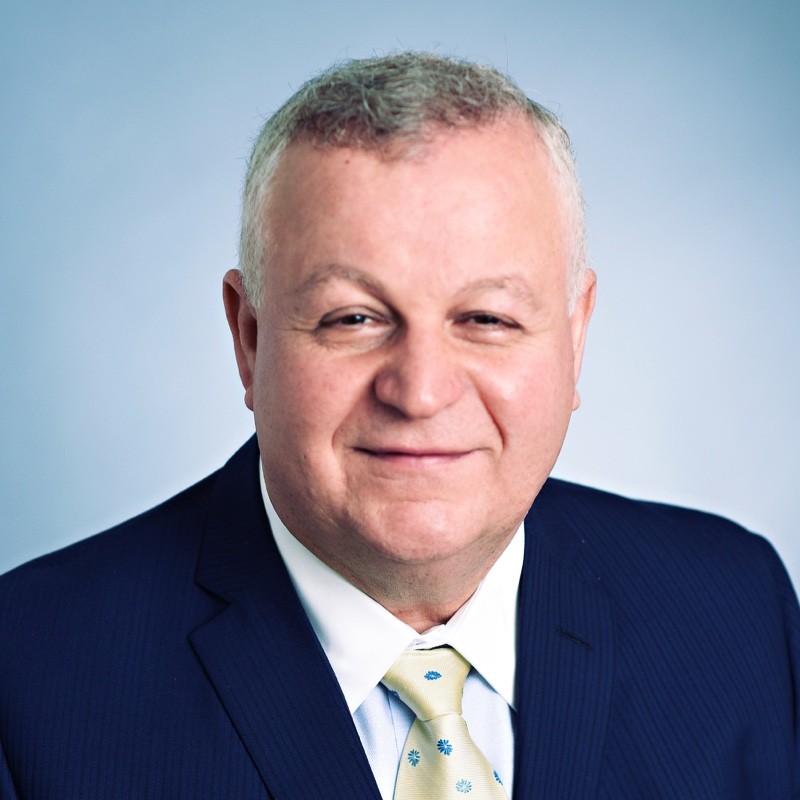
Kam Ghaffarian. (LinkedIn Photo)

— A Seattle-area nonprofit group known as the Fermi Explorer Mission announced that Kam Ghaffarian has joined as co-founder. Earlier this month, the organization shared its plans to send a spacecraft on an 80,000-year trip to the nearest alien star system, Alpha Centauri.

Ghaffarian is a billionaire who helped launch companies including X-energy, Axiom and Intuitive Machines. “By committing to launching a spacecraft to Alpha Centauri by 2029, we are not just pushing the boundaries of current technology; we are inspiring a new generation to look up and dream of interstellar exploration,” Ghaffarian said.

Philip Johnston, co-founder and CEO of the Fermi Explorer Mission, also leads Redmond, Wash.-based Starcloud, a startup aiming to launch up to 88,000 satellites to serve as AI data centers.
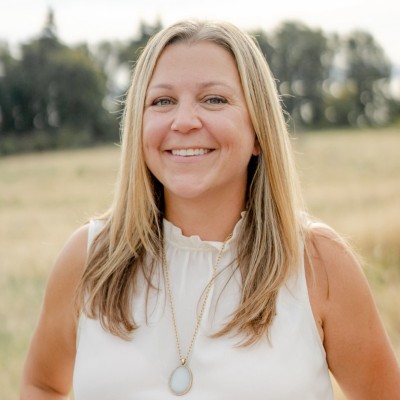
Rachel Cougan. (LinkedIn Photo)

Yoodli, the Seattle-based AI roleplay platform for enterprise training, has named Rachel Cougan vice president of human resources. Cougan previously served as a fractional HR leader through her consultancy, Possible HR. Before that, she was VP of people for Logixboard and Hiya, and also served as VP of talent for Textio.

Yoodli, which launched in 2021, has grown to more than 100 employees. The company is No. 17 on the GeekWire 200.
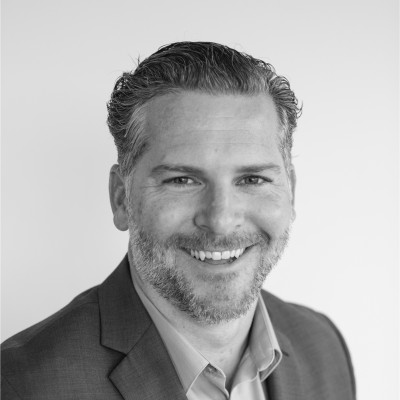
Daniel Finney. (LinkedIn Photo)

Kestra Medical Technologies has promoted Daniel Finney to vice president of research and development. The Kirkland, Wash.-based company sells cardiac monitoring and therapeutic devices. It raised $202 million in its IPO in March 2025 and was nominated for Deal of the Year at this year’s GeekWire Awards.

Finney has been with Kestra since 2019. CEO Brian Webster praised his role in developing the company’s FDA-approved monitoring device, adding that his “technical depth, product experience, and demonstrated leadership positions him to guide our next phase of innovation.”

Finney succeeds Phillip Foshee, Jr., who recently retired after leading Kestra’s R&D organization for nearly a decade.

PATH has named Dr. Jeremy Farrar chief of its Asia, Middle East and Europe regional division. Farrar, a globally recognized leader in public health and clinical medicine, will join PATH effective Oct. 1 and be based in Geneva. His past roles include assistant director-general at the World Health Organization and director of the Wellcome Trust.

PATH CEO Nikolaj Gilbert praised the appointment, and noted that Farrar “possesses deep knowledge of the realities that prevent access, the people that make health care possible, and the need for PATH’s mission of ensuring breakthrough innovations reach all who need them.”
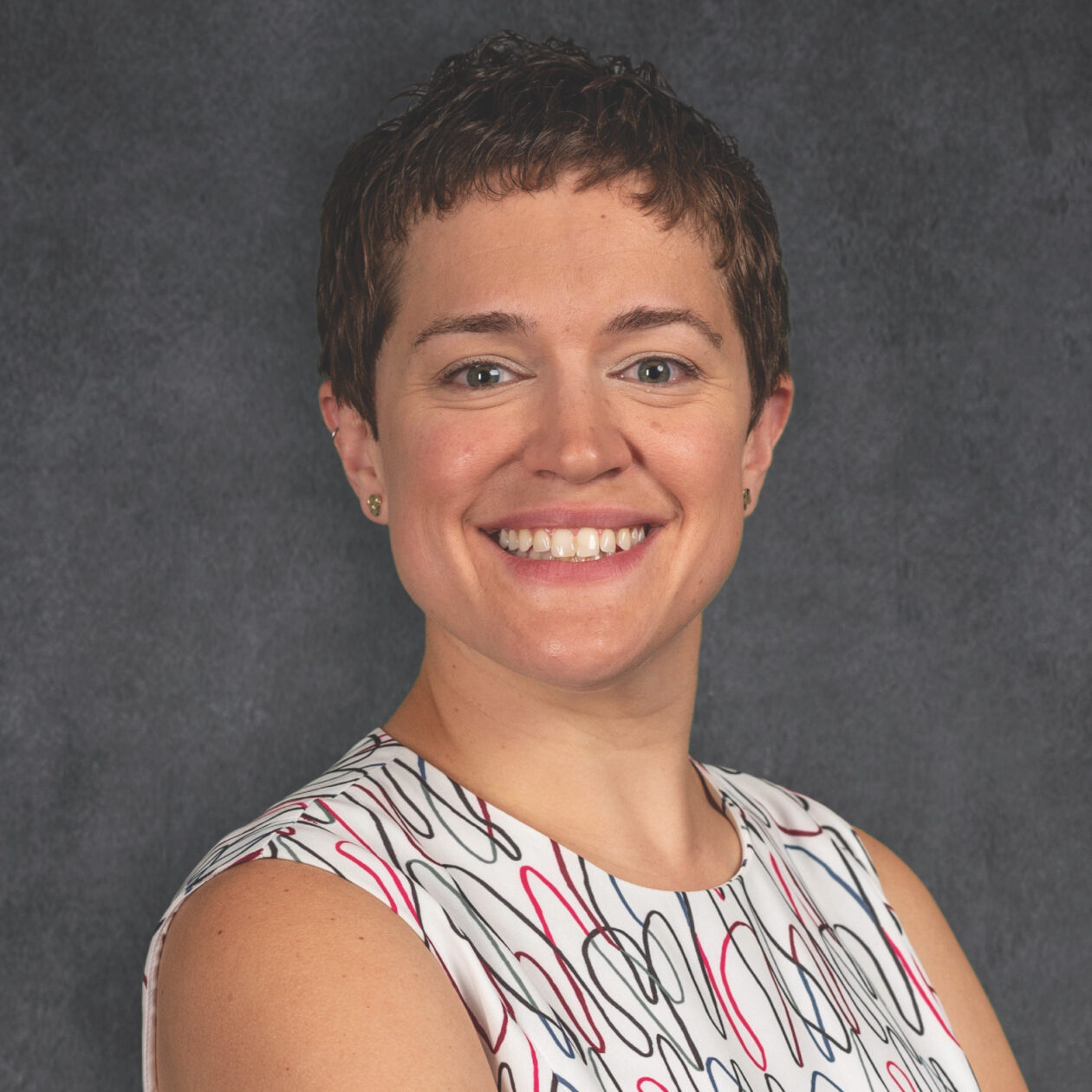
Emily Levesque. (AAS Photo)

American Astronomical Society (AAS) announced that University of Washington scientist Emily Levesque is the next editor in chief of the AAS journals. She will succeed Ethan Vishniac, who is stepping down from the role at the end of summer 2027 after 12 years.

“In the writing and publishing landscape we’re facing today, sharing information has never been easier, but trusting information has never been harder — which makes the AAS journals’ combination of rigorous peer review and accessible science more valuable than ever,” Levesque said.

Levesque has been an assistant astronomy professor at the UW for 11 years. She leads the massive stars research group, which studies the evolution and death of the largest and “most extreme” stars in the universe.

— The Seattle Metropolitan Chamber has added eight members to its board of trustees:

  • Deniz Anders, Nordstrom’s executive vice president and chief marketing officer
  • Reuven Carlyle, founder of Earth Finance and former state senator
  • Carl Gipson, vice president of government and community affairs for Comcast
  • Trevor Gooby, executive vice president and chief operating officer for the Seattle Mariners
  • Daniel Huber, BNBuilders’ vice president of operations for the Northwest and Colorado
  • Karen Lee, CEO of Plymouth Housing
  • Holli Martinez, vice president, head of belonging, recognition and corporate responsibility for T-Mobile
  • Rajat Puri, executive vice president and chief operating officer for Premera Blue Cross

Microsoft comms chief Frank Shaw to exit after nearly three decades shaping the company’s message

Frank X. Shaw addresses the media at Microsoft on May 18, 2025, in advance of the Build conference. (GeekWire Photo / Todd Bishop)

It’s the end of an era at Microsoft: Frank X. Shaw, the executive who oversaw the tech giant’s communications for nearly three decades, first at an external agency and for the last 17 years as one of its senior leaders, is leaving at the end of the year.

Shaw, 64, said he’s not retiring, although he doesn’t have another job lined up. He plans to stop working for a while, do some of the things he hasn’t had time for, and then decide what’s next.

“I have had a ringside seat at some of the biggest leadership, technology, and business transformations that have ever taken place,” Shaw said, sharing the news of his departure (under embargo) in a phone call Thursday afternoon. “I just feel incredibly fortunate.”

He said he had been discussing his potential departure for some time with Takeshi Numoto, Microsoft’s chief marketing officer, looking for the right moment.

Microsoft has not announced a successor for his role as chief communications officer. In a LinkedIn post, Shaw said the company will consider internal and external candidates.

A statement from Shaw’s colleagues in corporate communications credited him for his many years shaping Microsoft’s “voice and reputation with intelligence, candor and wit. His leadership and contributions to the company are too extensive to list, as is the number of journalists who have, at one point or another, used his name in vain.”

A former Marine Corps public affairs officer, Shaw has worked with all three of Microsoft’s CEOs. He started on the agency side, at Waggener Edstrom — now known as We. Communications — when Bill Gates was still running the company.

He built his reputation defending and advocating for Microsoft through some of its hardest stretches: the antitrust years, the Windows Vista backlash, the scramble to replace Steve Ballmer as CEO, and the weekend in 2023 when OpenAI’s board fired Sam Altman.

As the company’s top communications executive, he has also told the story of Microsoft’s reinvention under CEO Satya Nadella, from the LinkedIn and Activision Blizzard deals to an AI push that has carried Azure past $100 billion in annual revenue.

Evolving with technology: Shaw has spent much of his career closely watching the tech landscape and moving Microsoft’s voice into new channels as they emerged.

“We’re always thinking about what is the art and science of communications,” Shaw told PRWeek. “How do we reach our audiences most effectively in a changing environment?” He called the arc from print to radio and TV to social media and newsletters a “constant evolution of influence.”

He turned the corporate blog into a place where the company argued its own case, writing “Microsoft by the numbers” himself in 2010 — a stat-by-stat comparison against Apple and Google that TechCrunch dubbed “fantastic passive-aggressive.”

He and his team experimented with different and risky methods of telling the company’s story, holding mass briefings under embargo and publishing documents known as the “Book of News” in advance of its major keynotes and conferences. The prospect of a reporter having to answer to “fxs” was no doubt a factor in ensuring the news (mostly) didn’t leak.

Shaw hired Steve Clayton out of a technical role at Microsoft in London, where he had been blogging about the company unofficially out of frustration with how it was perceived, and made him chief storyteller. In the middle of the AI boom, Clayton and Shaw embraced the analog undercurrents in popular culture and launched Signal, a quarterly Microsoft print magazine for business leaders.

Clayton was VP of communications strategy by the time he left in January to become chief communications officer at Cisco, making Shaw’s planned departure the second high-profile exit from Microsoft’s comms team in a year.

Adapting to AI: In recent years, Shaw made his own team a testing ground for AI, publishing what worked and what didn’t. In a 2023 post he described using Copilot in Teams to pull story ideas out of conversations with spokespeople and anticipate coverage after interviews, and asking the AI to “poke holes in a statement we’re making on a tricky topic.”

He called it his corporal, a reference to Napoleon, who was said to bring one to meetings and ask whether his generals’ war plans made sense to him. A survey of 80 people in Microsoft’s communications and marketing organization found 84% did not want to go back to working without it.

Shaw was also known to use AI as a sounding board when a story frustrated him, offering him an objective take before he called and let a particular reporter have it.

He announced his departure Friday morning in a message to Microsoft’s communications team (reminding them he’s still there for a few months yet) and his public post on LinkedIn.

“Thank you as well to all the reporters, editors, writers, influencers and analysts who have put up with me over this time, enduring my early and late night calls, my off the record ‘no comments,’ my bad story ideas and my extended commentary on headlines and positioning,” he wrote.

“You all have incredibly hard and valuable jobs,” he added, “and while I’ve not agreed with everything said about us 😊 I appreciate you anyway.”

Artemis II commander and pilot become NASA's first astronaut emeriti

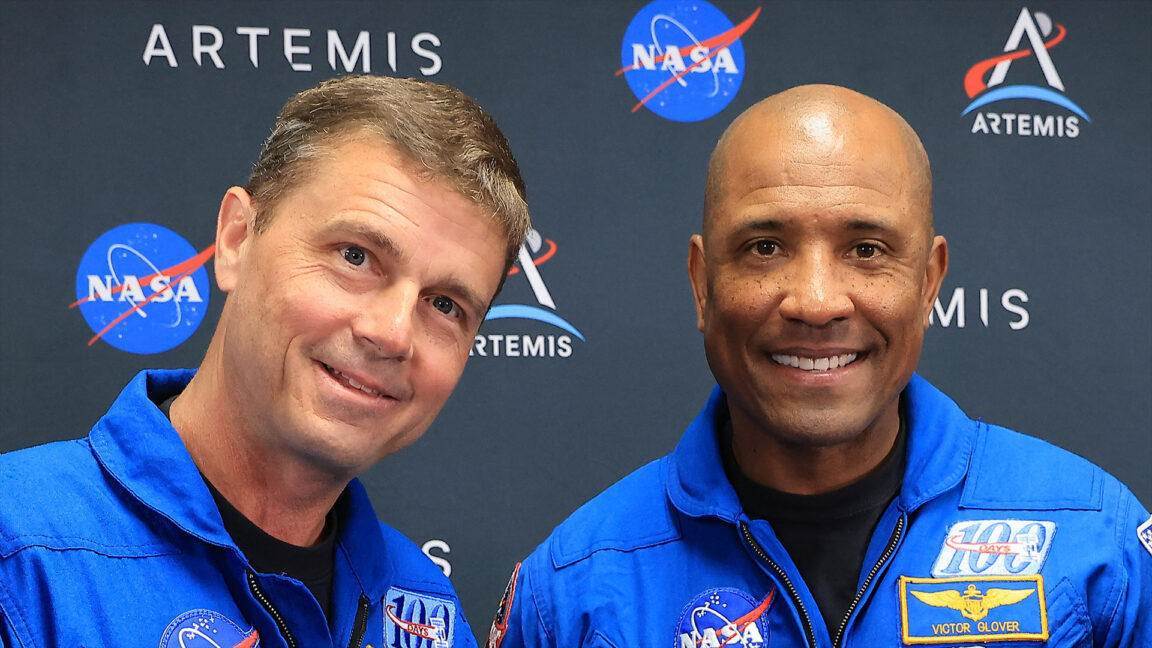
The commander and pilot of NASA's Artemis II mission have gained a new distinction five months after splashing down from the Moon: They're not fully retiring from the space agency.

Reid Wiseman and Victor Glover are the first astronauts to join NASA's emeritus program, enabling them to continue to support the work being done at Johnson Space Center in Houston. They will remain available to train and mentor the current workforce while still being able to pursue employment and opportunities outside of NASA.

"I have asked NASA ... to not use the term 'retire' as much, but technically emeritus is a retirement program," Glover told collectSPACE.com on Wednesday. "It's something we have typically done for scientists when they have groundbreaking research, and they want to go back to academia to teach or to research and publish."

Read full article

Comments

© NASA/Kim Shiflett

Opinion: It’s time for Seattle to believe in Seattle

Seattle’s foundation as a hub of technology, science and innovation runs deep. Its confidence should, too. (GeekWire Photo / Kevin Lisota)

[Editor’s Note: Jacob Colker is co-founder and co-managing director of AI House.]

Seattle is one of the most talented, creative and inventive places in the world. But if we want the rest of the country to see us that way, we have to start acting like we believe it ourselves.

First, we need more pride around here.

Let’s talk about what it means to be proud. 

My mother grew up in Tarnów, Poland. She escaped communism and came to the United States in 1978 looking for a better life. She found one, built a family, and has lived in America for nearly 50 years. 

But my mom is still very, very Polish.

Several times a year, I get a message: “Jakub. Did you see this?”

I already know what’s coming. 

Some Polish person did something. A Polish athlete won something. A Polish scientist discovered something. Some guy with a Polish grandmother finished third in a regional Nebraska chess tournament. Doesn’t matter. Poland.

“Jakub. Look at this person.”

Okay, Mom. Who is she?

“POLISH.”

That’s it. That’s the story. 

And I love it, because Mom has this completely indestructible pride in where she comes from. Plenty of us know someone like this: a Greek mom, Vietnamese dad, Indian uncle or Nigerian aunt. Somebody from their corner of the world did something great, and you are going to hear about it.

There is power in that instinct. Not because your people are better, but because you believe your place matters.

Seattle could use more of that.

We are almost pathologically humble. Our response to notable achievements is often a polite nod before everybody gets back to our regularly scheduled Seattle freeze. 

That humility is working against us.

Second, Seattle is awesome and the evidence is everywhere.

I see Seattle’s potential every day working alongside dozens of entrepreneurs building startups. Some of the most ambitious and talented people in the world are already here.

We have many billion-dollar startups across the region and more than 200,000 people working across technology, science, space, health and startups. That is more than enough talent to build yet a dozen more unicorns. 

Nearly 40% of the world flies every day on airplanes built here. Blue Origin and SpaceX build rockets here. Starbucks, Amazon, Costco, REI and Nordstrom reshaped how the world shops. Microsoft helped put computing into our homes. AWS and Azure helped make the cloud the infrastructure of modern life. The University of Washington ranks among the world’s best. Seattle medical breakthroughs have helped save tens of millions of lives. We are pushing forward fusion energy, aerospace and maritime innovation. And let’s not forget: we just won the darn Super Bowl.

And so, so much more. 

So why, despite all the evidence, do we still seem to have a communal case of imposter syndrome?

This is not a city lacking accomplishments.

It is a city with a branding problem.

Third, we have let other people tell our story for far too long. This ends, today. 

Cities have brands whether they intend to or not. Silicon Valley is where ambitious people build companies. Nashville is music. Los Angeles for film and television.

Seattle’s cultural humility mostly assumes our accomplishments speak for themselves.

They don’t.

Reputation gets built one story at a time. You hear one story and it is interesting. You hear 10 and you notice a pattern. You hear 50 and your beliefs begin to change: That’s where important science happens. That’s where talented people live. That’s where I should invest, build or work.

Those beliefs shape real decisions about where people move, where companies get built and where investors put their money.

So to fix Seattle’s branding problem, here’s what we need to do.

Step 1: Let’s tell one clear story — Seattle’s talent pool is ridiculous. 

Seattle is where deep technical talent meets deep domain expertise to build consequential things: AI, aerospace, cloud computing, medicine, fusion, robotics, maritime technology and enterprise software.

We do not need 50 slogans. We do not need another consultant-led branding exercise. We need one simple idea that people outside this region can remember: Seattle’s talent pool is ridiculous.

There is a reason some of the world’s most important companies have built major engineering centers, research hubs and second headquarters here for decades. They come for the talent.

And that talent is why Seattle will not just participate in the future. We will lead in building it.

Step 2: Let’s use the megaphones we already have.

Seattle already has outlets (including this one) telling this story — publications, podcasts and social channels that document the region’s startups, breakthroughs and product launches. 

Every day, startups are raising money, scientists are making breakthroughs, companies are launching products, engineers are building technology and institutions are pushing this region forward.

That is not just tech news. That is the raw material of Seattle’s reputation. So let’s use it.

When you read or hear about a Seattle startup doing something remarkable, share it. When you see a story about a breakthrough at Fred Hutch or the University of Washington, send it to someone outside the region. When a local company raises money, lands a major customer or gets acquired, don’t just scroll past it. Amplify it.

Step 3: Let’s treat every local win as Seattle’s win.

When a local robotics company ships something remarkable, that is Seattle’s story.

When a maritime startup reinvents how ports operate, that is Seattle’s story.

When our AI research labs, or hometown heroes in Amazon and Microsoft, create breakthroughs, that is Seattle’s story. 

When a biotech company lands a major breakthrough, when a game studio creates a global hit, when a clean-energy company reaches a milestone, that is Seattle’s story.

Our companies, universities, hospitals, labs, investors, civic organizations and business leaders should act like an amplification network for one another. Stop treating somebody else’s success as somebody else’s news.

Their win is our collective proof.

Step 4: Let’s put Seattle on the label.

Founders need to say where they are building. “Made with ❤️in Seattle” should be on the bottom of every website. Put Seattle in the press release. Put it in the LinkedIn post. Mention it onstage. Say it in interviews. Tell investors. Tell customers. 

Silicon Valley companies have spent decades attaching their success to their geography. We should do the same. If you build something extraordinary here, make sure the world knows it was built here.

Step 5: Let’s do a better job of selling Seattle.

Every venture capitalist, founder, executive and civic leader in this region should be able to explain in 60 seconds why somebody should build a company here.

Not defend Seattle. Not apologize for Seattle. Sell Seattle. 

Reminder: It’s the talent. 

(And also cream cheese on hot dogs.)

When investors and founders from New York, Boston or San Francisco come to town, show them the region. Introduce them to engineers, researchers and entrepreneurs. Bring them into the community. Let them see what is happening. 

The best branding campaign is somebody getting on a plane home saying, I had no idea all of this was happening in Seattle.

If we’re going to succeed, we need to believe first.

Insert all the Ted Lasso jokes you want, but this stuff matters. 

There is no giant Seattle marketing department coming to save us. There is no national referee who will eventually review the evidence and declare that Seattle deserves more respect.

When somebody here does something extraordinary, act like it. Read the story. Share the post. Send the article to your team. Text it to your friend in New York. Put it in the group chat. Bring it up over dinner. Tell your kids.

Basically, become my Polish mother.

My mom doesn’t give a hoot that Kraków ranks No. 6 on some list or Warsaw is No. 8 on another. She doesn’t need a clickbait listicle to tell her Poland matters. She already believes it does.

We have to build our reputation ourselves. The good news is that we already have everything we need: extraordinary companies, world-class institutions, ambitious people, groundbreaking science and media documenting it all.

What we have been missing is the confidence to start being more loud. Stories become patterns, patterns become reputation, and reputation becomes gravity. 

Gravity is what creates influence and respect.

Pride is not something somebody else gives you. You don’t wait until the rest of the country decides your home is important. YOU decide it is. Then you act like it.

Let’s get to work. 

NLM Photonics adds key investors in quest to reduce the power needed to move data between chips

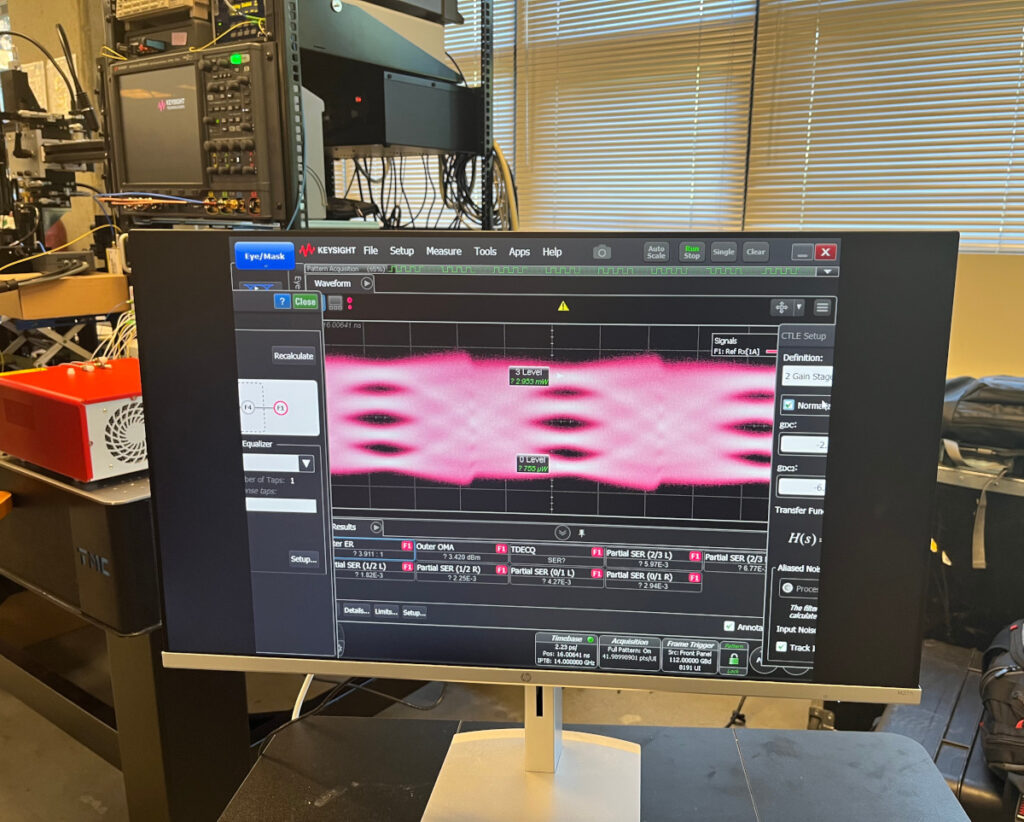
Test equipment measures a chip that uses NLM’s technology, showing how cleanly it carries high-speed data. (NLM Photonics Photo)

NLM Photonics, a Seattle-based chip materials startup and University of Washington spinout, announced two new investors: Pangaea Ventures and Diamond Edge Ventures, the investment arm of Mitsubishi Chemical Corp.

They joined as part of a funding round that totals $13 million, according to a Form D filed with the Securities and Exchange Commission. NLM has reported at least $26 million in funding since 2018, according to SEC filings.

The company offers a way to move more data without burning more power. Inside a data center, information travels between chips and servers as pulses of light. The part that puts the data onto the light beam, called a modulator, is normally made of silicon. It limits how much data a link can carry, and how much power that takes.

NLM’s technology, sold under the name Selerion, is an organic electro-optic material that goes on as a liquid and hardens in place on the chip, taking over the modulator’s job from the silicon underneath. The company says it does the work 10 to 15 times more efficiently.

Applications for the technology include fiber-optic networking equipment and the links between servers in AI data centers. NLM says it could also be used in quantum computing.

Five existing investors participated in the round, which the company described as a Series A2: Emerald Technology Ventures, Oregon Venture Fund, Idemitsu, Tokyo Ohka Kogyo and StoryHouse Ventures. Private investors and company employees also took part.

Pangaea Ventures, which has offices in Canada, the United States and Japan, backs startups built on advances in materials, chemistry and biology. It says it has invested in more than 40 companies over more than 20 years. David Weekes of Pangaea is joining NLM’s board, which already includes Frank Balas of Emerald.

Diamond Edge Ventures, led by president Curtis Schickner, has $200 million to invest through 2030. It backs companies in Mitsubishi Chemical’s core markets, including advanced materials, polymers and electronics, and its portfolio includes Boston Materials, DigiLens and Eridan.

Hamamatsu Photonics, which invested previously, is not part of this round but is still a shareholder, according to the company.

The company was incorporated in 2018 as Nonlinear Materials Corp. It licensed its patents from the University of Washington, building on 25 years of research there in the labs of chemists Larry Dalton and Bruce Robinson. Robinson is one of the company’s co-founders, as is Lewis Johnson, a longtime UW researcher who is chief technology officer.

Pack Ventures, the UW-affiliated venture fund, is an investor in NLM and is also listed among the advisors to its board.

GeekWire covered NLM’s launch in 2019, when the company was raising a $1.25 million seed round and running a small production lab on campus.

NLM Photonics CEO Brad Booth. (NLM Photo)

Brad Booth, who spent nine years at Microsoft and joined NLM’s board in 2023, took over as CEO in 2024 from co-founder Gerard Zytnicki, who is now a corporate advisor to the company. The company raised $1 million from Tokyo Ohka Kogyo and Hamamatsu in 2023.

Last year NLM said outside testing confirmed that a 1.6-terabit chip combining silicon with its materials ran at 224 gigabits per second on each of eight channels. It started sending samples of 1.6- and 3.2-terabit chips to customers in March.

NLM is not alone in trying to build a better modulator. Lightwave Logic, a publicly traded Colorado company also working with organic materials, named NLM among its smaller competitors in its annual report for 2024.

Some of the company’s rivals have raised a significant amount of funding. HyperLight, a Harvard spinout that uses a crystal called lithium niobate instead of an organic material, has raised $117 million, including $80 million in June led by MediaTek.

NLM has worked to get its materials onto other companies’ production lines. In March the company said the chips going out to customers were made at GlobalFoundries, and that it had built modulators using Tower Semiconductor’s high-volume silicon photonics process.

Tech industry’s robotics talent crunch has UW’s new grad program nearly full before day one

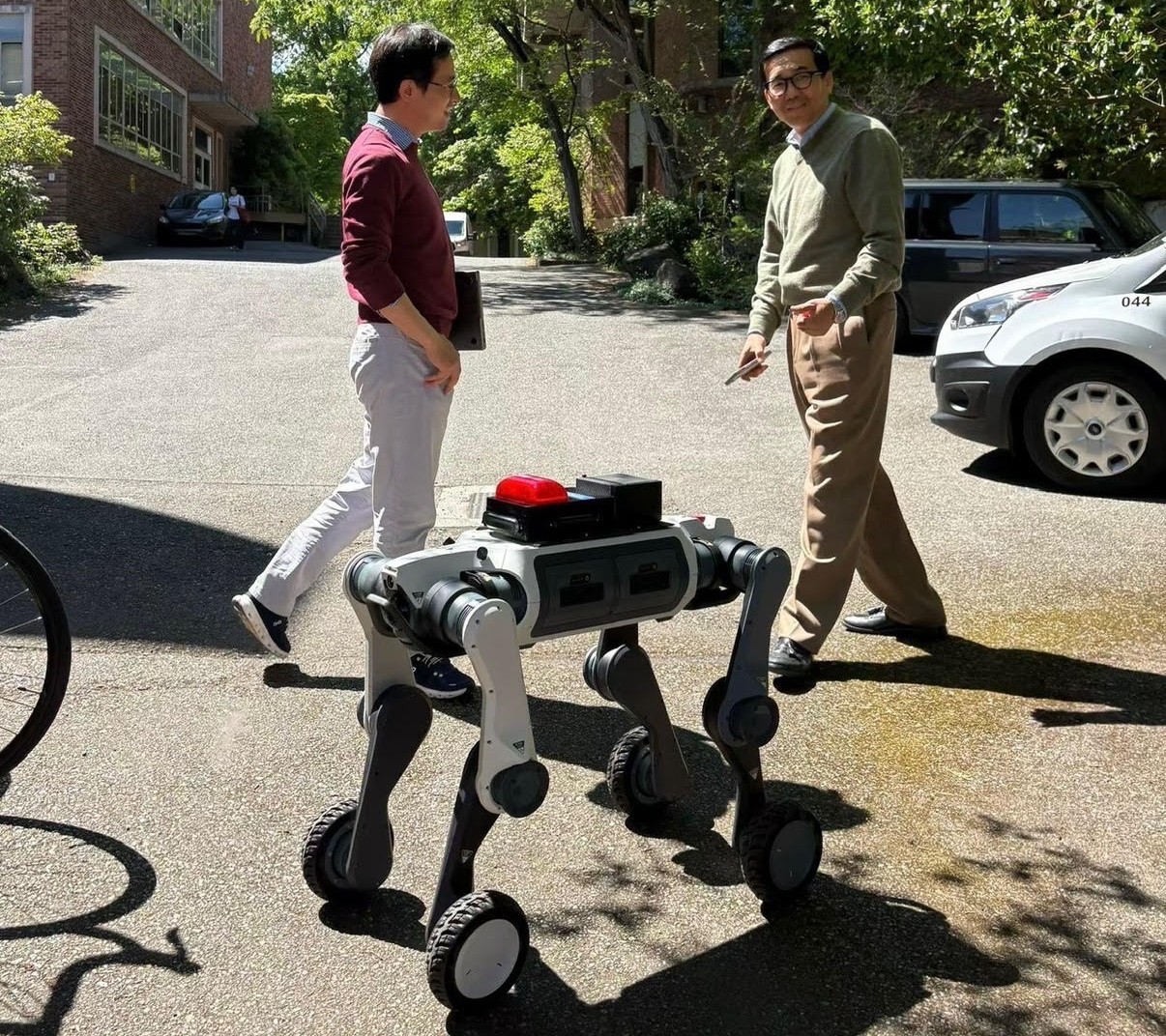
University of Washington College of Engineering Vice Dean Jihui Yang, right, and professor Xu Chen walk a robot dog on the UW campus. (Photo courtesy of Xu Chen)

Robotics jobs in the Pacific Northwest are multiplying faster than universities can train people to fill them. The University of Washington thinks it has an answer — or at least a start.

This fall, UW’s College of Engineering will launch its first robotics graduate programs: a Master of Science in Robotics and a Graduate Certificate in Applied Robotics

The university capped enrollment at 35 students for the inaugural cohort. More than 30 people had already signed up for an information session before applications even opened. It’s an  early signal, engineering leaders say, of pent-up demand from regional powerhouses racing to hire engineers who can operate at the intersection of AI, software and hardware.

Program leaders say that skill set is rooted in a traditional, narrowly focused engineering degree that hasn’t kept pace with the rapid evolution of technology. UW is betting that the fix lies at the intersection of AI and hardware, echoing an industry buzzword called “physical AI.”

“Robotics is no longer confined to a single discipline,” said Xu Chen, a UW engineering professor and director of the Boeing Advanced Research Collaboration, who played a large role in the committee that designed the new programs. “The future will need a wide variety of robotics knowledge, and that’s what we built these programs to deliver.”

Applications opened Sept. 1 and will close Sept. 10, with UW aiming for a roughly one-week turnaround before notifying applicants. For its inaugural year, the university is intentionally keeping things small: 25 seats in the master’s program and 10 in the certificate track, which is designed for working professionals who want robotics training without leaving their jobs.

Chen said the small first cohort is by design, not a limitation. The goal, he emphasized, is to get the fundamentals right before scaling up. He expects the programs to roughly triple in size within three to five years.

“Companies are seeing newer potential in robotics as advanced computing and the wave of AI technology mature,” Chen said. “They see that their workforce will benefit from a modern robotics program, and that need is really what drove this.”

Getting there will take machines, and lots of them. UW is purchasing robots and computing hardware for its initial course offerings while also leaning on industry donations: robots, GPUs, and computing infrastructure among them, according to Chen.

Amazon and Microsoft anchored the effort early; the list of partners has since grown to include NVIDIA, Boeing, Dassault Systèmes — the French software company behind design tools like SolidWorks — and at least one smaller robotics manufacturer.

“The industry board was incredibly supportive from the start,” Chen said. “We’ve had almost a year of continuous meetings and collaboration with them and with representatives across our own engineering departments.”

The broader structure of the program is meant to make it easier for students from different corners of engineering, such as electrical, mechanical and computer science, to land in the same classroom and eventually choose their own path deeper into robotics through electives.

The program is also drawing on UW’s existing research muscle in the region. It taps directly into the Boeing Advanced Research Collaboration, which Chen directs, along with robotics labs inside the Paul G. Allen School of Computer Science & Engineering. That gives students a line into the same research infrastructure that already feeds Seattle’s aerospace and e-commerce giants. 

The university’s ambitions extend well past this fall’s launch. Chen said UW has already mapped out longer-term plans for an undergraduate robotics degree and, eventually, a Ph.D. program, with the two new offerings serving as the foundation.

For now, the clearest sign of the program’s ambitions arrived this summer in an unlikely form: a pack of robot dogs let loose on UW’s campus.

“Seattle’s hills make it a uniquely difficult place for robots to move around, which is exactly why it’s a great place to study it,” Chen said.

Both students and faculty got a chance to operate the robots directly, Chen said. It was a hands-on moment that underscored how much more accessible robotics technology has become in just the last few years.

“It was exciting to see the students so happy to see the robots,” Chen said. “That’s the kind of energy we want to build this program around.”

How a new $7.5M UW facility aims to spark U.S. battery innovation

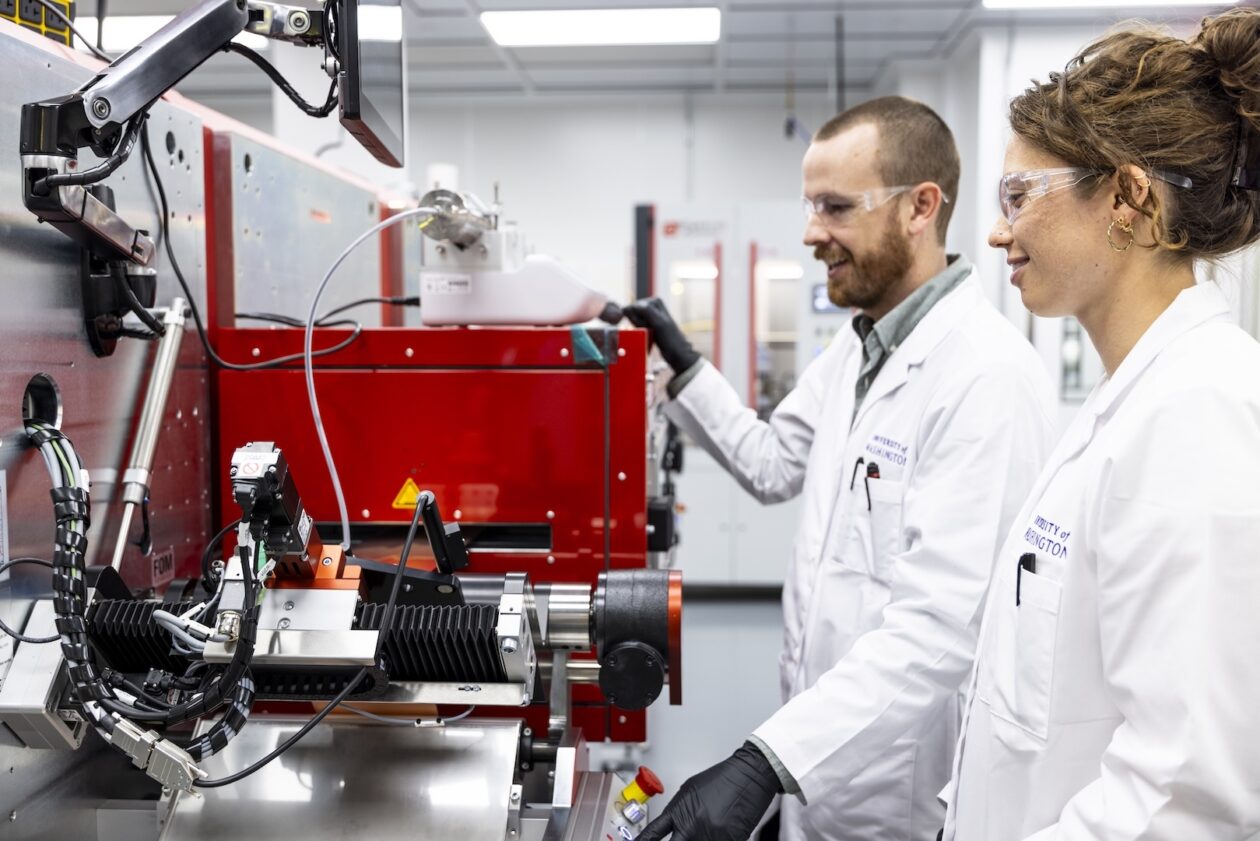
Staff in the Washington Clean Energy Testbeds use machinery in the expanded battery lab. (UW Photo)

The University of Washington on Thursday celebrated the opening of a public-access battery manufacturing lab that aims to propel energy innovation.

The new lab — the first of its kind on the West Coast — is housed within the UW’s Clean Energy Testbeds, a site that has helped launch multiple battery startups.

The expanded facility for researchers and entrepreneurs comes as battery demand surges, particularly for large deployments supporting solar energy and grid operations. Over the past three years, U.S. utility-scale battery storage capacity has grown at an average annual rate of about 70%, according to federal data. Other key applications include batteries for defense and transportation.

While China and other Asian nations overwhelmingly dominate the global supply of batteries, there is still room for U.S. companies to grow, particularly in developing new technologies, said Dan Schwartz, founding director of the Clean Energy Institute, which operates the Testbeds.

“We want to be part of the new chemistries that can serve new markets,” he said.

Those innovations include batteries using sodium or potassium ions, or replacing graphite with silicon-carbon materials in traditional lithium-ion batteries.

The new 1,600-square-foot lab was created by repurposing storage space inside the current 15,000-square-foot testbed facility, located east of the UW’s main Seattle campus. The $7.5 million capital project was completed in February and funded by the state’s Climate Commitment Act, which also supports additional facility staff.

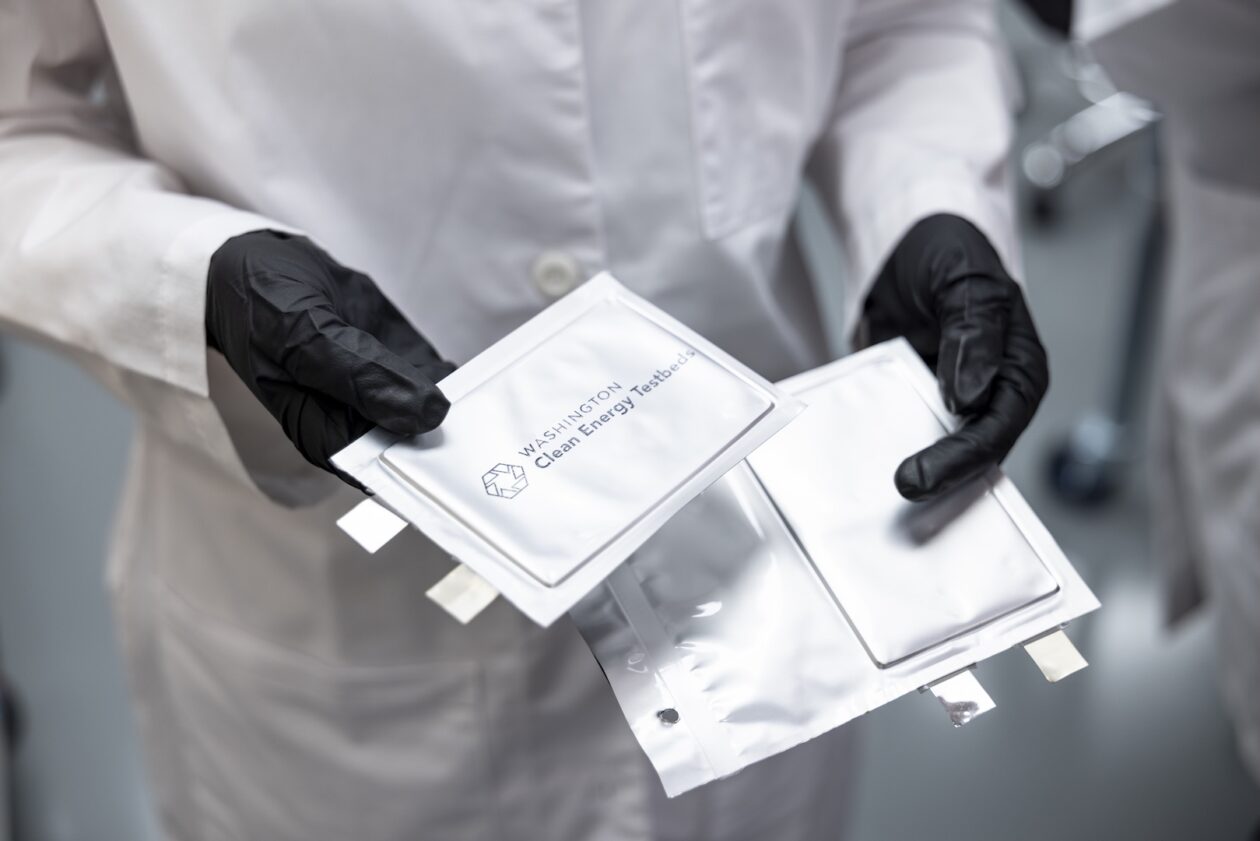
UW researchers holding battery pouch cells. (UW Photo)

The lab is focused on building pouch cells, a format that offers more flexibility than traditional cylindrical cells used in consumer goods. The metallic pouch, which resembles a Pop-Tart package, enables users to create and test both small-scale experimental cells and larger prototypes for wide-ranging applications.

The facility features a dry room equipped to mix electrode slurries, coat electrodes and assemble components inside plastic-lined aluminum pouches, alongside a room with tools to test battery performance. UW experts are on-hand to help.

Seattle startup Emerald Battery Labs produced its first pouch cells in the new facility. The company is developing sodium-ion batteries, which use cheaper raw materials, offer longer lifespans and pose fewer fire risks compared to lithium-ion alternatives.

“We wouldn’t have started this company in Seattle if not for the Testbeds,” said Kjell Schroder, co-founder and CTO of Emerald Battery Labs, in a statement. He added that the facility allows the startup to iterate and produce demo cells “for a range of potential applications without major capital expenditure.”

The UW announced plans for the lab in October 2024 with an expected summer 2025 launch. Permitting challenges and long lead times for high-demand tools delayed the opening until early 2026, Schwartz said.

The entire Clean Energy Testbeds was originally slated to relocate to a new building called Brightwork, but ground was never broken and the project was quietly scuttled.

Schwartz said the new lab is booked out for the coming months. Other companies using the space include a California startup called Project K Energy that’s pursuing potassium-ion batteries. The Testbeds also partners with academic institutions such as Big Bend Community College in Moses Lake, Wash., to offer battery fabrication workshops.

Schwartz sees potential for the facility to support specialized, high-value applications with Pacific Northwest ties, including aviation, data centers and electric semi-trucks.

When it comes to clean energy, “batteries are just winning,” Schwartz said. “And the question is, who’s going to win in all the sectors that batteries are transforming?”

UW pays $600K to settle lawsuit with computer science professor over parody land acknowledgment

University of Washington computer science professor Stuart Reges. (Twinkle Don’t Blink Photo via Fire.org)

The University of Washington has agreed to pay $600,000 to resolve a high-profile First Amendment lawsuit brought by computer science professor Stuart Reges, who was disciplined after including a parody land acknowledgment in a course syllabus.

The settlement, announced Thursday by the Foundation for Individual Rights and Expression (FIRE), follows a December ruling by the U.S. Court of Appeals for the Ninth Circuit that found university officials violated Reges’ academic freedom rights by retaliating against his speech and engaging in viewpoint discrimination.

“I am deeply grateful to FIRE for this legal victory which will remind public universities that they are obligated to respect the First Amendment rights of their students, faculty, and staff,” Reges said in a statement Thursday. He added that he hopes his protest helps reverse “a decade-long trend towards ideological conformity in academia.”

Under the agreement, UW agreed to pay $600,000 to FIRE to cover damages, legal fees, and costs. The settlement prohibits the university from taking further adverse action against Reges or removing the parody statement from his syllabi in perpetuity. While the appeal was pending, UW also rescinded and replaced Executive Order 31, the anti-harassment policy used during the investigation.

The dispute began in January 2022 after the Paul G. Allen School of Computer Science & Engineering recommended that faculty include a statement acknowledging Coast Salish Indigenous lands in their syllabi.

Reges, a teaching professor who has been at the school since 2004, opposed the policy. Instead, he included a parody invoking philosopher John Locke’s labor theory of property to claim Indigenous groups held “almost none” of the land occupied by the university.

UW officials responded by censoring the parody from Reges’ course syllabus, opening a yearlong disciplinary investigation under an anti-harassment policy, and creating a competing “shadow” section of his course so students could opt out of taking his class.

Although the university ultimately declined to formally discipline Reges, officials warned him that repeating the statement could trigger further punishment. Reges sued the UW in 2022, and while a U.S. District Court initially sided with the university, a three-judge panel for the Ninth Circuit reversed that decision, ruling that student discomfort cannot justify retaliating against a professor’s speech on matters of public concern.

Reges’ lawsuit named top university leadership as defendants, including then-UW President Ana Mari Cauce, Allen School Director Magdalena Balazinska, Vice Director Dan Grossman, and College of Engineering Dean Nancy Allbritton. Current UW President Robert J. Jones is named in the final agreement.

The Ninth Circuit panel’s decision established that university teaching materials like course syllabi are protected academic speech, setting a binding First Amendment precedent across public higher education institutions in the Western U.S.

The University of Washington provided the following statement to GeekWire:

“The University of Washington maintains that we acted appropriately, and this settlement is in no way an admission of any wrongdoing. Given the Ninth Circuit’s 2-1 decision overturning the federal district court’s decision in favor of the University, a settlement agreement was the most reasonable option due to the attorney fees and costs that would have resulted from the Ninth’s Circuit’s decision. Prof. Reges has retained his faculty position and continued teaching throughout this process, and his status with the UW remains unchanged.”

Reges remains an active faculty member. Under the terms of the deal, he is free to include the Locke property statement on future course materials without administrative interference.

Read the full settlement agreement here.

AI learns nature’s code: Allen Institute, UW and Fred Hutch launch $95M open science initiative

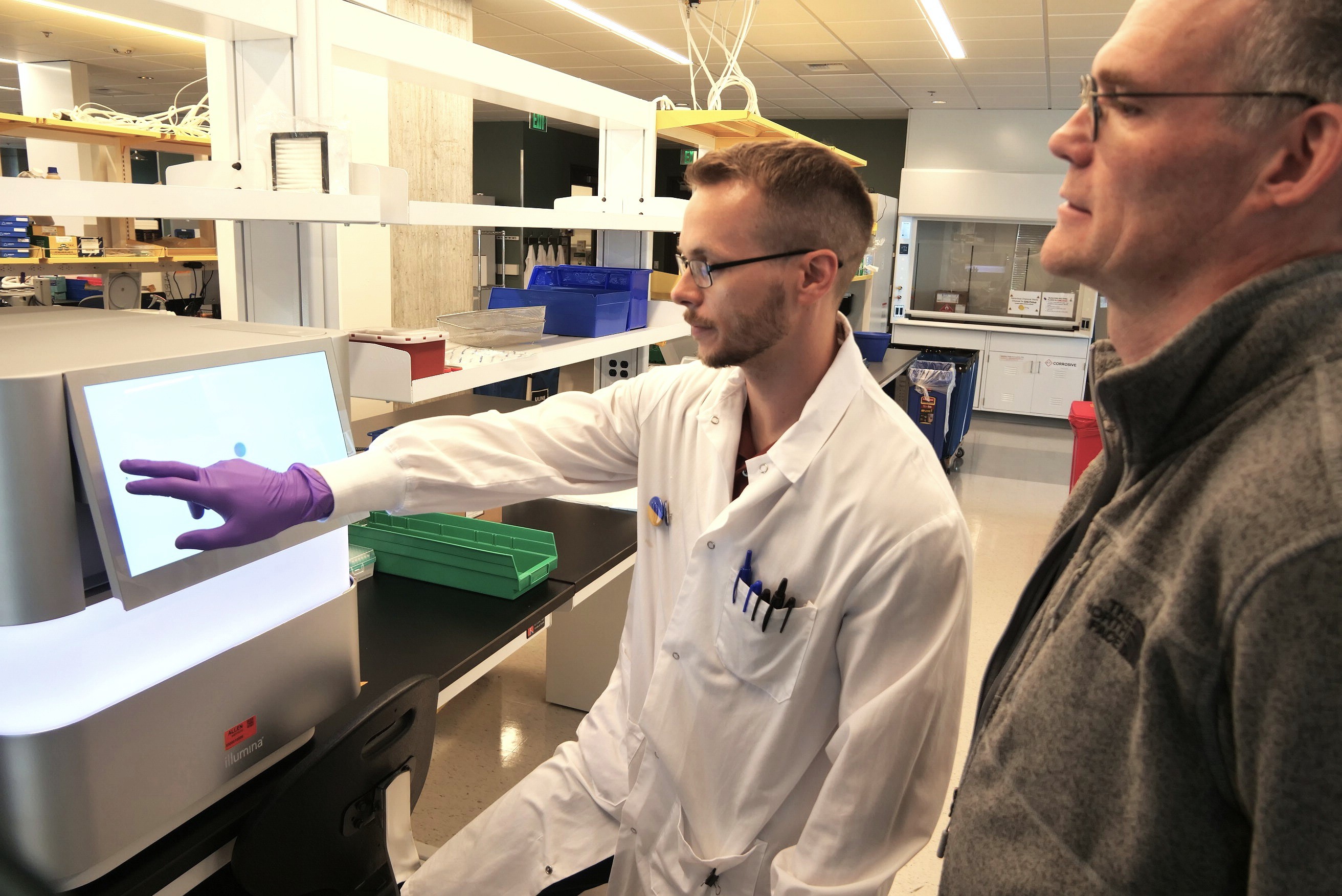
Jack Boylan, left, Allen Institute research associate, and Jesse Gray, AI BioDesign executive director of strategy and platform, at the DNA sequencer inside the initiative’s new lab. It reads millions of designed DNA sequences at once, revealing which ones worked. (GeekWire Photo / Todd Bishop) 

Three of Seattle’s top scientific institutions are launching a nearly $95 million research initiative that will generate data and train AI models to design proteins and genes that don’t exist in nature — sharing the results freely to help others develop new medicines and materials.

The initiative, called AI BioDesign, brings together the Allen Institute, the University of Washington and Fred Hutch Cancer Center, with funding from the Fund for Science and Technology (FFST), created by the estate of Microsoft co-founder Paul Allen.

AI BioDesign is led by David Baker, the UW biochemist who won the 2024 Nobel Prize in Chemistry for using computers to design new proteins, and Jay Shendure, a leading genome scientist at the UW and the Allen Institute.

The plan is to “hijack a lot of the machinery that evolution provided us” — the cellular assembly line that turns DNA into proteins — to design and measure millions of novel biological molecules, Shendure said in an interview in advance of the announcement.

That will help AI models learn the rules of biological design from a huge set of examples, instead of inferring them from the relatively limited number that nature has produced.

The field, Shendure said, is “putting too much emphasis on taking the cranks that we have and just running with them, as opposed to building the right cranks.”

Jay Shendure, right, lead scientific director of AI BioDesign, with research associate Jack Boylan in the lab at Dexter Yard in Seattle’s South Lake Union. (Allen Institute Photo / Jerry Petersen)

The goal is to make designing biology more like ordering a part: a molecule that latches onto a cancer cell, for example, or a genetic switch that fires only inside brain cells and nowhere else.

Potential outcomes could include everything from new therapies for disease, to proteins that dissolve plastic in the environment, to cells that travel through the body in a programmed way, said Sanjay Srivatsan, a Fred Hutch assistant professor who leads the cancer center’s work on the initiative, in a video released with the announcement.

“For the first time, the speed of AI is beginning to match the experimental power of synthetic biology,” Baker said in a statement. “That changes the question from ‘what has nature already made?’ to ‘what else is possible, and how can we test it?'”

Where the money goes

The Fund for Science and Technology is providing $94.6 million for AI BioDesign over five years. The foundation launched publicly last year with a mandate to direct a large share of Allen’s fortune into bioscience, environmental and AI research.

The funding from FFST is allocated as $46.1 million to the Allen Institute, $43.8 million to the UW and $4.7 million to Fred Hutch, according to an Allen Institute spokesperson.

The initiative had 62 people as of mid-August, including some new hires and others redirected from existing projects at the three institutions. The UW accounts for 41 of them, the Allen Institute 13, and Fred Hutch eight. AI BioDesign is expected to continue growing over time.

“AI BioDesign is exactly the kind of ambitious, collaborative science FFST was created to support,” said Marc Malandro, the foundation’s chief programs officer and co-lead, in a statement. He joined FFST in May after nearly a decade at the Chan Zuckerberg Initiative, most recently as chief operating officer of CZI and the Chan Zuckerberg Biohub Network.

Malandro and Chief Financial and Operations Officer Liz Carey have been leading FFST on an interim basis since founding CEO Lynda Stuart stepped down in May.

Inside the lab

On a recent tour of the AI BioDesign lab, research associate Jack Boylan pulled up results from a run he’d done on their new DNA sequencer that morning — on free kits donated by a neighboring biotech company, a year past their expiration date.

“We decided, let’s give it a roll,” he said. It worked fine.

The sequencer is what makes the whole approach possible. It reads all of the millions of DNA sequences in a single tube at once and reports which ones performed. One recent experiment ran 6 million distinct sequences through it at once.

“The scale comes not from robotics, but from parallelizing inside the test tube,” said Jesse Gray, executive director of strategy and platform for AI BioDesign and the Seattle Hub for Synthetic Biology, and a former Harvard Medical School geneticist.

The lab, at Dexter Yard in Seattle’s South Lake Union neighborhood, a short walk from the Allen Institute’s headquarters, is organized into teams of five or six people, each working on a different design problem.

A separate four-person team of machine-learning specialists takes the incoming results and works with the bench teams to decide which experiments come next — the ones that will teach the models the most. Each round is judged on how much the models improved.

Rui Costa, president and CEO of the Allen Institute. (Allen Institute Photo)

The Allen Institute calls projects like this “accelerators,” a term Rui Costa, the institute’s president and CEO, traced back to Paul Allen himself. The word came up in early planning sessions, Costa said. Allen wanted to “exponentially accelerate the field.”

Other accelerators at Dexter Yard include the Seattle Hub for Synthetic Biology, the Allen Institute’s collaboration with the Chan Zuckerberg Initiative and the UW, which Shendure also leads; and Cell Science, which works on engineering cells to assemble themselves into tissues.

The Allen Institute for AI (Ai2), the separate Seattle research organization also founded by Paul Allen, is involved informally rather than as a funded partner, Costa said.

Its robotics team has been talking with AI BioDesign about scaling up the protein work, and the two expect to collaborate on models and on tools that generate research hypotheses.

Why give it away

The decision to focus on open science also came from Allen, Costa said in an interview this week. “He was so visionary in the early 2000s: radically open science to exponentially impact and change fields, not to compete.”

That raises a question the initiative will face as soon as it produces anything valuable: what happens if a company builds a lucrative drug on data given away free? In traditional science, Costa said, being beaten to a discovery counts as a loss. Here it’s the goal.

“We would be so lucky if many companies would be taking this data and changing the world for good,” he said.

At the same time, Costa left open the possibility of the three principal institutions spinning out their own startups, nonprofits, or other initiatives from the work done by AI BioDesign.

Betting against the field

AI BioDesign’s approach runs against much of the current thinking in the field. Costa said most efforts to apply AI to biology are chasing a single general model that could answer questions about how any cell works. AI BioDesign is betting on the opposite: narrow models built for specific design problems, trained on data generated for that purpose.

“This project is a clear bet on a different way of doing things,” Costa said.

The people running the initiative are careful not to oversell. Gray said it remains an open question as to whether their approach beats the alternatives. “The jury’s still out,” he said.

Shendure put it plainly: “It’s never as easy as you think it’s going to be,” he said.

Costa said AI BioDesign needs to show real progress within 18 to 24 months — ideally even sooner — and expand to researchers around the world within five years.

Kids go from curious to frustrated playing with AI-stuffed toys, UW study finds

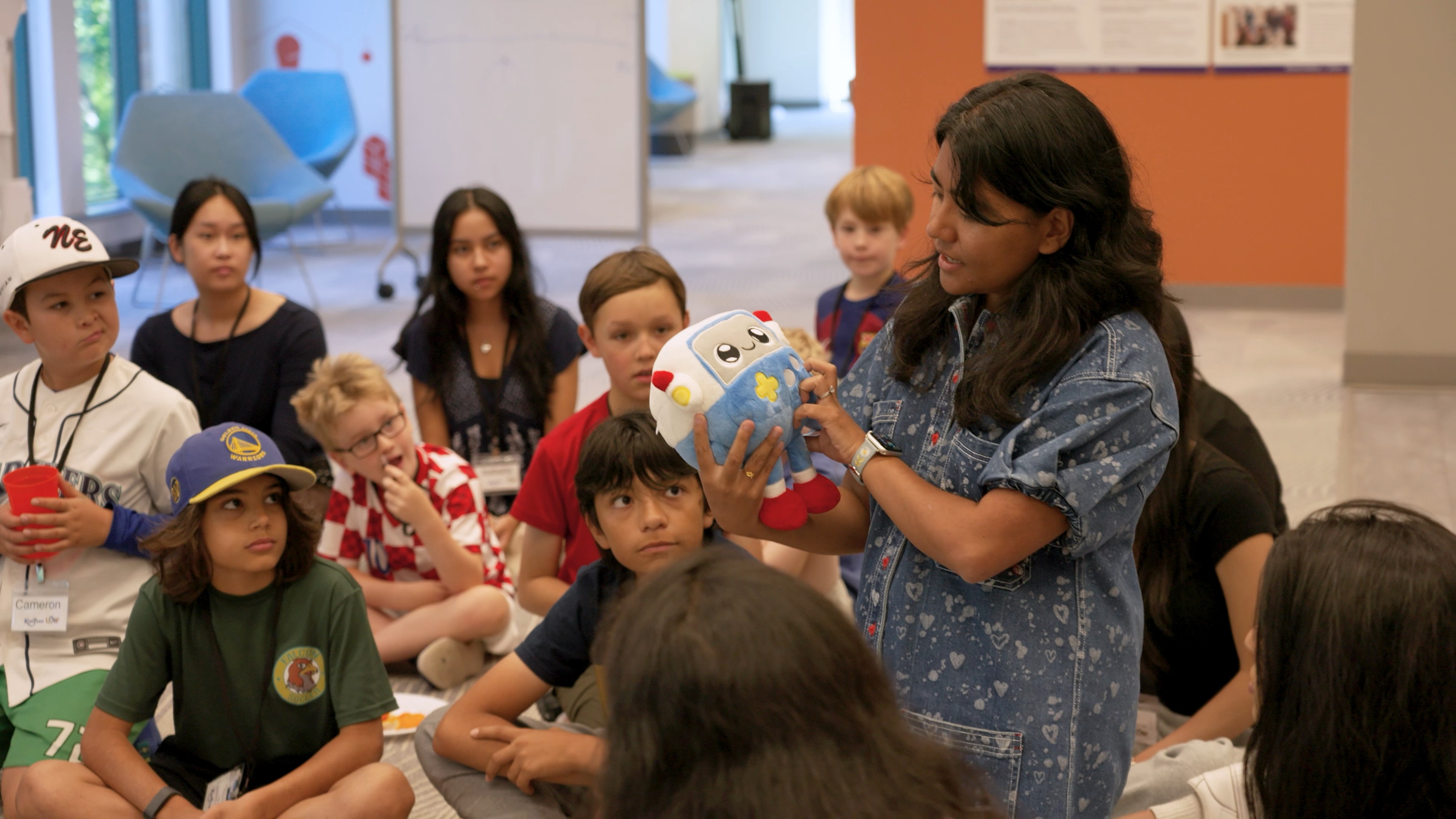
Aayushi Dangol, a recent University of Washington doctoral student in human centered design and engineering, explains an AI toy during a KidsTeam UW session. (UW Photo / Jacob Adams)

We’ve come a long way from Lincoln Logs and Hot Wheels that couldn’t talk to us. Today, plush toys aren’t just stuffed — they’re stuffed with artificial intelligence, and new research from the University of Washington reveals that when these “smart” toys start chatting, kids quickly go from curious to frustrated to outright hostile.

Claims of “smart” toys date back decades, from 1960s talking dolls like Chatty Cathy to 1990s sensor-packed plushies like Microsoft’s ActiMates Barney and Furby.

But generative AI marks a major shift. Companies like Curio are now packing plushies with onboard AI models, allowing characters like “Gabbo” or the viral brainrot figure “Ballerina Cappuccina” to hold dynamic, unscripted conversations, remember past interactions, and adapt directly to a child.

To see how kids actually interact with these conversational companions, researchers at UW’s KidsTeam brought eight children ages 6 to 11 to campus last summer. The kids initially engaged with curiosity — asking basic questions like “What is your name?” and testing physical reactions like tickling the toys’ toes.

But as the toys struggled with complex questions and failed to pick up on physical cues — one participant complained a toy “didn’t listen to me like 26 million times” — delight turned to irritation. Children eventually turned to antagonizing the plushies, calling them “ugly” or “evil” and joking about throwing them in the ocean.

In the video below, kids are asked at one point if they want an AI toy to read them a bedtime story.

“No. It just sounds awful,” one child replied.

“I think it’s gonna destroy my dreams as a tiny kid,” another said.

The study highlights a distinct psychological clash: a cuddly, familiar plush exterior combined with a synthetic intelligence that kids found both fascinating and unnerving.

“The juxtaposition of this plushie toy that also had signs of intelligence was both interesting and disturbing for the kids,” said co-lead author Aayushi Dangol, a former UW doctoral student now at Foundry10, in a UW News story.

While the toys offer dynamic play, Dangol warned parents that generative AI introduces new risks that traditional toys never had, from hallucinating facts to manipulative emotional bonding.

“They’ll give wrong answers, or flatter the kids excessively, or could manipulate the kids into attachment,” Dangol noted.

Beyond conversational glitches, researchers emphasize that synthetic companions fundamentally alter how children play. For generations, kids have supplied their own imagination to make inanimate objects talk and move. Generative AI alters that dynamic.

“Now the script has been flipped and the toy has this imitation of imagination,” said co-author Jason Yip, a UW associate professor in the Information School and director of KidsTeam UW. “We’ve never lived through that before, and we don’t know what questions children will ask or how long they’ll even want to play with these toys.”

Because kids are navigating entirely uncharted territory, Yip stressed the importance of giving young users space to talk through their experiences with the devices filling their bedrooms.

“It’s really important to give them opportunities to discuss these technologies we’re handing down to them,” Yip said.

Making a Robot to Serve Some Mean Badminton Shuttlecocks

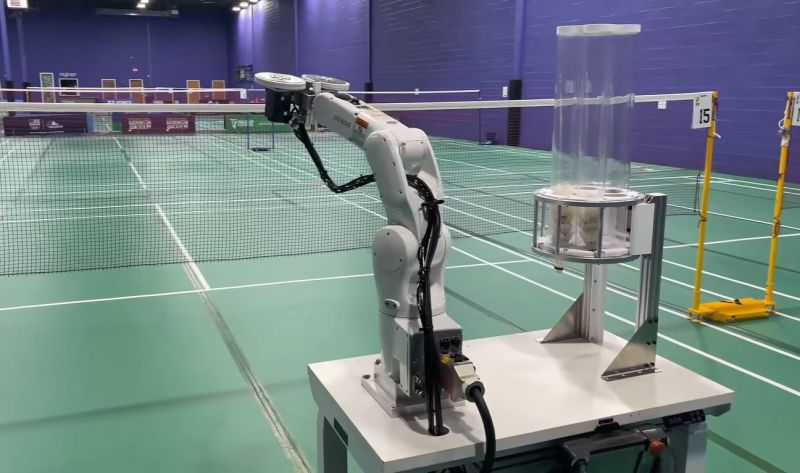
Sometimes regarded as a less violent form of tennis, badminton is still a pretty challenging sport. One which suffers like so many sports from requiring at least two players since magically flying balls and shuttlecocks haven’t been invented yet. After years of tinkering on a shuttlecock serving robot, [Travis Mitchell] hit upon the idea to convert a small industrial robotic arm for the purpose.

The target of this conversion is a positively cute-sized Denso VS050 robotic arm, with Denso helpfully providing a 3D model of the arm as a solid jumping-off point in a CAD project. Here the task of the robotic arm is two-fold: one is to grab a fresh shuttlecock from a hopper with a pneumatic grabber, the other is to feed it into the spinning wheels that grip and launch it. Fortunately [Travis] has a pretty tricked-out workshop available, including the ability to 3D print metal parts, making building the prototype a snap.

After initially thinking of using a Raspberry Pi Pico, he ended up using an ATmega AVR due to the input-output requirements when communicating with the arm. Using a height-adjustable desk as the base, the whole assembly was put together for some testing on the badminton court.

With most of the testing having been done in the shop already, the remaining issue was to determine the best disc material, as the two high-speed discs that grip the shuttlecock must be well-balanced and not stretch too much. Ultimately a 3D printed plastic disc with a silicone strip as gripping surface was found to work pretty well, allowing for the robot to finally start serving its function.

Our 10 favorite scenes from T2: Judgment Day

I'm on record declaring James Cameron's Terminator 2: Judgment Day (1991) to be The Best Damn Sequel of All Time, and I stand by that assessment. August 29, the fictional date (in 1997) of the franchise's original nuclear holocaust, is fast approaching, and Judgment Day is celebrating its 35th anniversary this year. So StudioCanal has decided to mark both occasions with a special theatrical rerelease of the film this weekend. What better time to revisit some of our favorite scenes from this seminal sci-fi action blockbuster?

(Many, many spoilers below.)

Nobody really expected 1984's The Terminator to be a hit, but it racked up an impressive $78 million at the box office against its modest $6.4 million budget. Star Arnold Schwarzenegger was keen to do a sequel, but Cameron was busy with other projects, including Aliens in 1986 (another killer sequel). There were also legal complications over the film rights until Schwarzenegger convinced Carolco Pictures, the studio behind Total Recall (1990), to buy everyone out and hire Cameron to make Judgment Day.

Read full article

Comments

© Paramount/Studio Canal

UW AI researcher wins top Marconi award and aims to put ‘superhuman hearing’ in billions of devices

Malek Itani, a Ph.D. student in the UW’s Paul G. Allen School of Computer Science & Engineering. (Photo courtesy of Malek Itani)

University of Washington Ph.D. student Malek Itani, who co-founded the AI-powered sound enhancement startup Hearvana, has been awarded the prestigious Marconi Society Paul Baran Young Scholar Award for his groundbreaking work in “superhuman” hearing technology.

Selected as one of just three global recipients from a record pool of nominees, Itani was recognized for developing on-device AI algorithms that enable real-time target speech extraction, “sound bubbles,” and semantic hearing on low-power hearables like earbuds and hearing aids.

Itani’s award comes less than a year after he and Paul G. Allen School of Computer Science & Engineering professor Shyam Gollakota co-founded Hearvana, a spinout aimed at commercializing their lab discoveries. The startup raised $6 million in pre-seed funding last fall to bring on-device acoustic intelligence to earbuds, hearing aids, and smart glasses.

By packing tiny, real-time neural networks onto low-power chips, the researchers hope to replace blunt noise cancellation with true semantic hearing — allowing users to filter out city traffic, amplify a single companion’s voice in a crowded room, or create a localized “sound bubble” on demand.

Itani’s work in the UW Mobile Intelligence Lab began with “acoustic swarms” — small, self-distributing robotic microphones that track and separate multiple speakers in a room. He and his collaborators then pivoted to personal audio devices, pioneering neural networks like IF-MLPNet and platforms like NeuralAids. These systems allow complex AI models to handle real-time sound separation directly on low-power wireless hearables without relying on heavy cloud compute or draining battery life.

“Malek has been a key part of every major contribution to the field of superhuman hearing in recent years,” Gollakota told the Allen School Blog. “He entered his Ph.D. with a background in RF and backscatter, but he rapidly mastered audio signal processing and deep learning, which is very impressive.”

“I feel like I’ve hit a niche that’s going to be so transformational, and it’s going to be in billions of devices,” Itani said. “It’s going to change the way we hear the world.”

Itani and his fellow Young Scholars will be formally recognized at the Marconi Awards Gala in San Francisco this November.

As U.S.-China biotech race heats up, Seattle makes its case to D.C.

From left, Marc Cummings, Life Science Washington; Snehal Patel, Sana Biotechnology; Joe Horsman, Madrona Venture Group; Rebecca Bryant, Fred Hutch Cancer Center; and Alex Zanghellini, Arzeda, at a Seattle forum hosted by the National Security Commission on Emerging Biotechnology on Tuesday. (GeekWire Photo / Sydney Jackson)

Arzeda designs enzymes for products ranging from laundry detergent to stevia. But when it comes time to manufacture at commercial scale, the Seattle-based startup often has to look overseas.

That’s why, when a federal biotechnology commission visited Seattle on Tuesday, the industry came forward with a problem: They have the science, but lack the infrastructure and workforce pipeline to keep innovation on U.S. soil.

Arzeda’s designs reach an estimated 1.8 billion consumers worldwide, and the company has spent the better part of two decades building its technology. The company’s enzymes, sometimes designed in days rather than weeks thanks to AI, are largely manufactured in Western Europe and India — with one U.S. contract manufacturing partner in Wisconsin. 

Finding domestic manufacturers with the expertise and capacity to make these specialized proteins has been difficult, CEO Alexandre Zanghellini said. And for a company trying to commercialize new biotechnology, he added, manufacturing delays can be “catastrophic.” 

The federal group visiting Seattle — the National Security Commission on Emerging Biotechnology — was created by Congress to address these kinds of problems. Since 2022, the team of 11 bipartisan experts have examined how biotech intersects with national security, and what the U.S. needs to do to remain competitive with China. 

Last year, the commission drafted a report to Congress with 49 recommendations spanning at least $15 billion in federal investment over five years, with policies to get more private capital into biotechnology, build domestic manufacturing capacity, strengthen the workforce and reduce vulnerabilities in the supply chain. 

Now, with the commission sunsetting in December, its members are taking their case around the country. 

The science is here, the infrastructure isn’t

In Seattle, the urgent matter is finding a way to keep biotechnology breakthroughs in the United States. Alexander Titus, a commission member who has headed AI-focused biotech initiatives in Seattle and nationwide, said Washington stands out for its early innovation and research. 

National Security Commission on Emerging Biotechnology commissioners Alexander Titus, left, and Paul Arcangeli speak with attendees at a Seattle biotech forum on Tuesday. (GeekWire Photo / Sydney Jackson)

“Companies like Arzeda are having pretty serious leadership roles in the AI and bio space,” he told GeekWire. “A lot of the work we have done in the commission has revolved around helping the U.S. meet the moment when it comes to this nexus.” 

Institutions like the University of Washington, Fred Hutchinson Cancer Center and the Allen Institute have helped build a deep life-sciences ecosystem in Washington. UW’s Institute for Protein Design, led by 2024 Nobel Prize winner David Baker, has spun out more than 20 companies.

One is Arzeda, which has an increasingly fast agentic workflow that can fine-tune a model, suggest the next experiment, and allow researchers to test thousands of sequences in a single round. The company’s first AI-designed commercial product was a stevia ingredient launched in 2024; it’s now negotiating a $44 million contract with the federal Defense Threat Reduction Agency related to biothreat response. 

While technology is moving quickly, the infrastructure needed to commercialize it is not — creating what Seattle biotech leaders called a “valley of death” between research and manufacturing.

The U.S. has federal funding for basic research, as well as a venture-capital system that can finance early-stage discoveries. But once a company needs to build or access physical infrastructure for commercial-scale manufacturing, the financing becomes much harder. Venture capital investors don’t see the returns attractive enough, Zanghellini said. Banks aren’t eager to finance them, either. 

The pull of overseas manufacturing

Meanwhile, China has spent two decades making biotechnology a strategic priority, and its 2026 Five-Year Plan doubles down on areas including biomedicine, biomanufacturing, pharmaceuticals and brain-computer interfaces. For U.S. companies in the race, that can create an uncomfortable incentive: If the infrastructure is cheaper and faster somewhere else, that’s where the work often goes. 

Last year, Seattle-based Sana Biotechnology canceled plans for a manufacturing plant that was supposed to employ hundreds of workers in Bothell, Wash., instead opting for a contract manufacturer elsewhere to cut costs. Snehal Patel, the company’s executive vice president and chief technical officer, said on Tuesday he’s optimistic the Seattle area could compete on speed and cost with China’s fully integrated supply chain — with the right resources.

Ideally, manufacturing facilities in the U.S. would offer flexibility and knowledge in different products and processes, while ensuring trade secret protection.

The commissioners recognize this need; among their recommendations for Congress is a nationwide manufacturing network for precommercial, bioindustrial product scale-up. That could address the problem Seattle companies face: a startup shouldn’t have to choose between sending manufacturing overseas or trying to build an entire facility itself.

The commission has also recommended requiring companies to disclose points of supply-chain vulnerability in foreign countries of concern. If a geopolitical conflict disrupts the supply of medicines or other biological products, Titus said, the consequences can reach Americans far from any battlefield.

“Being able to keep and maintain our leadership in certain industries allows us to have the edge in any given situation,” he said. “We want our industries to be able to produce here…it’s truly national security in the broadest sense at this point.”

Building the workforce pipeline

To accomplish this, companies need a stronger industrial biomanufacturing workforce.

Rebecca Bryant, Fred Hutch’s director of government relations and a former staffer for Rep. Adam Smith, said while Washington trains well for research, there’s no equivalent pipeline into entry-level biomanufacturing jobs. Titus sees the issue as part of a broader problem of “bioliteracy” — that biology should be a basic problem-solving tool in the same way that engineering, chemistry and computing are, rather than a specialized field understood by few. 

In Washington, the Hutch Advance partnership with Shoreline Community College trains and places lab technicians, while Sana Biotechnology has worked on a model for moving workers into biomanufacturing. Seattle industry leaders suggested a state or federally-supported workforce consortium to bolster the effort. Meanwhile, the commission has urged Congress for more biomanufacturing training support. 

According to the commission, the next three years will determine whether the U.S. remains the global leader in biotechnology or cedes the future to China. Of the commission’s 49 recommendations, Titus said, 26 have been written into law in some capacity. The next step is in the hands of Congress, federal agencies, states and the industry itself. 

The iconic T-38 jets flown by astronauts just got a spiffy new look

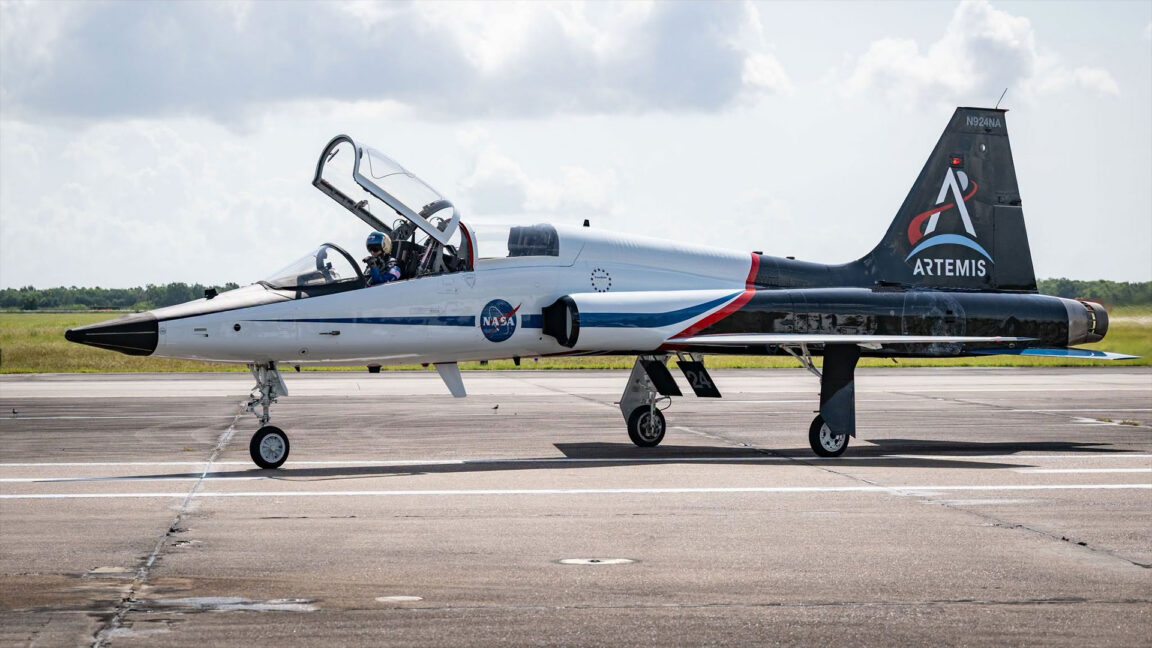
For the first time in decades, NASA has rolled out one of its iconic astronaut training aircraft with a bold, new look.

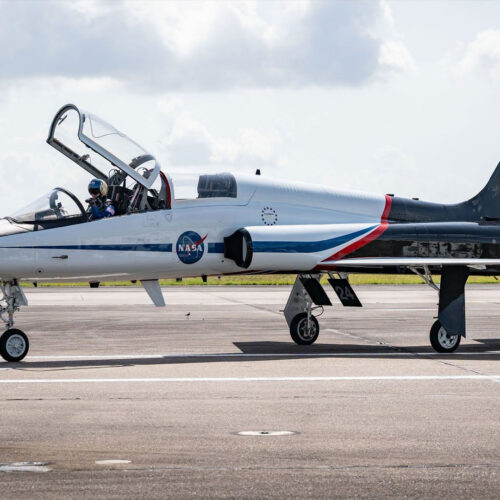
The space agency debuted a new livery on one of its T-38 jets in celebration of its program to return astronauts to the Moon. The Artemis design retains nods to what made the "white rocket" immediately recognizable, but adds a new colorway and painted graphics to make clear where NASA is headed.

"This new 'Artemis' livery has a black and white paint scheme with blue and red stripes that separate those two paint schemes," said Sean Brady, who proposed and designed the new livery while serving as the T-38 project pilot in NASA's Aircraft Operations Division (AOD), part of the Flight Operations Directorate at Johnson Space Center in Houston. "The Artemis program logo in the back and a picture of the Moon is on the left and right side of the rear fuselage."

Read full article

Comments

© NASA/James Blair

You think tech is a circus? This former Facebook engineer quit to focus on a career as an elite juggler

Cory Black is a former tech worker who left his career to focus on juggling, mostly of soccer balls. (Vitz Photography Photo)

Most tech workers are used to keeping multiple projects up in the air at once. Cory Black took the concept to a literal level.

A graduate of the Paul G. Allen School of Computer Science and Engineering at the University of Washington, and a former software engineer at Facebook, Black left his career behind to run away and join the circus.

Today, the work he’s juggling mostly involves soccer balls. Black, a 30-year-old from Bellevue, Wash., is one of the premier soccer freestylists in the world, doing things with his feet and hands that will leave you shaking your head.

Black is fresh off earning a bronze medal at the 2026 International Jugglers’ Association Championships in Fort Wayne, Ind., where he competed against top talent from Japan, Taiwan, and across the U.S.

His 5-minute routine (below) stood out by blending traditional hand-toss juggling with elite soccer freestyle — a rare combination he built over 16 years of kicking a soccer ball around and 11 years of hands-on juggling training.

It all started when he was 14 years old and playing youth soccer.

“My dad challenged me to juggle 100 times with my feet for $100,” Black told GeekWire. “Of course, that’s a ton of money when you’re a kid, so that’s all I did for a few weeks, and I got the money. Then I just started learning some tricks on YouTube and fell in love with learning the next one and next one, and figured out that it was a sport all to itself.”

Black quit traditional soccer in high school to focus entirely on freestyle, traveling to L.A. for his first U.S. Championships at age 16 and later heading to the World Championships in the Czech Republic. Unlike standard field play, soccer freestyle operates more like a breakdance battle, with competitors going head-to-head on stage to impress a panel of judges.

When it came time for college, Black followed his older brother to UW to study computer science at the Allen School. He spent his free time practicing tricks, but at the time, he didn’t view freestyle as a viable full-time career — most of his role models were just booking occasional corporate gigs for brands like Nike or Adidas.

After an internship in Silicon Valley, Black landed a full-time job as a software engineer at Facebook’s (now Meta’s) South Lake Union office in Seattle, where he spent three and a half years working on such things as content monetization tools for creators.

Juggling remained a constant backdrop to his engineering work; he kept juggling balls on his desk, tried teaching his teammates how to juggle, and practiced high tricks after hours in the office lounge. While training at a Seattle circus school, Black struck up a friendship with a former Cirque du Soleil choreographer who saw stage potential in his moves.

“After showing some of my tricks, he told me, ‘Hey, you can make this into a circus act,’ which I had never even imagined,” Black said. “I saw the opportunity … you can actually work with a circus and live with a circus and have a recurring way to support yourself.”

Cory Black is one of the world’s elite soccer freestylists, performing tricks with the ball that go far beyond what professional players pull off in games. (Philip Pavliger Photo)

Black took the leap, leaving Facebook to spend six to eight months building a full, stage-ready routine with his choreographer. To stretch his savings during the training period, he slept on his brother’s floor in Seattle for a year and a half before landing his first circus contract. That led to two years on the road with Flynn Creek Circus, living in a caravan and performing as a featured act.

After two seasons living on the road, Black transitioned into performing as a solo artist, booking corporate events, private shows, and local festivals. That solo pivot paid off big this past summer when Seattle hosted FIFA World Cup matches. Black stayed busy performing 28 separate shows across the city in six weeks, including fan events at Pacific Place Mall and outside the stadium for all six games. He made most of his money for the year during the stretch.

While moving from software engineering to stage performance brought a steep learning curve, Black sees surprising parallels between coding and juggling. He says engineers and jugglers are both drawn to complex patterns that have specific numbers associated with them. Managing five balls in the air fits that bill.

“If you go to local juggling clubs anywhere, there’s an unusually high amount of software people and engineers,” Black said. “Part of it is just being able to tackle hard, frustrating problems. If you haven’t gotten used to banging your head against a wall until you get something, you’re going to give up fairly easily.”

Black does occasionally lean on his engineering skills for side work. He broke his foot in December and took on what he calls “software adjacent” work. He’s also helped build websites for circus friends. But he has no interest in trading his soccer balls for a return to a tech desk job.

“Right now, I don’t plan on going back at all,” Black said. “Also, I don’t know what the landscape looks like after AI has kind of gone through everything.”

For now, he’s perfectly content sticking to debugging physical tricks on stage — where the only glitches in the code are the occasional dropped ball.

❌