Like a real-life episode of "Suits," the demise of famed white-shoe Wall Street law firm Weil, Gotshal & Manges has been the talk of the legal industry. And now an AI firm has entered the picture.
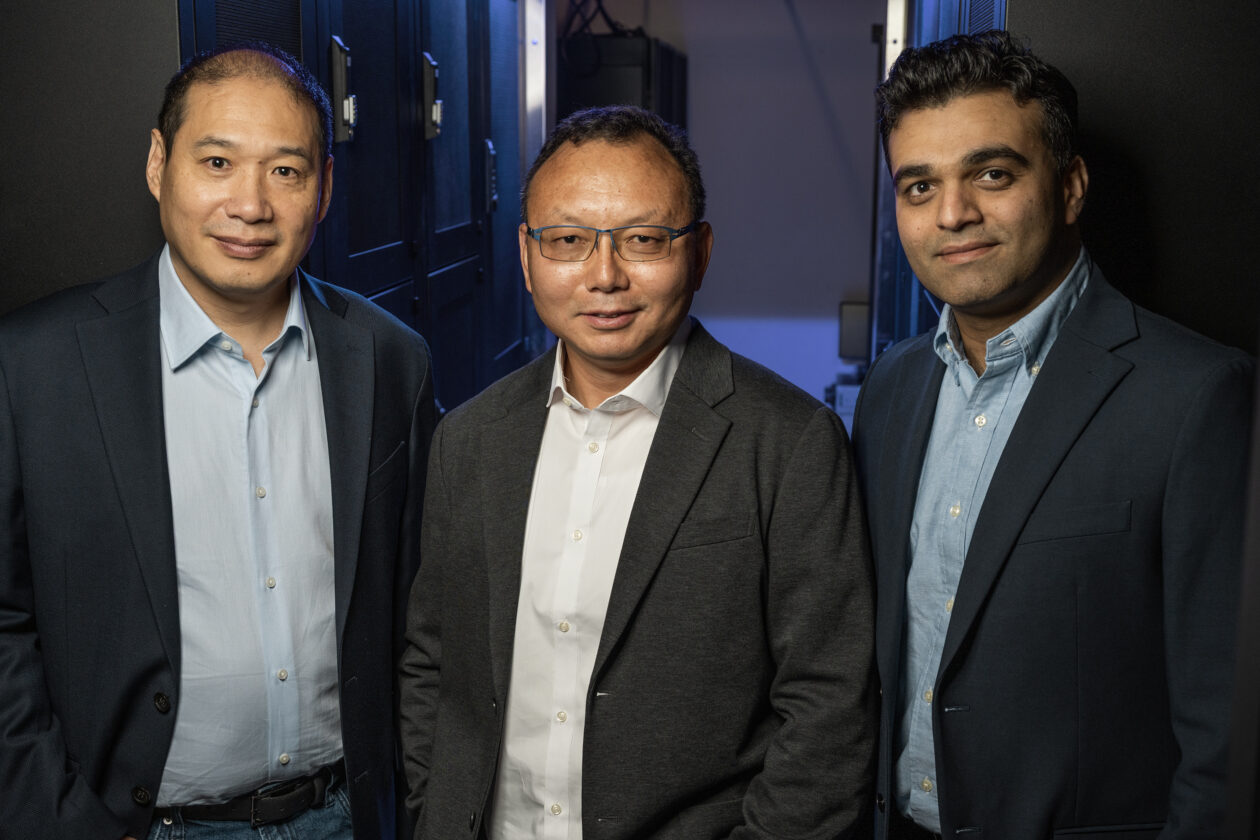
Powerlattice founders, from left: Gang Ren, Peng Zou, and Sujith Dermal. (Powerlattice / Walden Kirsch Photo)
Powerlattice, a Vancouver, Wash.-based startup developing chips that cut the power demands of AI processors, has raised $86 million, according to an SEC filing on Friday.
The new funding is nearly triple the $31 million the company had raised when it emerged from stealth last November with a $25 million Series A led by Playground Global and Celesta Capital. Board members include former Intel CEO Pat Gelsinger, a general partner at Playground, and Steve Fu of Celesta. The filing also lists Wen Hsieh, founding managing partner of Matter Venture Partners, as a director.
The filing shows Powerlattice is seeking $111 million, with 18 investors participating so far. It does not name the investors or the round. The company declined to comment.
AI chips are drawing so much electricity and throwing off so much heat that data center operators are running into limits on available power and cooling.
“AI is not constrained by capital, it’s constrained by power,” Gelsinger said last year when Powerlattice announced its Series A.
Powerlattice makes what it calls a power delivery chiplet, a small component that sits inside the processor package. Conventional setups route current over long paths to the processor, wasting energy along the way. The company says shortening that path can cut energy use by more than half and boost performance. Powerlattice said last year it was providing engineering samples for GPUs, CPUs and custom accelerators.
CEO Peng Zou, Gang Ren and Sujith Dermal founded the company in 2023. The three are semiconductor veterans whose backgrounds span Qualcomm, Intel and NUVIA, a startup Qualcomm acquired in 2021. Powerlattice also has offices in Chandler, Ariz.; San Jose, Calif.; and Hsinchu, Taiwan.
Earlier this week, Powerlattice announced it had demonstrated what it calls the industry’s first monolithic integrated voltage regulator chiplet, which packs the controller, power transistors and inductors onto a single piece of silicon.
In the test, the chiplet powered a device Powerlattice built to mimic the fast-shifting electrical loads of next-generation AI accelerators. The company says multiple chiplets can be linked to work as one, letting chip designers match the setup to their processors.
“Breaking through the AI power wall requires us to rethink how power reaches the processor,” Zou said in the announcement.
At TechCrunch Founder Summit 2026, happening November 4 at SoWa Power Station in Boston, networking powered by Braindate is designed to make those conversations easier to find, whether they are in 1:1 or small-group on-site meetings. Register before the event starts to save up to $100 on your pass, plus get a second for free.
Runware is building a factory to turn out prefabricated AI data centers on an assembly line. The real test will be whether it can deliver at that scale.
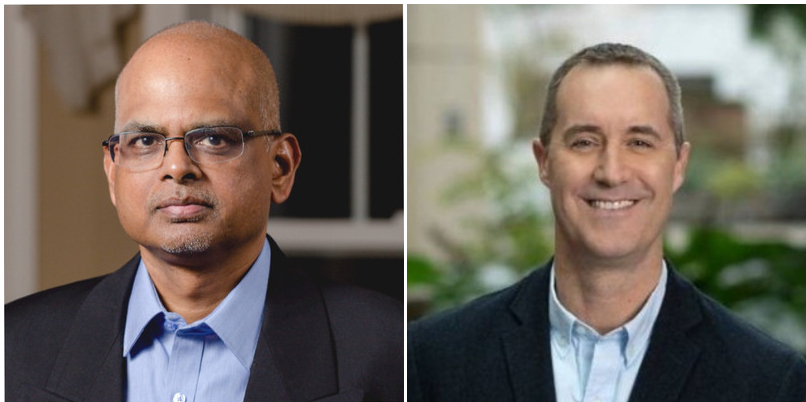
Avi Saxena, left, and Tyler Whitworth. (LinkedIn Photos)
— Two former Amazon executives who helped build Discovery’s direct-to-consumer operation in Bellevue, Wash., are stepping down from their leadership roles following the company’s acquisition by Paramount Skydance. They will remain in advisory roles during the transition.
Avi Saxena joined Discovery in 2019 as chief technology officer of its direct-to-consumer business and led its new Bellevue office. He became CTO of Warner Bros. Discovery (WBD) following Discovery’s 2022 merger with AT&T’s WarnerMedia business. Paramount Skydance completed its acquisition of WBD on Oct. 6, with the combined company taking the name Skydance Corporation.
Before joining Discovery, Saxena was with Amazon for 19 years over two stints, most recently as vice president of technology for Amazon Marketplace. He also held leadership roles at Microsoft and internet infrastructure startups.
Tyler Whitworth is stepping down as executive vice president and chief product officer for WBD’s streaming business. He led teams working on digital products for HBO Max, discovery+, Eurosport, TNT Sports, Food Network and others. Before joining Discovery, he spent more than seven years at Amazon, leading teams developing products and services for customers and third-party sellers.
Dane Glasgow, Skydance’s chief product officer, announced the departures of Whitworth, Saxena and WBD Chief Information Officer Dave Duvall in a memo shared with GeekWire.
“Much of the strength of WBD’s product and technology organizations reflects their leadership and dedication. Please join me in thanking them and wishing them the very best,” Glasgow wrote.
The company has not responded to GeekWire’s inquiries about the future of the Bellevue office.
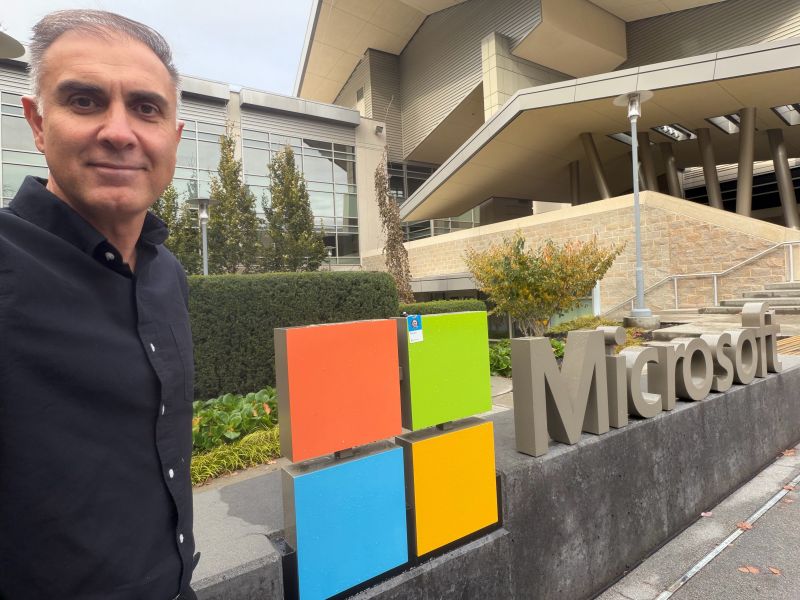
Bahadir Onalan. (LinkedIn Photo)
— Bahadir Onalan is returning to Microsoft as a vice president in its CoreAI organization, focused on responsible AI, after nearly 10 years at Amazon. Onalan first joined Microsoft in 2005 and worked on Azure teams focused on search, analytics, business intelligence and security. He left in 2017 as a principal software group engineering manager to join Amazon, where he worked on machine learning initiatives.
“This second tenure feels like a true homecoming,” Onalan wrote. “Our goal goes beyond shipping a platform or a product; we are here to define the global standards for AI safety.”
Naria Santa Lucia. (LinkedIn Photo)
— Naria Santa Lucia is leaving Microsoft after seven years, most recently as a general manager with Microsoft Elevate. She previously served as executive director of the Washington State Opportunity Scholarship.
“I’ll carry the lessons I learned from my time at Microsoft as I continue my personal and professional mission to serve people and communities by teaching, advising nonprofits and mission driven organizations, and spreading joy and human connection,” Santa Lucia wrote.
She did not announce a specific next role.
Leo Ochoa, left, and Aina Abiodun. (LinkedIn Photos)
— VertueLab, a Pacific Northwest nonprofit supporting climate tech entrepreneurs, has named Leo Ochoa executive director, promoting him from managing director for Oregon. He succeeds Aina Abiodun, who is transitioning to chair of the organization’s board after more than three years as executive director.
“Leo brings a unique blend of vision, relationships, and entrepreneurship experience,” the organization said, noting his background as a wildland firefighter, startup founder and patent holder for wearable safety gear.
Abiodun’s accomplishments include co-creating the Seattle Climate Innovation Hub, launching the Opalene Climate Challenge and helping lead the Just Future Climate Labs initiative.
Leah Sardone. (LinkedIn Photo)
— Seattle’s Pulse Space has appointed Leah Sardone as vice president of engineering. The startup is developing laser-based systems to deliver power and enable long-distance communications in low Earth orbit and beyond. In July, the company announced a $40 million U.S. Space Force contract to advance its laser-based space power technology.
Sardone brings more than 23 years of experience in hardware, sensors and embedded systems development. She joins Pulse Space from IonQ, where she most recently served as director of quantum networking and interconnects. Her previous employers include Lockheed Martin, Northrop Grumman, Honeywell Aerospace, Blue Origin and Amazon’s Project Kuiper, now known as Amazon Leo.
Michał Jastrzębski. (LinkedIn Photo)
— Caravel Bio a Portland, Ore., startup developing technology to rapidly test newly designed proteins, has announced Michał Jastrzębski as its CTO. The company says its platform can screen millions of protein designs in parallel at low cost, helping identify promising candidates for applications in human health, pollution reduction and industrial processes.
Caravel also announced a nearly $1.25 million Small Business Innovation Research Phase II grant from the National Science Foundation to further develop the platform.
Jastrzębski previously served as a principal machine learning engineer at Ginkgo Bioworks. His past employers also include GitHub and Intel.
— Darick Baker has been appointed the director the University of Washington’s Washington Nanofabrication Facility, which the UW describes as “the largest publicly accessible nanofabrication facility and cleanroom in the Pacific Northwest.” Baker joined the facility in 2012 as a research engineer and has served as acting director since 2025. He previously worked at the Colorado School of Mines
— Technology Alliance announced that Stoke Space director of communications Kyra Jorgensen has joined its board. Jorgeson recently joined the space startup from the fusion company Helion Energy.
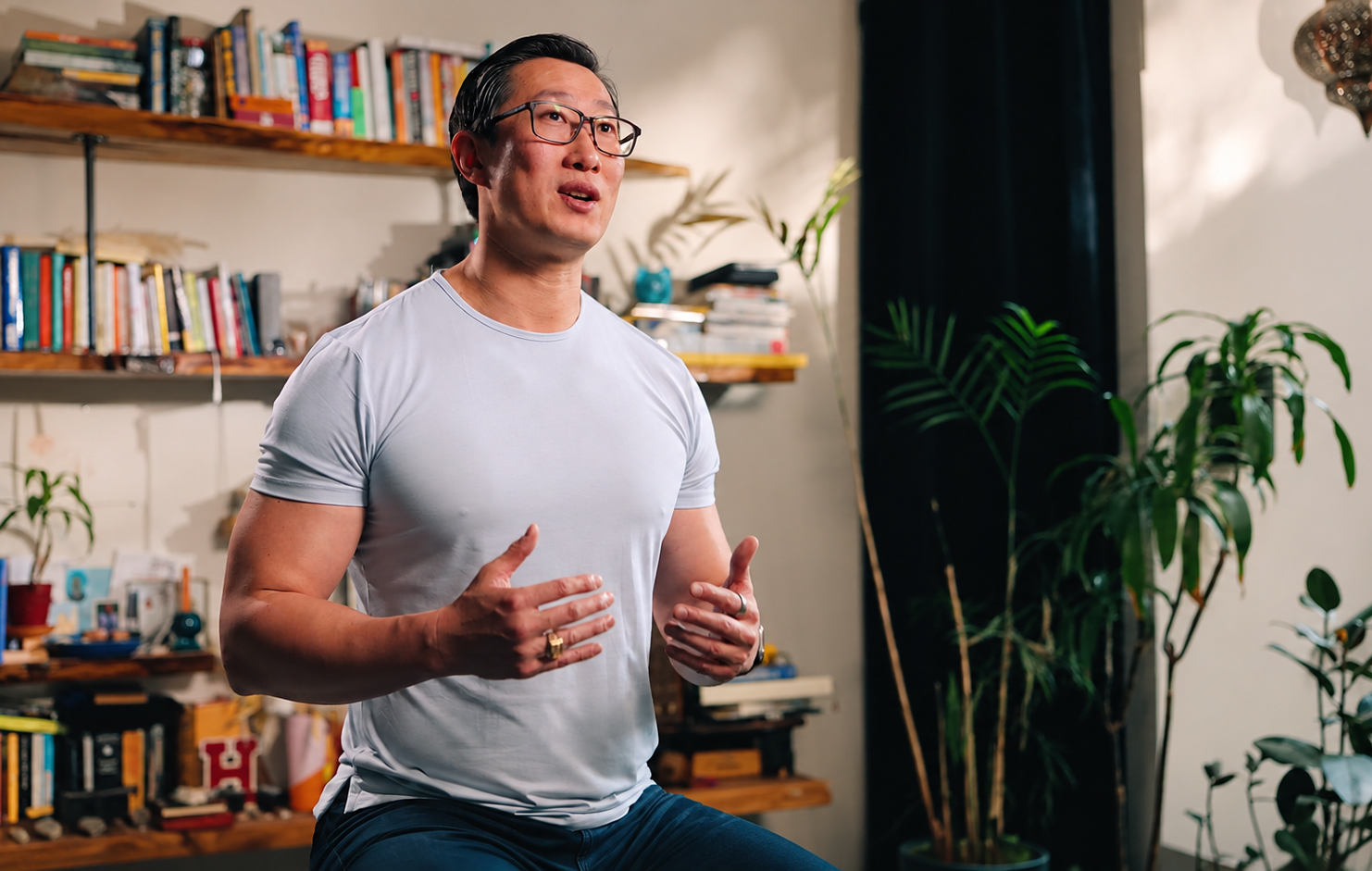
Richard Wang says he gets inspiration from mentoring aspiring startup founders. (Idea to Launch Photo)
Richard Wang, co-founder and former CEO of coding bootcamp Coding Dojo, is launching Idea to Launch, a 30-day program that helps would-be founders turn a startup idea into a working product using AI coding tools and hands-on engineering help.
Nearly four years after selling Coding Dojo to Perdoceo for $70 million, Wang was looking for a way to keep doing work that had a measurable impact on people’s lives. He found it in mentoring aspiring founders.
Wang thinks AI is about to do for software what smartphones did for video. Cheap cameras and cloud platforms gave rise to the influencer economy, and he believes AI will push the cost of building a product close to zero.
“We’re going to create this whole new builder economy that’s about to come in the next three to five years,” he said. “Baby boomers are gifted with cheap housing. I think Gen Z is going to be gifted with a cheap price to build.”
He sees plenty of demand. Citing a Shopify-Gallup study and a Zapier/Harris poll, Idea to Launch says 60% of Americans have a business idea but only 9% launch one. Wang said the reasons people hold back include fear of failure, not knowing how to get started, and not wanting to give up a paycheck or benefits.
Unlike accelerators such as Techstars or Y Combinator, Idea to Launch doesn’t take equity, and participants don’t have to quit their jobs. Over 10 evening sessions, founders get coaching, run customer interviews, build a product with AI tools such as Lovable, Replit and Cursor, and plan a launch. Each founder also gets 10 hours of one-on-one help from professional engineers.
Wang said people without technical backgrounds can now vibe-code 80% to 90% of a product on their own. The hard part, he said, is connecting it to other services, setting up the database correctly and making it secure.
“We’ll provide that type of knowledge with real engineering support,” he said. For engineers who have never done customer discovery or marketing, the program fills in the business side.
Security researchers have found serious vulnerabilities in apps built on vibe-coding platforms. A 2025 scan found 170 of 1,645 apps built with Lovable exposing user data, and another case this year exposed nearly 19,000 user records. Wang said the program’s engineers will make sure security holes are fixed “before they launch or before they get onto the first customer.”
The first cohort starts Jan. 11, followed by three more through April. Each is capped at 15 to 20 founders. Tuition is $3,500 for the inaugural cohort, down from the normal $5,000. Sessions will be held in person in Seattle or Bellevue, and Wang said he expects to pick a space within the next month. He is self-funding the venture.
Wang, who immigrated from China at 13 and was the first in his family to attend college, became Coding Dojo’s CEO in 2015. He left in 2017 for Trupanion and returned in 2019. The company grew to $50 million in peak annual revenue, according to Wang, and had 194 employees at the time of the sale, according to GeekWire’s earlier reporting. It operated campuses in several states before shifting online during the pandemic.
Wang sees Idea to Launch expanding to other tech hubs, then online, and eventually licensing the program globally, much as Coding Dojo grew to multiple campuses. If the first cohorts go well, he can envision a follow-up program, Launch to Traction, to help founders find more customers.
He doesn’t plan to invest in participants’ companies. Having spent years building and selling Coding Dojo, Wang said he knows how hard that road is and would rather “cheer them on from the sidelines.” He said taking VC money at Coding Dojo created pressure to grow 100% a year, something he calls “startup steroids.”
For Wang, the point isn’t to find the next unicorn. It’s to give more people a shot at building something now that AI has made it cheaper and easier.
“I think everyone should try at least once just to bring their idea to reality,” he said.
Dream is grounded in real physics and construction standards. Just as LLMs learn from text, Dream's world model is trained on more than 100 million square feet of building data gathered from permit archives across the United States.
A new startup called &Truth is joining the race to automate formal verification, a painstaking process that uses math to prove software works as intended.
Mintive was founded by two engineers who have been working on AI for decades through Google Brain and Coursera. It's platform promises to help IT easily control enterprise agents.
Group14’s silicon anode facility began manufacturing materials in 2024. (Group14 Photo)
Next-generation battery materials startup Group14 Technologies today announced $169 million in new funding and plans to build a manufacturing facility in Spain, expanding a production network that includes Washington state and South Korea.
“In order to be a global player in a global industry, we need a global footprint, which means it’s not about picking one specific region and going all in,” Group14 CEO Rick Luebbe told GeekWire. “We really need to grow all regions.”
The startup has developed a silicon-carbon material that replaces graphite in lithium-ion battery anodes, enabling higher energy density and faster charging, according to the company. The material already ships primarily to consumer-electronics customers, while the company pursues automotive and data center applications, Luebbe said.
The funding came from a European investor, Luebbe said, but he did not name the firm. It extends the company’s $463 million Series D round and brings Group14’s total funding to nearly $1.5 billion.
Rick Luebbe, CEO and co-founder of Group14. (GeekWire File Photo / Lisa Stiffler)
The new facility will be located in Sagunto, near Valencia, with production targeted for mid-2029. Luebbe said the site offers clean energy, skilled labor from the chemical industry and proximity to automotive customers, given that Spain is the second-largest vehicle producer in Europe after Germany.
Group14 already has a presence on the continent, acquiring Germany’s Schmid Silicon Technology Holding GmbH in 2023 to secure a European source of silane gas, a key ingredient in its battery material.
Just as the U.S. has been working to bolster its domestic battery manufacturing and reduce its reliance on Chinese supplies, Europe is doing the same, Luebbe said. The company wants to be part of that solution and is eager to make its move.
“Building chemical plants takes a long time, and so you’ve got to think ahead and be able to establish that global footprint and development strategy,” Luebbe said. “We’ve learned a lot in the lifetime of Group14.”
Group14 was founded in 2015 and six years later began operating its first commercial-scale factory, called Battery Active Materials-1, or BAM-1, at its headquarters in Woodinville, Wash.
In 2023, it broke ground on BAM-2 in central Washington’s Moses Lake with funding that included $100 million from the Bipartisan Infrastructure Law. The site has two modules that at full capacity will be able to produce up to 4,000 tons of silicon-carbon battery material annually, enough for at least 200,000 electric vehicles.
The company originally aimed to start production by late 2024, a target later pushed to early 2026. Group14 laid off an undisclosed number of Washington workers in July 2025 and furloughed additional employees at Moses Lake in January as it shifted resources toward South Korea. The company’s total headcount is approximately 383 employees.
Luebbe said this week that the company is now targeting mid-2027 to bring the first module online, following equipment installation and commissioning. The second module does not yet have a firm completion date.
“It’s a very complicated infrastructure, and it takes a lot longer than we had anticipated to do the final installation and commissioning,” he added.
There were no signs of life at the Group14 Moses Lake battery materials facility earlier this month, but CEO Rick Luebbe said work is continuing and will be ramping up. (GeekWire Photo / Lisa Stiffler)
The company has at least secured the power it needs. It previously contracted sufficient clean energy to run the site, as well as a planned silane gas facility. Since Group14 began its development, data center deployments have accelerated in the region and projects are competing for clean electricity from hydropower dams.
While BAM-2 has been delayed, Group14’s BAM-3 site in South Korea — which originally began as a joint venture with SK materials — has been producing anode material since 2024. The facility has been scaling up and expects to reach its 2,000-ton annual capacity within about six months, Luebbe said.
Group14 is shipping primarily to consumer-electronics customers, which qualify new materials faster than automakers. Luebbe also sees a growing opportunity in data-center battery backup units, where silicon-anode batteries could help smooth rapid spikes in AI-server power demand.
“I’m anticipating data center batteries, battery backup units, to be the second biggest market for us behind EVs,” he said.
Six days from now, on November 4, TechCrunch Founder Summit brings experienced founders, investors, and operators to Boston to share the decisions, mistakes, pivots, and lessons that shaped their companies. Register before it starts for ticket savings and deals.
Hannah Freeman, co-founder of Ganaz. (LinkedIn Photo)
Seattle startup Ganaz, which provides payroll and HR tech for agricultural workers and employers, has been acquired by Beacon Holdings.
Ganaz co-founder and CEO Hannah Freeman announced the deal Wednesday on LinkedIn, saying the public benefit corporation “is in great hands” at Beacon, which “is building momentum for our next exciting season.”
Freeman indicated she is stepping away from the company to “catch my breath, spend more time with my daughter, and dream about what’s next,” she wrote. “I’ll miss our team & customers, but will be cheering you on from the sidelines.”
Ganaz launched in 2017 and has raised more than $10 million, with its last disclosed funding round in June 2021. That financing valued the company at $26 million, according to PitchBook. Terms of the acquisition were not disclosed.
Beacon, based in Toronto, buys software businesses serving traditional industries and provides shared technology and operational resources. The company said in September that its portfolio included 45 software businesses.
Ganaz’s platform provides employee onboarding, training, communication and analytics tools. It also offers a Mastercard payroll card that gives unbanked workers access to digital banking. Employers save time and money by skipping paper checks, while workers keep more of their pay by avoiding check-cashing and high remittance fees.
Ganaz received GeekWire’s 2023 Geeks Give Back Award. “We founded Ganaz to make life better for farm workers, and we do that by building technology that agricultural employers love and can’t live without,” Freeman told GeekWire in 2023. “We build our tools to help both workers and employers prosper, and that kicks off a virtuous cycle that helps agricultural communities prosper as well.”
At that time, the startup was serving more than 250,000 agricultural workers in the U.S. and Mexico and 100 employers in the sector.
The company has about 17 employees, according to LinkedIn. Freeman did not say in her post whether Ganaz will continue as a subsidiary or whether its employees will receive job offers from Beacon. GeekWire has reached out to Freeman for comment and will update the story with any reply.
The PHP scare may have faded from your feed, but the cleanup is far from over. Last week, two critical bugs in the open source language behind roughly 70% of websites left organizations scrambling to fix their systems, with some taking sites offline until the vulnerabilities could be patched. According to researchers who found the […]
Seattle-based PicoBrew set out to revolutionize home beer brewing with a line of machines it initially sold on Kickstarter. (PicoBrew File Photo)
The patents behind PicoBrew, the Seattle startup that once promised to do for home beer what Keurig did for coffee, are up for sale again — six years after the company collapsed into receivership and after two changes of ownership.
Hilco Global, an Illinois-based diversified financial services company, announced this week that its Intellectual Property Services group has been retained by PicoBrew’s current owner to market the startup’s technology to potential buyers.
The sale includes 17 patents and patent applications, two of them pending, along with engineering and design files and product concepts. Buyers can bid on all or part of the portfolio, and non-binding indications of interest are due Nov. 18. Hilco is pitching the assets to companies in coffee, tea, kombucha, spirits, beverage appliances and housewares.
The seller is Pico Craft Group, which Hilco described as led by a former PicoBrew investor. After PicoBrew’s 2020 collapse, its bridge lender took over the assets. That lender, PB Funding Group, was managed by former Microsoft software developer Greg Whitten, The Seattle Times reported at the time. Pico Craft Group bought the assets from the lender in 2024 for an undisclosed amount, according to Hilco, which did not say who runs the group.
“PicoBrew was a true innovator in the consumer and commercial craft beverage space, and its portfolio has applications well beyond beer,” Eric Hurwitz, a senior director at Hilco, said in a news release.
The portfolio covers technology from PicoBrew’s full product line, according to the release, including the Pico Pro and Pico C home brewing appliances, the PicoStill accessory for spirits, the Pico U Multibrew platform for beer, coffee, tea and kombucha, and Z-Series brewing machines and KegSmarts kegerators for commercial use.
Bill Mitchell, a former Microsoft vice president and longtime homebrewer, founded PicoBrew in 2010 with his brother Jim Mitchell, a food scientist, and Avi Geiger, an engineer who also worked at Microsoft. Their countertop machines automated the brewing process using PicoPaks, ingredient packs based on recipes from craft breweries.
The startup became a Kickstarter regular. Its 2017 campaign for the Pico Model C raised $1.93 million from 4,301 backers, a record at the time in the site’s food category, and the $549 machine landed at retailers including Best Buy, Williams-Sonoma and Amazon. A 2018 campaign for the Pico U pushed PicoBrew into coffee, tea and kombucha.
But the company struggled to land more funding. In February 2020, after failing to close a new round, PicoBrew entered receivership. It had raised more than $15 million and cut its staff to fewer than 40, down from a peak of more than 80.
PicoBrew ceased operations in 2020, and no one has supported existing devices since, according to Hilco. Any decision about future support would be up to a buyer. The King County Superior Court approved the 2020 sale, which freed PicoBrew’s bridge lender from the company’s liabilities and from responsibility to past customers, The Seattle Times previously reported.
Some owners kept their machines brewing without the company’s servers by using a workaround developed by a Facebook group of PicoBrew users, The Spoon reported in 2020. The founders were let go after the receivership, according to the site.
When PicoBrew went up for sale in 2020, Mitchell told GeekWire that hardware takes time and multiple funding rounds backed by firm investor commitment.
He shared advice he’d gotten from Dan Leviton of Maveron: “Startups only fail for one of two reasons — they run out of heart, or they run out of money.”
In just 7 days, TechCrunch Founder Summit takes over Boston’s SoWa Power Station on November 4. Your chance to save up to $100 on tickets is running out, and the opportunity to learn and connect directly with experienced founders, investors, and startup leaders is almost here.

 Login