❌

Reading view

There are new articles available, click to refresh the page.

333 Tor exit nodes hijacked to intercept SSH traffic and retrieve plaintext email

Unknown hackers hijacked more than 300 Tor exit nodes and reconfigured them to favor unencrypted email traffic and redirect SSH connections through servers they controlled, a researcher reported Tuesday.

The hijacking began in late August, when, according to Tor volunteers, the attacker used a valid password that had been reused to gain access to a Tor management server. The attacker then installed Ebury, a backdoor written for Linux that was discovered 12 years ago.

Mysteries remain

Then the attacker connected from the management server to a second Tor server, called Switzerland2, through SSH, using an RSA key that, for unknown reasons, investigators couldn’t find among Switzerland2’s authorized keys. With administrative control of Switzerland2, the attackers installed Ebury there as well. Finally, the attacker reconfigured settings on two exit nodes that Switzerland2 hosted.


Read full article

Comments

Β© Photo Illustration by Pavlo Gonchar/SOPA Images/LightRocket via Getty Images
Improving an Autorouter with a Hexagonal Grid

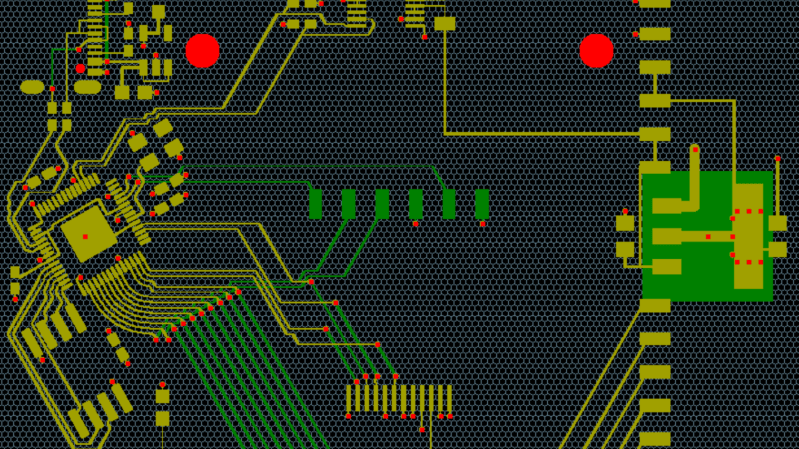
A PCB layout is superimposed on a grey grid of hexagonal cells. The PCB traces mostly bend at 120-degree angles, and an integrated circuit's footprint is tilted at an angle matching the grid.

Despite the recent leaps forward in other forms of computer-driven design, the reliability of PCB autorouters remains questionable; on the positive side, though, the lack of massive training data makes them plausible for a determined programmer to implement. For anyone contemplating this undertaking, [James Bowman] recommends a slightly unusual choice: use a hexagonal layout grid.

[James] built his own autorouter in his CuFlow PCB layout program. It takes a fairly straightforward approach: it represents the board as a grid of cells, and uses Lee’s algorithm to find the shortest routes between connected cells. The program initially used a square grid, but a hexagonal grid had a few advantages: in particular, each cell has six equidistant neighbors, rather than four (or eight, if you accept diagonal neighbors at a different distance), which allows denser routing. Because a hexagon more closely approximates a circle than a square, the same minimum-distance rules allow smaller cells, allowing the autorouter to pack more traces into the same space.

While we have previously seen a self-built autorouter, it’s much more common to interface with an external tool. If you start to get into high-speed PCB routing, though, building an autorouter becomes much harder.

❌