Reading view

There are new articles available, click to refresh the page.

New Markdown rival: Open-source DGML format aims to turn docs into data that AI (and humans) can trust

L-R: Mantra CEO John Patrick Mullin, Docugami CEO Jean Paoli, and Inveniam CEO Patrick O’Meara. The companies are partnering to make DGML a standard for AI, with Docugami turning documents into data, Inveniam verifying it on a blockchain, and Mantra providing the chain.

Jean Paoli has spent his career making documents readable by machines — first as a co-creator of XML, then helping build the file formats behind Microsoft Office. Now his Kirkland, Wash.-based startup, Docugami, is open-sourcing the technology at the heart of its business, betting it can become a standard way to turn documents into data that people and AI agents can trust. 

The company is releasing its technology, called DGML (short for Document Graph Markup Language), under Apache 2.0, a widely used open-source license, so other developers and companies can adopt it.

The idea is to turn it into a shared standard that no single company owns, much as XML became a common foundation across the tech industry. 

The move reflects a shift in where the value is created in AI. Docugami until now has made its money selling software that turns unstructured documents into usable data. It’s betting now that there’s more value in proving that data is trustworthy instead. 

How it works: Docugami is teaming up with Inveniam, a Detroit company whose software helps big investors keep tabs on the mountains of paperwork behind real estate and other hard-to-value assets. Inveniam will record a kind of digital fingerprint of each piece of DGML data on NVNM Chain, its blockchain built with Mantra, a crypto firm that Inveniam is acquiring.

That means, for example, that a single fact buried in a 200-page lease — such as the rental rate, a renewal option, or a default clause — can be verified on its own, without exposing the whole document. An investor, auditor, or AI agent can trace it to the page it came from. 

To work with documents, AI systems usually convert them into a simpler format first. DGML enters a growing field of contenders in that regard, competing with the popular Markdown format and DocLang, a new open standard for AI-ready documents backed by IBM, Nvidia and Red Hat.

The business model: This is a big move for a company of Docugami’s size, taking the 30-person startup in a new direction. Paoli is handing the industry the technology his team spent years building, and pinning the company’s future on a larger idea.

The plan is to make money not from the format itself but from the value of the trusted data. Once a company converts its leases or loans into DGML and anchors the key numbers on the blockchain, investors, lenders and auditors can pay to draw on that verified data.

Docugami will share in the revenue through its partnership with Inveniam. The company also stands to collect a small fee each time a piece of data is recorded on the chain. 

The company is giving away the DGML format and a working version of the software, but not everything. Paoli said the company is keeping some of its own technology private, including AI models it has fine-tuned to read documents, and could sell those or other tools to enterprises. 

“The business model of everybody is changing. And if you know any company where it’s not true, you need to tell me, because I haven’t met them yet,” Paoli said in an interview. 

Docugami has raised about $13 million to date, including a $10 million seed round in 2020 that drew the first investment in Grammarly’s history.

The partnership: Paoli met Patrick O’Meara, Inveniam’s CEO, a few months ago, through a former Microsoft colleague who had become one of O’Meara’s advisers. They quickly realized they had been working toward the same idea from different directions.

Inveniam, founded in 2017, helps big investors keep track of assets that are hard to value, like office towers, private loans and infrastructure. It monitors the documents behind those assets and flags changes as they happen, and its clients include some of the world’s largest sovereign wealth funds, according to O’Meara.

What it lacked was a consistent way to break those documents into verifiable pieces. That is what Docugami provides.

“We’re not putting the data itself on-chain, just a fingerprint of the document. Change one bit, one byte, one pixel, and the hash won’t match,” O’Meara said.

The blockchain comes from Mantra, a crypto company run by John Patrick Mullin. Inveniam invested $20 million in Mantra last year and has since agreed to acquire it outright. Mantra’s OM token collapsed in April 2025, erasing several billion dollars in value. 

Paoli said the project uses the underlying blockchain, not the token.

“Crypto as an industry has gone through a lot of changes in the last 18 to 24 months, and it’s growing up in a lot of ways. This is a real use case with fundamental value, not just pure speculation,” Mantra’s Mullin said in an interview. 

The result is a division of labor: Docugami turns documents into data, Inveniam verifies it and brings the customers, and Mantra provides the chain where the proof is recorded.

The DGML specification, sample documents and reference code are at dgml.io and on GitHub

Editor’s note: This story was updated after publication to correct the name of a competing document format, DocLang, and to note that Inveniam’s blockchain is called NVNM Chain.

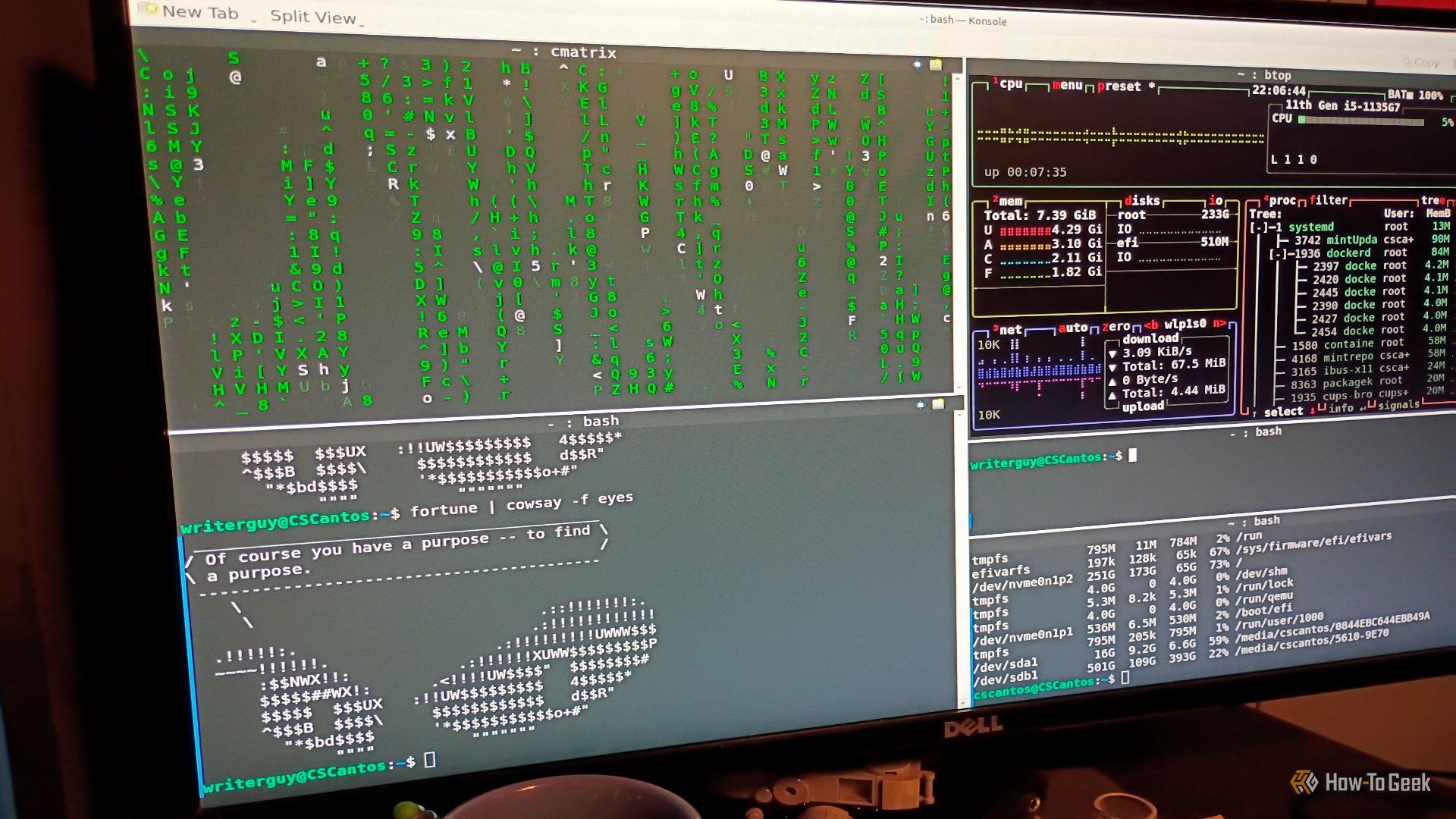
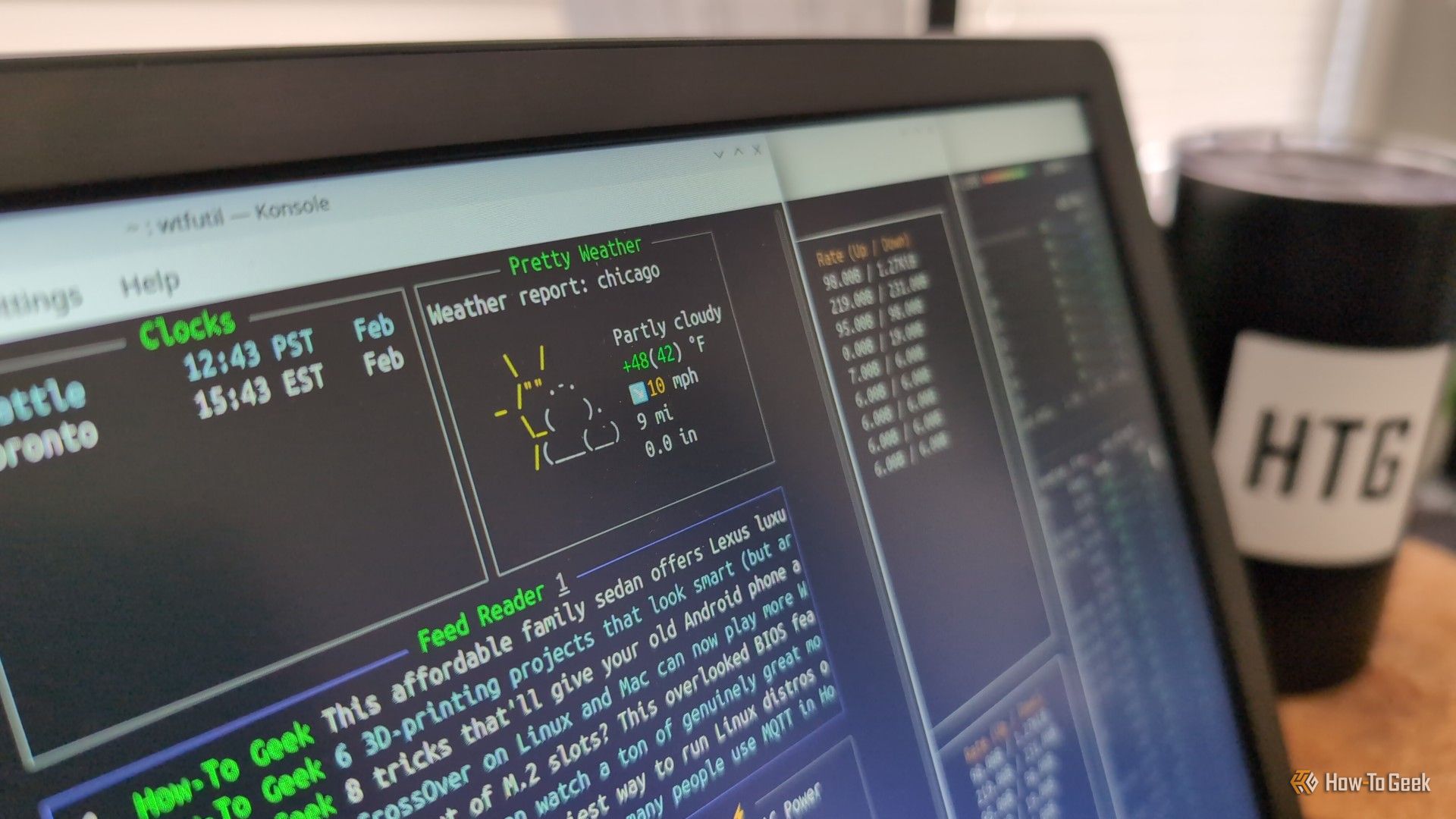
I replaced my default Linux terminal with this cross-platform one—and I'm not going back

Did you know there are different Linux terminals, some with unique and special features that can genuinely improve your day-to-day experience? For the average user, the choice doesn't matter much, but if you're planning to get serious about the terminal—using terminal apps, Vim, or Emacs—the terminal you choose becomes almost as important as the Linux distribution you run. With that in mind, here's why I settled on my current terminal, along with how the other popular options compare to my daily driver.

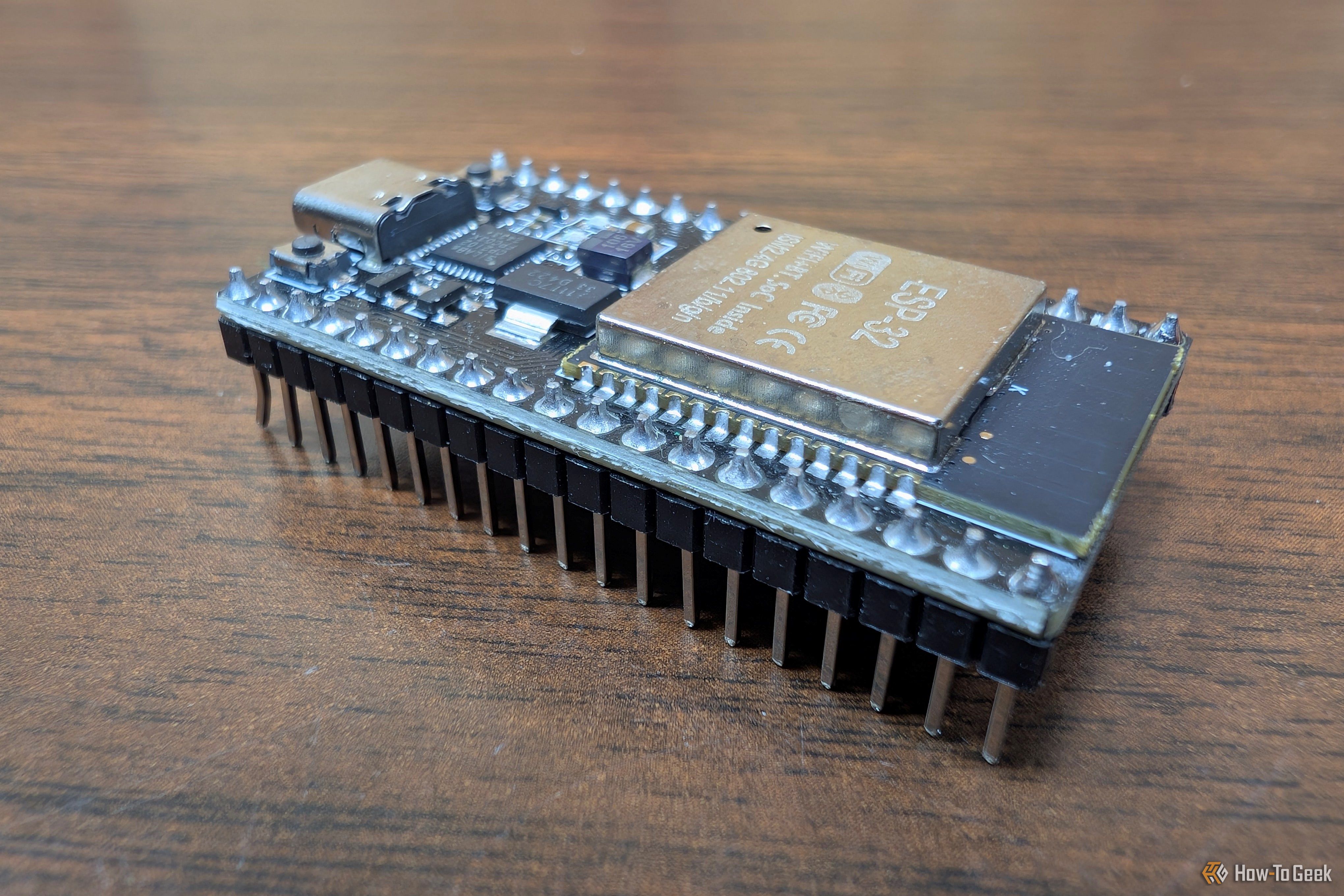
60 FPS NES Emulator on ESP32

At least in theory, video games are more resistant to becoming lost media thanks to their digital nature — they’re easy to copy and emulators have saved many titles that are otherwise locked in corporate vaults. But emulators give us something beyond simple preservation: they can also be used to enhance games well beyond the capabilities of the original systems while still preserving the souls of the games, as this NES emulator manages to do.

The emulator is called Anemoia-ESP32, and as its name suggests is a re-write of the Anemoia emulator specifically built for the ESP32. By modern standards these little chips don’t pack much of a punch, but compared to original NES hardware they’re more than up to the task of gaming. This project aims to recreate the Nintendo Entertainment System experience as faithfully as possible, hitting 60 FPS in most instances, as well as maintaining full audio emulation. Running on an ESP32 enables some truly small handheld options that would be difficult to achieve with more traditional platforms for emulation. There are some PCBs available here as well, but aren’t required to explore this project with.

As far as extra features compared to original NES hardware, the emulator does support save states and has a number of other settings improvements. Installation is as easy as flashing any other firmware image onto an ESP32, which these days can even be done from the browser. No word on whether or not it will eventually support emulating dual Picture Processing Units, but we can hope.

Stop paying Adobe—this patch turns GIMP into Photoshop's free twin

Muscle memory is hard to shake. If you've spent years in Photoshop, you're not going to have a good time switching to GIMP. It took me three tries to switch over, and even then, tools like PhotoGIMP were incredibly helpful. You're unlearning years of shortcuts and what feels ingrained, which is hard to commit to for a tool you've never used before. If you're on the fence about switching to an alternative, then this tool is exactly what you need.

4 uncomfortable truths about Home Assistant

Home Assistant is, in my opinion, the best smart home software available. It's free, open-source, privacy-focused, works with a huge number of devices, and can make your smart home do almost anything you can think of. Despite all that, Home Assistant definitely has its faor share of problems.

This open-source app turned my terminal into a to-do list

My relationship with to-do apps usually follows a predictable course. I install one, spend an unreasonable amount of time choosing colors and categories, enter every task I can remember, and then stop opening it after three days. The task list survives somewhere in the cloud, quietly preserving plans that even I have forgotten.

Startup Spotlight: Hedgehog bets that open-source networking will power the next generation of AI clouds

Marc Austin of Hedgehog.

As AI workloads drive soaring cloud bills, more companies are weighing whether to move computing out of public clouds and into their own data centers. But building and operating AI infrastructure is far more complicated than simply buying servers — networking has become one of the biggest technical hurdles.

That’s the opportunity Seattle startup Hedgehog is chasing.

Founded in 2022 by CEO Marc Austin, a Cisco networking veteran, Hedgehog develops open-source software designed to make private AI data centers operate more like hyperscale clouds. It has raised $11 million in seed funding, with plans to raise a series A financing round.

We caught up with Austin for the return of GeekWire’s Startup Spotlight to learn more about the 20-person company, the AI networking boom and what surprised him most about building a startup in one of tech’s fastest-moving markets.

In 50 words or less, give us your elevator pitch?

Hedgehog is open-source software that makes AI networking simple. AI clouds and enterprises use it to run GPU networks the way hyperscalers do — deployed in hours instead of months, operated by DevOps teams instead of armies of network engineers, on open hardware with no vendor lock-in.

What problem are you obsessed with solving?

Time to GPU value. A GPU cluster is the most expensive asset most companies will ever buy, and every day it sits idle waiting on the network is money burning. That wait is rarely the hardware — it’s the fabric: weeks or months of scarce network engineers hand-designing, cabling, tuning, and validating it across proprietary CLIs and locked-in vendor gear.

Meanwhile the people told to “own the network” usually aren’t network engineers at all — they’re platform and DevOps teams. We’re obsessed with collapsing that timeline: declare your network like intent in Kubernetes and go from racked GPUs to inference in hours instead of months — on open hardware, no lock-in, no room full of specialists. Cloud-grade networking without hyperscaler headcount.

What surprised you after talking to customers?

How rarely the buyer is a network engineer. It’s platform and DevOps teams, often at AI clouds who just took delivery of thousands of GPUs who are told “you own the network now.” They don’t want to learn BGP; they want a network that behaves like the rest of their cloud-native stack. The other surprise: they don’t just want to run the network, they want to sell it by carving up capacity for their own customers, like a cloud provider does.

How has AI changed the way you build your company?

Twice over.

Our product exists because AI broke traditional networking. Training and inference traffic melts networks designed for web apps.

And AI changed how we build: we use it heavily across engineering, testing, and go-to-market, which lets a small team continuously test every supported device and configuration in our lab and ship with hyperscaler-grade rigor. AI raised the bar for what a startup-sized team can deliver.

What’s one thing people misunderstand about your startup?

That “open source” means hobbyist. The opposite is true: openness is the enterprise feature. Our customers can audit every line of code that runs their fabric, extend it, and never get locked in. Nearly every competitor markets “open networking” while shipping a proprietary controller. Hedgehog is the only one that actually publishes the repo.

What’s the toughest decision you’ve made in the past year?

Betting entirely on Ethernet. We decided open, standards-based Ethernet would win AI networking and put everything behind it. Watching the industry’s largest AI operators now standardize on that same approach makes us feel good about the call — but saying no was hard.

What’s the one piece of advice you give to other entrepreneurs?

Pick the wave, not just the surfboard.

Product decisions are recoverable; betting against a structural industry shift isn’t. Find the standard, the architecture, or the buyer behavior that’s inevitable, align everything to it early, and be patient while the market catches up to your bet.

We’ll know our company has made it when…

Networking is boring again. When a platform engineer stands up a multi-tenant GPU cloud and the network is just a few lines of declared intent that nobody thinks twice about. When “network like a hyperscaler” describes every AI cloud, not just the giants running on Hedgehog, then we will have made it!

Is Now the Time for Volumetric 3D Printing?

Art of 3D printer in the middle of printing a Hackaday Jolly Wrencher logo

Of all innovations adopted by the maker community within the past couple of decades, one stands among the rest on top for anything regarding manufacturing. It goes without saying here at Hackaday how many projects have been reliant on using the technology to turn their ideas into reality. 3D printing has been a maker community invention and, in return, has expanded this hacky community into something that anyone with an imagination can get into. It also goes without saying that the layer-based tech imposes limits on what we can actually create: think overhangs and layer adhesion. However, there’s a possibility that a recent offshoot of this scrappy community has the power to eliminate some of these faults.

Volumetric additive manufacturing (VAM) is a young technology that has a similar start to many new tech toys, including the original SLA of the first 3D printers. That is expensive and completely stuck in the laboratory… Fortunately, that’s not where 3D printing as a whole stayed, as the RepRap project managed to bring the obscure technology to the hobbyists’ main stage. An entire group of people formed and spent countless hours until the useless pieces of poorly extruded plastic could form parts impossible to make with anything else. A cool quirk of history is that it likes to repeat: examples spur recreation, and this appears to be happening with the technology found within VAM printing.

History

Hold up for a second. While we have covered VAM here before at Hackaday, it’s not exactly the most well-known tech or the easiest to understand. So what is it? Starting from the beginning and simplest forms, VAM is similar to the more  common SLA printing. Using a light source and light sensitive resin, both of these methods can create entire physical objects by solidifying or curing specific areas of a vat or vial of resin. SLA will often use something like a laser and layer by layer “draw” the model until the entire geometry is finished. A quirk of most of many photosensitive resins is that they need to overcome a threshold before they can start curing. This allows VAM to do something a bit different. The earliest methods of VAM used intercepting lasers which allowed selective curing only where these beams were intercepted. One singular spot at a time would be able to overcome the threshold required for printing, allowing you to build up most geometries.

Xolography Print

This works, but for more complicated models there’s more effective methods. One type has been covered here before called Xolography, still using intercepting beams, however with differing wavelengths which allows for more finite control. This is effective, but the resin is complex, requiring two-wavelength-photon-sensitive photoinitiators. Introduce the current standard in VAM printing, computed axial lithography (CAL). This method finds itself using existing methods found in traditional tomography, such as CT scanners. CAL methods are basically reverse tomography, where a model is used to create projections to be projected in printing. These projections allow dose control in each “voxel” of resin from changing the projection as the volume of resin is rotated. When ideal, this means that the entire model is printed at once. No layers needed for printing, and printing in minutes rather than hours.

Open-Sourced

Cool, but why should you care about this tech? Because you could start using it now! Just like the RepRap project before it, VAM has OpenCAL. OpenCAL was started by the same lab that originally created the axial version of the technology. UC Berkeley released the first OpenCAL around 2019 which was… well a start.

Functionally practical for only big budget research, it was far too expensive and complicated for any hobbyist with a 9-5 to realistically touch. Last year saw a new model presented at Open Sauce which used a consumer projector and common hobbyist electronics. While this was an improvement, there are three barriers to VAM printing; the hardware, software, and chemical resins make it a challenge for any individual alone. A newer version of the hardware was quickly put together for this summer. This helps with the hardware element, but there’s two new aspects being released alongside OpenCAL V2 for other unsolved problems.


Software: Tomo

Tomo with the Thinker model being prepped

For a little while now there have been various software packages available for allowing easier use of whatever VAM printer you might have, however these had various problems. From being undocumented to being complicated for anyone without comfort in command line , something different would be needed. A standalone application would certainly work, and low and behold that’s exactly what’s being tried here, called Tomo. Tomo allows you to use an OpenCAL printer with little thought or expertise, or ideally any other type of VAM printer.

Chemistry: Formlabs Resin

Large form factor VAM print

Material science is always a particular challenge for the open source community. Unlike software, you can’t distribute unlimited copies of your perfect mix of photosensitive resin without special chemical clearances and certainly not for free. Some of the first 3D printers from RepRap would use a nylon weed wacker line in place of the standard PLA of today. Unfortunately there’s less flexibility in the fine tuned resin found in VAM. This resin has to have a nonlinear photo-reaction for selective curing, be fairly transparent to the reactive wavelength, and be very viscous to prevent resin movement during printing. Formlabs, which makes resin printers and resins, has gotten into the act. Through talks between the OpenCAL team and Formlabs, an agreement for production of this special resin is being worked out, allowing for far cheaper material.

Hardware: OpenCAL

OpenCAL V2 printer
OpenCAL V2 printer

Of course this leaves the printer itself. OpenCAL is designed for a variety of different sized printing volumes, projectors, or anything else you might have in mind. Expect printing anything from this printer to finish in the span of minutes. While it can do the same small prints found in the older model of OpenCAL, experiments involving larger form factors have been attempted. But if you want more details make sure to check out the documentation here or join their Discord channel!

Future of VAM Printing

So how far can this technology really go? Could it pass traditional methods of 3D printing? Well, it’s certainly faster than traditional printing, however, there’s still plenty of trouble when trying it out. How do you remove partially cured resin off your print? How do you actually tell when the print is done? These are problems that are being fixed right now by the community, and maybe you can be the one to fix something holding it back. It’s fair to say that the community that has propped this technology up to where it currently stands is who is going to decide where it goes.

❌