Microsoft has drafted a “Humanist AI” code requiring future models to accept human shutdown, follow non-negotiable safety rules, and remain under control.
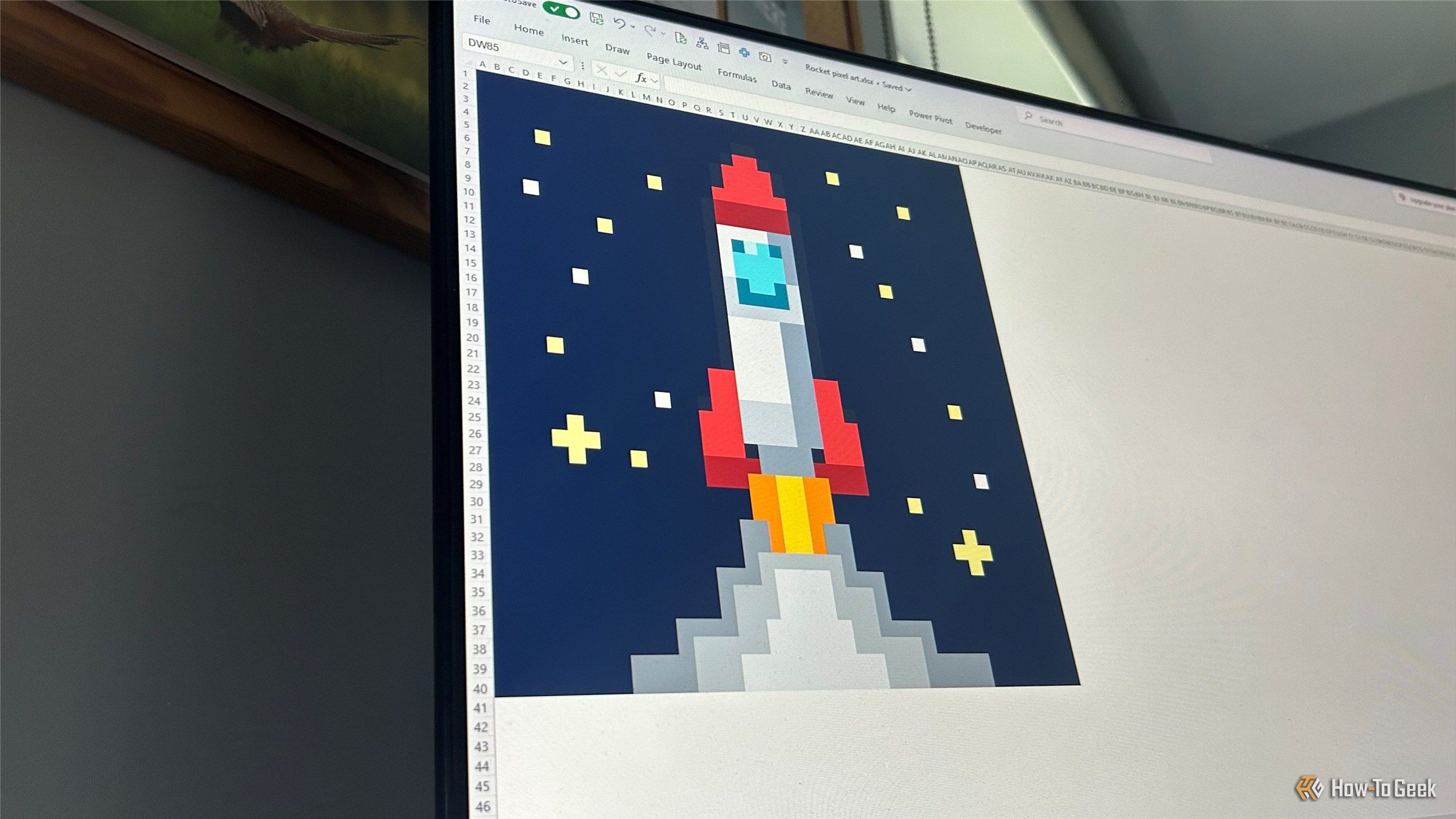
I've used Excel for long enough to know that it isn't the first tool I'd reach for when I want to draw a picture, plan a room, or design a craft project. But a blank worksheet has helped me get creative, have a bit of fun, and sometimes even solve a problem faster than I could with a piece of paper or a dedicated app. Once you stop thinking of Excel as just somewhere to enter data, its grid becomes a surprisingly useful playground.
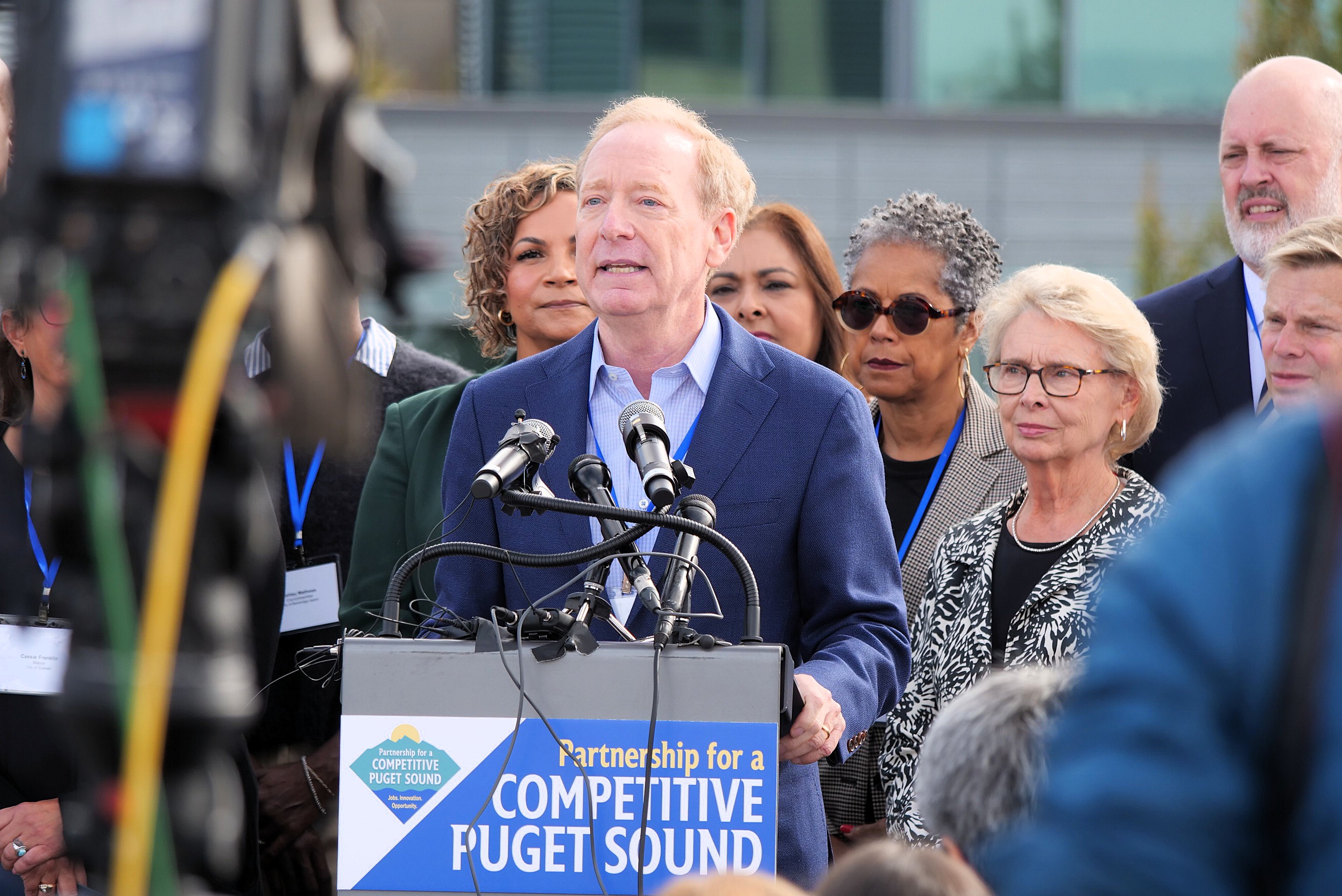
“You should tax things you want to discourage, like cigarettes, not jobs.” Microsoft’s Brad Smith at Monday’s launch of the Partnership for a Competitive Puget Sound, with former Gov. Chris Gregoire at his left. (GeekWire Photo / Todd Bishop)
Detroit, Cleveland and Pittsburgh each had their moment in the sun a century ago, Microsoft Vice Chair and President Brad Smith said Monday — and then the warning lights started flashing, and their leaders at the time failed to heed them.
“Well, here we are. It is 2026,” Smith said at a press conference, flanked by dozens of regional leaders, with the Seattle skyline behind them. “And the warning signs are flashing on our economy.”
Smith was speaking at the launch of the Partnership for a Competitive Puget Sound, a Challenge Seattle initiative that brought together roughly 50 elected officials from King, Kitsap, Pierce and Snohomish counties — two county executives, around 20 mayors, port commissioners and about a dozen state legislators — along with labor leaders and business executives, behind a 20-point plan for reversing the region’s slide.
The region lost nearly 7,000 jobs in 2025, according to a report issued by the group, the first time in two decades outside a recession or the pandemic that Seattle-area employment growth has trailed the nation’s. Washington has fallen from 32nd to 47th in CNBC’s ranking of states by cost of doing business since 2017.
An ‘intentional’ regional tech strategy: The report makes a pointed observation about technology: aerospace has a coordinated regional agenda and tech doesn’t, despite tech accounting for nearly one in 10 regional jobs and about 24% of total payroll.
Aerospace knows what it’s working on: the next airplane, the space industry, sustainable fuels, supplier diversification. Technology, “despite being one of Puget Sound’s defining economic anchors, does not yet have an equally intentional regional strategy,” the report says.
King County Executive Girmay Zahilay addresses the crowd Monday, with the downtown Seattle skyline behind him. More than 32% of the city’s central business district office space sits vacant, according to the new regional report. (GeekWire Photo / Todd Bishop)
Without one, it adds, the region risks losing “jobs, technology investment, headquarters, talent, and company growth” to the Bay Area, New York, Boston and Austin. The goal is “not simply to promote growth, but to protect and strengthen the region’s position as a leading technology center.”
Challenge Seattle says it will write that strategy with the Puget Sound Regional Council, built around two priorities: keeping the big tech companies investing here, and making it easier for startups to scale. Related recommendations target industrial space for AI hardware startups, commercial space, and the region’s fusion cluster.
The report sets no budget or measure of success for the tech strategy, and no deadline beyond its general goal of progress within three years.
A regional wake-up call: Many of the recommendations are changes to how local government operates, not new spending: deadlines for permit decisions, a designated business contact in every city and county, and a strategy for dealing with the way taxes stack across state, county and city.
“This is, for us, a wake-up call,” said former Washington Gov. Chris Gregoire, CEO of Challenge Seattle, launching the initiative during the press conference. “We cannot resort to relying on yesterday’s success while tomorrow’s jobs go somewhere else.”
April Sims, president of the Washington State Labor Council, said businesses need predictability and enough margin to invest, innovate and take risks — but “working people need margins, too.”
King County Executive Girmay Zahilay said his office has hired an economic development team and is beginning an internal permitting audit. “AI is transforming our economy seemingly overnight,” he said, calling the 7,000 lost jobs “quite alarming.”
The group also released a playbook for Puget Sound mayors, drawn from interviews and surveys with local leaders, on building what it calls a culture of partnership with business.
Seattle as a Microsoft litmus test: Asked by GeekWire during the press conference what it would take for Microsoft to return and grow in Seattle proper, where it previously had offices in South Lake Union, Smith first pointed out that he was standing in front of Redmond Mayor Angela Birney.
“We have a great mayor, and every day we get up and we’re excited to go to work in Redmond, Washington,” he said, to laughter from the assembled officials.
Smith also pushed back on the premise: Microsoft moved to the Eastside from Albuquerque in 1979 and never had a large presence in Seattle, so he wouldn’t use the city as the point of comparison.
Then he turned to Seattle’s JumpStart payroll expense tax.
As structured, the payroll tax “is really a tax on tech jobs,” Smith said, “and that’s why you’re seeing more tech jobs move from Seattle to places like Bellevue and the Eastside.” He noted that San Francisco abolished its payroll tax the same year Seattle adopted one, in 2021.
“You should tax things you want to discourage, like cigarettes, not jobs,” he said.
He tied the issue to the larger impact of AI on jobs. “We need people to succeed to some degree in a world of AI,” Smith said. “And you don’t want to make the cost of employing people more expensive, at the same time that AI is increasingly adding its own new form of competition.”
“There’s nothing that would lead to the decline in jobs in this state faster than a replication of the JumpStart tax,” he said. “And if Seattle wanted to do one thing to increase jobs in Seattle, it ought to revisit whether a payroll tax makes any sense.”
Then he added a caveat: “That’s probably something that would impact other companies more than Microsoft.”
Amazon, which has been reported to be the largest payer of the tax, did not have a speaker at Monday’s event. Individual Amazon execs are listed in the acknowledgments in the Challenge Seattle report, though the report says participation doesn’t imply endorsement.
View from Olympia: During the press conference, Senate Majority Leader Jamie Pedersen, D-Seattle, was asked whether Washington risks becoming an outlier among states on taxes. The Legislature has been correcting course, he said, pointing to two moves from this year’s session.
One was the estate tax. Lawmakers raised the top rate to 35% in 2025, the highest in the country, and reversed themselves this March, returning it to 20% as of July.
The other was the millionaires tax — a 9.9% tax on household income above $1 million, signed by Gov. Bob Ferguson and projected to raise roughly $3 billion a year. It doesn’t take effect until 2028, and Seattle tech leaders warned it would push founders and investors out of the state.
Pedersen cast it as the fix for a different kind of outlier status: Washington’s business and sales taxes are high because it’s one of the few states with no personal income tax at all. The new tax would let Washington “join 41 other states that have a personal income tax,” he said.
Voters get the last word in November. Initiative 645, backed by Let’s Go Washington, qualified for the ballot in July and would repeal the tax. If it survives, Pedersen said, a statewide payroll tax is “vanishingly unlikely” next session.
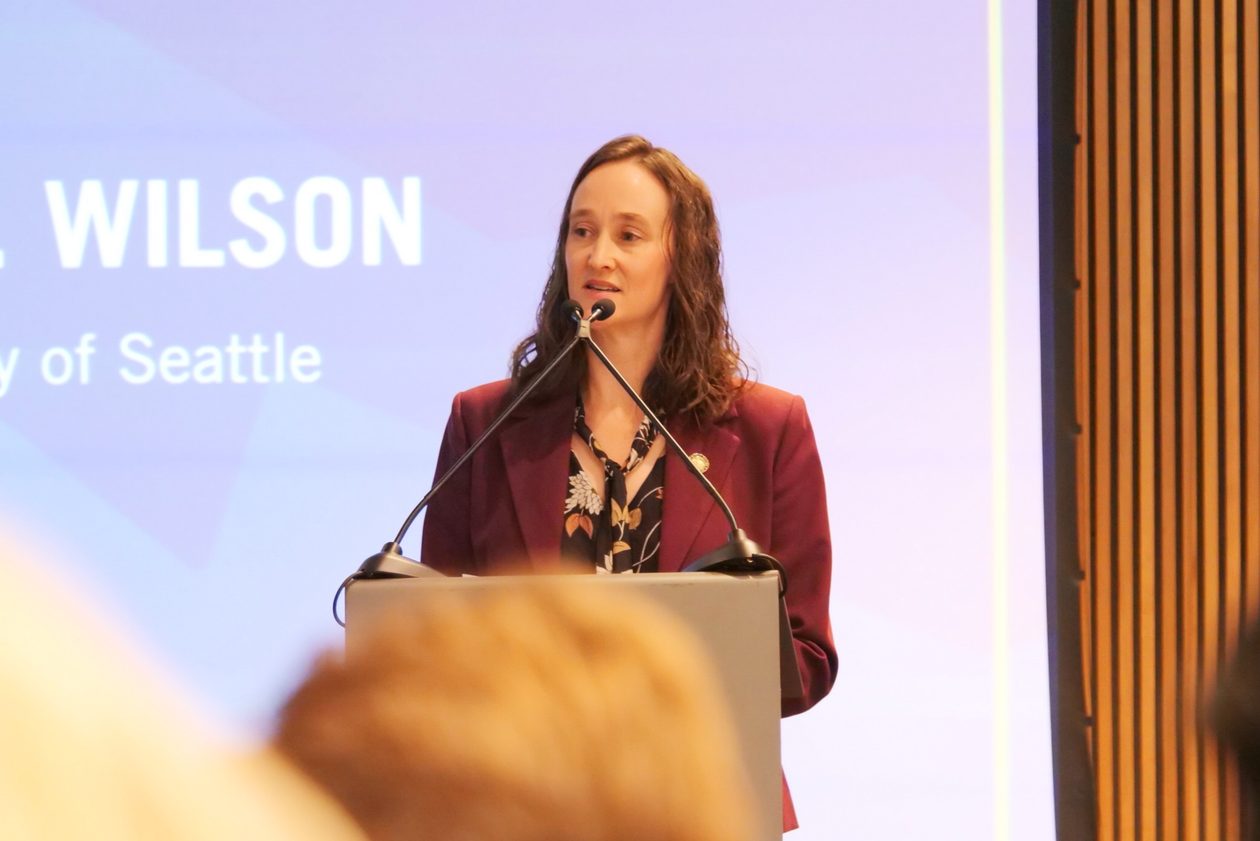
Seattle’s mayor weighs in: Seattle Mayor Katie Wilson, who was an architect of the JumpStart tax before running for office, was not among the speakers at the press conference. She opened the regional session that followed, and said the region needs to do a better job telling its own story.
Seattle Mayor Katie Wilson opens the regional action session that followed Monday’s launch of the Partnership for a Competitive Puget Sound. (GeekWire Photo / Todd Bishop)
“There are some forces and interests that are pushing a narrative that does not want Seattle or our region to succeed,” Wilson said, “and we must counter that with a new commitment to a shared sense of destiny, because Seattle’s success is Bellevue’s success, Pierce County’s success is Snohomish County’s success.”
She called it a fragile moment and said the time to act is now, pointing to the economic actions she announced last week in conjunction with an independent report commissioned by the city and released by Seattle’s Office of Economic Development.
That report, “Seawall: Building a Resilient Seattle Economy,” found Seattle’s tax structure unique among peer cities in the way it “specifically penalizes the hiring of senior, high-compensation workers,” with the burden falling overwhelmingly on large tech employers.
Hiring a software engineer at $650,000 in total compensation costs about $17,000 more a year in Seattle than in Bellevue at JumpStart’s top rate, the researchers found.
The city report, conducted by the economic consulting firm Formation, said Seattle should bet on cleantech, the sector where the city owns the utility, writes the building codes and controls permitting and land use. It’s one place where Seattle has real leverage over its own economy, the researchers argued.
“It’s striking how much agreement we share across labor, businesses, and government,” Wilson said. “This is not a call to ignore our challenges, but to tackle them with a shared sense of possibility.”
She did not address the payroll tax in her remarks.
If you're switching from a Mac or new to Windows, knowing how to 'force quit' an app can be confusing. Luckily, there are a number of ways to get the job done.
When you set up a brand-new Windows PC, you probably want to get through the setup screens as quickly as possible so you can start using your shiny new computer. That makes it easy to click through Microsoft's privacy options without paying much attention to what you've actually enabled. One of those settings allows Microsoft to collect samples of what you type or write.
The code of conduct lays out general principles that Microsoft AI models should uphold — supporting humans rather than replacing them, for instance, and accelerating human flourishing — as well as specific safety constraints meant to implement those principles.
— Silvia Candianihas been named corporate vice president of Worldwide Telco & Media within the Microsoft Frontier Company, a $2.5 billion initiative launched by the tech giant in July to embed engineers inside customers to build and run AI systems. In her new role, Candiani will lead Microsoft Frontier Company’s work with some of the largest telecommunications operators and media conglomerates.
“The momentum across our industry is extraordinary, and I believe we are only at the beginning of what AI can make possible,” said Candiani, who is based in Milan.
Before joining Microsoft in 2010 as a general manager, Candiani was a marketing director for Vodafone in Italy for more than a decade.
Kevin Frey. (LinkedIn Photo)
— Kevin Frey has been appointed vice president and chief impact officer of Microsoft Elevate, the company’s philanthropic effort providing technology support, donations, sales and AI training for educational organizations and nonprofits. Frey joined from UNICEF, where he was the first CEO of Generation Unlimited, the organization’s skills and employment initiative.
Frey said he was joining Microsoft because it’s “one of the only organizations in the world with the scale, scope and influence to bend the arc of the AI-powered future we are entering.”
“I will be spending my time and energy trying to ensure that the benefits of AI are shared broadly and safely across society — by every teacher, every student and every worker — regardless of their postal code,” he added.
— And while we’re on Microsoft, Anne Linge has been promoted to director of communications for commercial and consumer experiences after nearly 10 years with the company. She previously worked in communications at Weber Shandwick and Waggener Edstrom Worldwide, which has since rebranded as We.
Alexis Bateman. (LinkedIn Photo)
— Alexis Bateman has been promoted to director of global sustainability at Amazon Web Services after more than five years with the company. She was director of the MIT Center for Transportation & Logistics for 14 years before coming to Amazon.
Her work with AWS has given her the chance to help “shape sustainability at enormous scale,” Bateman said. “AI and cloud are transforming technology and society at an unprecedented pace, creating both enormous challenges and incredible opportunities for sustainability.”
Lynn Girotto. (LinkedIn Photo)
— Gradial has appointed Lynn Girottoas chief marketing officer. In June, the Seattle startup announced $65 million in new funding for its agentic AI platform that automates enterprise marketing. The company is No. 127 on the GeekWire 200, a ranked index of the Pacific Northwest’s top startups.
Girotto joins from Qualtrics, where she was CMO for two years. She has previously led marketing teams at companies including Vimeo, Tableau and Getty Images, and was a senior director at Microsoft for nine years earlier in her career.
“The best marketers I know want to build ideas and customer relationships, not manage processes,” Girotto said. “Gradial is the first company I’ve seen that’s built to give them that time back.”
Kam Ghaffarian. (LinkedIn Photo)
— A Seattle-area nonprofit group known as the Fermi Explorer Mission announced that Kam Ghaffarian has joined as co-founder. Earlier this month, the organization shared its plans to send a spacecraft on an 80,000-year trip to the nearest alien star system, Alpha Centauri.
Ghaffarian is a billionaire who helped launch companies including X-energy, Axiom and Intuitive Machines. “By committing to launching a spacecraft to Alpha Centauri by 2029, we are not just pushing the boundaries of current technology; we are inspiring a new generation to look up and dream of interstellar exploration,” Ghaffarian said.
Philip Johnston, co-founder and CEO of the Fermi Explorer Mission, also leads Redmond, Wash.-based Starcloud, a startup aiming to launch up to 88,000 satellites to serve as AI data centers.
Rachel Cougan. (LinkedIn Photo)
— Yoodli, the Seattle-based AI roleplay platform for enterprise training, has named Rachel Couganvice president of human resources. Cougan previously served as a fractional HR leader through her consultancy, Possible HR. Before that, she was VP of people for Logixboard and Hiya, and also served as VP of talent for Textio.
Yoodli, which launched in 2021, has grown to more than 100 employees. The company is No. 17 on the GeekWire 200.
Daniel Finney. (LinkedIn Photo)
— Kestra Medical Technologies has promoted Daniel Finney to vice president of research and development. The Kirkland, Wash.-based company sells cardiac monitoring and therapeutic devices. It raised $202 million in its IPO in March 2025 and was nominated for Deal of the Year at this year’s GeekWire Awards.
Finney has been with Kestra since 2019. CEO Brian Webster praised his role in developing the company’s FDA-approved monitoring device, adding that his “technical depth, product experience, and demonstrated leadership positions him to guide our next phase of innovation.”
Finney succeeds Phillip Foshee, Jr., who recently retired after leading Kestra’s R&D organization for nearly a decade.
— PATH has named Dr. Jeremy Farrar chief of its Asia, Middle East and Europe regional division. Farrar, a globally recognized leader in public health and clinical medicine, will join PATH effective Oct. 1 and be based in Geneva. His past roles include assistant director-general at the World Health Organization and director of the Wellcome Trust.
PATH CEO Nikolaj Gilbert praised the appointment, and noted that Farrar “possesses deep knowledge of the realities that prevent access, the people that make health care possible, and the need for PATH’s mission of ensuring breakthrough innovations reach all who need them.”
Emily Levesque. (AAS Photo)
— American Astronomical Society (AAS) announced that University of Washington scientist Emily Levesque is the next editor in chief of the AAS journals. She will succeed Ethan Vishniac, who is stepping down from the role at the end of summer 2027 after 12 years.
“In the writing and publishing landscape we’re facing today, sharing information has never been easier, but trusting information has never been harder — which makes the AAS journals’ combination of rigorous peer review and accessible science more valuable than ever,” Levesque said.
Levesque has been an assistant astronomy professor at the UW for 11 years. She leads the massive stars research group, which studies the evolution and death of the largest and “most extreme” stars in the universe.
— The Seattle Metropolitan Chamber has added eight members to its board of trustees:
Deniz Anders, Nordstrom’s executive vice president and chief marketing officer
Reuven Carlyle, founder of Earth Finance and former state senator
Carl Gipson, vice president of government and community affairs for Comcast
Trevor Gooby, executive vice president and chief operating officer for the Seattle Mariners
Daniel Huber, BNBuilders’ vice president of operations for the Northwest and Colorado
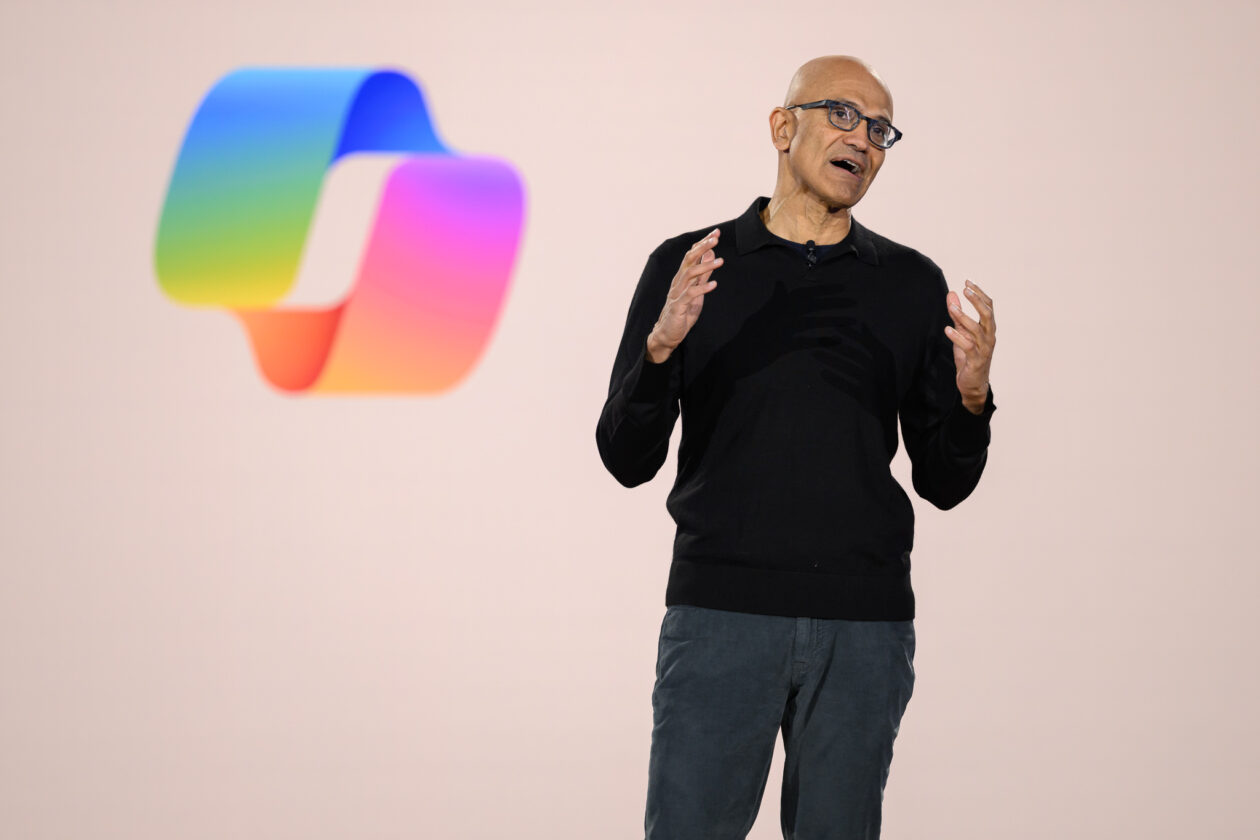
Satya Nadella says Microsoft welcomes the “deliberate pacing needed to get alignment right.” (GeekWire File Photo / Kevin Lisota)
“People matter more than AI.”
That’s the premise of a draft code of conduct Microsoft published Monday morning for the AI models it’s developing in-house. The 37-page document would bar its models from resisting shutdown, setting their own goals, or hiding their reasoning from human auditors.
The document applies to Microsoft’s MAI models, the in-house family the company began building after forming a superintelligence team in late 2025. Microsoft has since released seven homegrown models in what it described as a push for long-term self-sufficiency in AI.
The company says the models should remain “subordinate to humanity, subject to meaningful human oversight and control.”
“AI is moving fast,” the company says in a blog post. “As it does, we believe it’s worth writing down the rules and the motivations behind it, and doing it in as open a space as possible.”
Microsoft acknowledges there’s no guarantee its models will follow the rules. “Written objectives alone can never ensure alignment,” the company says, calling the document a “north star,” not “a guarantee of present-day performance.”
The company says it also filters what its models produce, watches how they behave once released, and limits what they’re allowed to do.
Microsoft’s move comes amid a growing debate over the pace of AI development. In an essay over the weekend, Anthropic CEO Dario Amodei called for slowing down AI advances, saying the pace of development has started to surpass the industry’s ability to keep AI systems safe.
As a first step, Anthropic committed to giving outside evaluators permanent, employee-level access to its systems.
Industry reaction to Amodei: OpenAI CEO Sam Altman agreed and said OpenAI would make the same commitment to independent evaluators. Elon Musk’s response: “Dario is right.”
President Donald Trump rejected the idea of guardrails outright Monday, blaming a “SICK conspiracy” for public backlash over AI data centers and writing that “the only one that is happy about it is China,” alluding to concerns about American competitiveness in AI.
Microsoft CEO Satya Nadella weighed in Sunday, writing on X that the company welcomes “the research, focus, and deliberate pacing needed to get alignment right,” using the industry’s term for making AI systems reliably do what people intend.
Nadella added that the effort “cannot be controlled by a handful of entities, but must have broad representation across the ecosystem, countries, and fields, including academia.”
Microsoft’s draft code of conduct: Mustafa Suleyman, the Microsoft AI CEO, told CNBC the document had been in the works for about five months, and that the company decided to publish it now given the current discussions.
One place where the two companies may diverge is the question of what AI models are, exactly. Microsoft’s code of conduct says its models are “not conscious and should not be designed to imitate consciousness.” It also rejects “the pursuit of legal personhood, or the idea that models might deserve welfare, or be entitled to rights.”
The Verge called that portion of the document “a direct swipe at AI welfare research and model consciousness — concepts Anthropic has been pushing hard on lately.”
Microsoft is taking public comment on its code of conduct for six weeks through a feedback form. It says it will publish a summary of the responses and a revised version later this year, to guide development starting in 2027. It says it isn’t training its current models on it.
The company’s AI team developed the draft with its responsible AI, legal, red teaming and safety teams, consulting outside experts in law, ethics, linguistics and philosophy, plus focus groups drawn from the public.
For most of my Windows-using life, there was an annual ritual we all got to know very well. When your computer started getting slow and creaky, you'd back up all your files to a separate medium, format your system disk, and reinstall Windows.
Nearly 1900 Blizzard Entertainment workers "voted to ratify their first union contract with parent company Microsoft after over two years of bargaining," reports Kotaku, "consolidating Blizzard's many smaller unions into three larger bargaining units."
The workers now gain new protections "on issues such as generative AI, crediting, remote work, and layoffs."
[The contract] acknowledges that AI tools "may be useful in the game development process to support human judgment and creativity and that AI-assisted workflows remain subject to appropriate human control and review for accuracy and quality." But it also stipulates that any implementation of AI technology that would materially impact work performed by union employees must have its impacts bargained over before it can be implemented.
Other sections cover issues such as crediting (guaranteeing that current and former employees are credited by name in all games they work on) and remote work (designating certain roles as hybrid in-office and providing procedures for individuals to apply for their roles to be fully remote). It also contains a lengthy section on how layoffs may be conducted, including a required 60-day notice period (or pay in lieu of notice), a guarantee of one week of severance for every six months of employment, and 14 months of recall rights. The contract also guarantees successorship, meaning if Blizzard is ever acquired by another company, the contract would remain intact.
"Workers also contractually locked in their current hybrid work schedule," reports the gaming news site Aftermath, "meaning that Blizzard can't suddenly change it, as has been a labor-unfriendly trend in the games industry over the past couple years."
Fully remote workers scored a big win as well. "I'm remote, and we grandfathered everyone who is remote to stay remote, so we can't be magically called to an office that we've never worked at before," [said Diablo senior environment artist Mahreen Fatima].
And "The contract also elevated pay floor," reports the Yakima Herald-Republic. "Across the board, workers secured a 1.25% pay increase, but some workers who were paid below $50,000 per year will walk away with pay increases that are as much as 34%."
Windows 11 and its native apps don't have the best reputation. Microsoft has packed the system with all kinds of features, making it feel increasingly bloated.
Microsoft included a number of really helpful features and tools in past versions of Windows that many users came to love. While some of these utilities have survived the transition to Windows 11, others were left by the wayside. Some even made it to Windows 11, only to be retired in one of its subsequent updates. Here are some of my favorite classic Windows tools that are missing from Windows 11, with the latest version of Windows still lacking equivalent features.
This week on the GeekWire Podcast: A study commissioned by the City of Seattle says the city is not in decline but is in danger — finding that 10 companies, nine of them in tech, pay three-quarters of the payroll tax on large employers, and that the tax structure uniquely penalizes the hiring of senior, high-compensation workers.
The report says Seattle should be most concerned about AI but most active in cleantech, the one industry the city can actually shape, since it owns the electric utility and controls permitting, building codes and land use.
Meanwhile, the Seattle Times and Newsday sue Microsoft and OpenAI, accusing them of copying hundreds of thousands of articles to train their AI models, putting Microsoft’s hometown paper against a company that helps fund some of its journalism.
Which leads us to a new GeekWire Trivia Challenge about the Microsoft products that Apple later turned into categories. Stick around to the final segment to see if you can figure it out.
Upcoming Event
AI meets real estate
GeekWire, in partnership with Real Estate at Work, is recording the GeekWire Podcast live at 4 p.m. Wednesday, Sept. 16, with Toby Roberts, SVP of Engineering at Zillow. John Cook and Todd Bishop host with Real Residential broker Leka Devatha at Atmosphere Seattle. Grab a ticket.
Like a lot of Windows users, I resisted Linux for years for two main reasons. I expected a steep learning curve, and I assumed I'd have to give up some of the Windows apps I rely on every day. Either one is enough to make switching feel like more trouble than it's worth.
For longer than I care to remember, I've written Excel formulas, dragged them down hundreds of rows, copied calculations across columns, and built running totals one cell at a time. This works, but I always find I'm doing too much work, especially when some of those jobs can be handled by a single formula sitting in a single cell.
Microsoft's PowerToys suite of Windows utilities, which you can download from GitHub or install through the Microsoft Store, has earned a reputation as a tool designed for — and used exclusively by — Windows power users. But the reality is more nuanced.

 Login
Login