❌

Reading view

There are new articles available, click to refresh the page.

Apple announces touchscreen MacBook Pro with OLED display

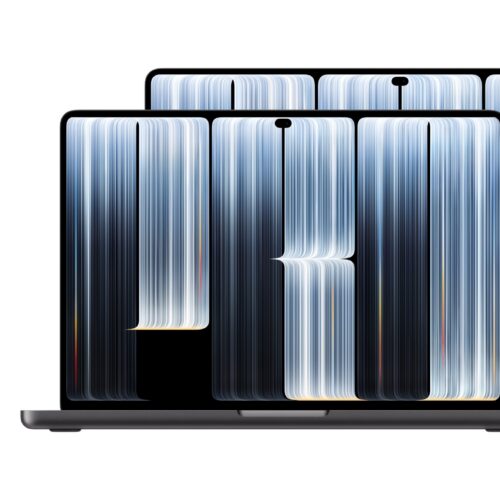
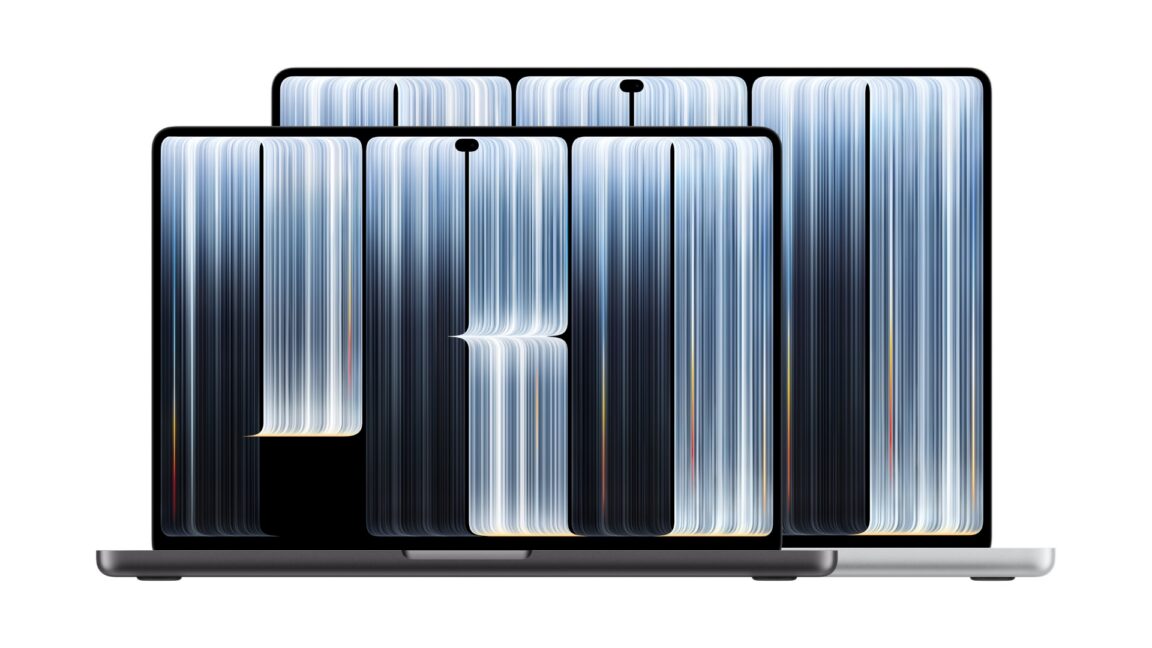
LOS ANGELESβ€”Apple today announced and gave a first glimpse of its first major MacBook Pro redesign in more than five years. As rumored, it includes an OLED display and, for the first time on macOS, a touchscreenβ€”a change Apple has long debated. (Former CEO Steve Jobs famously was opposed.)

Apple's demonstration video showed users interacting with applications by reaching up to touch the screen, including file dragging and multi-touch gestures like pinch-to-zoom. It does not appear to be a 2-in-1 convertible design, though; all the footage was of people reaching up to touch the screen in a normal laptop configuration.

The OLED display (which Apple is, of course, calling the PROLED XDR) seems to be the real highlight here, compared to earlier models: It can achieve 2,000 nits in terms of maximum brightness, and Apple says it has a 10,000,000:1 contrast ratio. References were made to burn-in protection, but details on which approach it's taking for that weren't yet shared. The display retains the 120 Hz variable refresh rate of its predecessors.
Read full article

Comments

Β© Apple

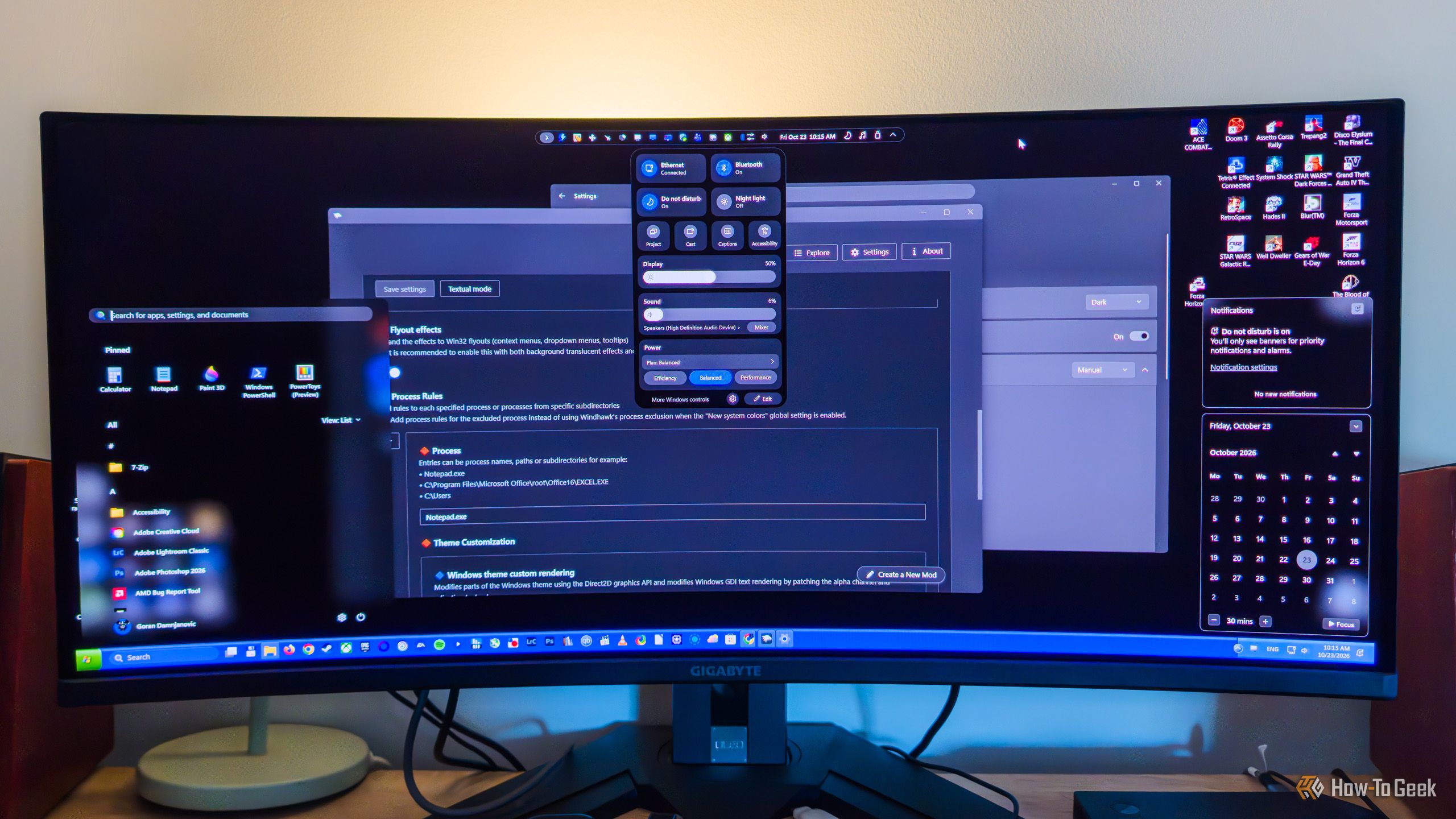
Windows modding is back, and the open-source tools are better than Microsoft's own

While PowerToys is a fantastic open-source tool made by Microsoft, its Windows modding capabilities are fairly limited. When it comes to built-in Windows modding options, you can do stuff like bring back the Windows 10-style right-click menu (via Registry Editor), toggle transparency effects, use a limited selection of custom themes, finally move the taskbar again, and a few other things, which isn’t that bad considering they’re all available right from the get-go.

Apple releases iOS and macOS 27.2 with new Siri AI features, new Music logo

Today, Apple rolled out the 27.2 updates for its operating systems, including iOS, macOS, watchOS, tvOS, visionOS, and so on.

Let's start with iOS 27.2. This update is heavily focused on Siri AI. It adds a memory feature to Siri, so it can "recall your past conversations" and reference them when chatting with you. It also expands what data sources Siri can access when giving responses to include voicemails, Messages attachments, and more.

Read full article

Comments

Β© Apple

One-stop Tool Shows Apple Intelligence The Door

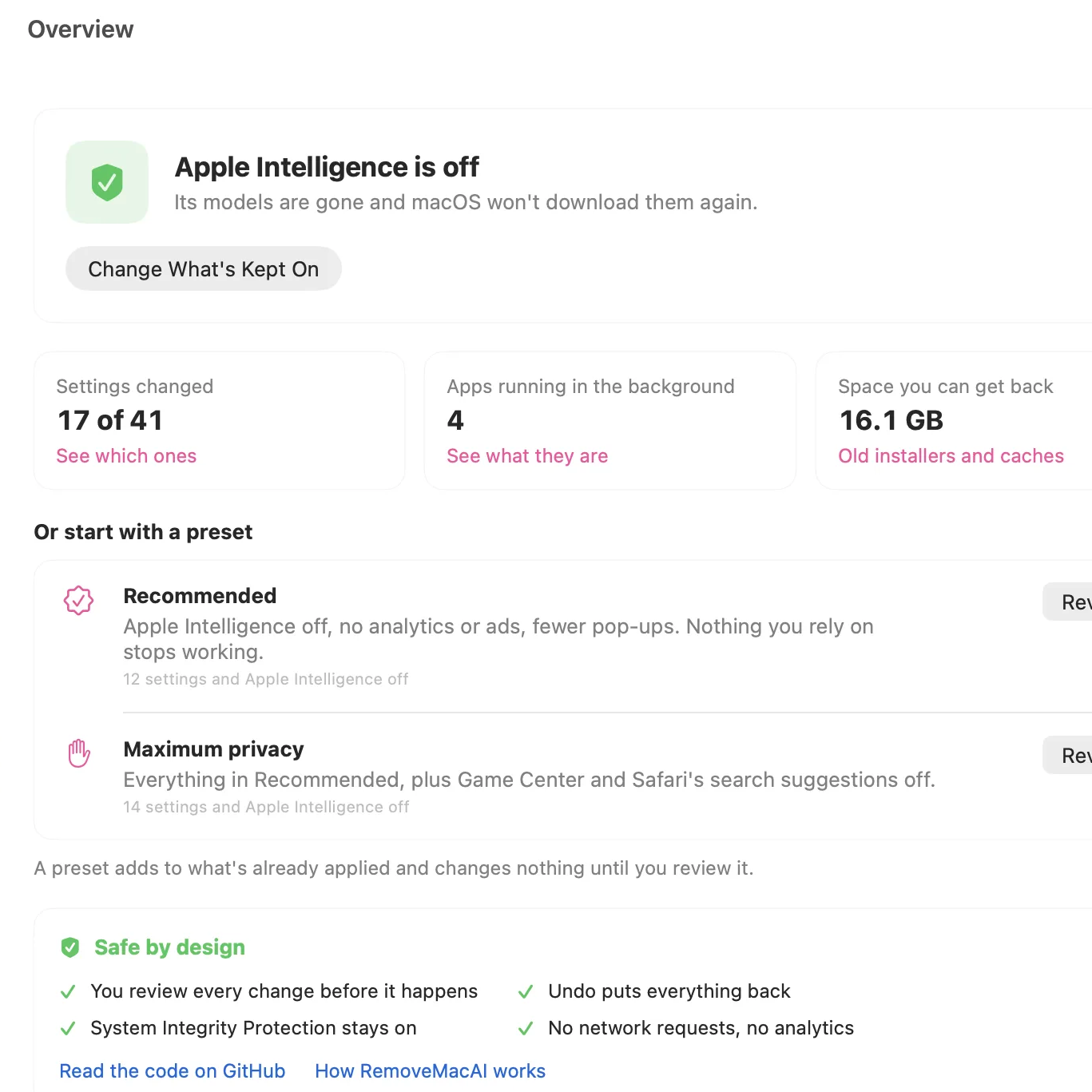
Don’t want AI features on your Mac? Tough luck, unless one wants to imperfectly do it by hunting down settings in about a dozen different places. Even then, the multi-gigabyte models stay on disk. Unsatisfied by this state of affairs, [omlahore] created RemoveMacAI, a one-stop-shop debloater that shows Apple Intelligence the door, reclaiming its disk space on the way out.

With RemoveMacAI one has a single location from which to turn individual AI features off, delete the models behind them, and block MacOS from downloading them again by redirecting attempts to a closed local port.

What’s refreshingly nice about the tool is how transparent it is about what each setting or preset will change, and communicates clearly what exactly one loses access to by disabling it. Want it all gone? Easy. Use one or two features, but don’t want the rest? No problem. All changes are shown up-front before the tool changes anything, and all alterations are reversible.

Released only a couple weeks ago, to say the tool is popular would be an understatement. Windows 11 also got a β€œremove AI features” tool, and it requires constant updating to stay functional. Will a future MacOS update interfere similarly with RemoveMacAI? Probably, but one thing that is clear is that a tool like this resonates deeply with a nontrivial number of users.

A Cray-1 supercomputer replica from 30 "obsolete" Mac Minis

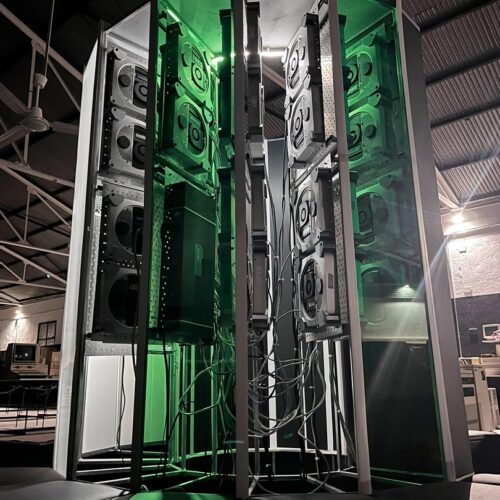
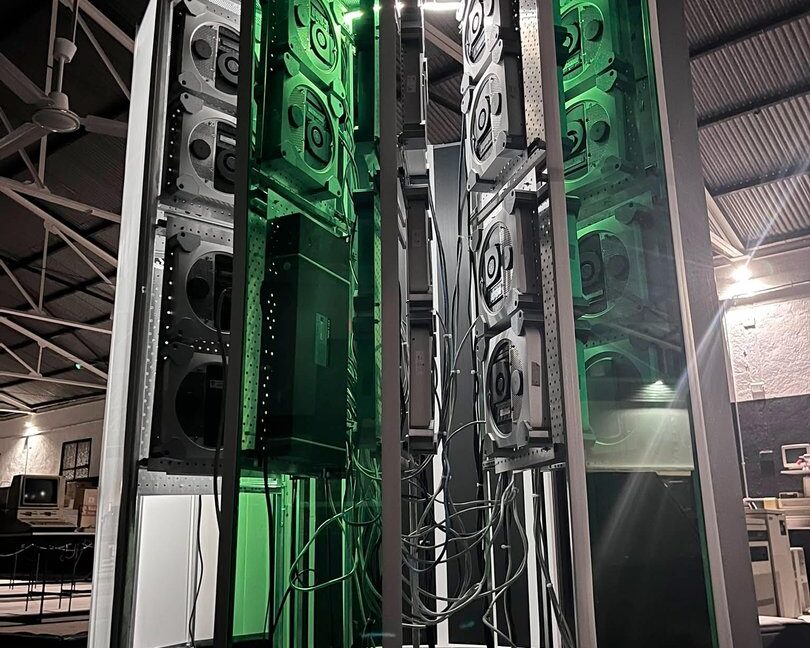
The Museo de Historia de la ComputaciΓ³n in Spain has unveiled a 1:1 scale visual replica of the famous Cray-1 supercomputer from 1976. Instead of sourcing expensive, cutting-edge tech to run the system, the creative team powered the project with 30 2012-era Mac Minis. Developed over 18 months, the project serves as a 50th-anniversary tribute to the Cray-1 and Apple's founding.

Mac Minis from over a decade ago might not seem like the obvious first choice for building a cluster supercomputer, but when networked together, the developers can orchestrate the 64 active processing cores into a combined 1.3 teraflops of performance in their most recent tests. The museum reportedly achieved 1.5 teraflops previously using all 70 available cores, prior to one node going offline. Benchmarks were obtained using a custom matrix-multiplication Python script. Five PCs are quad-core i7s, and the remaining 25 are dual-core i5 models. Except for two units from 2014, the rest of the array dates to 2012.

The replica is a valuable tool for museum-goers to understand the shifts in computer architecture since 1976. The original Cray-1 used vector processing, applying a single instruction to multiple data elements simultaneously, whereas the replica distributes work across independent processors in a parallel cluster. The peak theoretical performance of the original Cray-1 was approximately 160 megaflops. What was originally a purpose-built research machine has been re-created with consumer hardware that's vastly more capable than the machine that inspired it.

Read full article

Comments

❌