Samsung faces a 20.1 billion won (US$15.2 million) fine over undisclosed Galaxy gaming limits. Learn what the case means for device buyers and IT teams.
An unprecedented leak of Department of Homeland Security records has exposed details of more than 41,000 employees or contractors who work for the department and its constituent agencies. The records include email addresses, phone numbers, and office addresses, but also references to internal systems and sensitive information on undercover and surveillance programs. In all, the leak provides a map of how DHS is organized and how it operates.
The records, which span DHS itself as well as seven component agencies, including Immigration and Customs Enforcement and US Customs and Border Protection, were last updated on August 19, 2026. The transparency nonprofit Distributed Denial of Secrets and cybersecurity researcher and journalist maia arson crimew previewed the data for WIRED, which they say they obtained from a group calling itself the Department of Peace.
DDoSecrets published the archive, which it calls “Icepick,” on Wednesday. In a press release, DDoSecrets says the data is from DHS's Okta login system. In a note with the files, the hackers wrote, “They have our information, so it’s only fair that we have theirs.”
The latest generation of Kindle’s 7-inch e-readers have a new look and new accessories. But are they worth the upgrade given Amazon’s new Kindle prices?
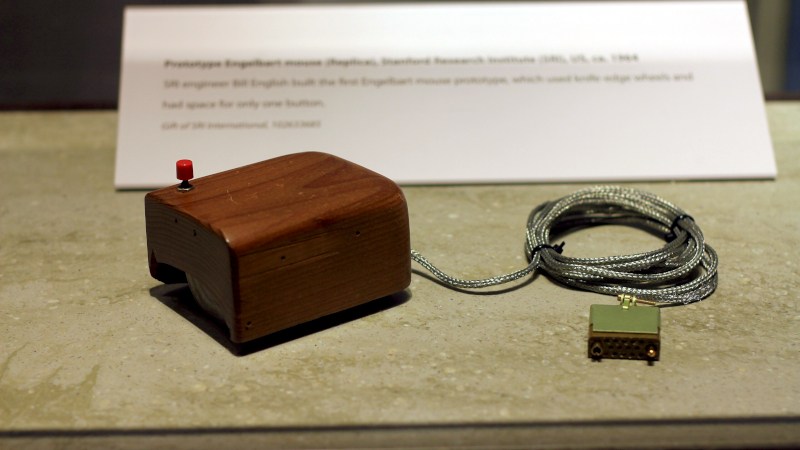
Many readers will be familiar with Douglas Englebart’s 1968 so-called “Mother of All Demos”, in which he described many of the devices and technologies we would be using two or three decades later. Among these was a primitive computer mouse, but while famous it was by no means the earliest pointing device. At the recent Vintage Computer Festival Berlin, [Dmitriy Kostiuk] delivered a fascinating lecture of the history of the pointing device.
It’s a long video that we’ve placed below, and it’s an exhaustive examination of the topic from the earliest examples to the 1990s when mice became commoditized. It’s a surprise to find that the first pointing device was a trackball built for a 1950s Canadian warship, with a surprisingly modern-looking optical encoder. Englebart’s 1966 wooden block with its pair of wheels and potentiometers had a less-well-known and much more stylish competitor in the same year from Telefunken.
We visit the various design iterations as the form of what we’d call a mouse today took shape. It’s unexpected to find that those Sun mice with the spotty mouse pad weren’t from Sun at all, they were from Mouse Systems. The first mice from Microsoft and Apple make an appearance, as do some awful designs for 8-bit computrs. Remembering those in particular perhaps it’s as well we didn’t have the cash to buy such a disappointing product for ourselves.
The video is long, but interesting. Give it a watch.
Header image, Douglas Englebart’s prototype, Michael Hicks, CC BY 2.0.
Samsung faces a $15.1 million fine over gaming claims tied to the Galaxy S21 and S22, reviving a four-year throttling controversy that lawsuits had seemingly put to rest without consumer damages.
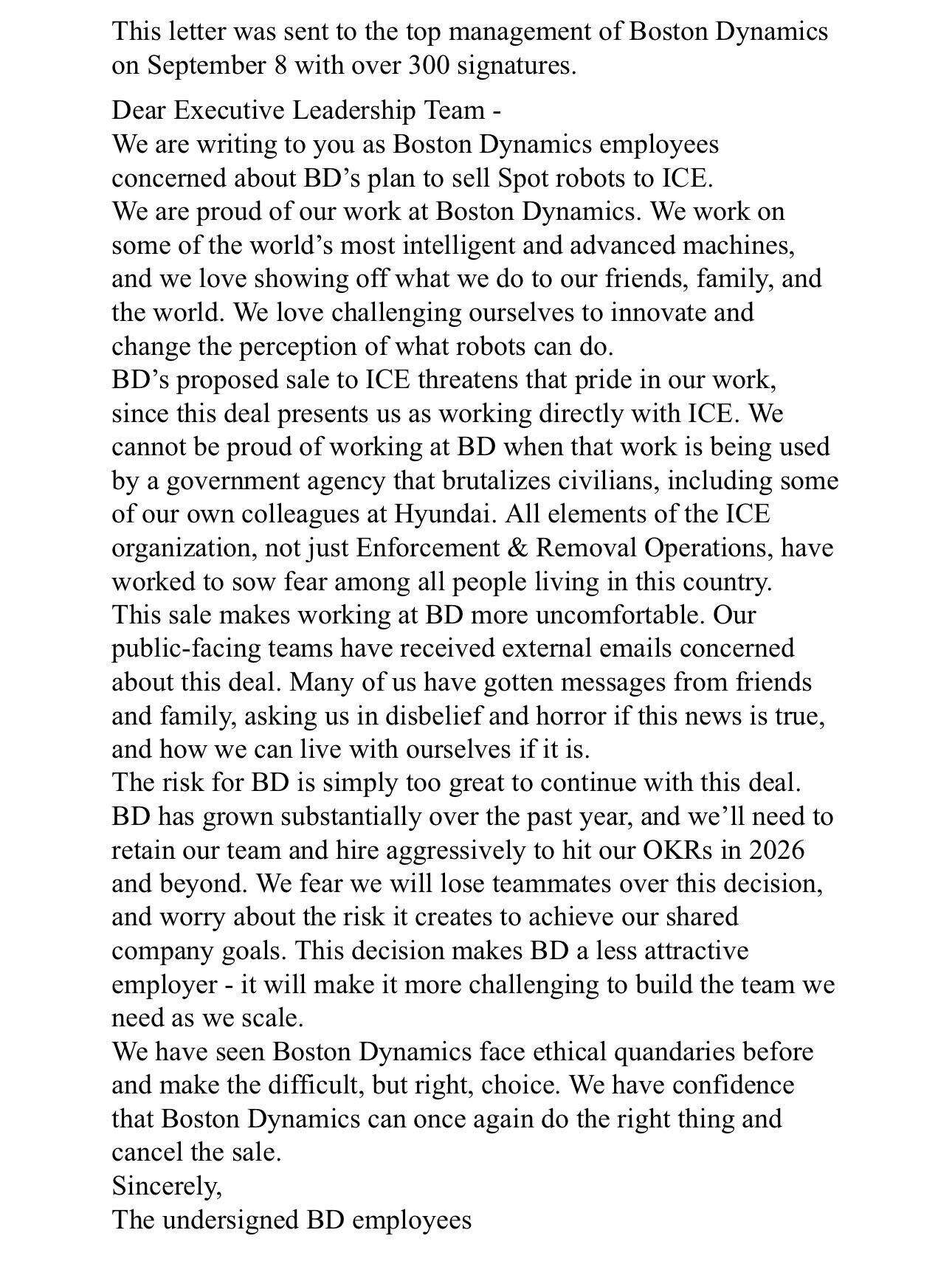
Hundreds of employees at the US robotics firm Boston Dynamics signed a petition calling for executives to halt a sale of the company’s robot dogs to US Immigration and Customs Enforcement—but executives stood by the deal, while saying the robots would not be weaponized.
On September 25, the Department of Homeland Security contract awarded $1.3 million to a Connecticut company called Radeco to provide ICE with modified versions of Boston Dynamics’ quadruped robots. But Boston Dynamics workers sent the petition letter with more than 300 signatures—half of them anonymous—to the company’s executives in early September and shared copies with The Boston Globe and WBUR public radio station.
“Many of us have gotten messages from friends and family, asking us in disbelief and horror if this news is true, and how we can live with ourselves if it is,” according to the petition. “The risk for Boston Dynamics is simply too great to continue with this deal.”
It's the final week of October, which means spooky season is coming to an end. There are plenty of horror movies to watch on Netflix, including Friday the 13th and The Texas Chain Saw Massacre. This week's list of movies heading to streaming is not made up entirely of horror movies, but there are some tense thrillers, including a wild documentary on Paramount+.
Whether you're starting a new business venture and need Microsoft Office's help or you just want to get better organized in your personal life, it's a good time to take advantage of this deal.
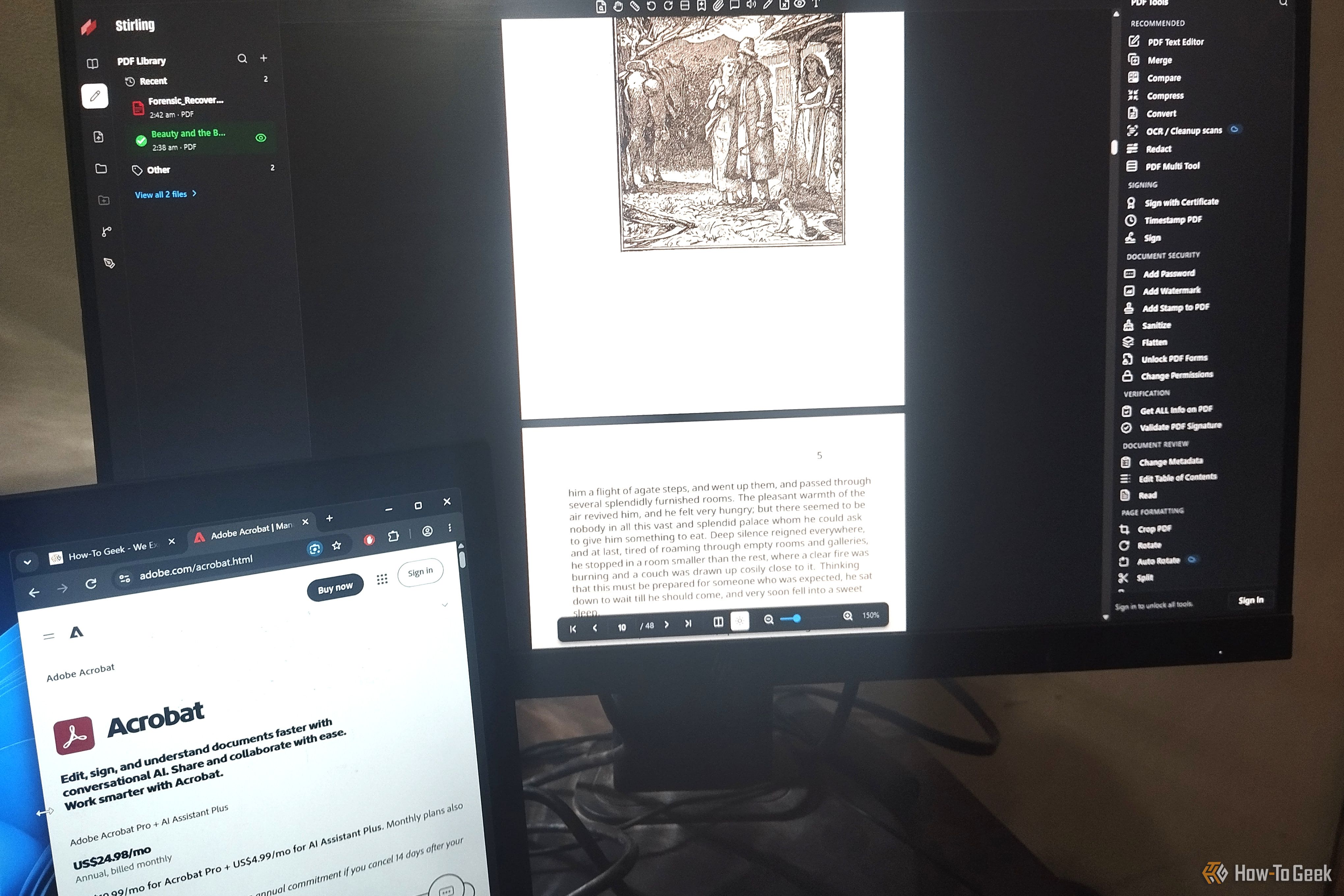
Adobe Acrobat is a go-to PDF tool for many people, but you don't necessarily need a subscription to handle everyday tasks. Free alternatives like PDFgear on Windows and Preview on Mac can handle many common PDF tasks.
Some disappointing, but perhaps not entirely unsurprising news this week out of Denmark — after announcing last year that they would transition away from Microsoft’s proprietary software, the realities of making it work seem to have caught the government off guard. The word is that a trial program immediately ran into problems when government employees that had been given Collabora tried to collaborate with their peers running Office, and has since been quietly abandoned.
Although there’s probably a joke to be made about different parts of the government not knowing what the other ones are talking about, the reality is that if one group of staffers can’t reliably access the data being produced by another, that’s a pretty big problem. Of course, had they simply asked us nerds, we could have advised them that these sort of issues are inevitable if you don’t fully commit to the effort.
Had the entire government moved to the Open Document Format (ODF) at once they would have avoided the issue, at least when it came to newly created documents, but obviously that’s a considerably larger undertaking than installing Collabora or OpenOffice on a few dozen machines and calling it a day. There’s no word yet on how this stumble will impact Denmark’s larger effort to free themselves of proprietary software, but we’d hazard a guess it’s not a great sign. Hopefully things go better for the Dutch.
Speaking of users trying to improve their personal software situation, The Verge has an interesting article on a recent trend of frustrated users pointing AI tools like Claude at their smart TVs, with a few success stories posted to social media showing off interfaces that have been stripped of ads or replaced with something else entirely. It’s compelling stuff for anyone who’s unhappy with their current smart TV experience, but the whole thing isn’t quite as technically impressive as it might seem on the surface.
As the TV’s in question are running Android, all the AI tools need to do is connect to them over Android Debug Bridge (ADB) and uninstall any offending packages that might be providing ads, and similarly creating a customized launcher interface is a matter of spinning up an Android app and installing it over the network. The results may look like arcane magic to the uninitiated, so we appreciate The Verge pointing out that it’s all pretty basic stuff for anyone familiar with Android development.
On the subject of extracting unwanted components, a delicate operation to remove the masts of the sunken WWII cargo ship SS Richard Montgomery was completed successfully earlier this week off the coast of Sheerness, England. To those unfamiliar with this particular vessel that might not sound like a big deal, but when you’re dealing with a wreck holding an estimated 1,400 metric tons of explosives that have been deteriorating since 1944, even approaching the area needs careful planning and coordination.
Masts of the SS Richard Montgomery in 2014. Image Credit: Christine Matthews
There was a concern that the masts and their supporting structures were on the verge of collapsing into the hull of the wreck, which experts warned could potentially trigger an explosion large enough to endanger life and property. Actually removing the explosives from the ship itself will be a far larger undertaking, but at least for the time being, removing the masts has helped stabilize the situation.
Finally, if you’re looking to learn about something a little more local than a potentially explosive situation in Sheerness (apologies to anyone in Sheerness), check out Local Wikipedia. Created by [Ed Jefferson], the site lets you filter Wikipedia pages by their distance from your location or whatever other landmark you wish. By default it shows results that are within 1.5 miles, but if you don’t have anything too exciting within range it will start opening up the radius to pull in more results.
See something interesting that you think would be a good fit for our weekly Links column? Drop us a line, we’d love to hear about it.
As someone who tries to spend one weekend night at a theater, I see as many movies as I can. Not all of these movies will be masterpieces. Some might even feel like a waste of time, though I can usually justify why I watched them in the first place. Like most cinephiles, I have a sixth sense for a certain type of movie: one I don't have to rewatch.
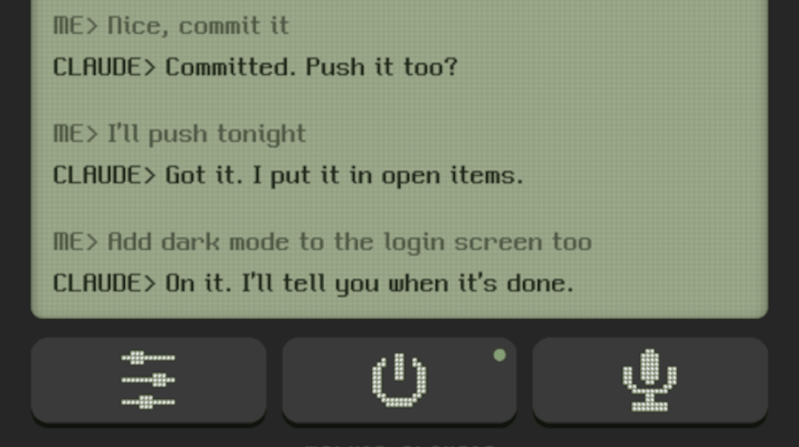
[Bookmari] had a problem — working as a delivery driver, they wanted to work on various projects with Claude Code while out and about. Unfortunately, it simply wasn’t practical to write prompts and read answers on the job. Thus, they whipped up Walkie Claudie, so they could use their voice instead.
The concept is simple enough, it’s an interface that lets you talk to Claude using speech recognition, and lets Claude talk back to you with a text-to-speech engine. It runs on a smartphone, with a direct network connection to the PC running Claude, though you can use a VPN if you’re distantly located. [Bookmari] has a push-to-talk setup so that pushing a button on their Bluetooth earbuds lets them talk directly to Claude. There’s also a special mode to keep the channel active during long pauses if you need a while to collect thoughts and vocalize them. Just for fun, the interface is styled like an old-school walkie LCD, and there’s fun little details like synthesized squelch and channel-switch noises and so on.
If you’re looking for a way to stay hooked up to your AI assistant at all times, this could prove useful to you. Alternatively, consider if maybe it’s worth taking a break sometimes, or check out other Claude Code projects we’ve seen of late.
What should you watch this weekend? If you're staying home to watch something on streaming, NBC has a sitcom about a newly married couple that might suit your interests. On Hulu, an intriguing mystery comedy premiered earlier this week and has already attracted attention.

 Login