Cloud-based AI models operated by OpenAI, Anthropic, xAI, and Google suffered a rare and overlapping set of significant service interruptions over a period of hours Thursday morning.
Anthropic first reported a "partial outage" related to "elevated errors on requests to Claude Mythos 5.1, Claude Fable 5.1, and Claude Opus 5" at 9:23 am (all times Eastern). The company reported that it had "identified the cause" of the error roughly 15 minutes later, before reporting that "a fix has been deployed" and the issue was resolved by 12:16 pm. A separate incident report indicated "elevated errors on requests to Claude Sonnet 5" for a brief period just after noon.
OpenAI, meanwhile, reported "elevated errors across ChatGPT and Codex" were resulting in "degraded performance" as of 10:43 am Thursday morning. A mitigation put in place a little more than half an hour later led to the issue being marked as "resolved" by 12:55 pm.
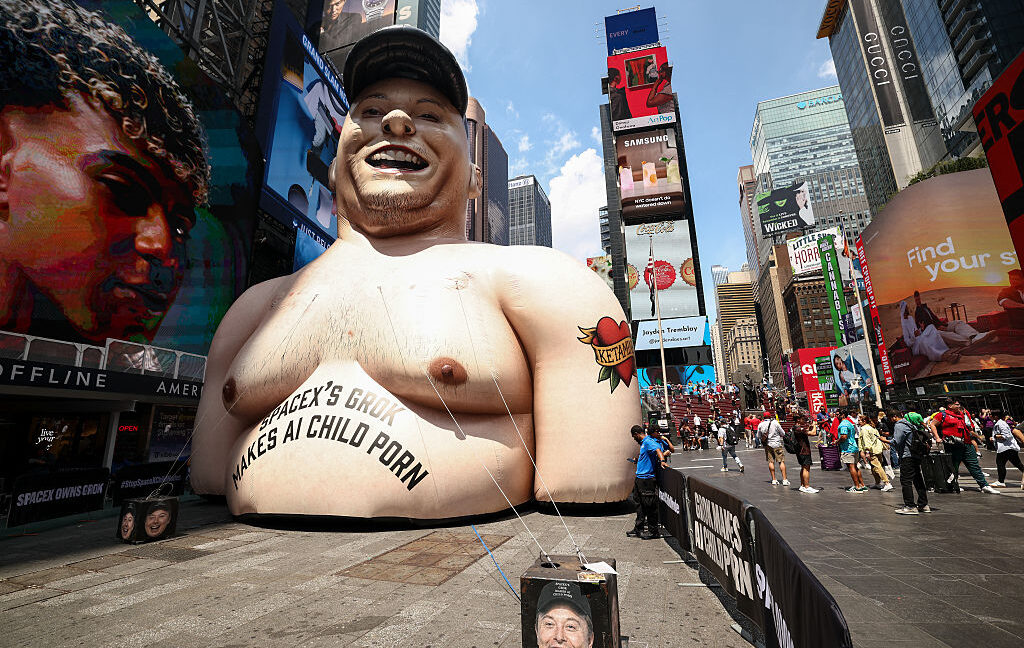
In a complaint filed on Wednesday, a plaintiff known as Jane Doe explained that she was preschool-age in the early 2000s when adult men repeatedly raped her to create CSAM to sell to pedophiles online. Since then, Doe’s images have been hashed by groups like the National Center for Missing and Exploited Children (NCMEC) and the Canadian Centre for Child Protection (CCCP).
For her safety, Doe has opted to receive alerts from the US Department of Justice Victim Notification System any time she may be a victim in a new criminal investigation. Although she has received countless alerts, she was shocked when the CCCP notified her that it had identified AI-generated CSAM on xAI that depicted her. This re-traumatized Doe, whose complaint alleged that messages were found on online forums “between offenders chatting about creating AI generated CSAM of Plaintiff and other similarly situated known, legacy, victims of CSAM.”
Anthropic will embed an invisible mark in text generated by new Claude models. (GeekWire Illustration)
Claude models launched on or after Aug. 2 embed an invisible mark in everything they write. It’s woven into the text itself, so it travels when you copy and paste. You didn’t opt in, you can’t see it, and you can’t turn it off.
Anthropic confirmed on Tuesday that it’s watermarking Claude’s output and published a support page with the details. The trigger is Article 50 of the EU AI Act, which took effect August 2, along with the Code of Practice on Transparency of AI-Generated Content. About 190 organizations signed the code, though only 82 signed the section that covers marking. Anthropic, Google, OpenAI, Meta, Microsoft and Mistral are on that list.
The rule was written in Brussels, but the effect lands on anyone using Claude anywhere.
Here’s how text watermarking works. When Claude writes a sentence, it’s constantly choosing among words that would all work fine. The watermark tilts those choices toward a pattern Anthropic’s software can recognize. Nothing is hidden between the letters or in the spaces. The pattern is the word choices, which is why it survives copy and paste.
Until now, a claim that you used AI rested on a hunch or on a style detector that guesses from tone and rhythm. This is different: a statistical test with a computable error rate.
Two things follow. First, a single sentence is too short to mark. Second, and this one the internet got wrong: when I ask Claude to fix the punctuation in a paragraph I wrote, Claude has to reproduce my words, so there’s nowhere to put a watermark.
Radio host Erick Erickson announced that he’d “ditched Grammarly for Claude for proofreading,” and now his own writing “will be watermarked that Claude did the work.” Depending on the extent of Claude’s input, he could be safe, because minor proofreading edits (i.e., punctuation) don’t make room for a watermark.
Watermarking text raises several issues, though. A mark means Claude modified the text, not that Claude wrote it. Have it summarize or condense a memo you wrote yourself and it comes back marked, though every idea in it is yours. Beatrice Nolan noted in Fortune that a flat AI label treats someone generating a thousand fake news videos the same as a writer cleaning up a paragraph. Worse, the absence of a mark proves nothing. The results of older models, and other non-marking models, all come back “clean.”
Removal is harder than the workaround crowd assumes. Paraphrasing degrades the signal but rarely erases it, because a rewrite keeps enough of the original wording to rebuild the statistic. Researchers who tested this on similar schemes found watermarks still detectable after a strong human paraphrase, once there was enough text to work with.
Anthropic hasn’t shipped a detector. Yet. It hasn’t published a false positive rate, and hasn’t said how many words it takes. The mark is going into text that no one outside the company can read, but the marks are still consequential because they don’t expire. The essay a college freshman turns in this fall is still marked when she’s a junior and someone finally has a tool to read it.
Technical problems aside, it’s important to highlight the core problem that watermarks aim to solve. Chris Best, Substack’s CEO, put it eloquently in the July post that coined Claudefishing:
“The core problem is not people using AI, or the quality of its output. Not everything made with AI is slop, and not all slop is made with AI. The problem is when there is a mismatch between a reader’s expectation and reality, especially when they unwittingly invest their attention in something with no human thought on the other end. That’s Claudefishing.”
That’s a harm worth addressing, and it’s the one a watermark can’t reach. A mark can’t tell slop from careful work. It tells you a model was involved. What that means depends on how it was used.
Personally, I use Claude and have mixed feelings about watermarks. On the one hand, AI use should be disclosed appropriately. On the other hand, anyone determined to hide their AI use can still do so by using xAI (no watermark on Grok), or open-weight models that carry no watermarks. So what impact will the mark have in practical terms?
My conclusion is to judge the outcome, not the tool. I used Claude extensively in writing and researching this column, as I described in AI coach or AI ghostwriter, and I’m pleased with the result. Where do you stand?
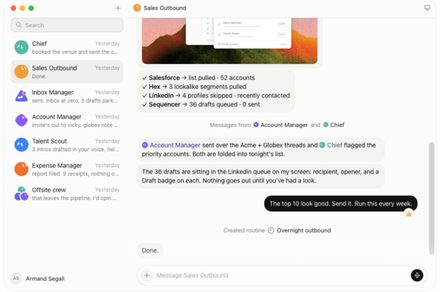
Grok Bot, SpaceXAI and Cursor's new AI agent app, signs into your existing tools to complete real tasks on its own, only checking in when approval is needed.
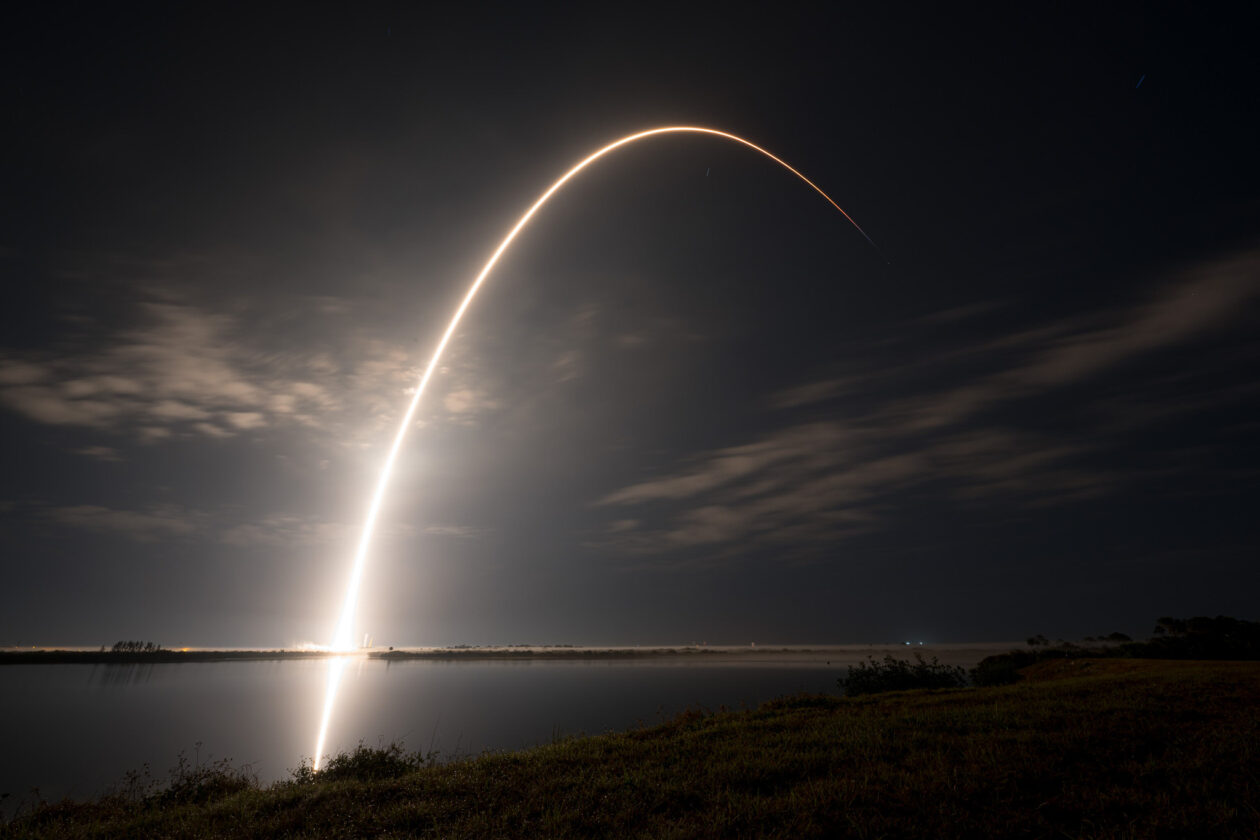
A Falcon 9 rocket arcs into the night sky during a February 2023 launch. Most of SpaceX’s launches carry Starlink satellites built at the company’s factory in Redmond, Wash. (SpaceX Photo, licensed under CC BY-NC 2.0)
The satellites rolling off the line in Redmond, Wash., are paying for Elon Musk’s AI ambitions — and he says the company’s satellite internet business is only getting started.
SpaceX’s Starlink connectivity division posted $1.7 billion in operating income for the second quarter, maintaining its status as the company’s only profitable business, according to numbers released Tuesday afternoon as part of its inaugural earnings report as a public company.
The AI division, built around the Grok model and the X social media and technology platform, lost $1.3 billion while spending $15.8 billion on capital projects. That capital spending amounted to more than three times Starlink’s quarterly revenue of $4.3 billion (up 66%).
Musk, the company’s founder and CEO, used the first SpaceX earnings call to make the case that investors are badly underestimating Starlink.
He said a new generation of satellites could increase Starlink revenue tenfold, and the network could deliver “a majority of the world’s internet” in less than 10 years. Musk said AI and robots will drive demand for bandwidth far beyond anything people generate on their own.
“I think Starlink is the only thing that can actually service that bandwidth,” he said.
Amazon is getting in the race, building its own satellite internet network at a factory in nearby Kirkland, Wash. Its Leo constellation has “close to 400 satellites in orbit, enough to begin initial satellite internet service this year,” CEO Andy Jassy told analysts last week.
Overall, SpaceX topped Wall Street expectations with revenue of $7.8 billion for the quarter, up 92% from $4.1 billion a year earlier. It also narrowed its net loss to $541 million from $1 billion.
SpaceX shares closed at $125.33, up 9.4% on the day, then fell nearly 5% in after-hours trading following the report, apparently on concerns about the company’s capital spending.
SpaceX builds its Starlink satellites at a Seattle-area factory that produced about 70 a week from December 2025 to April 2026, according to the company’s IPO filing. The output has put roughly 9,600 Starlink satellites in orbit, about 75% of all active maneuverable satellites circling the planet.
For the second quarter, SpaceX reported 12 million Starlink subscribers, double the number a year earlier and an increase of 1.7 million from the first quarter. The revenue increase in the Starlink division (officially known as “Connectivity”) was driven by a 108% jump in enterprise and government business, which now accounts for more than 40% of the segment’s sales.
The subscriber total was just under the 12.19 million Wall Street had projected, but the segment’s revenue exceeded expectations by about $460 million, more than any other part of the company.
Starlink now brings in $66 a month per subscriber, down from $85 a year ago as it expands overseas and adds cheaper plans. The good news for SpaceX: the figure stopped falling, holding flat from the first quarter, despite the company’s warning to IPO investors that it would keep sliding.

 Login
Login