❌

Reading view

There are new articles available, click to refresh the page.

Metal fabricator NIC Global to cut 103 jobs near Seattle, move production to Eastern Washington
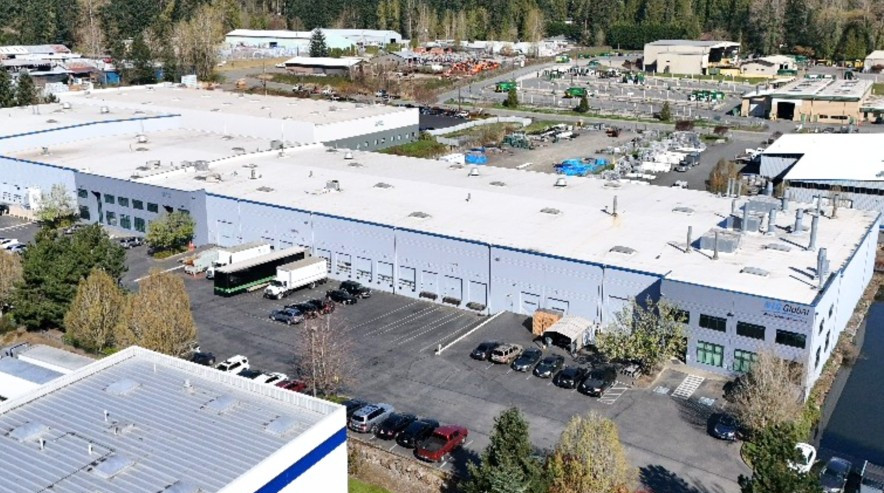
NIC Global is closing its 100,000-square-foot manufacturing site in Woodinville, Wash., as demand shifts to Eastern Washington. (NIC Photo)

Metal fabricator NIC Global plans to close its Woodinville, Wash., plant, eliminating 103 jobs. Declining business from local customers is prompting the company to shift production primarily to Eastern Washington to meet data center-related growth.

The layoffs are scheduled to begin Jan. 18, 2027, with final departures Aug. 31, 2028, according to a notice filed with the Washington Employment Security Department. Affected jobs include assembly, engineering, quality assurance, metal fabrication specialists, and forklift positions.

The building will be returned to its landlord when the lease ends in September 2028.

β€œThis is a sad day for our company. Woodinville is where NIC was formed β€” three Seattle-area sheet-metal shops brought together under one roof in 2001 β€” and the people in that building built the foundation of everything NIC is today,” Troy Wood, company president and CEO, said via email.

The 100,000-square-foot site mostly served energy and medical device customers. Wood said the volume of work at the plant has declined while demand has increased in Eastern Washington for customers building power distribution technology needed by data centers.

β€œNIC is a supplier of sheet-metal fabrications and assemblies, and in our business, being close to our customers is what keeps us competitive,” Wood said.

While most of the work from Woodinville will go to Spokane, and a smaller portion will go to NIC’s Gallatin, Tenn., facility. The company also has manufacturing in Pullman; Chillicothe, Ohio; and Denton, Texas. The work outside of Washington is focused on the heavy truck sector. The company’s headcount is nearly 600.

Laid-off workers will be encouraged to apply for openings at other plants.

There are smaller fabricators remaining in the Seattle area, including JEMCO Components & Fabrications, which provides precision machining and sheet-metal fabrication for customers in medical, aerospace and defense sectors, and QUAL-FAB serving medical and dental customers.

NIC’s legal and financial headquarters will stay in the Woodinville area, where the company plans a new office for its finance, IT, sales and West Coast support teams.

Wood praised the quality and reliability of the Woodinville employees’ work.

β€œI am grateful to every one of them,” he said, β€œand especially to those who chose to stay with us through two and a half years of uncertainty and kept doing their jobs with integrity.”

PicoBrew’s patents are back on the market, six years after the Seattle homebrew startup’s collapse

PicoBrew machine
Seattle-based PicoBrew set out to revolutionize home beer brewing with a line of machines it initially sold on Kickstarter. (PicoBrew File Photo)

The patents behind PicoBrew, the Seattle startup that once promised to do for home beer what Keurig did for coffee, are up for sale again β€” six years after the company collapsed into receivership and after two changes of ownership.

Hilco Global, an Illinois-based diversified financial services company, announced this week that its Intellectual Property Services group has been retained by PicoBrew’s current owner to market the startup’s technology to potential buyers.

The sale includes 17 patents and patent applications, two of them pending, along with engineering and design files and product concepts. Buyers can bid on all or part of the portfolio, and non-binding indications of interest are due Nov. 18. Hilco is pitching the assets to companies in coffee, tea, kombucha, spirits, beverage appliances and housewares.

The seller is Pico Craft Group, which Hilco described as led by a former PicoBrew investor. After PicoBrew’s 2020 collapse, its bridge lender took over the assets. That lender, PB Funding Group, was managed by former Microsoft software developer Greg Whitten, The Seattle Times reported at the time. Pico Craft Group bought the assets from the lender in 2024 for an undisclosed amount, according to Hilco, which did not say who runs the group.

β€œPicoBrew was a true innovator in the consumer and commercial craft beverage space, and its portfolio has applications well beyond beer,” Eric Hurwitz, a senior director at Hilco, said in a news release.

The portfolio covers technology from PicoBrew’s full product line, according to the release, including the Pico Pro and Pico C home brewing appliances, the PicoStill accessory for spirits, the Pico U Multibrew platform for beer, coffee, tea and kombucha, and Z-Series brewing machines and KegSmarts kegerators for commercial use.

Bill Mitchell, a former Microsoft vice president and longtime homebrewer, founded PicoBrew in 2010 with his brother Jim Mitchell, a food scientist, and Avi Geiger, an engineer who also worked at Microsoft. Their countertop machines automated the brewing process using PicoPaks, ingredient packs based on recipes from craft breweries.

The startup became a Kickstarter regular. Its 2017 campaign for the Pico Model C raised $1.93 million from 4,301 backers, a record at the time in the site’s food category, and the $549 machine landed at retailers including Best Buy, Williams-Sonoma and Amazon. A 2018 campaign for the Pico U pushed PicoBrew into coffee, tea and kombucha.

But the company struggled to land more funding. In February 2020, after failing to close a new round, PicoBrew entered receivership. It had raised more than $15 million and cut its staff to fewer than 40, down from a peak of more than 80.

PicoBrew ceased operations in 2020, and no one has supported existing devices since, according to Hilco. Any decision about future support would be up to a buyer. The King County Superior Court approved the 2020 sale, which freed PicoBrew’s bridge lender from the company’s liabilities and from responsibility to past customers, The Seattle Times previously reported.

Some owners kept their machines brewing without the company’s servers by using a workaround developed by a Facebook group of PicoBrew users, The Spoon reported in 2020. The founders were let go after the receivership, according to the site.

When PicoBrew went up for sale in 2020, Mitchell told GeekWire that hardware takes time and multiple funding rounds backed by firm investor commitment.

He shared advice he’d gotten from Dan Leviton of Maveron: β€œStartups only fail for one of two reasons β€” they run out of heart, or they run out of money.”

❌