Apple Partners With Klarna To Offer iPhones, Macs On a Subscription Basis
Read more of this story at Slashdot.

Nearly 20 years ago (!), in 2007, I published my first and only book: Microsoft 2.0. It focused on changes I expected at the company in the “Post-Gates” era. What would remain the same and what likely would be different once co-founder and CEO Bill Gates had left the building?
CEO Satya Nadella has not exited the company (yet). But there’s no question that Microsoft and its mission have morphed considerably in the past year or two. I’m not quite ready to christen this the Microsoft 3.0 era, even though Nadella handed the reins of Microsoft’s dominant commercial business to Judson Althoff nearly a year ago.
That decision resulted in Nadella moving into more of a “founder mode” role, allowing him to focus less on the day-to-day work of running the business. (Microsoft historians may recall that Gates made a somewhat similar move back in 2000 when he became Microsoft’s chief software architect.)
While it might not yet be time for Microsoft 3.0, we arguably could be in the “Microsoft 2.5” era. Windows and Office are still around and still play a big role. Microsoft still builds and sells developer tools and databases. But there’s no question that the cloud and all things AI are at the top of the pecking order now.
I’m embarking on a series here at GeekWire that will focus on what matters to Microsoft and, by extension, to its customers, partners, investors, and employees these days. Who are some of the people shaping and leading the company? What are their opportunities and challenges right now?
Over the next few weeks, I will be profiling various Microsoft execs working on plans for Microsoft’s ongoing evolution. Some are company veterans; some are newcomers. I’ll be talking with top execs from Microsoft’s Security, Copilot, Windows + Devices, Xbox, GitHub, and more.
I’m interested in their strategies for Microsoft’s key products and technologies and how they plan to try to turn Microsoft’s ambitious vision into reality. What are their teams building? What do they see as their biggest challenges and opportunities? And where do they see the technologies in their respective areas heading?
I feel like many of us who’ve been keeping track of the biggest tech companies (myself included) have fallen into the trap of blaming or attributing everything a company does to AI. Layoffs? AI is the culprit. Price increases? It’s all thanks to AI. Changing sales strategies? Chalk it up to AI …
But upon further reflection, I believe Microsoft’s strategy is more nuanced than “AI or bust.” There’s no question that Microsoft’s AI ambitions are shaping its goals and tactics. But Microsoft, as a heavily enterprise-focused entity, can’t simply stop supporting products that aren’t built from the ground up with AI (as much as it might like to do so). Nor can it just leave behind customers who aren’t 100% onboard with its AI moves.
Couple those enterprise hurdles with some not-so-popular consumer decisions, like axing 3,200 people in the gaming unit, and Microsoft’s approach to turning the ship looks a lot trickier.
Our Microsoft 2.5 series kicks off Thursday. Stay tuned.

The combination of hardware required to make use of this project is specific enough that we imagine only a relatively limited number of readers will actually be able to try it out. But if you do happen to own a YubiKey and either a laser engraver capable of marking it or a fancy UV printer, [madeinoz67] has put together an awesome tool for adding some visual flair to your two-factor authentication device.
Running it is as simple as opening a web page, because that’s exactly how it’s implemented. You can either host it yourself or just launch it right from the GitHub repository. After opening the HTML file, you’re presented with a fairly intuitive user interface that lets you draw on top of a 2D outline of the YubiKey itself so you can get a better idea of what the final product will look like.
You can pick from an array of vector icons, upload your own images, and add custom text. There’s a pull-down at the top that lets you pick which specific YubiKey you want to work with, and there are different views depending on whether you plan on blasting your handiwork onto the device with a laser, doing a full-color UV print, or cutting it out of vinyl with something like a Cricut.
Even if you don’t have a YubiKey that’s begging for some custom artwork, we think there’s a lot to learn from this project. Obviously there are some very valid reasons to be concerned about how much of our modern software can only be accessed through a browser. If you’re going to use web technologies to create a piece of software, the least you could do is make it offline and self-contained like [madeinoz67] has.
Now if you’ll excuse us, we’ve got to go warm up the UV printer.
Read more of this story at Slashdot.

This week on the GeekWire Podcast: Silicon Valley legend Vinod Khosla’s family is leading a group that’s buying the Seattle Seahawks for a record $9.6 billion.
We dug into hours of his talks and interviews to answer the big questions: Who is this guy, why does he want an NFL team, and what does his track record tell us about the kind of owner he’ll be? Plus, the blind spot that could get him into trouble.
Featuring highlights from his 2015 talk at the Stanford Graduate School of Business.
Also: A mystery trove of aerospace artifacts is rescued from a Seattle-area electronics recycler, and we want to hear about your coolest tech history find. Send your comments, voice memos and photos to todd@geekwire.com.
Subscribe to GeekWire in Apple Podcasts, Spotify, or wherever you listen.

Apple Car Key support is reportedly coming to future GWM Tank SUVs, allowing compatible iPhone and Apple Watch users to unlock, lock, and start their vehicles digitally.
The post Apple Car Key Support On The Way To Future GWM Tank SUVs first appeared on Redmond Pie.

One of the biggest hits ever produced by Seattle’s independent video game scene is joining the Magic: The Gathering multiverse later this month. Sort of.
Magic, the long-running collectible card game published and developed by Renton, Wash.-based Wizards of the Coast, frequently puts out special crossover editions via its Secret Lair imprint.
The Secret Lair “drops” are limited-run collectibles that typically reimagine older Magic cards with new designs and art, which replaces Magic‘s usual cast of wizards and monsters with, for example, Dwarf Fortress, Garfield, or various Marvel superheroes. A caveat: Secret Lairs are priced to appeal to die-hard collectors, rather than casual players.
On Friday, during the first day of MagicCon Amsterdam, Wizards announced several upcoming “drops” for Secret Lair, three of which are based on the popular indie video game Stardew Valley.
Stardew, made by solo developer Eric “ConcernedApe” Barone, is arguably the single biggest success story to come out of Seattle’s independent game development scene. It’s an open-ended video game about a young person who moves back to their grandfather’s abandoned farm, to raise crops, breed livestock, make friends, fish, adventure through the nearby abandoned mines, and/or romance neighbors. This can all be taken at the player’s own pace, with no particular time limits or directions.
Stardew’s success helped to popularize what’s come to be known as the “cozy” genre of chill-out, low-stress video games, alongside other hits like Nintendo’s Animal Crossing. Stardew celebrated its 10th anniversary earlier this year, has sold nearly 50 million copies across multiple platforms, and has spun out into a successful concert tour, a cookbook, and as of earlier this month, a crochet book.
Now Stardew is coming to Magic via Secret Lair, in a package that Wizards is calling the “Superdrop of the Moonlight Jellies,” named after a jellyfish-themed town festival in Stardew Valley.
Coming on July 27, the drop is split into three specific sets of cards: Welcome to Stardew Valley, Life in Pelican Town, and A Flicker in the Deep. The first set, Welcome, features unique pixel art made by ConcernedApe on each card.
Most of the cards in the Stardew Valley Secret Lair are reprints of existing Magic cards, though some have been renamed in keeping with the theme. For example, Swords to Plowshares is one of the oldest cards in Magic, but it’s getting a new Stardew-themed edition in this Secret Lair.
The lone exception is the actual Stardew Valley card (above), which is a special land that’s designed to be compatible with most styles of competitive Magic play.
Other upcoming Secret Lairs announced at MagicCon Amsterdam include:
Read more of this story at Slashdot.

iOS 27 beta code hints that Lucid and Xiaomi vehicles could gain Apple Car Key support, though compatible models and launch timing remain unconfirmed.
The post Apple Wallet Car Key Support Could Expand to Lucid, Xiaomi Vehicles appeared first on TechRepublic.
Read more of this story at Slashdot.
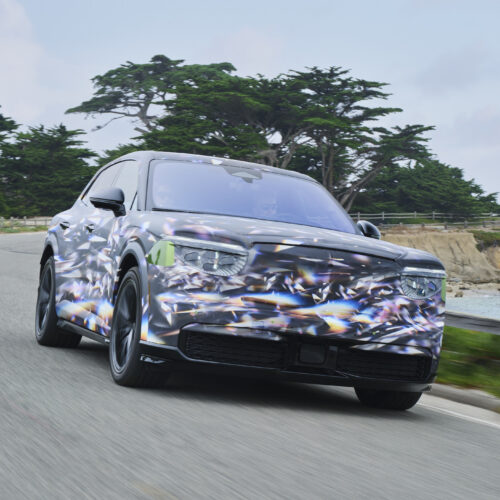
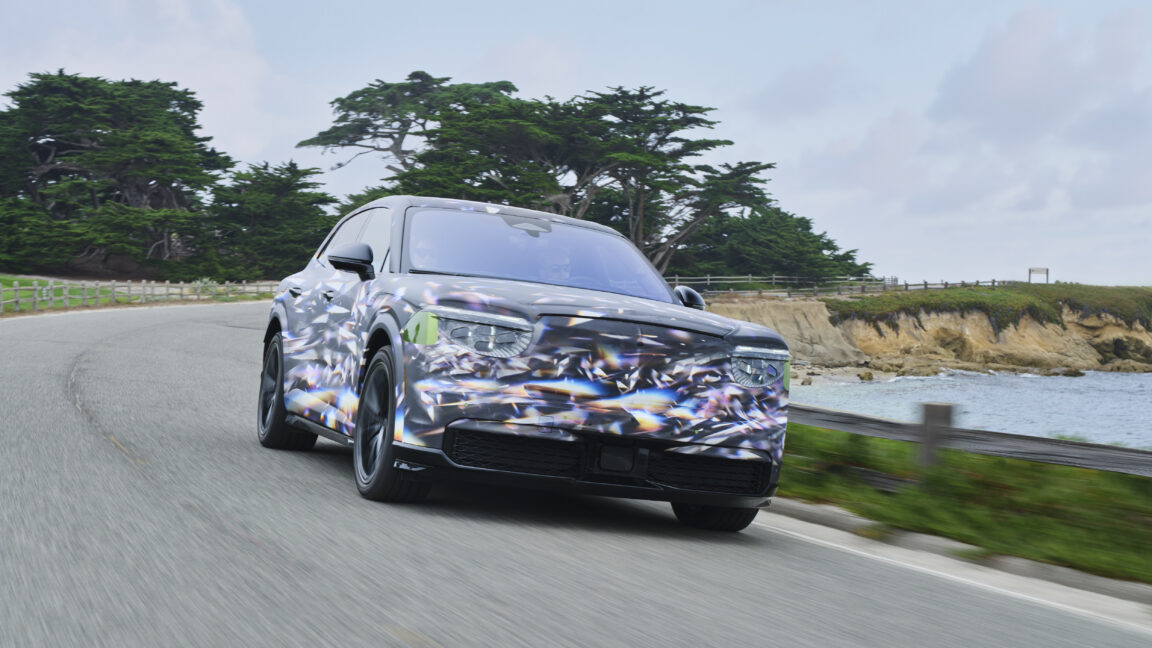
Bentley is preparing to add a fourth model to its rarified lineup, and today we know what it will be called: the Torcal. The carmaker has been working on its first electric vehicle for a while now; it was seen testing in the Arctic Circle late last year, giving us a sneak peek at the interior. A few weeks ago, another example was spotted at the Nürburgring.
Speculation had been mounting over what Bently would call its first battery EV—although sleuths spotted a European and UK trademark filing for Torcal earlier this year, the absence of a related US trademark filing led Car and Driver to suggest the car might be badged the Bentley Barnato instead. This referenced Woolf Barnato, who raced Bentleys with great success in the pre-war period, including three wins at the 24 Hours of Le Mans (1928, 1929, and 1930).
El Torcal de Antequera Nature Park in Andalusia, Spain.
Credit:
Matthias Balk/picture alliance via Getty Images
Instead, Bentley continues a convention it has used for the Bentayga, Bacalar, and Batur, taking a name from a natural landmark—in this case, El Torcal de Antequera, a spectacular collection of limestone rock formations in Spain. When the automaker noted that the name is also derived from the Latin "torquere"—the root from which the modern word torque also traces back to—that seems to be a clue that the Torcal will use an electrified powertrain, as these provide immense amounts of effortless torque.


© Bentley

Microsoft is launching a new AI “company.” It won’t be a separate legal entity, and most of its 6,000 people already work at Microsoft. But the $2.5 billion behind it is real, and the stakes are big, given how many of its AI partners and rivals are racing to do basically the same thing.
The tech giant on Thursday announced “The Microsoft Frontier Company,” which will embed engineers inside customers to build and run AI systems. It will be led by Rodrigo Kede Lima, a longtime Microsoft sales and enterprise leader, most recently president of Microsoft Asia.
This practice is known in the industry as forward-deployed engineering, in which a company sends its own technical employees to work inside a customer’s operations to design, build, deploy and operate AI systems on-site rather than selling a tool and walking away.
The model was pioneered two decades ago by Palantir, but in recent months the approach has become the hot new thing in enterprise AI. Amazon committed $1 billion to its own forward-deployed engineering initiative just two days ago. (Some inside Microsoft suspect that its rival may have caught wind of what it was planning and moved to announce first.)
Anthropic and OpenAI launched rival ventures in May to put engineers inside enterprise customers. Unlike Microsoft’s initiative, the OpenAI Deployment Company, as the ChatGPT maker’s venture is known, is an actual standalone entity — majority-owned by OpenAI but backed by more than $4 billion from a partnership led by the private-equity firm TPG.
Similarly, Anthropic teamed with Goldman Sachs, Blackstone and Hellman & Friedman on a $1.5 billion venture — not yet named — to embed engineers inside mid-sized companies, starting with the investment firms’ own portfolio businesses.
Microsoft is attempting to one-up them all.
“This goes beyond what has been labeled as Forward Deployed Engineering (FDE) and will be the largest, most capable, outcome-driven engineering organization in the industry,” wrote Judson Althoff, CEO of Microsoft’s commercial business, in a post announcing the new initiative Thursday morning.
Responding to questions from GeekWire, a Microsoft spokesperson called the new initiative “a purpose-built company with its own leadership and financial accountability” but stopped short of calling it a separate legal entity or standalone company.
The spokesperson said the organization “brings together more than 6,000 industry, engineering and AI professionals, drawn primarily from Microsoft’s existing engineering and forward-deployed teams,” noting that it will “grow through a combination of internal talent and external hiring across engineering, AI, and industry roles.”
Separately, some consulting roles are among those expected to be impacted by the round of layoffs anticipated next week.
Microsoft wouldn’t say whether the $2.5 billion is new spending or repurposed from existing budgets, or over what period it’s being spent. The company also hasn’t yet spelled out what the new organization means for the future of its existing consulting and services units.
Across the industry, this is happening now because the payoff from AI has proven harder to capture than many companies expected. Businesses across the economy have adopted tools like ChatGPT, Claude, Gemini and Copilot, only to find that impressive demos don’t automatically translate into results. The technology is powerful, but deploying it can be difficult inside a real company, with its own data, rules and entrenched ways of working.
So the AI providers have started sending their own engineers to work inside those companies, figuring out where the AI can actually help, then building it into their operations.
“Having the model alone doesn’t change your workflows or how you operate,” said Marc Nachmann, Goldman Sachs’ global head of asset and wealth management, in an interview with CNBC about the Anthropic partnership. “You need people who can combine the technology with what’s actually happening in the business and implement those changes.”
The big AI providers have multiple reasons to do this. Each of them wants to get more businesses using its AI platform at higher volumes. All of them are looking to drive long-term demand for the AI capacity they’re collectively spending hundreds of billions of dollars to build.
Another big reason: AI models are becoming commodities, getting cheaper and more similar by the month. The big money for the likes of Microsoft is in selling the services needed to make AI pay off inside a company, which is a far bigger market than just selling the models themselves.
Microsoft is pitching privacy and trust as a selling point. Its promise is that a customer’s data and hard-won knowledge stay the customer’s alone. Microsoft says it won’t feed them into training its AI models in ways that would hand the same advantages to the customer’s rivals.
It’s also promising choice: customers can run whichever AI model fits the job, from OpenAI, Anthropic, Microsoft, or open-source providers, not locked into using one.
Microsoft CEO Satya Nadella has argued that a company should be able to exchange one AI model for another without losing all the institutional knowledge it has built up.
That’s his test, as he put it, for whether a business still controls its own future.
“The last thing any of us want is a world where every company across every sector is ceding value to a few models that eat everything they see,” Nadella wrote in a June 14 essay. “If all the value is accrued by only a few models, the political economy will simply not tolerate it. There is no societal permission for an AI future that hollows out entire industries.”
Whether that vision of swappable AI models becomes a reality remains to be seen. There’s actually a risk for customers that the opposite will happen in the forward deployed engineering approach. Even if they can theoretically swap in a competitor’s AI model, working with Microsoft’s engineers means their systems naturally end up running on Microsoft’s cloud platform and related technologies, making it very difficult to jump ship.
It’s also not clear how new all of this really is for the company. Microsoft already runs a large in-house delivery arm — Industry Solutions Delivery, the group that absorbed what used to be called Microsoft Consulting Services — with thousands of consultants and engineers building and deploying technology inside customer organizations.
Microsoft also has programs like FastTrack to help customers roll out its software, and over the past year it has been rolling out “forward-deployed engineering” teams with partners, including a dedicated practice with Accenture and a $1 billion, five-year alliance with EY.
So ultimately the Microsoft Frontier Company is less a new company than a new push behind work the actual company was already doing, albeit bigger and better-branded than before.