CNN reports on yaks "designed and cloned" in secretive, high-altitude labs in Tibet — 2.4 miles (4,000 meters) above sea level. They're a critical part of the local economy, and researchers "hope to create an 'elite' herd of super-yaks, healthier and more fertile than their predecessors."
Both domestic yaks and their wild cousins have been facing threats for years, with some rare subspecies at risk of disappearing entirely. Authorities in the southwestern Chinese region have poured tens of millions of dollars into boosting the yak industry in recent years — and they hope cloning can help. The first yak clone came in July 2025, Chinese state media hailing it as a breakthrough achievement that combined cloning with gene selection. More clones were born this spring — and researchers are now aiming to create a herd of more than 100 "elite" yak clones by 2028, boasting desired traits like faster growth and larger size. "This shows the technology has moved from a one-time success to a stable, mass-scale application," said Fang Shengguo, the project's scientific lead and director of the State Conservation Center for Gene Resources of Endangered Wildlife, according to state-run news agency Xinhua...
Many experts acknowledge there are legitimate arguments for using cloning in conservation, and for gene selection in farming. But the ethical waters are murky, and any such project should have high levels of public transparency and accountability, said Lisa Moses, a veterinarian and bioethicist at Harvard Medical School. So far, much of the yak cloning project remains mysterious, with information largely limited to glowing state-media coverage...
[S]ome scientists say these projects reduce our sense of urgency toward fixing the environment, and that we can't simply churn out clones while the planet burns. To truly enact change, they say, we have to continue addressing the root cause of the problem — restoring degraded habitats, lowering carbon emissions, cracking down on poaching, and more. But for others, "there is a strong feeling ... that traditional conservation is essentially failing now," Moses said. "What we've been doing for the last 100 years to try to stave off ecological destruction is not working.... The argument is, we don't have a choice," she added. "If we want to try to do something that will actually make a difference, we need to use these technologies, specifically synthetic biology, to essentially override evolution and change the fitness of the species for the environment that they live in."
"History is littered with good intentions in the environment gone wrong," Moses said, "and I would argue that these technologies have even more unknowns than ones that we previously employed."
The article points out that the number of wild yaks "dropped more than a third in the last 30 years,
with just 10,000 to 20,000 individuals left, according to the Wildlife Conservation Society."
The yaks are threatened by climate change and habitat degradation, "with warmer temperatures bringing invasive plant species and increased competition for resources... in one of the world's most inhospitable terrains."
Big Tobacco studied nicotine analogs like 6-methyl-nicotine for decades but never marketed them. Now, Chinese vape makers are using them to sidestep US regulations.
Researchers found Chinese and Russian SDKs in Android apps marketed to U.S. military users, highlighting software supply chain and enterprise privacy risks.
China's AI companies are running short on engineers, so they're now scouting talent as young as 13 with camps, mentorships, and even guaranteed jobs straight out of high school.
A recent examination of hundreds of mobile apps marketed toward US military personnel found more than one in eight contained software built by companies in China, Russia, or other foreign nations, raising fresh concerns that adversary governments could harvest data revealing where service members live, work, and deploy.
The largely unregulated advertising industry that tracks Americans online treats civilians and service members mostly the same—unless there is profit in telling them apart—despite evidence that exposure can reveal troop deployments, unit movements, and the routines of personnel within intelligence facilities and hardened shelters where nuclear weapons are believed to be stored.
Moonshot AI has temporarily paused new subscriptions for its Kimi K3 model after demand surged beyond the company's current capacity within days of the launch. The open-source Chinese AI model, described as one of the largest of its kind at 2.8 trillion parameters, has rattled U.S. rivals by beating Anthropic's Fable 5 and OpenAI's GPT-5.6 Sol in front-end coding tests. The Associated Press reports: "Kimi K3 has received far more love than we expected," Moonshot AI, which is Beijing-based, wrote in a X post late on Sunday. "Over the past 48 hours, demand has pushed close to the limits of our current capacity." Moonshot said that it's prioritizing existing subscribers and would be temporarily pausing new ones. "We're adding capacity as fast as we can and will reopen new subscription spots in batches," it added. The AI startup also posted a similar message on Chinese social media.
"New model releases generally trigger massive interest, which can strain existing compute infrastructure," said Lian Jye Su, a chief analyst at the technology research and advisory group Omdia. "This does show Moonshot AI does not have sufficient compute chips to serve the current surge in demand." Su said that the key reason was more likely due to Moonshot not fully anticipating the surge in K3's popularity. K3 is "very demanding" in terms of compute requirements, he said, making compute allocation challenging and expensive.
Since the first V2 rocket sailed above the Kármán line back in 1944 and right up until the modern era, the trajectory of most space-bound rockets was more or less the same: after expending their propellants they would either crash into some desolate steppe or plunge into the ocean. In either event, the rocket was disposable. The important bit up top might go on to explore the stars or send a human crew off on their mission, but the booster rocket that lifted the spacecraft out of the atmosphere was always going to be sacrificed for the cause.
But in the 1970s NASA had a wild idea: what if we didn’t smash a brand-new rocket valued at millions of dollars into the ocean every time we wanted to put something in orbit? Instead, they would build a hybrid space vehicle that blended the vertical takeoff and raw power of a rocket with the capabilities of an airplane, allowing it and whatever it was carrying to make a gentle runway landing at the end of its mission. As such, the Space Shuttle was born.
With the benefit of hindsight, we now know the Shuttle wasn’t quite the spaceflight revolution that NASA had hoped for. The age of reusable rockets didn’t truly begin until 2015, when SpaceX landed the first stage of their Falcon 9. To date they’ve repeated the feat nearly 600 times, all the while increasing the reliability and speed of their operations. Today the Falcon 9 is the most prolific launch vehicle in history, and nearly every other rocket in active development is being designed to include some element of reusability.
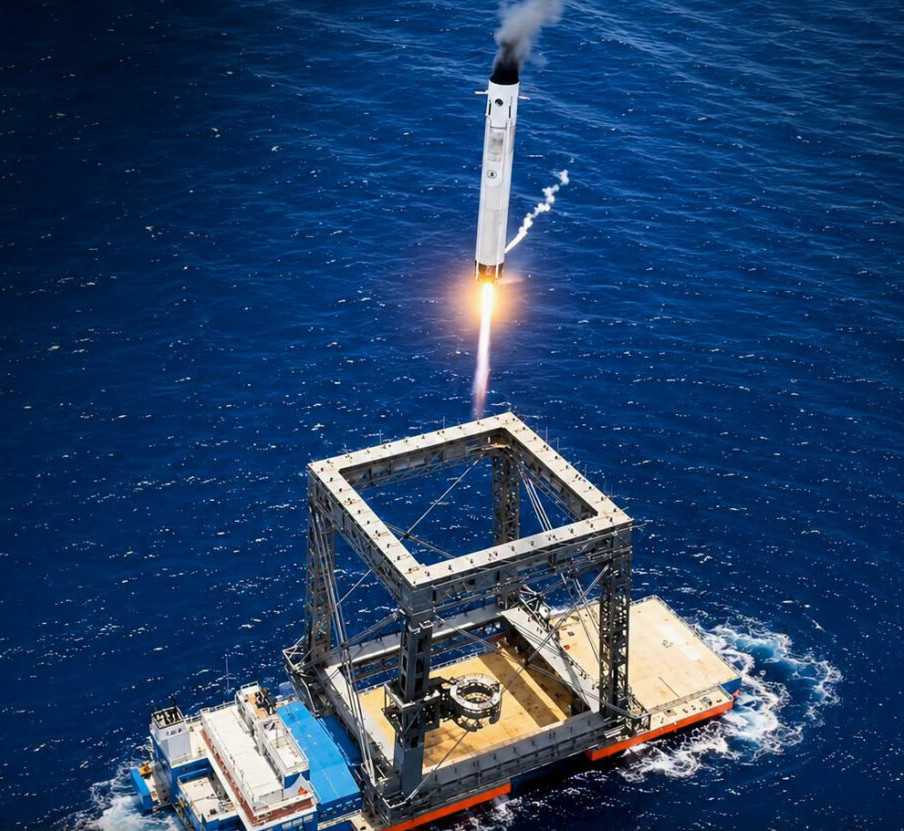
Most recently, China demonstrated that they could recover their Long March 10B rocket by gently bringing it down into what amounts to a giant butterfly net. While it might seem a bit quaint compared to rockets that land on their tails like something out of a 1950s sci-fi movie, the idea offers considerable promise.
There and Back Again
But why did it take 70+ years before we were able to regularly refly orbital-class rockets? It’s not that there’s anything inherently complex about reusing a spent rocket. Sure, there’s a case to be made that material science improvements have made the engines robust enough for repeated use. But even if you had to rebuild the engines after each flight it would still be better than slamming the whole vehicle into the ocean. Similarly, there’s nothing particularly unique about the structure of the Falcon 9 that enables it to fly multiple times — it’s a big metal tube with tanks inside of it, just like essentially every rocket that has flown before it.
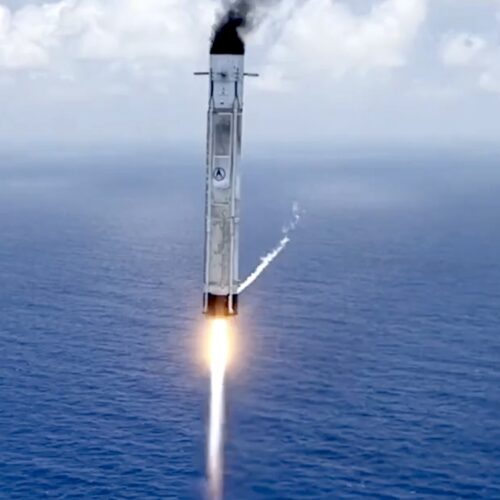
The revolutionary technology demonstrated by SpaceX in 2015 didn’t have anything to do with making their rocket go up, it was that they were able to safely bring it back without damaging or physically altering it. The Falcon 9 first stage that came back to Earth was in the same condition it was when it left the launch pad eight minutes or so earlier, albeit with empty propellant tanks and a layer of soot on the outside.
As such, most of the variability we see when comparing the reuse of past, present, and future rockets comes not from how the vehicle ascends, but how it ultimately comes to rest back down on Earth.
Splashdown is Easy, But Rough
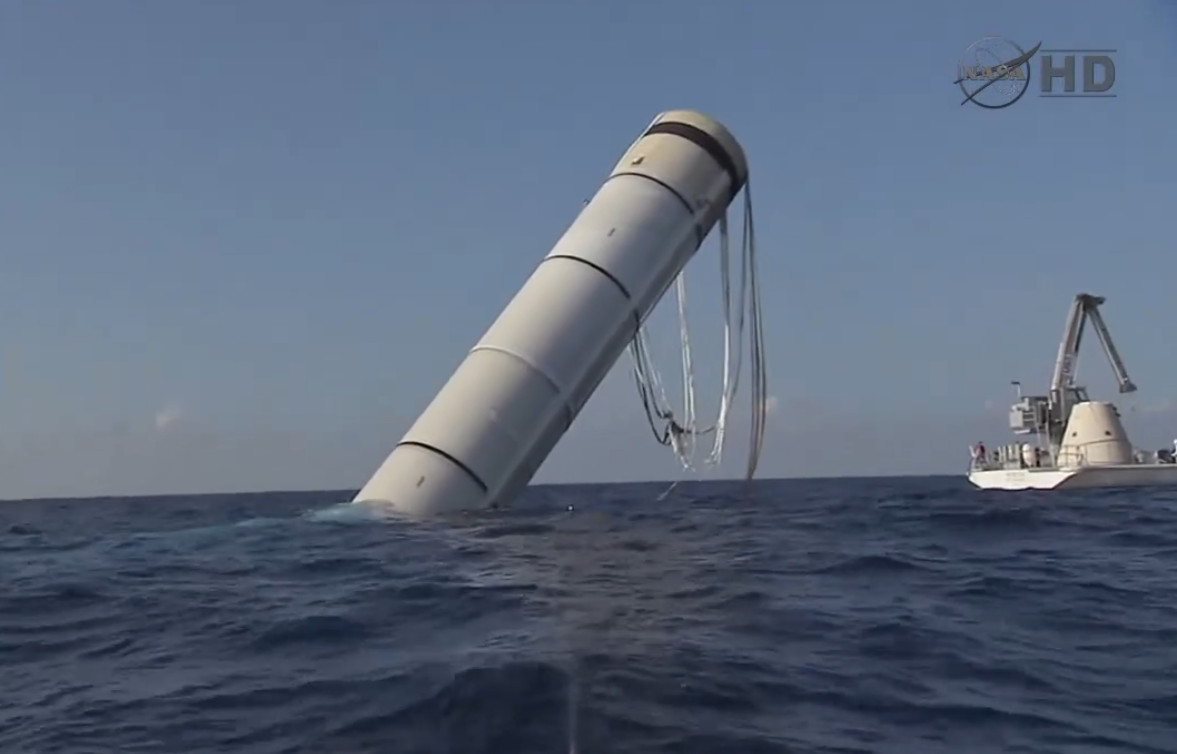
Without question, the easiest way to recover a rocket intact is to simply slow it down before it hits the surface of the ocean using parachutes This is how all American crewed capsules, and more applicably the Space Shuttle’s Solid Rocket Boosters (SRBs), have been recovered after their flights.
Once pumped out, the hollow SRBs could be towed to shore.
But even when descending under multiple huge parachutes, splashdown isn’t exactly a gentle event. It could probably best be described as “survivable”, in that the vehicle and crew will come through the experience in one piece, but neither is likely to be terribly happy about it.
The situation of course ends up being even worse for the rocket, as its structure is going to be subjected to the brunt of the impact force. Additionally, a complex aerospace vehicle getting partially submerged in salt water is a recipe for corrosion and electrical issues, to say nothing of the thermal shock the hot engines will experience when getting dunked.
One could argue that the only reason this method of recovery worked for the Shuttle SRBs is because of their relative simplicity when compared to a liquid-fueled rocket capable of independent flight. At the risk of oversimplifying the structure of the SRB, at splashdown it was effectively a hollow tube with minimal avionics and thrust vector control (TVC) hardware that could simply be replaced before the next flight.
Still, the NASA document Solid Rocket Booster (SRB) Refurbishment Practices goes over the considerable work required to bring each booster back to flight status after coming down in the ocean. Given the challenges of refurbishing the boosters, it’s perhaps unsurprising that NASA elected to forgo their reuse on the Space Launch System despite its SRBs being largely identical to their Shuttle predecessors.
Teaching Rockets New Tricks
In the very early days, while they were still trying to reach orbit with the Falcon 1, SpaceX had actually considered a Shuttle SRB-style recovery procedure. But in the end they decided to outfit the Falcon 9 with deployable landing legs and the rest, as they say, is history.
Landing legs allow a rocket to come down on effectively any flat surface, be it a concrete pad next to the launch facility or a floating platform. But there are some fairly serious drawbacks to this approach. For one thing, the requirement for precise terminal guidance means parachutes are out of the question. The rocket needs fins, attitude thrusters, or other control surfaces to come down on the center of the pad.
It also means the rocket needs to perform a propulsive landing. That is, use its own primary engines to bring its velocity on touchdown to as close to zero as possible. This in turn requires engines that can not only restart in flight — a capability that has not traditionally been required by first stage boosters — but are able to throttle down low enough to control the rocket’s descent without simply pushing it back upwards. It’s difficult to overstate how unnatural a state of operation this is for a rocket. Indeed, it’s the antithesis of how nearly every rocket has operated since the Song Dynasty started experimenting with gunpowder in the 10th century.
Even if you can accomplish all that, the true cost of landing a rocket is in the extra mass. Although the legs will be stowed away and unused for 99.8% of the rocket’s flight time, it still has to lug all that weight uphill. If that wasn’t bad enough, there’s also the extra weight of whatever control mechanism is in place to guide the rocket’s descent trajectory as well as the propellant that needs to be kept in reserve for the landing burn.
All told, landing a rocket on legs comes with a massive payload penalty. In the case of the Falcon 9, the rocket’s maximum capacity to Low Earth Orbit (LEO) in its expendable configuration is approximately 22,800 kg (50,300 lb). But when outfitted with the hardware necessary to land, that number is reduced by nearly 25% to 17,500 kg (38,600 lb).
Dropping the Dead Weight
There was a time, not so very long ago, when critics doubted the financial viability of recovering and reusing rockets like the Falcon 9. But today, reuse has gone from theoretical to standard operating procedure. Outside of a few Old Space holdouts, it’s top of mind for every launch provider and critical for remaining competitive in a fast-moving commercial market. In November, Blue Origin even managed to land their New Glenn heavy-lift rocket on only its second flight.
So at this point the question isn’t whether or not future rockets will be reusable, but rather, what is the most efficient way to achieve that reusability?
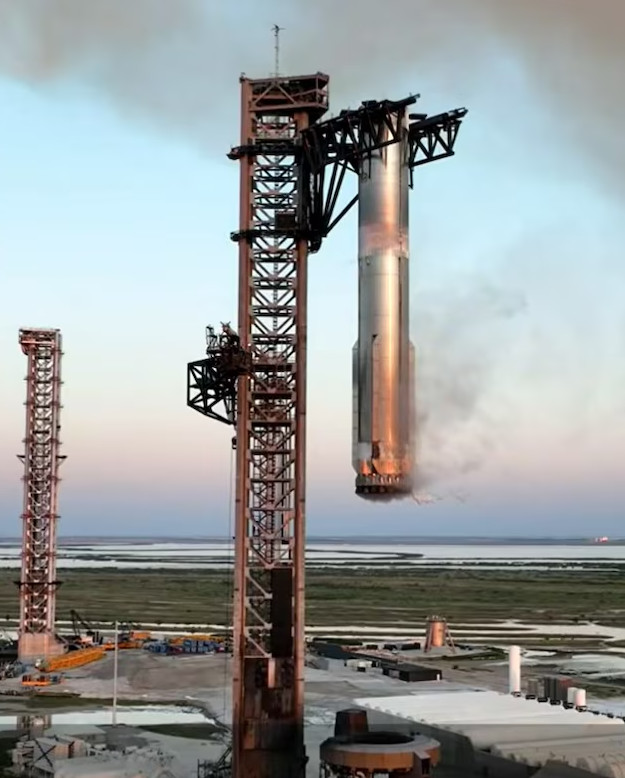
The first stage of Starship after being caught in mid-air.
With that in mind, it’s easy to see the appeal of China’s net recovery. While the rocket must still perform a propulsive descent — although in theory the necessary positional accuracy, and therefore the technical challenge, is somewhat reduced — it doesn’t need to have landing legs installed. This mass savings increases the vehicle’s useful payload capacity, which in turn makes it more profitable to operate. Achieving the same end goal while being easier and cheaper is an improvement in anyone’s book.
Admittedly, having the rocket come down in a huge net adds a certain amount of whimsy to the whole endeavor, but the overall logic is sound enough. It should also be said that SpaceX, for all the success they’ve had with landing their Falcon 9 on a set of deployable legs, are themselves planning on catching both the first and second stages of their next-generation Starship vehicle. Instead of a net, their goal is to pluck the rocket out of the air with a huge robotic pincer mechanism.
One is reminded of the old joke about how the Americans and Russians approached the problem of writing in space: NASA spent millions of dollars developing a pen that would work in microgravity, while their Russian counterparts simply used pencils. If China can demonstrate the ability to reuse a rocket they snagged in their net, the more elaborate methods of recovery employed by American rockets may one day look like a similarly overengineered solution.
Xi Jinping used his first appearance at China's World AI Conference to promote a vision of low-cost, broadly accessible AI and call for international cooperation rather than technological rivalry. "AI development should not be a solo performance by a single country, but a symphony of international cooperation," he said. Bloomberg reports: His presence at the gathering, attended by scores of tech and government leaders, conveys a potent signal of China's ambitions to dominate a technological sphere with the potential to revolutionize industry and economies -- an effort that's shot to the top of the nation's agenda. Chinese models are winning over companies worldwide, with their share of US firms' AI usage nearing a record 60% on the popular marketplace OpenRouter.
Behind the rhetoric, Beijing is grappling with the balance between openness and national security as models grow more capable. Chinese officials recently discussed with companies including Alibaba -- developer of the popular Qwen models -- how to mitigate the security risks posed by their increasingly powerful models, people familiar with the matter said. The talks are early, with no enforcement planned, but restricting foreign access to top models was among the options raised, the people said. Reuters previously reported that Beijing was weighing curbs on overseas access. Earlier today, the Beijing-based AI company "Moonshot" released a massive new model that reset the AI race overnight, immediately vaulting into the top tier of global AI, beating Anthropic's Fable 5 and OpenAI's GPT-5.6 Sol in front-end coding tests.
One week ago, three widely respected European news outlets published the results of an investigation into what they described as a "joint plan" by China and Russia to "defeat Elon Musk's Starlink."
The story was the product of a long-running inquiry by The Insider, Der Spiegel, and Le Monde. Reporters at those publications said they reviewed a cache of documents detailing growing military cooperation between China and Russia. The documents covered discussions between the nuclear powers on integrated air and missile defense systems, autonomous "swarm" loitering munitions, next-generation armored vehicles, and military aviation, the report said.
According to the papers, the investigation found evidence of a partnership between China and Russia in the field of space weapons far deeper than either country has acknowledged. One particular focus for China and Russia has been developing strategies to counter SpaceX's Starlink satellite broadband network.
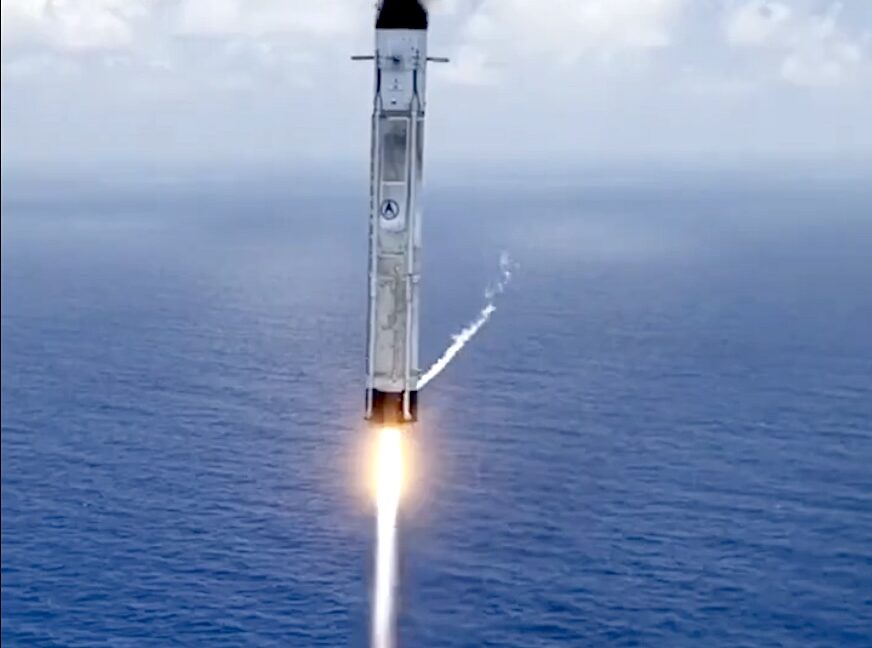
China recovered a Long March 10B booster after an orbital launch, testing a net-based system that could help lower launch costs and support reusable rockets.
In March, Anthropic's Claude "quietly deployed software to spy on China-based customers," reports the Washington Post — apparently to unmask Chinese rivals "suspected of hijacking its technology to make their own AI tools smarter."
Last week Anthropic removed the spyware "after a software developer revealed its existence and privacy advocates criticized Anthropic, saying it had surveilled its own users."
Anthropic's tracking code was designed in part to catch Chinese firms "distilling" its AI models, a technique that involves pressing a large, expensive AI system to serve as a tutor to a smaller, cheaper one. Asking the larger system huge numbers of questions — hundreds of thousands or more — generates responses that can be used to upgrade the power of the smaller one on the cheap. Distillation isn't illegal, and it has been used for years in the AI industry. But distillation without permission is against AI companies' rules, and, used effectively, is giving Chinese AI companies a major leg up, American AI companies say... Anthropic and ChatGPT-maker OpenAI have both accused Chinese AI companies of using this technique to build copycat AI models of their own.
In a May blog post, Anthropic said that Chinese companies' use of distillation, along with evading U.S. export controls on high-end computer chips, has allowed them to "trail closely" behind U.S. models. But if these techniques can be blocked, it might be possible for the United States to "lock in a 12-24 month lead" on Chinese capabilities, the company said... This month, Anthropic said in a letter to U.S. senators that was obtained by The Post that it uncovered a campaign in which Chinese tech giant Alibaba's Qwen AI team used roughly 25,000 fraudulent accounts to generate more than 28.8 million exchanges with Claude to improve its own technology. In February, Anthropic made similar accusations against the Chinese firms Deepseek, Moonshot and MiniMax and said the campaigns were "growing in intensity and sophistication...." Anthropic and OpenAI have appealed to the U.S. government, arguing that distillation amounts to intellectual property theft that harms the U.S. in the geopolitical AI contest....
That Chinese AI labs are using U.S. models to improve their own technology appears beyond dispute. In a February 2025 study, researchers from China's Peking University and the state-funded Chinese Academy of Sciences developed methods to detect signs of distillation in leading large language models. They concluded that, with the exception of ByteDance's Doubao, most domestic models they tested showed substantial evidence of distillation, mostly drawing from U.S. models... In one set of intensive tests, a Qwen model misidentified itself as Claude nearly a third of the time, the Chinese researchers found.
U.S. firms have also used distillation to piggyback on AI systems made by others. In 2024, OpenAI released a tool to make it easier for customers to distill its own models and produce data sets for AI training. SpaceX founder Elon Musk said in court testimony in May that his AI company xAI used distillation to train its models and that the technique is common throughout the industry.
The article also notes that Anthropic "said it has banned nearly 700,000 accounts that were using Claude in China." But the article includes this quote from Kyle Chan, a fellow at the Washington-based Brookings Institution's China Center. "Anthropic's framing is that this is a geopolitical contest for basically the future of the world and freedom and democracy. It's that this is not just undercutting the U.S. commercially, but undercutting American strategic advantage in the most powerful technology we know today."
China's sprawling state-owned rocket developer, maker of the country's Long March rocket family, announced it recovered a reusable orbital-class booster for the first time Friday in the South China Sea.
The milestone mission began with the liftoff of a Long March 10B rocket from the Wenchang Commercial Space Launch Site on Hainan Island, China's southernmost province. Powered by seven kerosene-fueled engines, the approximately 209-foot-tall (63.6-meter) rocket took off at 12:15 am EDT (04:15 UTC), or 12:15 pm local time at the seaside spaceport at Wenchang.
About 10 minutes later, the Long March 10B booster descended from space and guided itself into a four-legged frame affixed to an offshore vessel. Tensioned cables stretched over the ship in a grid pattern captured the rocket as it shut down its landing engines, leaving the smoldering booster hanging in midair. The rocket's upper stage continued into orbit and deployed a payload known only as CX-26. Chinese officials hailed the flight as a "complete success."
Nobel-winning chemist Omar Yaghi is leaving UC Berkeley for China's Tsinghua University, where he will lead a new AI institute focused on accelerating the discovery of advanced materials. "Last week, Tsinghua University in Beijing welcomed Dr. Yaghi in an appointment ceremony, calling him one of the world's foremost chemists," reports The New York Times. "The university said he saw his new post as an opportunity 'not to slow down, not to repeat what has already been done, but to do science with more energy, more intensity, and more ambition than ever before.'" From the report: Dr. Yaghi was born in Amman, Jordan, to Palestinian refugees whose one-room home lacked electricity and running water. Early on, he became fascinated with a schoolbook's depiction of atomic building blocks. When he was 15, his father, a butcher, sent him to the United States. Last year, before flying to Stockholm to receive his Nobel Prize, Dr. Yaghi in an interview with The New York Times voiced concern about Mr. Trump's immigration policies, saying that they endanger the nation's system of universities, companies and governments that promote scientific excellence. "I think it's regrettable," he said of Mr. Trump's nationalism. "We have to know that people coming from different backgrounds improve the level for everybody involved," he added. "That's an amazing story. Great thinkers can improve not only the U.S. but the world."
Dr. Yaghi joined the University of California, Berkeley, in 2012, and while there earned many awards for his scientific advances. He received his Nobel Prize for helping discover a world of chemistry in which molecular building blocks are assembled into structures that possess vast internal surface areas -- the largest of any known substance. His porous structures can act like sponges that readily absorb, store and release gases and vapors. He named them metal-organic frameworks. The metal atoms form an adjustable framework that can hold chemicals associated with life -- carbon atoms in particular. While deeply theoretical, the frameworks are so radical, innovative and flexible in nature that materials experts and companies foresee many commercial uses for them. The frameworks can, for instance, harvest water from desert air. In 2018, Dr. Yaghi's students at Berkeley tested the idea in the Mojave Desert in California, finding that a small passive harvester could each day produce nearly three cups of pure, drinkable water. The device is now nearing commercialization.
In the interview with The Times, Dr. Yaghi credited the invention to his boyhood efforts to secure water for his family. The municipal pipes worked for only a few hours every week or two. That hardship, he added, shows how the diverse experiences of emigres can lead to unexpected breakthroughs. Dr. Yaghi has longstanding ties with Tsinghua University. In 2022, the Beijing school appointed him as an honorary professor and in that role he closely followed its work in chemistry, materials science and related disciplines. Now, on joining Tsinghua full time, Dr. Yaghi is being named as the head of a new A.I. institute for science research that will focus on the design and synthesis of new materials. Its underlying aim, the university said, is to "overcome the efficiency bottlenecks of traditional trial-and-error approaches" and shorten the usual cycles of discovery.
China warned organizations to remove certain Claude Code versions over alleged backdoor risks, while Anthropic called the feature anti-abuse protection.
DeepSeek, the Chinese startup developing large language models that are competitive with those from US companies like OpenAI and Anthropic, is planning to enter the silicon business, according to Reuters.
Citing three people familiar with the matter, Reuters writes that DeepSeek has been working on a move into silicon for about a year. It has been meeting with potential partners in the hardware and silicon space and has been hiring engineers for the project.

 Login
Login