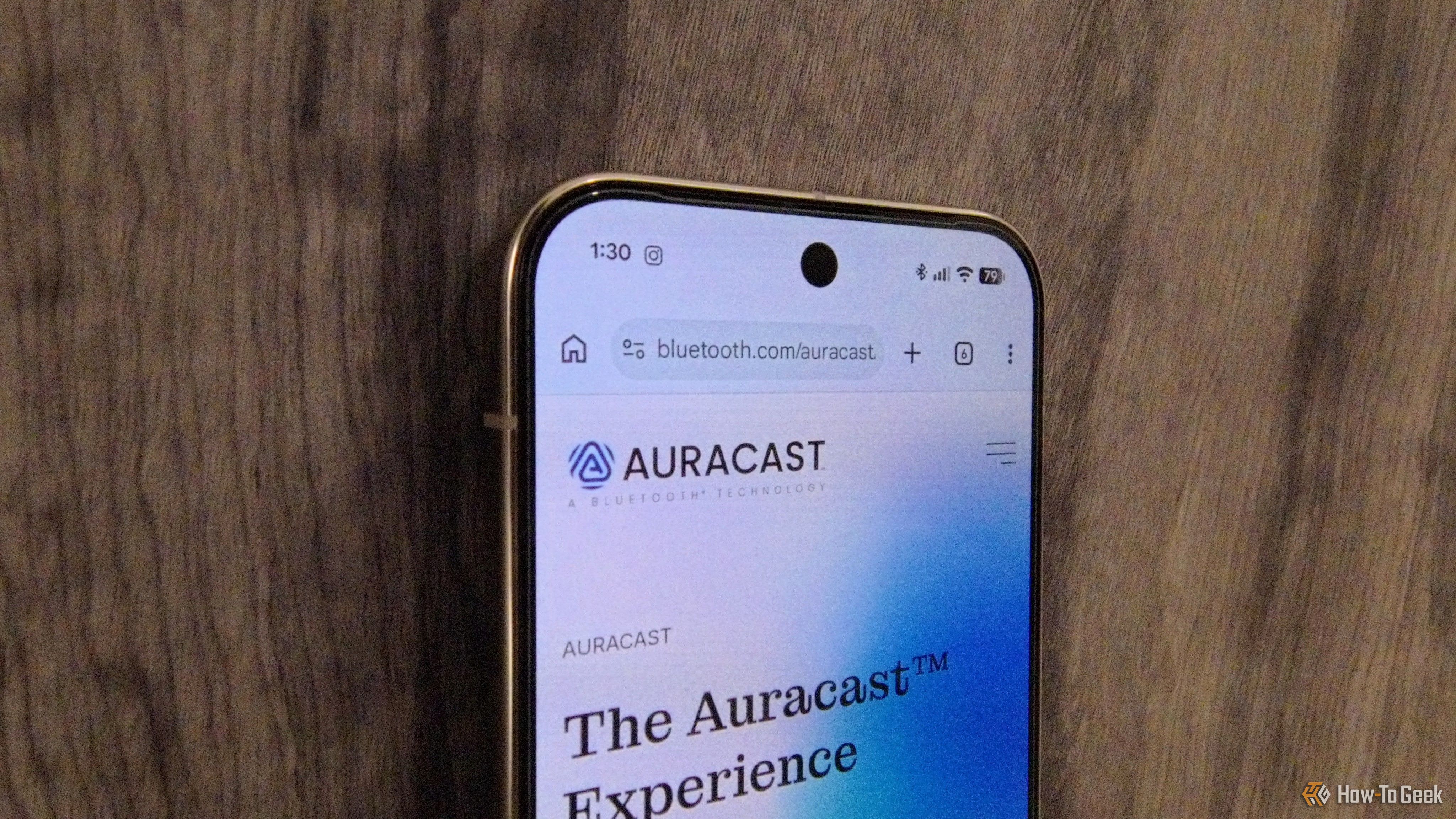
Four years have passed since Bluetooth SIG announced Auracast, and we now have it readily available on the latest Android smartphones. Yet somehow, the average smartphone owner barely uses it. Most folks I know or socialize with haven't even heard of the feature.
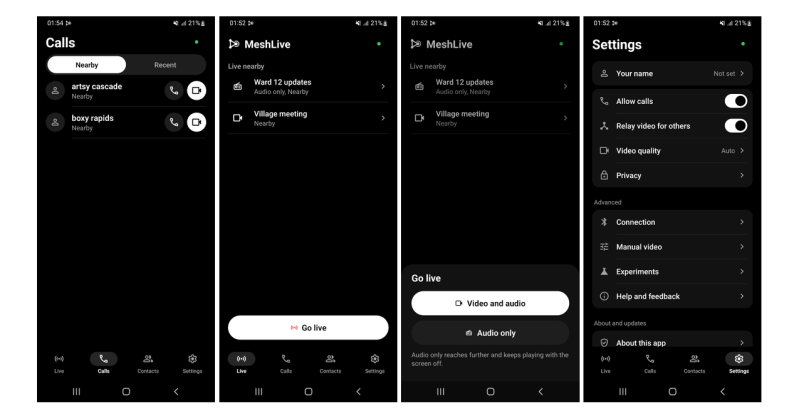
Telephony is a bit of a mixed bag. On the one hand, being able to talk to people in far off places is kind of neat, at least in theory. On the other hand, you’re usually reliant on a centralized network, which isn’t ideal to the mindset of most hackers.[Gautam]’s MeshLive project deals with that last one, offering a decentralized mesh network solution based on Bluetooth for Android phones that can handle both voice and video.
Rather than relying on dedicated hardware, this particular mesh piggybacks on your phone, and exists only as an Android application. Calls are end-to-end encrypted for both voice and video — though two-way video calling is still experimental. More testing has gone into video broadcasting, where a stream goes out one-way. The capability is available for voice, as well.
Each user has a unique identifier that can be scanned to create contacts, but it isn’t otherwise clearly identifiable to everybody. You’ll only appear with a random name that changes every 15 minutes to other users in range who aren’t your contacts. Range is of course the Achilles heel of this project, since it’s using the Bluetooth hardware of ordinary smartphones. It’s possible to extend the range of Bluetooth significantly with the right hardware, but we imagine most folks aren’t carrying directional antennas around with them. While every phone does forward the signal to as many others as it can, it can only do so for about 20 meters.
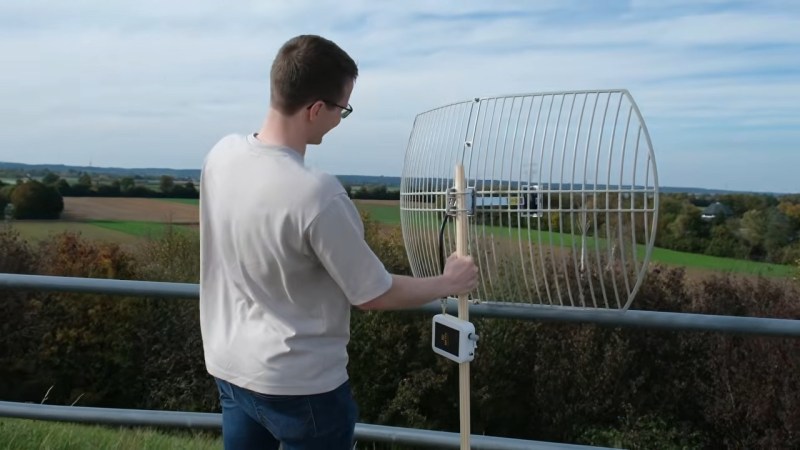
Bluetooth is a short-range protocol that’s great for peripherals and finding your keys, but it’s limited range is mainly a product of how it’s usually implemented. A recent video from [nktbuilds] demonstrates this by extending its range out to 12 kilometers, or around 7.5 miles.
The secret is twofold: one is the antenna, a parabolic unit that captures far more than the dinky dipole in your phone. The other is a very sensitive receiver with a much lower noise floor. What you won’t see here is any extra power than you get stock out of one of those generic coin-sized Bluetooth tracker tags. It’s kind of obvious, in retrospect: grab more signal, lower your noise floor, and get a better result. Still, it certainly wasn’t obvious it would work out to 1200 m, and it’s an impressive feat by [nktbuilds]. We’re going to have to keep it in mind next time we lose our keys.
Of course this doesn’t mean you should jump to Bluetooth for distance communications. You’re still better off sticking with something like LoRA for that, especially since it’s good to hundreds of miles if you can get line-of-sight — or even tens of thousands with the right setup.
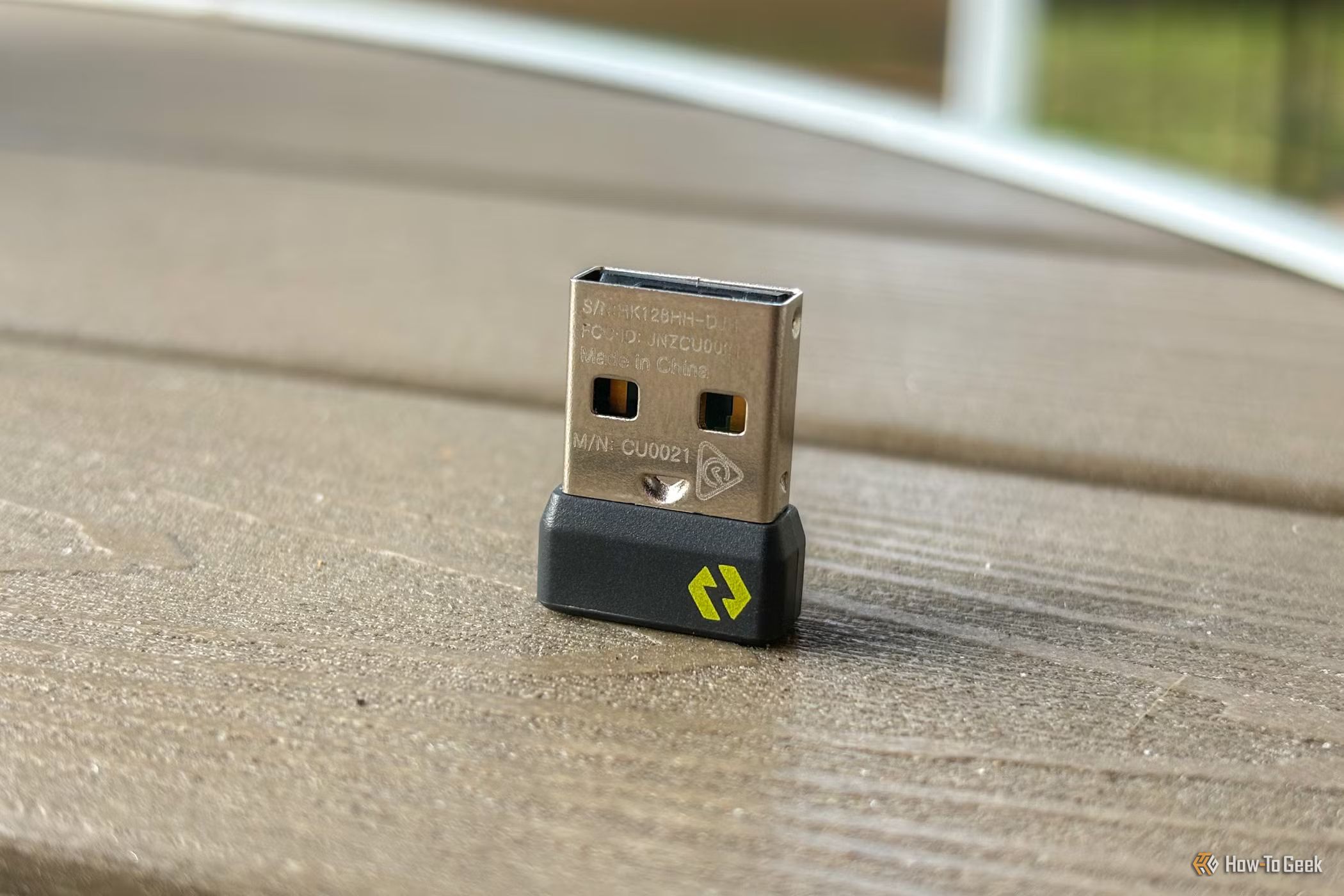
I remember a time when you'd have to be mad to use a wireless mouse, even if you were only working with spreadsheets or playing Solitaire. Weak signals, low-res optical sensors, and a Wild West of driver and software support made my first wireless mouse experience very frustrating indeed.
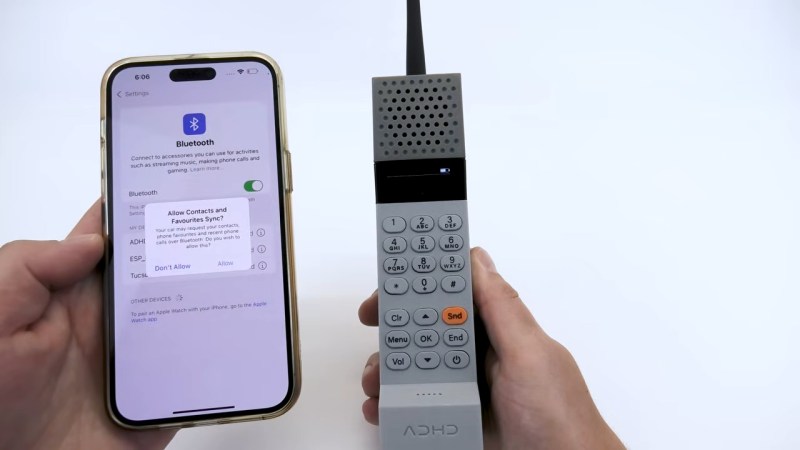
Like more than a few of us , [Kevin Noki] is sick of being pulled out of flow state by that annoyingly addictive black rectangle we all carry around. His solution was to build a phone to escape his phone, in a YouTube video we embedded down below. We’d say that phone is straight out of the 1980s, except it’s not quite a phone. It would perhaps be more accurate to say he’s building a Bluetooth handset– actual telephony remains the province of a professional device with regulatory approval, because getting custom hardware on VoLTE is a nonstarter in many places.
He starts out using an ESP32, because he already had one and why not? It’s got bluetooth, after all. Alas, audio quality he was getting through it was a little too crunchy, so he pivoted to use a dedicated Hands Free Profile (HFP) bluetooth module that is purpose built for exactly this kind of application. He’s selling the design on his website, but given how much detail he shows on screen, recreating your own version would be easy enough to save the quid. You’d be missing out on the STL for the fantastic 80s brick he’s made, which may be the most interesting part of the build to us.
We’d likely have jumped right to CAD and printed out a few iterations of the case until we were happy, but [Kevin] takes a more traditional industrial-design approach, mocking up the phone with XPS foam and a manually-operated hot wire cutter. It’s not a step we see makers take very often, but it pays off here– at least for subtracting material, it’s a very quick way to iterate, and he only needs to do one 3D print for the final version. We also like very high-tech acrylic bending jig, which he uses to put some black LED acrylic over the display.
It’s a lot of work to make you less-likely to grab a phone you still need anyway– remember, there’s no cellular modem in this– but, hey, it beats torturing yourself, or worse, a tamagotchi.
An artist’s conception shows one of Hubble Network’s satellites in orbit. (Hubble Network illustration)
Seattle-based Hubble Network has reached a $1.6 billion valuation after raising $200 million in new funding to power its satellite-based Bluetooth connectivity network. The fresh capital propels the startup into unicorn territory as it works to connect billions of everyday, off-the-shelf devices directly to space.
The Series C round, led by Smith Point Capital, with Seraphim, Carthona Capital, Earthshot Ventures, Y Combinator, and RPM Ventures, brings total funding to $300 million. Hubble Network raised $70 million a year ago.
Hubble currently operates six satellites in low-Earth orbit and plans to expand to a full 60-satellite constellation built with satellite operator Muon Space by 2030. The company says its hybrid network — which blends ground-based tracking with satellite coverage — is live for pilot customers today, including software firm Samsara, with data speeds and update frequencies set to increase as more spacecraft launch.
“When we said we’d connect Bluetooth chips to satellites, most of the industry said the physics wouldn’t allow it,” Alex Haro, CEO and co-founder, said in a news release on Wednesday. “Today we’re turning that early skepticism into a global opportunity.”
Hubble’s swift rise underscores the Seattle region’s growing status as an epicenter for low-Earth orbit satellite development. While heavyweights like SpaceX’s Starlink facility in Redmond and Amazon’s Leo satellite division in Kirkland focus on high-bandwidth orbital internet, Hubble is carving out a distinct niche in low-power, direct-to-satellite IoT connectivity — reinforcing the Pacific Northwest’s footprint across commercial space technology.
The company, which employs about 70 people, is No. 135 on the GeekWire 200, our ranked index of the Pacific Northwest’s top startups.
Hubble’s system works via a software update, allowing standard Bluetooth Low Energy (BLE) chips — found in everyday items like package trackers, vehicles, and pharmaceuticals — to broadcast signals directly to space. By pairing a ground-based network of nearly 90 million scanners with its satellite constellation, Hubble aims to replace costly cellular trackers with a setup running on roughly 50-cent chips and $4 monthly subscriptions.
Founded in 2021 by Haro, who previously co-founded location-sharing app Life360, and CTO Ben Wild, who invented Amazon Sidewalk, Hubble is positioning itself to disrupt traditional asset tracking by making global monitoring economically viable for everyday goods.
Haro noted that combining terrestrial and space networks drops tracking costs low enough to extend real-time visibility beyond high-value cargo to routine consumer items, like tracking a new pair of shoes directly from a warehouse to a front doorstep.
The company has no connection to NASA’s Hubble Space Telescope. Instead, Hubble Network’s name plays off the idea that its network can serve as a hub for BLE transmissions.

 Login