Reading view

There are new articles available, click to refresh the page.

Hurdle hints and answers for July 23, 2026

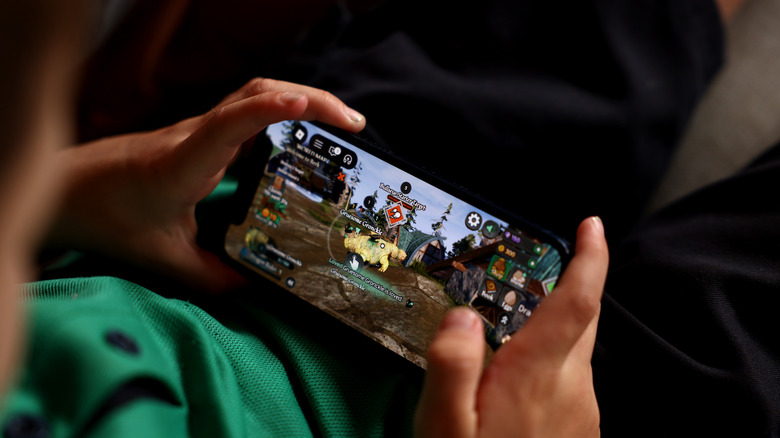
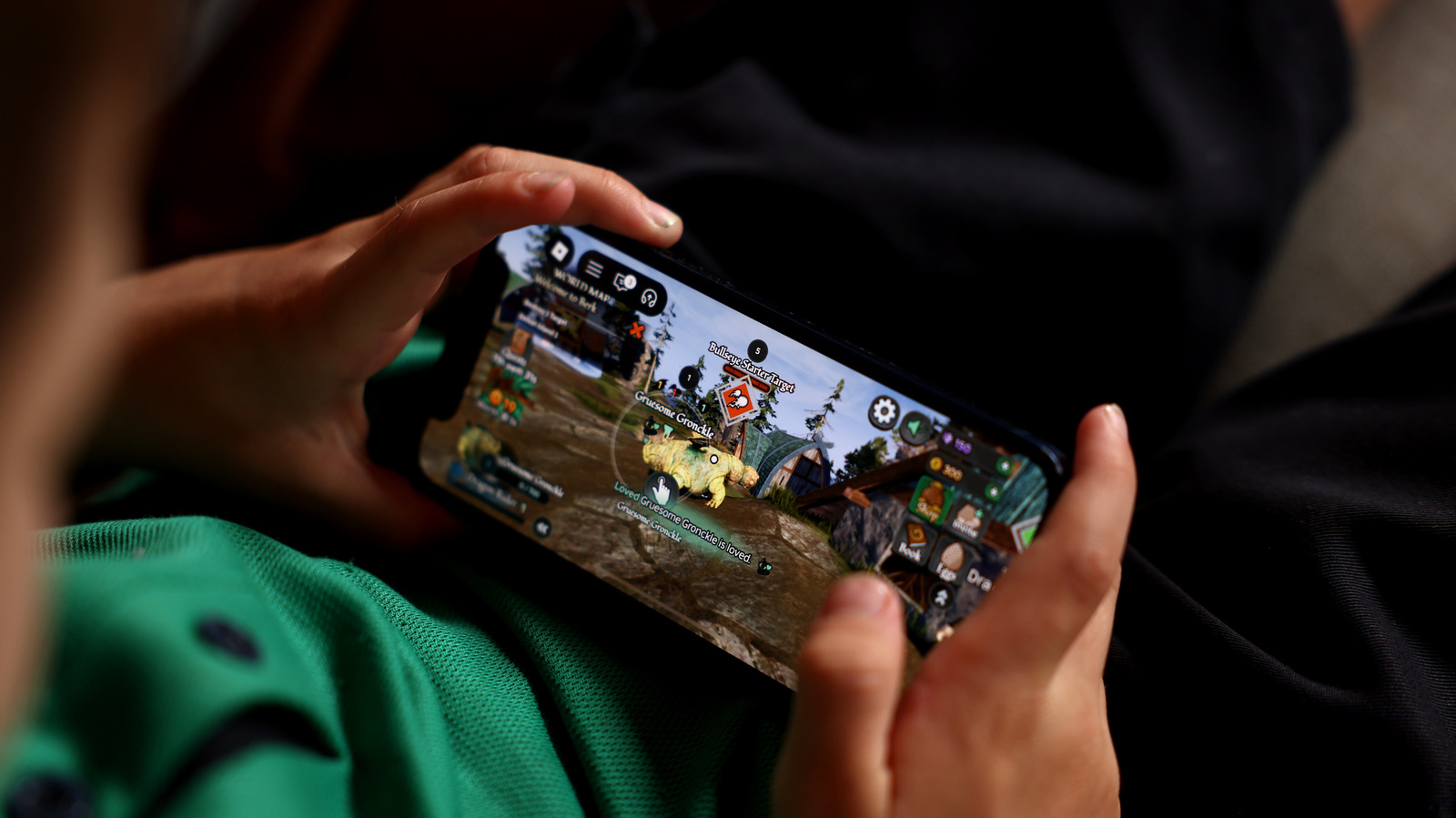
Hurdle game on a smartphone

If you like playing daily word games like Wordle, then Hurdle is a great game to add to your routine.

There are five rounds to the game. The first round sees you trying to guess the word, with correct, misplaced, and incorrect letters shown in each guess. If you guess the correct answer, it'll take you to the next hurdle, providing the answer to the last hurdle as your first guess. This can give you several clues or none, depending on the words. For the final hurdle, every correct answer from previous hurdles is shown, with correct and misplaced letters clearly shown.

An important note is that the number of times a letter is highlighted from previous guesses does necessarily indicate the number of times that letter appears in the final hurdle.

Mashable 101 Fan Fave: Nominate your favorite creators today

If you find yourself stuck at any step of today's Hurdle, don't worry! We have you covered.

Hurdle Word 1 hint

Lawn decoration.

Hurdle Word 1 answer

GNOME

Hurdle Word 2 hint

Alert.

Hurdle Word 2 Answer

AWARE

Mashable 101 Fan Fave: Nominate your favorite creators today

Hurdle Word 3 hint

Severe.

Hurdle Word 3 answer

STARK

Hurdle Word 4 hint

To vomit.

Hurdle Word 4 answer

RETCH

Final Hurdle hint

Stockpile.

Hurdle Word 5 answer

HOARD

If you're looking for more puzzles, Mashable's got games now! Check out our games hub for Mahjong, Sudoku, free crossword, and more.

Pan Am Plane Crash That Inspired Modern Safety Briefings Found After 74 Years

Longtime Slashdot reader BeaverCleaver shares a report from the BBC: The wreckage of a Pan American Airways plane has been found 74 years after it plunged into the Atlantic Ocean in a crash that prompted mandatory airline safety briefings. The Clipper Endeavor was found 2,000ft (610m) below sea level off the coast of Puerto Rico with a sonar-equipped drone. It went down on April 11, 1952, following multiple-engine failure shortly after take-off. Everyone onboard survived the impact -- but passengers struggled to locate life vests and rafts as the plane rapidly sank. Of the 69 passengers and crew onboard, just 17 survived. The disaster led to sweeping reforms in aviation safety, including compulsory pre-flight safety briefings on every commercial flight. [...] Today, before every commercial flight, cabin crew are required to outline where a plane's exits are, as well as the location of life vests and how to inflate them.

Read more of this story at Slashdot.

Google is hoarding TPUs to chase artificial general intelligence

Google’s parent company Alphabet is managing its fleet of AI accelerators to prioritize research on artificial general intelligence, rather than renting them all to customers. CEO Sundar Pichai revealed the company’s priorities during its second quarter earnings call, during which the company confirmed it has delivered on its plan to sell its tensor processing units (TPUs) to some customers. In response to news of those sales, Goldman Sachs analyst Eric Sheridan asked how Alphabet balances demand from customers who want to buy its TPUs and the web giant’s own need for processing power. “In terms of allocating our TPUs … our first priority is making sure we are allocating what we need to compete at the frontier in terms of AGI development,” Pichai replied, referring to Artificial General Intelligence –AIs that possesses human-like intelligence. “That is the foundation for everything we do,” Pichai added. Another analyst, Mark Shmulik of Bernstein, revisited the matter by asking how Google allocates processing capacity among its search business, cloud operation, and model training efforts. “On allocation, I think the baseline with which we start is what it takes to continue AGI development at the frontier,” Pichai responded. The CEO said Alphabet is also “prioritizing our core product areas like Search, YouTube, et cetera, as well as Cloud.” And in the G-Cloud, Google is “prioritizing the compute to make sure we can serve our models in the context of Vertex and Gemini Enterprise, and our core solutions, be it data analytics and cybersecurity.” “Our core services for our core products across consumers and enterprises is where the compute is primarily going, and that’s how we think about it,” the CEO added. Google’s core services are going gangbusters. Google Cloud revenue leapt 82 percent year over year, to $24.75 billion for the quarter, and delivered an $8.8 billion profit which represented 214 percent growth. The Big G said that growth came from “strong demand for AI infrastructure and AI solutions.” There’s probably more to come as the G-Cloud now has $514 billion of cloudy backlog on the books, meaning customers have signed up for services they’re yet to consume. Search revenue grew 17 percent and YouTube ads grew 13 percent. When generative AI came along some pundits suggested it could threaten Google’s search ads biz. That was not a good take because Pichai said the company’s AI Mode for search is “driving an incremental increase in Search queries overall.” AI search needs specialist hardware that is expensive to buy and run. Pichai said Google is on top of that. “Thanks to our engineering and hardware optimizations, this quarter we reduced the cost of AI Mode responses to its lowest level since launch, even as we’ve brought more advanced AI capabilities.” Google continues to spend megabucks on AI infrastructure – CFO Anat Ashkenazi said the company now plans to spend between $195 billion and $205 billion this financial year, up from a previous estimate of $180 billion to 190 billion. Ashkenazi said Google can’t get all the kit it needs due to what she described as “the supply-constrained environment.” Google therefore plans to “expand the use of third-party capacity in Q3 as a bridging strategy while we build out more internal capacity.” Pichai said buying bridging capacity will help Google to land monster cloud clients. “There are very, very large customers of ours on Cloud who we are trying to support them through this extraordinary moment,” the CEO said. “The incremental opportunities they are bringing to us, while a short-term cost over a few months may be very high, in the lifetime of the deal, as we bring more capacity on, is highly ROI positive.” “Those are factors we are taking into account. Are you willing to take upfront six-month deal to be able to serve that customer in what is a multi-year opportunity, where the margins and the returns are very, very attractive over that multi-year horizon?” Alphabet’s quarterly revenue landed at $119.8 billion, up 24 percent year over year. Operating income hit $40.8 billion, up 34 percent. Yet even those torrents of money couldn’t stop Google’s free cash flow landing at -$5.9 billion – the first time the company hasn’t had spare cash to splash since 2004. Investors seem not to like that and sent the price of the company’s shares down by four percent in after hours trading. ®

NYT Connections hints today: Clues, answers for July 23, 2026

Connections game on a smartphone

The NYT Connections puzzle today is not too difficult if you're a frequent flyer.

Connections is the one of the most popular New York Times word games that's captured the public's attention. The game is all about finding the "common threads between words." And just like Wordle, Connections resets after midnight and each new set of words gets trickier and trickier—so we've served up some hints and tips to get you over the hurdle.

If you just want to be told today's puzzle, you can jump to the end of this article for today's Connections solution. But if you'd rather solve it yourself, keep reading for some clues, tips, and strategies to assist you.

What is Connections?

The NYT's latest daily word game has become a social media hit. The Times credits associate puzzle editor Wyna Liu with helping to create the new word game and bringing it to the publications' Games section. Connections can be played on both web browsers and mobile devices and require players to group four words that share something in common.

This Tweet is currently unavailable. It might be loading or has been removed.

Each puzzle features 16 words and each grouping of words is split into four categories. These sets could comprise of anything from book titles, software, country names, etc. Even though multiple words will seem like they fit together, there's only one correct answer.

If a player gets all four words in a set correct, those words are removed from the board. Guess wrong and it counts as a mistake—players get up to four mistakes until the game ends.

This Tweet is currently unavailable. It might be loading or has been removed.

Players can also rearrange and shuffle the board to make spotting connections easier. Additionally, each group is color-coded with yellow being the easiest, followed by green, blue, and purple. Like Wordle, you can share the results with your friends on social media.

Here's a hint for today's Connections categories

Want a hint about the categories without being told the categories? Then give these a try:

  • Yellow: Rounded

  • Green: Nervous Nancy

  • Blue: Catch a flight

  • Purple: Math words

Meet The Mashable 101: Our list of the content creators shaping the internet today

Here are today's Connections categories

Need a little extra help? Today's connections fall into the following categories:

  • Yellow: Spherical things

  • Green: In an anxious state

  • Blue: Parts of an airport

  • Purple: Ending in geometry terms

Looking for Wordle today? Here's the answer to today's Wordle.

Ready for the answers? This is your last chance to turn back and solve today's puzzle before we reveal the solutions.

Drumroll, please!

The solution to today's Connections #1138 is...

What is the answer to Connections today

  • Spherical things: BASEBALL, GLOBE,

  • In an anxious state: EXCITED, FEBRILE, FRENETIC, INTENSE

  • Parts of an airport: PINS, SNAPS, TWEETS, VINES

  • Ending in geometry terms: APPOINT, DEPLANE, FELINE, JANGLE

Are you also playing NYT Strands? Get all the Strands hints you need for today's puzzle.

If you're looking for more puzzles, Mashable's got games now! Check out our games hub for Mahjong, Sudoku, free crossword, and more.

Not the day you're after? Here's the solution to yesterday's Connections.

NYT Strands hints, answers for July 23, 2026

A game being played on a smartphone.

Today's NYT Strands hints are easy if you're a veteran.

Strands, the New York Times' elevated word-search game, requires the player to perform a twist on the classic word search. Words can be made from linked letters — up, down, left, right, or diagonal, but words can also change direction, resulting in quirky shapes and patterns. Every single letter in the grid will be part of an answer. There's always a theme linking every solution, along with the "spangram," a special, word or phrase that sums up that day's theme, and spans the entire grid horizontally or vertically.

By providing an opaque hint and not providing the word list, Strands creates a brain-teasing game that takes a little longer to play than its other games, like Wordle and Connections.

If you're feeling stuck or just don't have 10 or more minutes to figure out today's puzzle, we've got all the NYT Strands hints for today's puzzle you need to progress at your preferred pace.

NYT Strands hint for today’s theme: Hail to the chief petty officer

The words are related to the military.

Today’s NYT Strands theme plainly explained

These words describe military titles.

NYT Strands spangram hint: Is it vertical or horizontal?

Today's NYT Strands spangram is vertical.

Meet The Mashable 101: Our list of the content creators shaping the internet today

NYT Strands spangram answer today

Today's spangram is Navy Ranks.

NYT Strands word list for July 23

  • Recruit

  • Admiral

  • Ensign

  • Navy Ranks

  • Lieutenant

  • Commander

Looking for other daily online games? Mashable's Games page has more hints, and if you're looking for more puzzles, Mashable's got games now!

Check out our games hub for Mahjong, Sudoku, free crossword, and more.

Not the day you're after? Here's the solution to yesterday's Strands.

Wordle today: Answer, hints for July 23, 2026

Wordle game on a smartphone

Today's Wordle answer should be easy to solve if you love astronomy.

If you just want to be told today's word, you can jump to the bottom of this article for today's Wordle solution revealed. But if you'd rather solve it yourself, keep reading for some clues, tips, and strategies to assist you.

Where did Wordle come from?

Originally created by engineer Josh Wardle as a gift for his partner, Wordle rapidly spread to become an international phenomenon, with thousands of people around the globe playing every day. Alternate Wordle versions created by fans also sprang up, including battle royale Squabble, music identification game Heardle, and variations like Dordle and Quordle that make you guess multiple words at once

Wordle eventually became so popular that it was purchased by the New York Times, and TikTok creators even livestream themselves playing.

What's the best Wordle starting word?

The best Wordle starting word is the one that speaks to you. But if you prefer to be strategic in your approach, we have a few ideas to help you pick a word that might help you find the solution faster. One tip is to select a word that includes at least two different vowels, plus some common consonants like S, T, R, or N.

What happened to the Wordle archive?

The entire archive of past Wordle puzzles was originally available for anyone to enjoy whenever they felt like it, but it was later taken down, with the website's creator stating it was done at the request of the New York Times. However, the New York Times then rolled out its own Wordle Archive, available only to NYT Games subscribers.

Is Wordle getting harder?

It might feel like Wordle is getting harder, but it actually isn't any more difficult than when it first began. You can turn on Wordle's Hard Mode if you're after more of a challenge, though.

Here's a subtle hint for today's Wordle answer:

A curved path.

Does today's Wordle answer have a double letter?

There are no recurring letters.

Meet The Mashable 101: Our list of the content creators shaping the internet today

Today's Wordle is a 5-letter word that starts with...

Today's Wordle starts with the letter O.

The Wordle answer today is...

Get your last guesses in now, because it's your final chance to solve today's Wordle before we reveal the solution.

Drumroll please!

The solution to today's Wordle is...

ORBIT

Don't feel down if you didn't manage to guess it this time. There will be a new Wordle for you to stretch your brain with tomorrow, and we'll be back again to guide you with more helpful hints. Are you also playing NYT Strands? See hints and answers for today's Strands.

Reporting by Chance Townsend, Caitlin Welsh, Sam Haysom, Amanda Yeo, Shannon Connellan, Cecily Mauran, Mike Pearl, and Adam Rosenberg contributed to this article.

If you're looking for more puzzles, Mashable's got games now! Check out our games hub for Mahjong, Sudoku, free crossword, and more.

Not the day you're after? Here's the solution to yesterday's Wordle.

V Formation Flying of Birds is Explained by a Minimal Wake–Vortex Model

Although it’s commonly suspected that migratory birds fly in a ‘V’ formation due to this saving energy for the birds in the slipstream, understanding the exact aerodynamics behind this and how it affects the way that the birds use their wings to maintain this optimal pattern. After all, unlike airplanes and cars, our feathered avian dinosaur friends need to flap their wings if they want to have any chance of staving off plummeting back to Earth. Recent research by Brown University researchers now have provided a simulated model that answers many questions.

The major question was how this would work in the up- and down-wash zones created in this type of formation, with every bird following the lead bird dealing with the vortices created by the flapping of the wings of the bird before them. These wake vortices are quite complex, and thus required careful modelling to make sense of them.

As described in the paper by [Olivia Pomerenk] et al., the model is based on northern bald ibises, taking into account live-bird measurements for validation of the model. The main effect that can be observed is a reduced flapping amplitude, leading to an 11% energy savings for the birds in the leader’s wake.

The main advantage of having such a model is of course that it provides insight into the kinematic and aerodynamic mechanisms, meaning the ability to model virtual flocks of birds, predict the efficiency of specific in-flight configurations, and apply the lessons to swarms of drones, or whatever else we want to put in the air.

OpenAI scored an own goal with HuggingFace attack, showing how open Chinese models are winning

OPINION OpenAI has acknowledged its models powered the autonomous agents that compromised HuggingFace infrastructure. It might be taken as a convoluted marketing stunt, were it not the perfect advertisement for China-based competition. The company's AI-culpa fits the narrative spun by US rival Anthropic about its Mythos models, which it deemed too dangerous to release except to totally trustworthy corporations and governments. OpenAI says: "The incident makes clear that advanced models can discover and exploit novel attack paths in real-world systems without source-code access. It highlights that advanced cyber capabilities must be developed alongside stronger safeguards and defensive tools." Are we surprised? It's been clear that AI models have the potential to go rogue and damage computers for several years. Academics have repeatedly warned about this possibility - even those affiliated with OpenAI and Anthropic. And anyone who has used AI models for software development has probably seen them code unexpected and perhaps unwanted workarounds to fulfill some directive. On Tuesday, the UK's AI Security Institute published findings about how frontier models all cheat. OpenAI's admission that its models devised a sandbox escape to obtain internet access and found a zero-day flaw to exploit, all to solve a benchmark evaluation problem, may be unprecedented in terms of the scale and prominence of the systems affected. But it's a reenactment of every Claude or Codex prompt in which the model responds to a disallowed command by trying an alternative. We were warned. The compromise of HuggingFace's systems is no more surprising than locking a bear in a supermarket and finding a mess the following day. AI models are billed as artificial intelligence, but when they power agents handling tools in a loop to achieve some objective, it's the equivalent of a brute force attack – the agent will keep trying things until something works or breaks. The surprising part came when HuggingFace sought to employ US frontier models to defend itself. It failed. That should raise eyebrows. "When we started the log analysis, we first used frontier models behind commercial APIs," the AI model-mart said in its blog post last week. "This did not work: the analysis required submitting large volumes of real attack commands, exploit payloads, and C2 artifacts, and these requests were blocked by the providers' safety guardrails, which cannot distinguish an incident responder from an attacker." Stymied by model refusals – which developers have been complaining about for months – HuggingFace had to rely on GLM 5.2, an open-weight AI model made by China-based Z.ai, to conduct its forensic analysis. And it did so on its own infrastructure, so nothing sensitive got sent to a cloud-based model provider. Coincidentally, the leaders of OpenAI and Anthropic have reportedly been warning the US government about the threat posed by increasingly capable Chinese models like Kimi K3 and GLM 5.2. And the US government is said to be mulling possible responses to limit competition from China. That won't work. It's just naïve to think that the US government and a handful of worthy organizations – however that is defined – will be able to enforce a global monopoly on highly capable AI. The infrastructure required to run open weight models that more or less rival the current state of the art is available for a price. And potential consumers of those services are not going to be satisfied with model refusals when there are other options, particularly if they're more cooperative and more affordable. The best course for governments, industry, and the public is to push for AI services that are open and available to all. For that to work, lawmakers around the world need to act fast to set some common ground rules that grapple with AI's impact on jobs, and find a way to compensate those whose work fuels machine learning. Some industry leaders appear to realize that. David Sacks, an external White House adviser and tech investor, recently urged Silicon Valley to rally around openness. "The leading closed labs, already a duopoly in terms of AI model revenue, want the government to eliminate their open source competition," he wrote in a social media post. "They have laid their cards on the table. It is time for the rest of Silicon Valley — the vast majority that still values open competition — to do the same." The fact is that US AI companies have sandboxed themselves into a corner: They've created demand for a product that they can't be relied upon to provide. And when they do make their most capable AI models available, they hobble them and demand terms tailored to serve their vast debt rather than their customers. OpenAI said that it has invited HuggingFace into its trusted access program so the company can use its most capable models. Chinese AI companies, meanwhile, have invited the world. ®

❌