❌

Reading view

There are new articles available, click to refresh the page.

Hot and Fast Brisket: Great Flavor Without the Wait

Updated October 2026.

I know that “low and slow” (a long cook at a low temperature) is the gold standard for brisket.

So why should you even consider cooking brisket hot and fast?

If you tried to consume all that has been written and preached about the best way to smoke a brisket low and slow, you would be exhausted. And you could have smoked enough briskets to feed your whole town. No matter where or how you learned to smoke a low and slow brisket, or who taught you, the method requires one key ingredient: patience. Patience is a nice way of saying it takes hours before you are eating any brisket.

Why Cook Brisket Hot and Fast?

So what’s with the hot and fast method? Time, that’s what. Maybe you don’t have the time for low and slow, but you still want brisket. I have prepared brisket low and slow and hot and fast on a variety of smokers and grills, so I feel I can share some insight on the hot and fast controversy.

How to Make Brisket

Photo Credit: Steve Nestor

Is a low and slow smoked brisket better? Yes. But a hot and fast brisket is better than no brisket at all! For my first attempt at smoking a brisket, I used the hot and fast method since I did not have time for low and slow. I was a novice, and I smoked my first brisket on a kettle grill at 400°F for about 4 hours. I thought it was awesome. I thought it was delicious, but I did not know any better.

Years later, I was attending Barbecue University and asked Steven Raichlen about the hot and fast method. He told me he was authoring a whole book on brisket and suggested I try it so we could compare it to low and slow. If you’re interested in our results, check out “Brisket in a Hurry” on page 82 of Steven Raichlen’s The Brisket Chronicles.

The Brisket Chronicles

Since my first brisket, I have cooked briskets on a kettle grill, a Pit Barrel Cooker, a Big Green Egg, a pellet smoker, and an offset barrel smoker (aka stick burner). I usually select the low and slow method, but sometimes I just want brisket, and I do not want to wait all day or get up in the middle of the night to start it. Other times, I want brisket for another use.

I have used brisket in nachos, hash, jalapeño poppers (Texas Twinkies), chili, ragu, and tacos. I can appreciate that most people do not cook brisket just for other recipes, and it is rare that there is leftover brisket. But smoky, beefy, succulent brisket will boost the flavor of other dishes.

Texas Twinkies - Hot and fast brisket

Photo Credit: Steve Nestor

Our Hot and Fast Brisket Test

At Barbecue University in 2024, Steven and the team were comparing two methods for wrapping brisket. We wrapped one brisket in butcher paper (the Aaron Franklin method) and the other in aluminum foil (the Tootsie Tomanetz method). You can read the results of our brisket wrapping comparison. Early in the morning, we realized that even with two briskets, we might not have enough for all the students. I suggested that we revisit our hot and fast experiment and cook two more briskets. Steven gave me the go-ahead.

"Boat Mode" Brisket
Photo Credit: Steve Nestor

Cooking Hot and Fast Brisket

I quickly trimmed two briskets and seasoned them with Steven’s Texas Brisket rub. I decided to use the Weber SmokeFire for a few reasons. I would not have to babysit the briskets while helping the students, the smoke would be consistent, and it would reach a temperature of 400°F.

Once the briskets reached an internal temperature of 165°F on the ChefsTemp instant-read thermometer, I wrapped one in butcher paper and one in aluminum foil. Total cooking time was about 4 hours.

The briskets did not jiggle like they would if they were smoked low and slow. When I probed them with the instant-read thermometer, they still felt a little tight despite the temperature reading of 203°F. The briskets then rested for about an hour and a half before it was time to slice them up for lunch.

Boat Mode Brisket - Hot and fast brisket

Photo Credit: Steve Nestor

What to Know Before Trying Hot and Fast Brisket

Allow time for the rest, too. Our briskets smoked for about 4 hours, then rested for another 90 minutes before slicing. That was our result for this test, not a timetable for every brisket.

Pay attention to texture as well as temperature. Our briskets reached 203°F but still felt a little tight when probed. That detail matters when deciding whether the shorter smoking time gives you the result you want.

The Results: How Did Hot and Fast Brisket Compare?

Now, if you have never eaten brisket, you might be impressed with a hot and fast brisket. It was smoky and luscious, and the bark was flavorful and crusty. Both the flat and the point developed a nice smoke ring. Thinly sliced flat would be ideal in a sandwich. The point was moist and smoky, as you would expect. Due to the shortened smoking time, not all the intramuscular fat rendered from the brisket, but it still had a luscious mouthfeel.

We all enjoyed sliced brisket for lunch, and to our surprise, there were leftovers. I quickly wrapped up slices of brisket to make hash the next morning for Steven and the team. Check out “Brisket for Breakfast? You Bet!” to see how I made hash with the leftover brisket.

Brisket Hash

Photo Credit: Steve Nestor

I do not expect to convert Planet Barbecue to the hot and fast method, but there will come a day when you just need more brisket or you need brisket in a hurry, and I hope you will remember hot and fast brisket.

Plan your next cook with our full recipe collection—weeknight grills, weekend projects, and special-occasion feasts.

Get Steven’s weekly grilling tips, seasonal recipes, and live-fire ideas in your inbox. Join our Up in Smoke newsletter. Sign up and get a FREE PDF of Steven Raichlen's Best Ribs Recipes Ebook.

Preorder Man On Fire — A Steven Raichlen Memoir. And get some really cool rewards!

Looking to upgrade your tailgating setup? Check out our Tailgating Essentials.

The post Hot and Fast Brisket: Great Flavor Without the Wait appeared first on Barbecuebible.com.

An Ode to Apples: Grilled, Stuffed, and Smoked

October is National Apple Month—not to mention, prime picking and eating time for some of America’s best apples. What better occasion to celebrate the contributions this storied fruit has made to American barbecue?

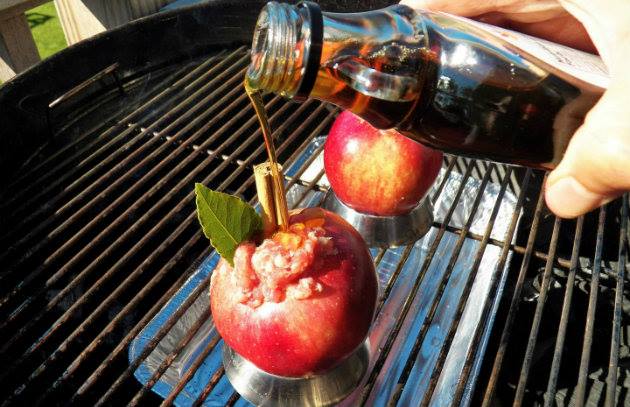
Apples possess a natural affinity for pork, which probably gained the fruit admission to the barbecue world in the first place. But don’t stop there. Apple juice, apple sauce, and cider vinegar are essential ingredients in regional American barbecue sauce. Apple wood is the fuel some of the most decorated competition pitmasters swear by. Then there are grilled apples, smoked apples, and “baked” apples hot from the smoker.

Given the apple’s deep roots in American food culture, you may be surprised to learn that the fruit originated in Central Asia. The early colonists brought the apple to the New World along with the honeybees needed to pollinate the trees. Thousands of apple varieties have been grown in the U.S., though only a fraction are grown commercially.

So how else should you use apples and apple-based products to take your barbecue to the next level?

Apple Brines and Marinades

  • Make an apple brine: Replace a portion of the water in a standard brine recipe with apple cider or apple juice for pork, turkey, and game birds.
  • Make a simple apple marinade or injector sauce: Combine 2 cups of apple cider with 1/4 cup each apple cider vinegar, soy sauce, maple syrup, and vegetable oil. Add 2 tablespoons Worcestershire sauce.
  • Don’t forget hard cider, made by fermenting apple cider like beer. A dry hard cider is less sweet than apple cider, which makes it ideal for basting or as a base for marinade.

Apple Sprays, Basting Mixtures, and Mop Sauces

  • Place apple cider in a spray bottle and spray it on ribs or pork shoulder as they smoke to add another layer of flavor.
  • Combine apple cider, cider vinegar, bourbon, Worcestershire sauce, lemon juice, and a little water to make a “Cider Squirt” for basting pork and poultry. Squirt it from a spray bottle or brush it on with a basting brush.
  • Make a hog slather by combining mustard, apple cider, Worcestershire sauce, and melted butter in roughly equal proportions. Brush on the meat with a basting brush.
  • For a simple mop sauce for beef brisket, combine one bottle of beer with 1/2 cup apple cider vinegar, 1/2 cup cold-brewed coffee, and 2 tablespoons Worcestershire sauce. Swab it on with a barbecue mop at the 1-hour mark, and every hour after that.

Apple Cider or Apple Juice?

So what’s the difference between apple cider and apple juice? In the U.S., sweet cider is generally unfiltered, while apple juice is filtered for clarity. Either may be pasteurized. I prefer cider—especially freshly pressed at a farm stand. The aroma and flavor will vary depending on the season and which apples are used.

Three Apple Recipes for the Grill

Put the fruit itself on the menu with these recipes for a grilled side dish, savory stuffed apples, and a skillet dessert.

Apple “Steaks”

Fire Roasted Apple - October Dinner Plan

Thick slices of Granny Smith apples get a glaze of cider, honey, lemon juice, and butter before and during grilling. Direct high heat browns the slices while leaving them firm enough to hold their shape. Serve them alongside grilled pork chops.

Get the Apple “Steaks” Recipe »

Apples Stuffed with Sausage and Sage

apples stuffed

Pork sausage, onion, celery, and sage fill these apples, with a little maple syrup spooned over the stuffing. Smoke-roast them over indirect heat until the apples soften. They’re a savory side dish you can assemble several hours ahead and refrigerate until grilling time.

Get the Sausage-and-Sage Stuffed Apples Recipe »

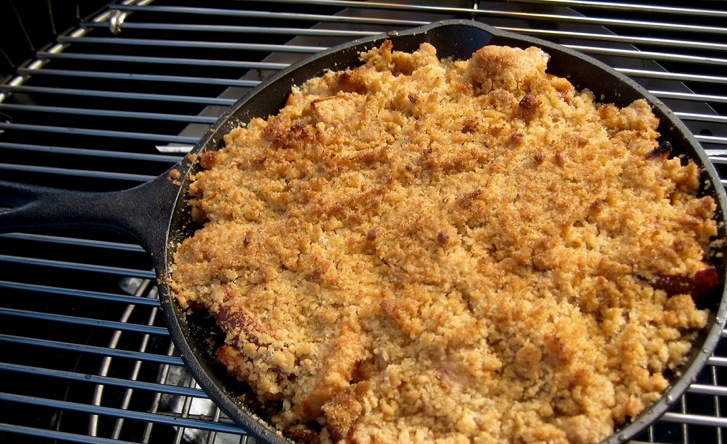
Smoke-Roasted Apple Crisp

Grilled Apple Crisp

Apples, lemon, and cinnamon go into a cast-iron skillet beneath a topping of butter, granola, flour, and brown sugar. Smoke-roast over indirect heat until the filling bubbles and the topping browns. Let it cool for a few minutes before serving—with ice cream, if you like.

Get the Smoke-Roasted Apple Crisp Recipe »

Next time you’re picking up apples, grab a few extra for the grill. Serve them alongside pork, stuff them with sausage, or save them for dessert. And if there’s cider in the fridge, you’ve got the start of a baste for whatever’s smoking.

Looking for more recipes like this? Browse our Recipe Index for grilled, smoked, and live-fire favorites.

Get Steven’s weekly grilling tips, seasonal recipes, and live-fire ideas in your inbox. Join our Up in Smoke newsletter. Sign up and get a FREE PDF of Steven Raichlen's Best Ribs Recipes Ebook.

Preorder Man On Fire — A Steven Raichlen Memoir. And get some really cool rewards!

Looking to upgrade your tailgating setup? Check out our Tailgating Essentials.

The post An Ode to Apples: Grilled, Stuffed, and Smoked appeared first on Barbecuebible.com.
Back to Basics: Crispy Pulled Pork Bacon Sliders

Photo Credit: Daniel Hale

By Daniel Hale

Presented by Wildfire Outdoor Living

Pulled pork is one of those foods that may be even better the second time around.

For this installment of Back to Basics, we’re turning leftover pulled pork into a quick griddle meal that works just as well at home as it does at a tailgate.

Of course, here at BarbecueBible, we’re happy to smoke a pork shoulder from scratch. But if you already have pulled pork in the refrigerator—or pick some up from your favorite barbecue joint—you’re most of the way there.

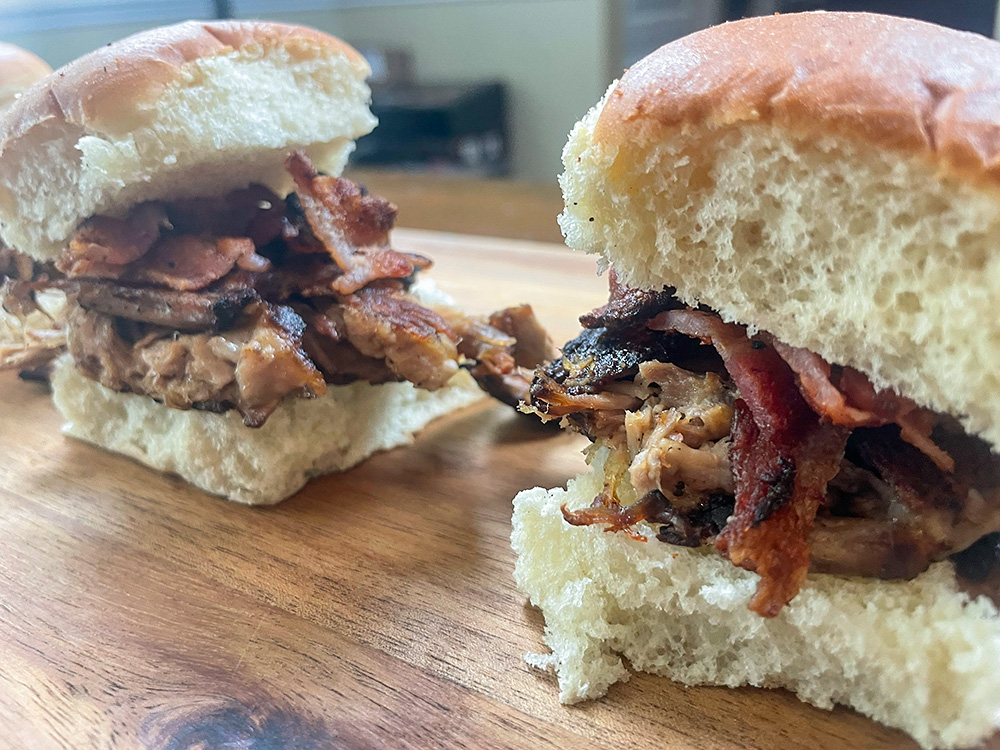
For this recipe, I used the Wildfire Ranch Pro 30″ Griddle to turn the pork into crispy little slider patties. Think of them as pulled pork burgers, with bacon doing double duty as both topping and flavor.

Start With the Bacon

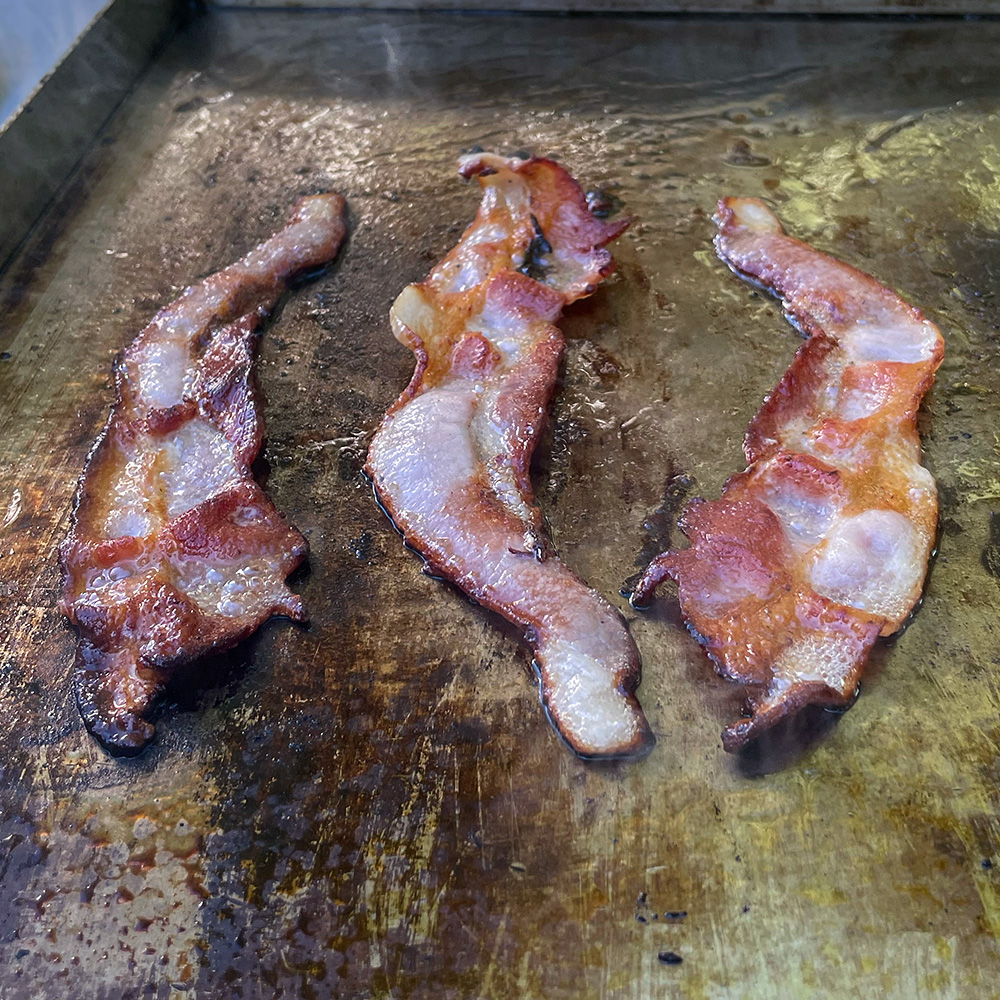
I started by cooking strips of bacon directly on the Wildfire griddle.

Once the bacon was crisp, I removed it from the griddle and set it aside for the sliders. More importantly, I left the rendered bacon fat right where it was.

That fat becomes the base for crisping the pulled pork.

bacon on griddle

Photo Credit: Daniel Hale

You could certainly use butter or olive oil instead, but if bacon is going on the finished slider anyway, why not? Also: it’s bacon.

Turn Pulled Pork Into Crispy Patties

Instead of simply piling the pulled pork onto the griddle, I formed it into small patties about the size of the slider buns.

The patties don’t need to be packed tightly like hamburgers. Press them together just enough to hold their shape.

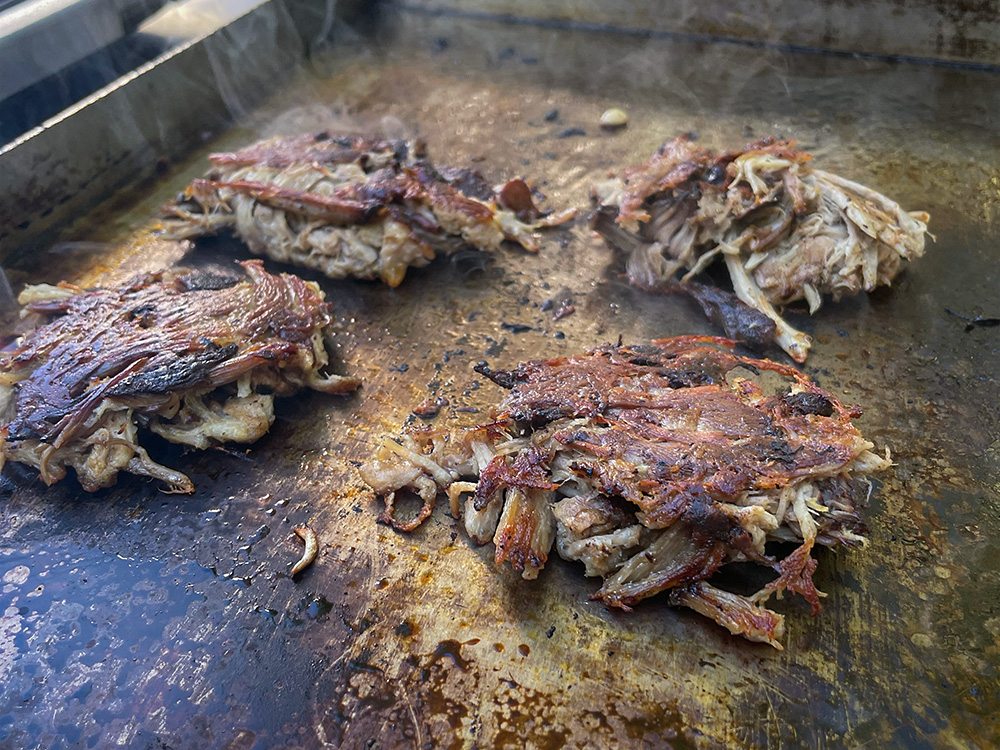
Place them directly in the hot bacon fat and let them cook without moving them around too much. You want the pork making solid contact with the griddle so the bottom develops a crisp, browned crust.

crispy pork on griddle

Photo Credit: Daniel Hale

Flip the patties and crisp the second side.

The result is still tender pulled pork in the center, but with deeply browned edges and a crunchy exterior.

That contrast is what makes these different from simply reheating leftover barbecue.

Keep the Sliders Simple

Once the pork patties are crisp, the rest comes together quickly.

Chop the cooked bacon and pile it onto the pork. Add your favorite barbecue sauce if you like, then sandwich everything between slider buns.

Coleslaw makes a good topping, particularly if you want something cool and crunchy against the hot pork. Pickles would work, too.

But you don’t need much. The crispy pork and bacon should stay at the center of the slider.

crispy pork sliders

Photo Credit: Daniel Hale

A big thank you to Wildfire Outdoor Living for sponsoring this post.

Wildfire Outdoor Living is an Arizona-based company specializing in high-performance gas grills and premium outdoor kitchen solutions. Wildfire brings a commitment to cutting-edge technology and industry-leading innovation. Their 304 stainless steel design and illuminated LED knobs, cast stainless steel burners, and laser-cut stainless steel cooking grates create products that will provide peak performance. They also allow you to customize your outdoor kitchen with designer finish knobs and handles to meet the growing demand for designer outdoor kitchens.

Want to go deeper on the craft? Explore our grilling techniques and how-to guides for ribs, steak, chicken, seafood, and more.

Get Steven’s weekly grilling tips, seasonal recipes, and live-fire ideas in your inbox. Join our Up in Smoke newsletter. Sign up and get a FREE PDF of Steven Raichlen's Best Ribs Recipes Ebook.

Preorder Man On Fire — A Steven Raichlen Memoir. And get some really cool rewards!

Looking to upgrade your tailgating setup? Check out our Tailgating Essentials.

The post Back to Basics: Crispy Pulled Pork Bacon Sliders appeared first on Barbecuebible.com.
Back to Basics: A Labor Day Feast Without the Labor!

By Steven Raichlen

Labor Day already? It seems like summer just began. I hope you’ve been grilling as much as I have this summer. For Labor Day this year, I propose something different.

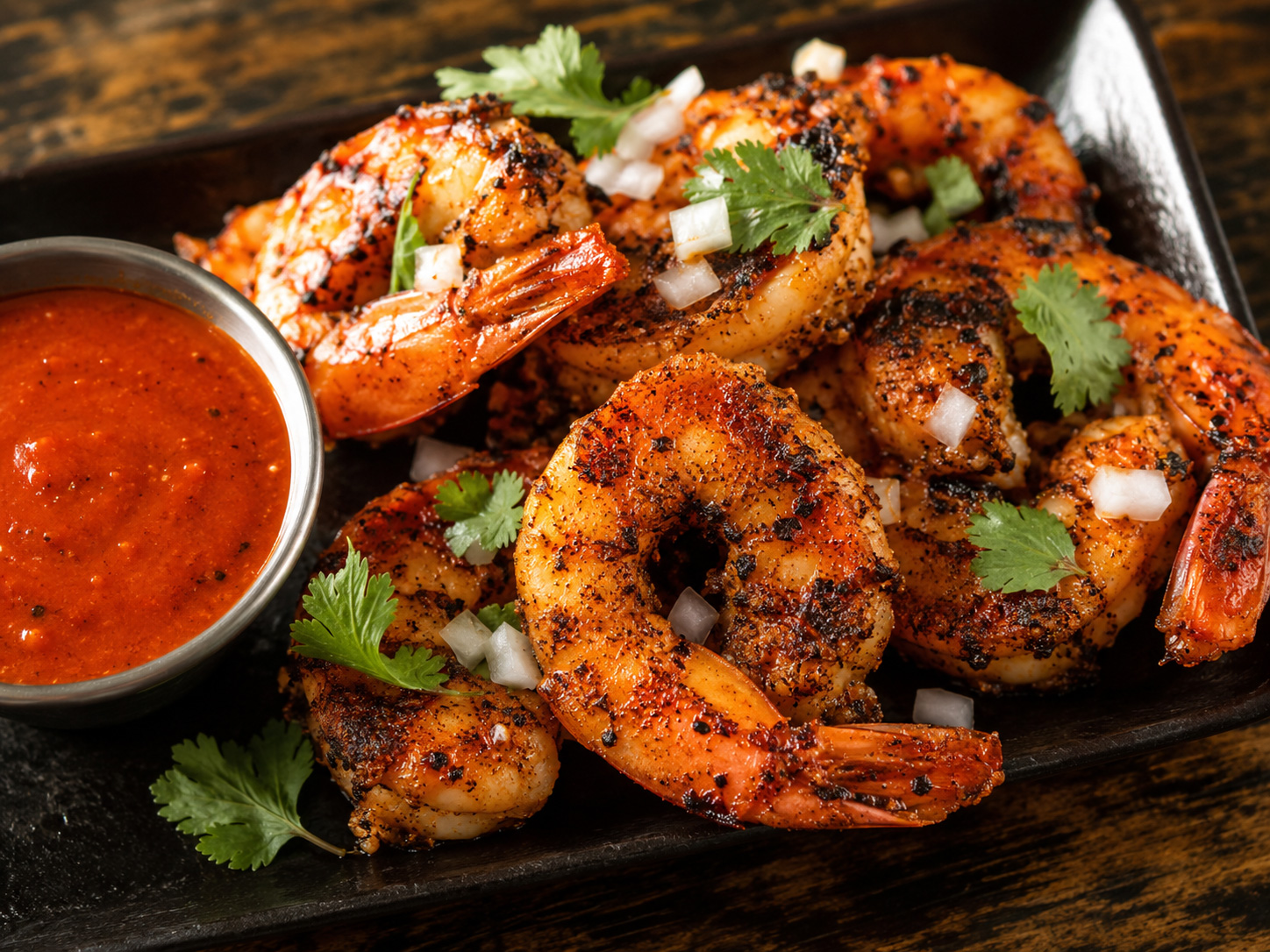
This Labor Day, we’re planning a feast that’s the opposite of labor intensive, and we’re firing up the griddle to cook it. We start with a Raichlen twist on classic shrimp cocktail—spice blackened shrimp with chipotle tequila cocktail sauce.

Wildfire Banner

For the main course, we’re taking a page from the Philadelphia playbook: cheesesteak. But not just any cheesesteak. No, we’re making this one with thinly sliced rib-eyes. (Of course, you can use the more traditional top or bottom round.) And to crank up the heat, we’ll use poblano chiles instead of bell peppers. For mushrooms, you can’t beat the elegance of shiitakes.

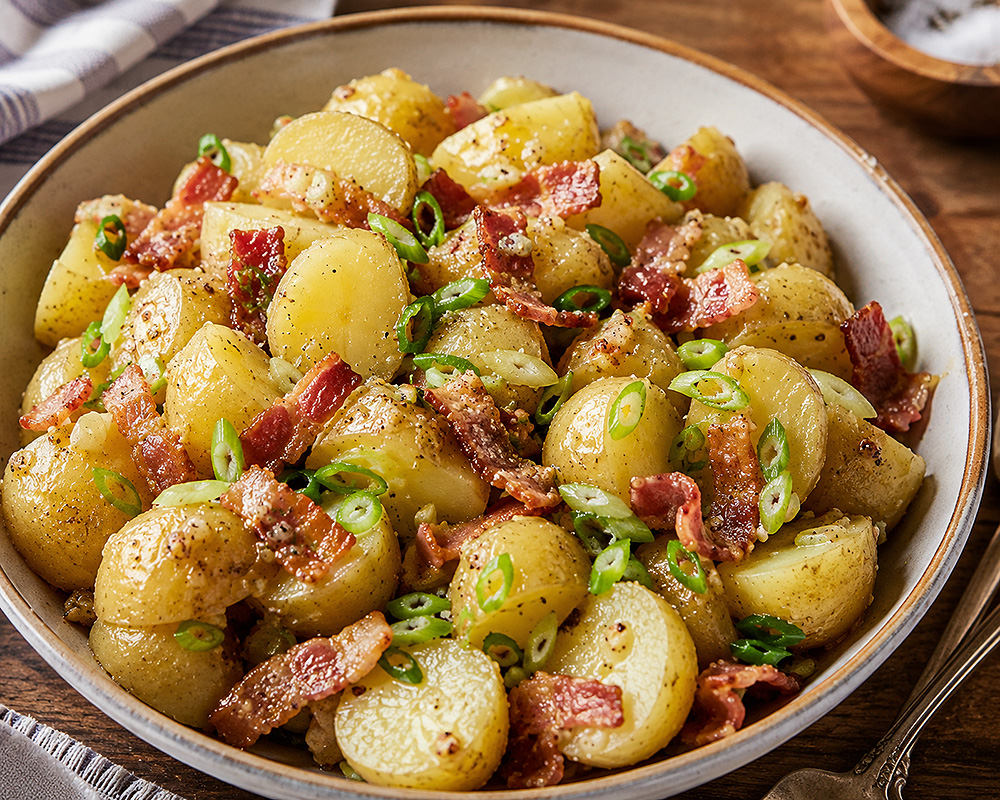
Our side dish is—you guessed it—potato salad, but, oh, what potato salad. German-style potato salad enhanced with griddled onion, capers, and bacon.

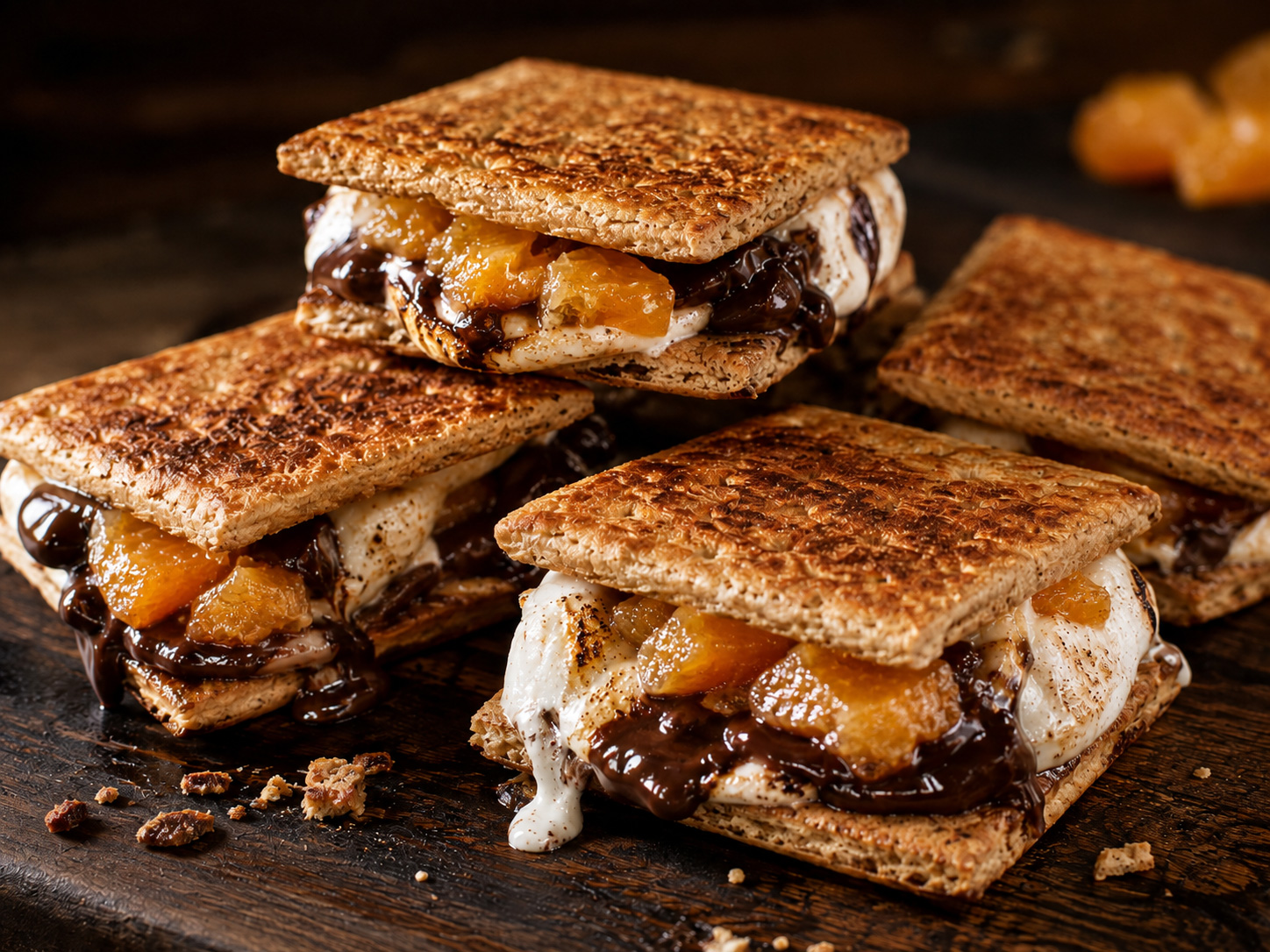
And for dessert? That campfire classic, s’mores, only for these, you don’t need a campfire. You don’t even need a grill. The secret, deconstruct and reconstruct the classic s’more into a sandwich: 2 graham crackers sandwiched with marshmallow and bittersweet chocolate. The Raichlen touch? A slice of candied orange. You’ll crisp the whole shebang on the griddle. Who says s’mores are only for kids?

Finally, to wash it all down? One of my favorite cocktails: the smoky mezcalini. Think margarita meets mojito and don’t think of Labor Day without it.

Happy Labor Day everyone! Don’t work too hard as you celebrate.

The BarbecueBible.com Labor Day Menu

Wildfire Outdoor Living is an Arizona-based company specializing in high-performance gas grills and premium outdoor kitchen solutions. Wildfire brings a commitment to cutting-edge technology and industry-leading innovation. Their 304 stainless steel design and illuminated LED knobs, cast stainless steel burners, and laser-cut stainless steel cooking grates create products that will provide peak performance. They also allow you to customize your outdoor kitchen with designer finish knobs and handles to meet the growing demand for designer outdoor kitchens.

Plan your next cook with our full recipe collection—weeknight grills, weekend projects, and special-occasion feasts.

Get Steven’s weekly grilling tips, seasonal recipes, and live-fire ideas in your inbox. Join our Up in Smoke newsletter. Sign up and get a FREE PDF of Steven Raichlen's Best Ribs Recipes Ebook.

Preorder Man On Fire — A Steven Raichlen Memoir. And get some really cool rewards!

Looking for some fall grilling inspiration? Check out our Fall Grilling Guide.

The post Back to Basics:<br /> A Labor Day Feast Without the Labor! appeared first on Barbecuebible.com.
❌