Login
Login
When “We’ll Build It Later” Becomes a Sales Problem
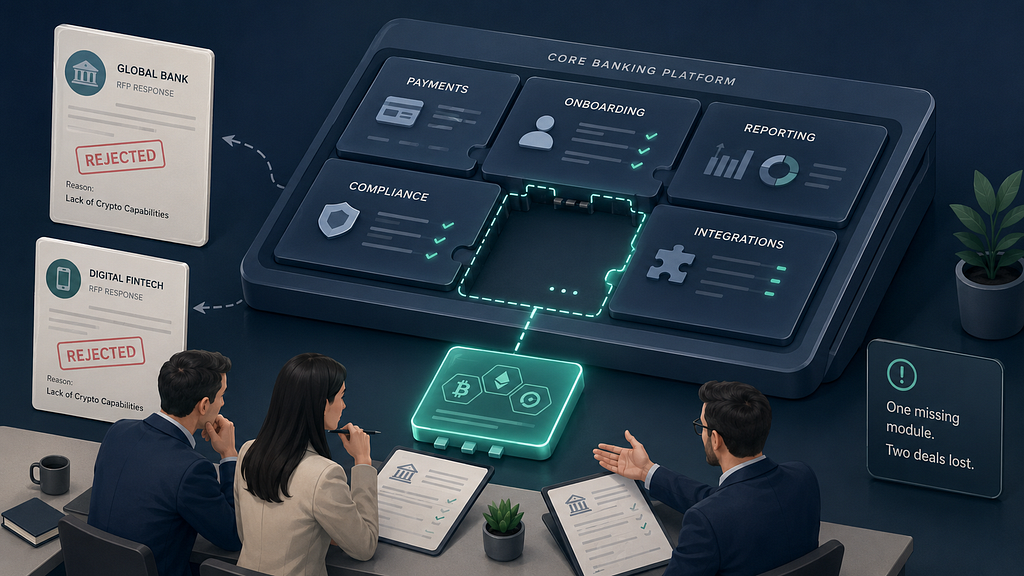
A core banking platform working with 45 banks and fintechs spent years improving the parts of its product that usually decide enterprise deals: payments, onboarding, reporting, compliance dashboards, and integrations.
The product was solid, existing clients trusted it, and the team knew how to serve regulated financial institutions. Then the RFPs started changing.
At first, crypto came up as a future request. Some clients asked about basic Bitcoin access, others wanted wallet functionality, deposits, or a way to buy and sell crypto directly inside the platform.
The team planned to add a crypto module in two years, which seemed reasonable until three RFPs in one quarter specifically required crypto functionality, and two deals were lost because one module was missing.
The Feature That Quietly Became a Dealbreaker
For many banking and fintech platforms, crypto still looks like a roadmap item until clients start using it as a vendor filter.
That is the tricky part: a missing feature does not always feel urgent internally. The product team sees it as a future module, and the sales team sees it as a question in an RFP. But for the client comparing vendors, the logic is much simpler: one provider can offer the feature, and another cannot.
The problem is that adding crypto is rarely as simple as adding another dashboard tab. A platform has to think about wallets, supported assets, networks, custody, AML checks, fiat conversion, deposits, withdrawals, reporting, user permissions, and security.
That complexity is exactly why many providers delay it. However, once crypto becomes part of competitive evaluations, “we will build it later” stops sounding like a plan and starts sounding like a weakness.
Three Ways to Close the Gap
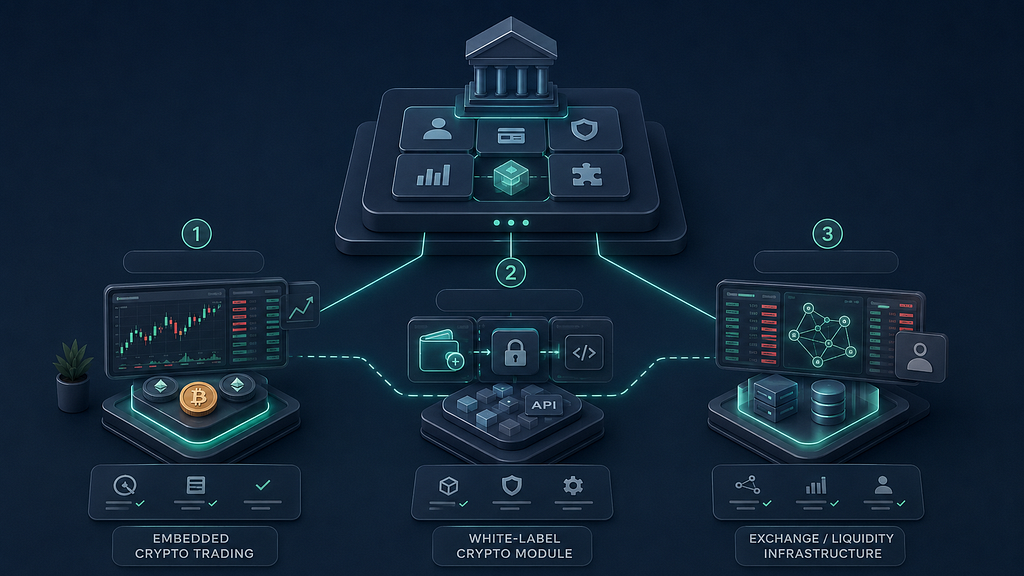
There are a few ways a banking or fintech platform can add crypto functionality without building everything from scratch.
Kraken Embed can be useful for platforms that want to add crypto trading quickly while keeping control of the front-end experience. They provide the underlying execution, liquidity, asset access, and market infrastructure, which can help partners launch faster without managing the full trading stack themselves.
WhiteBIT Crypto-as-a-Service is another option for platforms that want a white-label crypto experience under their own brand. It supports wallet creation for 340+ cryptocurrencies across 80+ networks, fiat-to-crypto and crypto-to-fiat flows, secure custody with 96% of digital assets stored in cold wallets, and crypto transfers through a single API integration.
Binance Crypto-as-a-Service can fit platforms that want access to Binance’s crypto infrastructure, liquidity, trading services, API connectivity, sub-account management, and commission settings. This route may suit brokerage-style or trading-focused platforms where liquidity and market depth matter most.
The right option depends on what the platform actually needs. Some providers only need embedded crypto trading, or wallets, custody, and fiat conversion, while others care most about trading infrastructure and liquidity.
The Cost of Building It Too Late

For banking platforms, crypto can’t replace the core product, as payments, onboarding, reporting, compliance, and client management remain the foundation, but it has become a required module for the clients the platform wants to win.
If banks and fintechs are already asking for crypto access in RFPs, then waiting becomes easier to measure. It shows up in lost deals, weaker competitive positioning, longer sales cycles, and missed upgrade opportunities with existing clients.
A crypto module does not always need to be built internally. In many cases, the practical decision is whether to buy, partner with, or integrate existing infrastructure.
Sometimes the real risk is not building the wrong feature. It is building the right one too late.
Disclaimer: This is not financial or investment advice. DYOR before making any decisions. Use at your own risk.
When “We’ll Build It Later” Becomes a Sales Problem was originally published in Coinmonks on Medium, where people are continuing the conversation by highlighting and responding to this story.