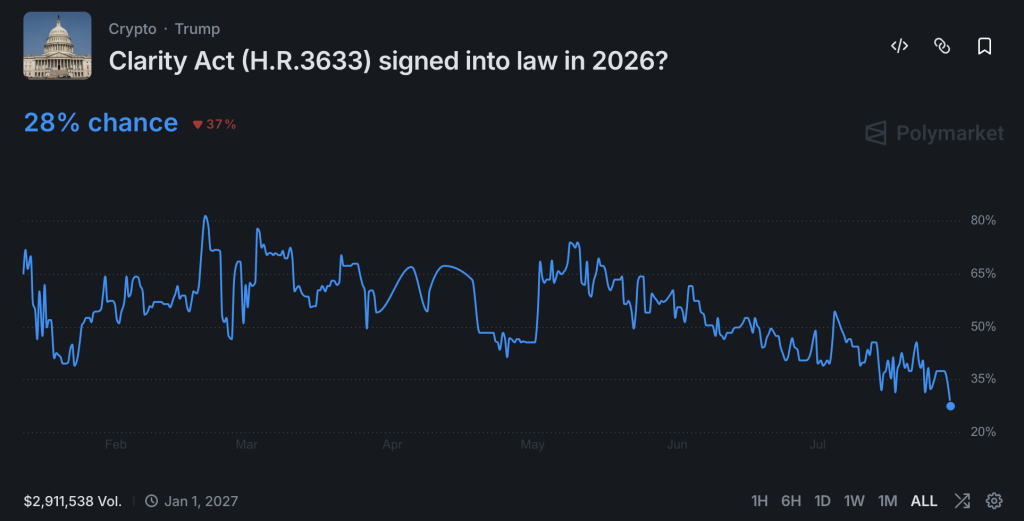
Reading view

There are new articles available, click to refresh the page.

Elon Musk Grok AI Predicts Ethereum Will Hit This Price by End of 2026

Grok AI predicts a massive breakout for Ethereum, and this price prediction sets the bar unusually high. The bull case runs to $6,000 to $8,000, with a stretch scenario reaching $10,000 to $12,000 by the end of 2026, up from roughly $1,890 today.

Accelerating spot ETH ETF inflows anchor the case. These are described as already flipping positive, with BlackRock’s ETHA taking the leadership position and cumulative net inflows exceeding $11 billion.

Expanding staked ETH ETF products are named as a second driver, unlocking yield for institutions in a way that turns simple price exposure into something closer to an income-bearing asset. That structural shift did not exist in any prior Ethereum cycle.

Source: Grok AI Ethereum Price Prediction

Post Pectra and Fusaka scaling adds real technical weight to the case. PeerDAS is expected to deliver a multi-fold increase in blob capacity, making Layer 2 networks meaningfully cheaper to operate, while the Glamsterdam upgrade in the second half of 2026 is set to boost Layer 1 throughput through ePBS and parallel execution.

Ethereum’s dominant share of stablecoins and tokenized real-world assets, estimated at tens of billions and still growing, forms the usage backbone underpinning the technical upgrades. Rising staking lockups are tightening liquid supply, a potential ETH-to-BTC ratio recovery is floated as a further tailwind, and broader institutional and RWA adoption is framed as solidifying Ethereum’s position as the premier settlement layer.

The bear case is treated as a real possibility rather than a footnote. Stalled ETF flows, Layer 2 competition or fee compression limiting how much value accrues to the base layer, upgrade delays, regulatory setbacks, or macro tightening could all keep Ethereum trading between $2,200 and $4,000 instead.

eth logo
Ethereum (ETH)
24h7d30d1yAll time

Ethereum Price Prediction: ETH Just Fell Back Below The Level It Spent Weeks Trying To Hold

Price closed at $1,877.71, down 2.20%, in a session ranging between $1,871.84 and $1,932.72. That red day breaks a run of gains that had briefly pushed Ethereum back above the $1,900 mark.

Zoom out, and the broader trend since September 2025 has been a long, uneven decline. Ethereum peaked near $4,950 that month, then broke down hard through January, gapping from above $3,000 to under $2,200 in a matter of weeks.

Since that crash, price has made two separate recovery attempts, one in April that stalled near $2,450, and another in June that also topped out near the same level before rolling back into a sharp flush to $1,540. The climb since that June low pushed price above $1,900 for the first time since the flush, but today’s drop pulls it right back under that mark.

Support sits at $1,850, then the June low near $1,540 if this pullback deepens. Resistance stacks at $1,930, then $2,200, then the heavier ceiling near $2,450 that has already rejected two separate rally attempts this year.

Momentum here has cooled sharply after weeks of steady gains, with today’s decline erasing some of the recent progress. For Grok’s bull case to gain any real traction, Ethereum first needs to reclaim $1,930 and then clear $2,450, the exact level that has stopped this chart twice before, rather than losing ground the way it did today.

Here is what Grok AI Predicts For LiquidChain’s Near Future

Every cycle has one moment when standing still costs more than moving. That moment is now.

Bitcoin, Ethereum, and XRP are all trapped under the same resistance they have tested for weeks. The macro catalyst is always one data point away. The institutional wave always lands next quarter. Large cap traders waiting for a breakout are lined up behind a decision that belongs entirely to someone else.

Grok AI has flagged what experienced cycle traders already understand instinctively. Capital that vanishes as statistical noise at Bitcoin’s scale can completely reshape the price of a small, undiscovered project. The asymmetry here is not complex. It exists in the gap between what something is genuinely worth and what the market currently believes it is worth. That gap collapses the instant it gets noticed. Right now, it remains fully open.

Cross-chain fragmentation has quietly extracted value from every DeFi participant since the first bridge went live. Bitcoin, Ethereum, and Solana were built independently, with no shared infrastructure and zero intention of communicating with each other. Every transaction crossing those boundaries pays for that decision in fees, failed execution, and slippage extracted before settlement even completes. Bridges were never the fix. They became a business built on top of the unsolved problem.

LiquidChain eliminates that business model entirely. All 3 networks merge into a single execution layer. One deployment reaches everything at once. Zero cross-chain tax on any interaction, anywhere.

Grok AI has flagged it as a coin worth watching. The presale sits at $0.01454 with just over $860,000 raised.

Execution is unproven. Adoption remains an open question. Established assets offer a smoother climb toward a ceiling the whole market can already see. LiquidChain is the entry point that disappears the moment the market catches on.

LiquidChain Here.

The post Elon Musk Grok AI Predicts Ethereum Will Hit This Price by End of 2026 appeared first on Cryptonews.

BNB Price Prediction: Binance Chain Dominates Weekly DEX Volume Amid Memecoin Revival

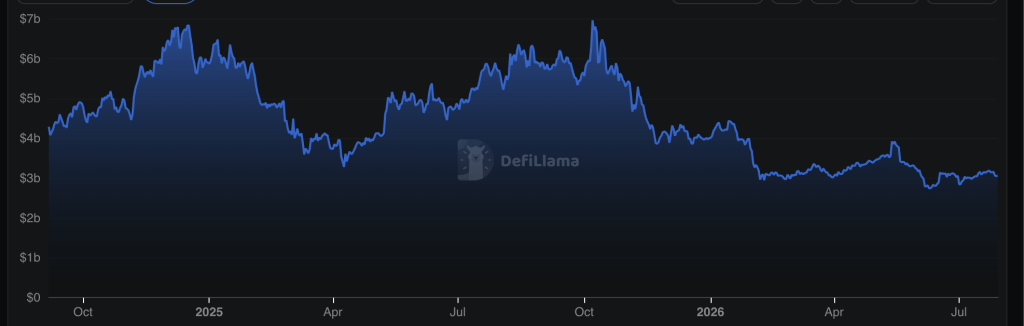
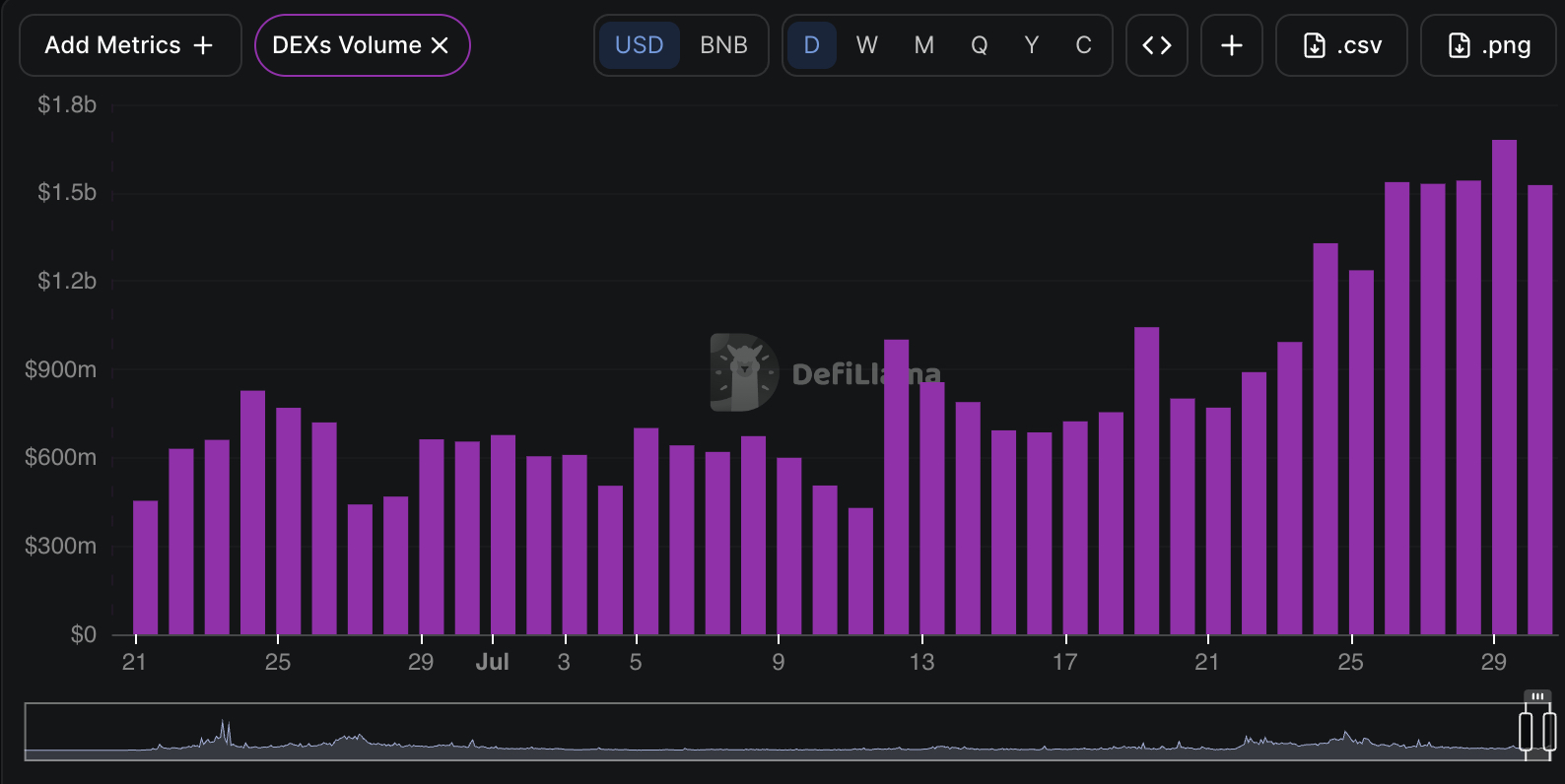
BNB Chain just posted $19 billion in weekly DEX volume, the highest among major blockchains, and the market is taking notice. BNB is trading near $580, holding steady after recent gains. However, BNB price still faces strong resistance around the $620 to $646 zone, where buyers must prove they can sustain a bullish prediction.

Dune Analytics data shows BNB Chain’s $19 billion in weekly DEX volume comfortably outpaced Solana’s $10.6 billion and Ethereum’s $5.8 billion during the same period. PancakeSwap remains the main driver, fueled by retail activity and another wave of memecoin speculation. That combination continues to generate heavy trading volume despite relatively modest capital inflows.

BNB price leads the top 10 after record DEX volume, and prediction remains bullish if buyers break above the $620 to $646 resistance zone.
BNB DEX Volume Chart, Defillama

Meanwhile, Robinhood Chain, launched in July 2026, has already processed roughly $3.5 billion in trading during its first week. That rapid start highlights how quickly competition among Layer 2 networks and trading ecosystems can evolve, especially when fresh liquidity enters the market.

Still, DEX leadership alone does not guarantee higher prices. Strong on-chain activity supports demand for BNB, but sustained upside will likely depend on whether buyers can break and hold above the $620 to $646 resistance range. Until then, the recent surge in trading volume remains an encouraging signal rather than confirmation of a lasting breakout.

Discover: The Best Token Presales

BNB Price Prediction: Hit $650 This Week?

BNB is trading around $580, making it the strongest performer among the top 10 cryptocurrencies today, up more than 3%. That rebound puts it back above recent support, although the $620 to $646 resistance zone remains the next major hurdle.

Technical levels remain largely unchanged. A daily close above $646 would strengthen the bullish case and could open the way toward the $650 to $670 range over the coming weeks. Until then, BNB may continue consolidating while buyers build momentum.

bnb logo
Bnb (BNB)
24h7d30d1yAll time

If BNB holds above $580, the recent surge in BNB Chain activity should continue supporting sentiment. The chain’s industry-leading DEX volume and renewed memecoin trading have helped attract fresh liquidity. Even so, price action still needs to confirm the improving fundamentals.

On the downside, a daily close below $565 would weaken the current recovery and expose the $540 area. Longer term, some analysts still project $1,300 to $2,100 across future market cycles, supported by Binance’s token burn mechanism and continued ecosystem growth.

Trade BNB and BSC Memecoins on Bybit and Get a Chance to Win Our $1,000 USDT Airdrop

Bitcoin Hyper Targets Early Mover Upside as BNB Tests Key Levels

BNB at $580 with a path to $650 is a legitimate trade, but at a $78B+ market cap, the asymmetry is structurally limited. A move from $588 to $1,100 represents roughly a 90% gain. That’s meaningful, but it’s not the kind of return profile that early-stage infrastructure plays can offer.

Bitcoin Hyper ($HYPER) is building what it positions as the first Bitcoin Layer 2 with full Solana Virtual Machine (SVM) integration, bringing smart contract execution speed and low fees to the Bitcoin ecosystem without sacrificing Bitcoin’s base-layer security.

The pitch is direct: BTC’s trust and finality, SVM’s throughput and programmability. The presale has raised $32.9 million at a current price of $0.0136839, with staking available for early participants.

The broader DeFi liquidity infrastructure narrative, the same one driving BNB Chain’s DEX volume story, is exactly the environment where a Bitcoin L2 with SVM could find traction.

Traders watching BNB for a breakout may find the risk/reward more interesting one layer down the cap table. Research Bitcoin Hyper before the presale closes.

Discover: The Best Crypto to Diversify Your Portfolio

The post BNB Price Prediction: Binance Chain Dominates Weekly DEX Volume Amid Memecoin Revival appeared first on Cryptonews.

Ark Invest Rotates Within Crypto Equities, Adding Coinbase and Circle While Trimming Other Names

Ark Invest sold shares of Bitmine Immersion Technologies, Bullish, and Block as crypto-related equities extended losses across U.S. markets. The move raised questions after months of aggressive buying during previous pullbacks. Rather than signaling a broad exit, the latest trades suggest Ark is actively rotating capital within its crypto portfolio instead of abandoning the sector.

That view is supported by recent buying activity. Over a three-day period, Ark purchased roughly $43.5 million in crypto stocks, including 122,544 Coinbase shares valued at nearly $18.6 million and 169,777 Circle shares worth about $12.9 million. The purchases came as both companies declined alongside Bitcoin and weakening expectations for U.S. crypto legislation.

🚨𝗔𝗥𝗞 𝗜𝗡𝗩𝗘𝗦𝗧 𝗦𝗟𝗜𝗖𝗘𝗦 $𝟮𝟬𝟬𝗠 𝗙𝗥𝗢𝗠 𝗕𝗜𝗧𝗠𝗜𝗡𝗘!

Ark Invest trimmed its crypto‑related holdings on Wednesday as prices fell.

The firm sold 120,665 Bitmine shares worth about $2 million, plus 13,403 Block Inc. shares (~$1.1 M), 12,561 Robinhood shares… pic.twitter.com/RaRUCm4Ufv

— Rahul K (@iamrahulinc) July 30, 2026

The broader backdrop also explains the pressure. Falling digital asset prices have weighed on exchange revenues and crypto-related valuations. At the same time, uncertainty surrounding U.S. market structure legislation has cooled investor optimism. Stocks that previously benefited from expectations of regulatory progress have been among the hardest hit during the recent pullback.

Discover: The Best Crypto to Diversify Your Portfolio

Position Rotation Looks More Likely Than a Thesis Change

Ark’s history with these companies provides important context. The firm invested roughly $16.8 million into Bullish and about $7.6 million into Bitmine during late 2025. It also deployed approximately $38.7 million into Coinbase, Bitmine, Circle, and Bullish during another sharp crypto equity decline. Those earlier purchases leave plenty of room to trim positions without changing the broader investment thesis.

cathie-wood_ ark invest
Source: Ark Invest Instagram

The direction of recent trades reinforces that interpretation. Ark previously sold about $8.9 million worth of Block, Bullish, and Robinhood while purchasing roughly $12.5 million of SpaceX and Bitmine. That pattern suggests the firm is reallocating capital toward higher conviction ideas rather than reducing overall crypto exposure.

Block deserves separate attention because its business extends beyond cryptocurrency. Payments, merchant services, and Bitcoin products all contribute to its revenue. Selling Block alongside Bullish and Bitmine therefore points to a broader reduction in crypto equity risk instead of targeting only pure play digital asset companies.

Coinbase and Circle tell a different story. Ark continued adding to both positions during the latest selloff despite near-term losses. That approach signals conviction rather than retreat. While those investments may currently sit below Ark’s average purchase price, the firm appears willing to absorb short-term weakness in exchange for longer-term growth potential.

Circle also occupies a different position within the crypto ecosystem. Its outlook depends heavily on stablecoin adoption and regulatory clarity rather than exchange trading volumes. Continued buying suggests Ark sees stablecoin infrastructure as a stronger long-term opportunity than several other crypto-related equities currently under pressure.

Trade Crypto and Stocks on Bybit and Get a Chance to Win Our $1,000 USDT Airdrop

Bitcoin, Regulation Will Shape Ark Invest Next Moves

Ark’s daily trade disclosures remain the clearest indicator of its strategy. If the firm resumes buying Bitmine or Bullish during additional weakness, the recent sales will likely be viewed as routine portfolio management. However, continued net selling across multiple sessions without offsetting purchases would suggest a more meaningful reduction in risk appetite.

Tom Lee and Bitmine $BMNR are getting very close to owning 5% of the total Ethereum $ETH network https://t.co/2AizrOdwCW

— Ark Invest Tracker (@ArkkDaily) July 28, 2026

External conditions will ultimately drive that decision. Bitcoin price trends remain the biggest factor influencing crypto equity performance, while regulatory developments continue shaping investor sentiment. Delays to market structure legislation could pressure valuations further, whereas renewed momentum in Washington may revive demand for crypto-linked stocks.

Ark has already shown it will act quickly when conditions deteriorate. Earlier this year, the firm sold roughly $11.2 million of its ARKB spot Bitcoin ETF alongside about $84 million in technology holdings during a broader risk reduction move. That history suggests Cathie Wood remains flexible. For now, the latest transactions look more like selective portfolio rotation than a broad retreat from crypto equities.

Discover: The Best Token Presales

The post Ark Invest Rotates Within Crypto Equities, Adding Coinbase and Circle While Trimming Other Names appeared first on Cryptonews.

Coinbase Q2 Earnings Preview: Guidance and Diversification in Focus

Coinbase reports Q2 earnings after the close on July 30, with Wall Street expecting a soft quarter. Consensus revenue sits near $1.31 billion, down roughly 13% year over year. The EPS consensus has slipped to about $0.15, while HC Wainwright projects $0.05. The bigger question is whether management can justify Coinbase’s valuation through stronger guidance and growing revenue beyond spot trading.

Estimate cuts have been broad. Barclays expects Q2 trading volume near $152 billion, below the Street consensus of roughly $178 billion. The bank also sees adjusted EBITDA about 3% below consensus and revenue near the lower end of guidance. Softer crypto prices and slower USDC growth remain the biggest headwinds.

Clear Street forecasts roughly $160 billion in trading volume and adjusted EBITDA near $301 million. JPMorgan also cut its price target from $283 to $196 on July 17. The bank cited weaker trading activity and uncertainty surrounding Coinbase’s USDC revenue-sharing arrangement with Hyperliquid.

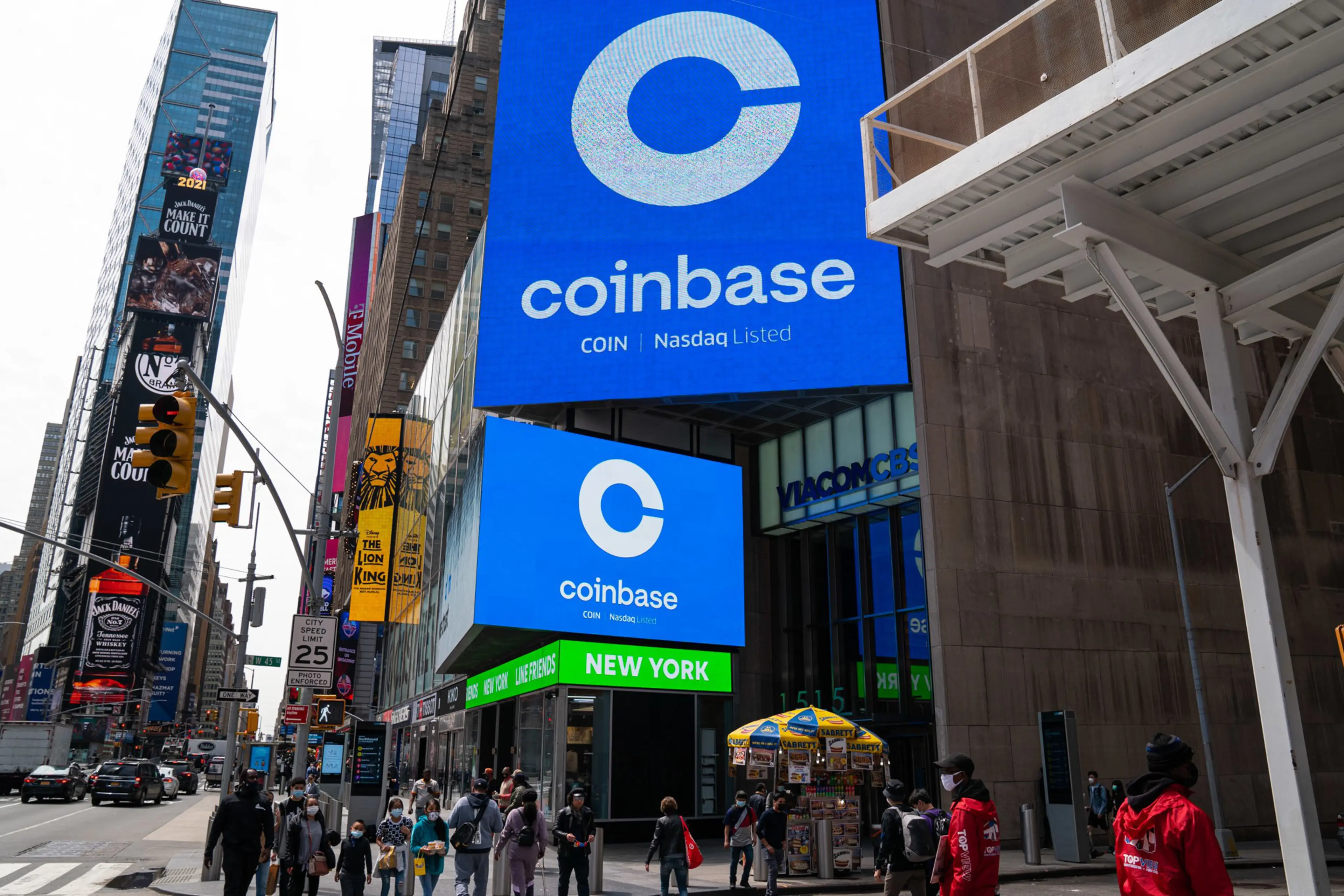
Coinbase advertising sign in Times Square, New York with pedestrians.

Discover: The Best Token Presales

Diversification Becomes the Bull Case

Citi lowered its price target from $400 to $235 while maintaining a Buy rating. Even so, the average analyst target remains near $223. That suggests most of Wall Street still expects meaningful upside once trading conditions improve despite lower earnings expectations.

William Blair remains constructive despite reducing forecasts. Analysts Andrew Jeffrey and Adib Choudhury cut 2026 revenue estimates by 12% and 2027 estimates by 13%. They also lowered adjusted EBITDA forecasts by 34% while maintaining an Outperform rating. The firm expects earnings to bottom during the second half of 2026 before recovering through 2027.

$COIN
-Citi lower Coinbase target to $235 from $400
Buy
$CROX
-Bank of America raises Crocs target to $160 from $145
Buy
$CRSR
-B. Riley raises Corsair Gaming target to $( from $7.50
Neutral

— stock setter (@MarcJacksonLA) July 24, 2026

The firm argues Coinbase’s long-term story is becoming structural rather than cyclical. Spot Bitcoin ETFs continue attracting institutional capital, while Base, retail derivatives, and prediction markets are expanding the company’s revenue mix. Coinbase also strengthened its derivatives business through the Deribit acquisition, although the deal contributed little to Q2 because it closed late in the quarter.

Subscription and services revenue remains another bright spot. The segment includes USDC interest income, staking, custody, and Coinbase One subscriptions. Analysts expect around $601 million, within management’s guidance range of $565 million to $645 million. That recurring revenue provides a cushion when trading volumes weaken.

Trade on Bybit and Get a Chance to Win Our $1,000 USDT Airdrop

Regulation and Guidance Hold the Coinbase Key

The Clarity Act remains one of the biggest long-term catalysts. The proposal would divide crypto oversight between the SEC and CFTC. Benchmark believes recent Senate progress improves its chances, while Compass Point warns delays could pressure Coinbase’s valuation if investors have already priced in regulatory progress.

Coinbase CEO Brian Armstrong calls to get the CLARITY Act across the finish line, saying "Clear rules are almost here – we're at the one yard line." pic.twitter.com/eQHTMsrHJi

— Dani Gigante (@Dsgigante) July 30, 2026

Bitcoin and Ethereum both traded at earlier highs during much of Q2, reducing retail participation and exchange volumes. Piper Sandler also highlighted prediction markets and perpetual futures after strong World Cup activity. However, Coinbase shares economics with Kalshi, limiting the business’s direct earnings contribution.

Ultimately, investors already expect a weak quarter. Management’s outlook for trading demand, stablecoin revenue, and regulatory developments will likely matter more than the headline results. If Coinbase shows its diversified businesses can offset weaker spot trading, the market may look beyond another soft earnings report.

Discover: The Best Crypto to Diversify Your Portfolio

The post Coinbase Q2 Earnings Preview: Guidance and Diversification in Focus appeared first on Cryptonews.

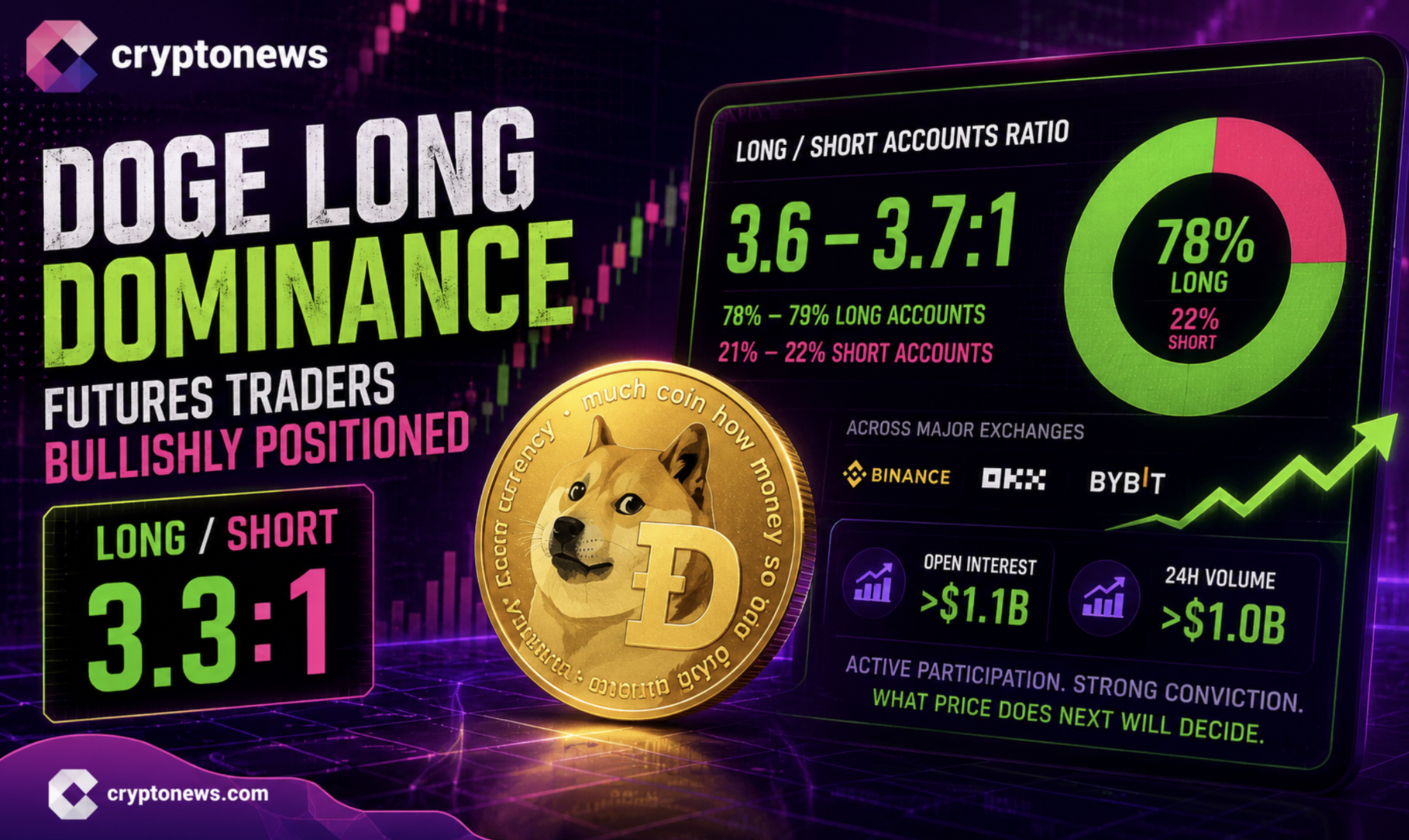
Dogecoin Long Short Ratio Goes Too Bullish at 3.3:1

Dogecoin is trading near $0.07, but its derivatives market tells a stronger story. Futures traders remain heavily positioned on the long side, leaving bears badly outnumbered. The headline ratio sits near 3.3:1, while some exchanges show even stronger bullish conviction. Meanwhile, the latest Fed decision and renewed inflows into Bitcoin ETFs continue to support risk appetite.

Binance perpetuals holding a long-to-short accounts ratio between 3.6 and 3.7:1. Around 78% to 79% of active accounts are net long, while 21% to 22% remain short across intraday and one-day windows. That imbalance suggests traders still expect higher prices rather than another sharp decline.

Dogecoin is trading near $0.07, but futures traders remain heavily positioned on the long side, leaving bears badly outnumbered.

Coinglass also shows a similar bias across OKX and Bybit, confirming the trend extends beyond a single exchange. Futures open interest remains above $1.1 billion, while daily trading volume has climbed past $1.0 billion. Those figures point to active speculative participation instead of thin market conditions.

Even so, crowded long positioning can quickly become a double-edged sword. If Dogecoin holds key support and buyers stay in control, those positions could fuel another leg higher. On the other hand, any sharp rejection may trigger long liquidations and accelerate downside volatility.

Discover: The Best Crypto to Diversify Your Portfolio

Can Dogecoin Price Break Out of the Upper-$0.07 Band This Week?

DOGE is trading around $0.07, moving within a 24-hour range of around $0.0693 to $0.0722. Price continues hovering near the upper end of its recent consolidation range. Spot trading volume is close to $520 million, while futures volume remains above $1.0 billion, showing derivatives still dominate market activity.

The circulating supply stands near 155.5 billion DOGE, giving the token a market capitalization of about $11.0 billion. That size still requires meaningful capital to sustain a strong breakout. Immediate resistance sits around $0.073 to $0.074, while support remains near $0.069, the lower edge of the current range.

The bullish case remains straightforward. If Bitcoin extends its risk on momentum and memecoin demand returns, the 3.3 to 1 long bias could become self-fulfilling. A decisive move above $0.073 would put $0.080 back into focus.

doge logo
Dogecoin (DOGE)
24h7d30d1yAll time

The base case is continued consolidation. DOGE could defend $0.069 and trade sideways until a fresh catalyst appears. On the other hand, a Bitcoin pullback or funding rate spike could trigger long liquidations. A break below $0.069 would quickly shift the short-term structure in favor of sellers.

Current positioning still supports a constructive outlook. Even so, long heavy markets often produce fast moves. That leaves DOGE vulnerable to either a clean breakout or a sharp flush once traders force the next directional move.

Trade Dogecoin on Bybit and Get a Chance to Win Our $1,000 USDT Airdrop

Bitcoin Hyper Targets Early-Mover Upside While DOGE Navigates Resistance

DOGE at $0.07 with a $12 billion market cap is a known quantity. The upside math on a coin this size demands broad market cooperation and sustained memecoin rotation, and two conditions that don’t arrive on schedule.

Traders watching the long/short ratio for continuation signals are essentially waiting on macro permission. That’s a different risk profile from early-stage infrastructure plays where the valuation ceiling hasn’t been defined yet.

Bitcoin Hyper ($HYPER) is currently in presale at $0.0136839, having raised $33 million to date, a traction that reflects genuine interest in what it’s building. The project positions itself as the first Bitcoin Layer 2 with SVM integration, combining Bitcoin’s security and capital base with Solana Virtual Machine execution speed, targeting throughput that competes directly with Solana itself.

The offering also includes high-APY staking and a decentralized canonical bridge for native BTC transfers. For traders who have already sized their DOGE position and are looking at the early-stage end of the risk curve, research Bitcoin Hyper here.

Discover: The Best Token Presales

The post Dogecoin Long Short Ratio Goes Too Bullish at 3.3:1 appeared first on Cryptonews.

Anthropic Claude AI Predicts the Price of XRP by The End of 2026

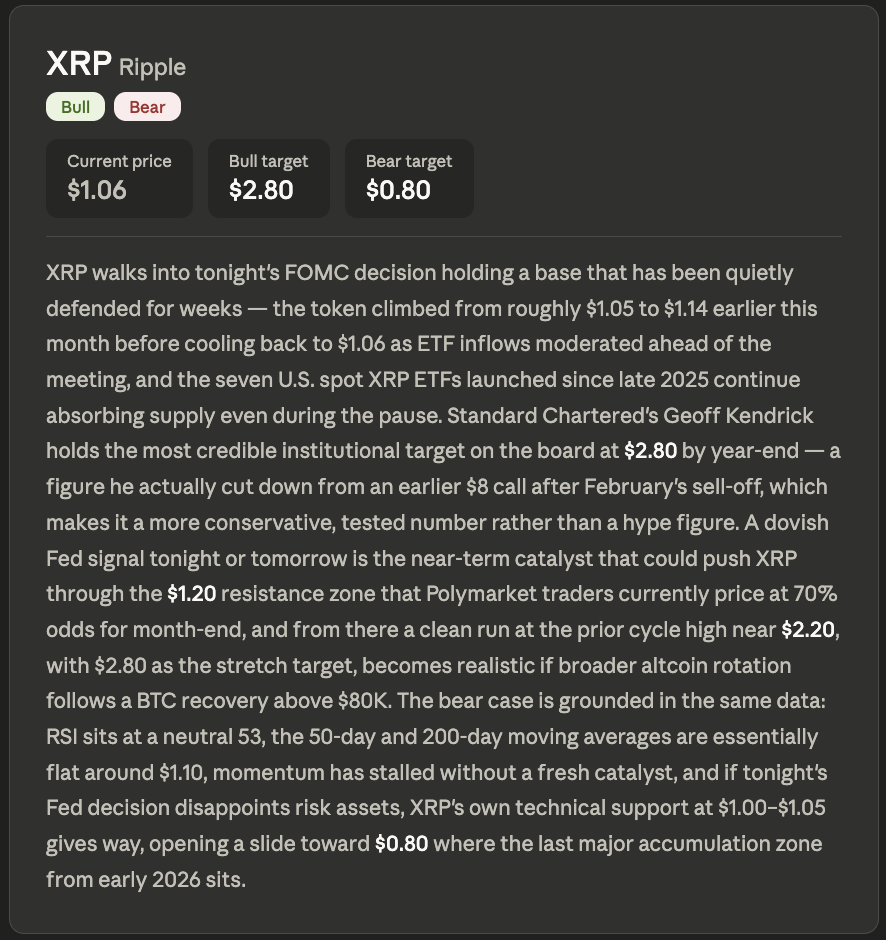
Claude AI predicts a Fed driven breakout for XRP, and this price prediction ties the entire setup to a single event. XRP walks into tonight’s FOMC decision holding a base that has been quietly defended for weeks, climbing from roughly $1.05 to $1.14 earlier this month before cooling back to $1.06 as ETF inflows moderated ahead of the meeting.

Seven US spot XRP ETFs, launched since late 2025, continue absorbing supply even during this pause. That kind of steady institutional buying through a quiet period is often more telling than a sharp spike, since it suggests real demand rather than momentum chasing.

Standard Chartered’s Geoff Kendrick holds the most credible institutional target on the board at $2.80 by year end. Worth noting, that figure was actually cut down from an earlier $8 call after February’s selloff, which makes it a more conservative, tested number rather than a hype driven one.

Source: Claude AI XRP Price Prediction

A dovish Fed signal tonight or tomorrow is named as the near term catalyst that could push XRP through the $1.20 resistance zone. Polymarket traders currently price 70% odds of that happening by month end.

From there, a clean run at the prior cycle high near $2.20 becomes realistic, with $2.80 as the stretch target if broader altcoin rotation follows a Bitcoin recovery above $80,000. The bear case is grounded in the same underlying data rather than a separate narrative.

RSI currently sits at a neutral 53, while the 50 day and 200 day moving averages are essentially flat around $1.10, meaning momentum has genuinely stalled without a fresh catalyst to break the tie.

If tonight’s Fed decision disappoints risk assets broadly, XRP’s own technical support at $1.00 to $1.05 gives way, opening a slide toward $0.80, the level where the last major accumulation zone from early 2026 sits.

xrp logo
Xrp (XRP)
24h7d30d1yAll time

XRP Price Prediction: XRP Is Sitting Exactly Where The Data Says It Should Be

Price closed at $1.0665, down 0.12%, in a session ranging between $1.0608 and $1.0925. That flat close lines up almost perfectly with the neutral RSI reading and flat moving averages described in the prediction itself.

Zoom out and the broader trend since July 2025 has been a long, uneven decline. XRP peaked near $3.65 that month, then spent the rest of the year carving a staircase of lower highs, with the sharpest break coming in October when price gapped from above $2.60 down through $1.80 in a matter of weeks.

Since that October crash, price spent months compressing between roughly $1.30 and $1.60, then broke that range lower in June, sliding toward $1.05. The bounce to $1.14 earlier this month has already faded back to current levels, exactly the kind of stalled momentum the flat moving averages point to.

Support sits at $1.00, the level the bear case names directly as the line that needs to hold. Resistance stacks at $1.14, then $1.20, the zone Polymarket traders are pricing tonight’s catalyst against, then the heavier ceiling near $2.20 from the prior cycle high.

Momentum here is genuinely neutral, not building toward a breakout in either direction on its own. For Claude’s bull case to activate, XRP needs a dovish signal to arrive and immediately clear $1.20, since nothing in the current chart structure suggests it can do that without outside help.

Here is What Claude AI Predicts About LiquidChain: Spoiler Alert, Very Bullish

Hindsight is the only place most people will see this rotation clearly. The money that moves early does not announce itself.

Large caps are not broken. They are boxed in. Bitcoin, Ethereum, and XRP keep testing the same ceilings with nothing giving way. Every macro catalyst comes with a new arrival date. Every institutional wave lands next quarter. Sitting in assets where the next leg depends entirely on someone else’s decision is not a position. It is a waiting room.

Capital that has survived enough cycles operates on one principle. It moves before the destination has a name.

Small market cap infrastructure plays by a different set of rules entirely. A rotation that would not register at Bitcoin’s scale can reprice an undiscovered project by multiples. The return lives in the distance between what something is genuinely worth and what the market has assigned it so far. That distance only exists while the project stays unfound. The moment it gets found, the gap closes for good.

Multi-chain fragmentation drains value from DeFi every single day. Bitcoin, Ethereum, and Solana operate as completely isolated systems with no native bridge connecting them. Every user who crosses those boundaries pays for that disconnection directly in fees, slippage, and failed transactions. Every crossing. Every time.

Claude AI predicts LiquidChain eliminates that entirely. All 3 networks unified inside a single execution layer. One deployment reaches every ecosystem. Zero cross-chain tax on any interaction.

The presale sits at $0.01454 with just over $920,000 raised. The market has not found this yet. That is exactly the opportunity.

Visit LiquidChain.

The post Anthropic Claude AI Predicts the Price of XRP by The End of 2026 appeared first on Cryptonews.

Ethereum Price Prediction: Foundation Adds Pascal Caversaccio to Its Board

Ethereum price is trading near $1,920, and its prediction is getting bullish. The move comes as the Ethereum Foundation signals a shift in long-term priorities. While governance changes rarely move prices immediately, they often shape the network’s future direction.

Pascal Caversaccio, better known on chain as pcaversaccio, has joined the Ethereum Foundation‘s board for an initial one-year voluntary term. He joins Aya Miyaguchi, Vitalik Buterin, and Swiss legal counsel Patrick Storchenegger on the four-member governing board. The board sets the Foundation’s vision and provides oversight of its management.

Ethereum Foundation Adds Cypherpunk Manifesto Author To Board

The Ethereum (@ethereum) Foundation has appointed Pascal Caversaccio (@pcaversaccio) as its fourth board member.

Caversaccio is known for his security research and the Ethereum Cypherpunk Manifesto.

The Foundation… pic.twitter.com/1JtYivojJR

— BSCN (@BSCNews) July 30, 2026

Caversaccio brings deep security experience to the role. He co-founded SEAL 911, wrote the Ethereum Cypherpunk Manifesto, and serves in the Foundation’s Silviculture Society. That group focuses on censorship resistance, privacy, open source development, and Ethereum’s long-term resilience.

Meanwhile, the appointment arrives as Ethereum navigates mixed spot ETF flows and a cautious macro backdrop. Traders are still watching how institutional demand develops after the latest Federal Reserve decision. Governance alone is unlikely to drive the next breakout, but stronger security and privacy efforts could reinforce Ethereum’s long-term investment case.

Discover: The Best Crypto to Diversify Your Portfolio

Ethereum Price Prediction: Push Toward $2,000 This Week?

ETH price has ranged between $1,875 and $1,930. That leaves the area just below $1,930 as the immediate technical hurdle. A clean close above it would put the $2,000 psychological resistance back in focus.

Near-term model projections for August still span a wide range, highlighting uncertainty rather than a clear forecast. Most estimates continue to place support around the upper $1,700s if ETH pulls back. With the current price holding comfortably above that area, the technical structure remains constructive.

eth logo
Ethereum (ETH)
24h7d30d1yAll time

The bullish case is unchanged. ETH needs to defend the $1,870 support zone and break above $1,930 with convincing volume. If buyers succeed, the next targets sit around $2,000 and $2,100. Sustained spot ETF inflows would provide another tailwind.

The base case favors continued consolidation between $1,870 and $1,930 as traders digest the latest macro developments. On the downside, a daily close below the upper $1,700s would weaken the medium-term structure. That could shift attention back toward the $1,600 to $1,680 range.

Long-term projections remain mixed. Conservative models continue to favor gradual appreciation over several years. Meanwhile, more optimistic analysts still see cycle highs reaching well above current prices if institutional adoption continues to expand.

Trade ETH on Bybit and Get a Chance to Win Our $1,000 USDT Airdrop

Maxi Doge Targets Early Mover Upside as Ethereum Tests Key Levels

ETH at $1,914 is constructive, but let’s be direct: a large-cap asset grinding toward $2,000 isn’t the kind of trade that generates life-changing asymmetry. That’s not a knock on ETH’s long-term case — it’s just math. For traders looking for the kind of early-stage exposure that blue-chip moves can’t offer, the Ethereum ecosystem’s presale layer is where that risk/reward lives right now.

Maxi Doge ($MAXI) is an ERC-20 meme token built on Ethereum, currently priced at $0.0002831 with $4.8 million raised in its presale. The project positions itself around a “1000x leverage trading mentality,” gym-bro culture meets DeFi degeneracy, with holder-only trading competitions, leaderboard rewards, and a Maxi Fund treasury earmarked for liquidity and ecosystem partnerships.

Friday night: "I'll keep it chill and won't stay up all weekend trading"

Monday morning: pic.twitter.com/OGFfZNxdNe

— MaxiDoge (@MaxiDoge_) July 27, 2026

Dynamic staking APY adds a yield layer for holders who aren’t purely speculating on price. Meme tokens live and die by community momentum, and $MAXI’s viral gym-bro marketing angle. The tagline is “Never skip leg-day, never skip a pump” is self-aware enough to actually.

Research Maxi Doge before sizing any position.

Discover: The Best Token Presales

The post Ethereum Price Prediction: Foundation Adds Pascal Caversaccio to Its Board appeared first on Cryptonews.

Bitcoin Price Prediction: Bitcoin ETFs End 4 Day Outflow Streak

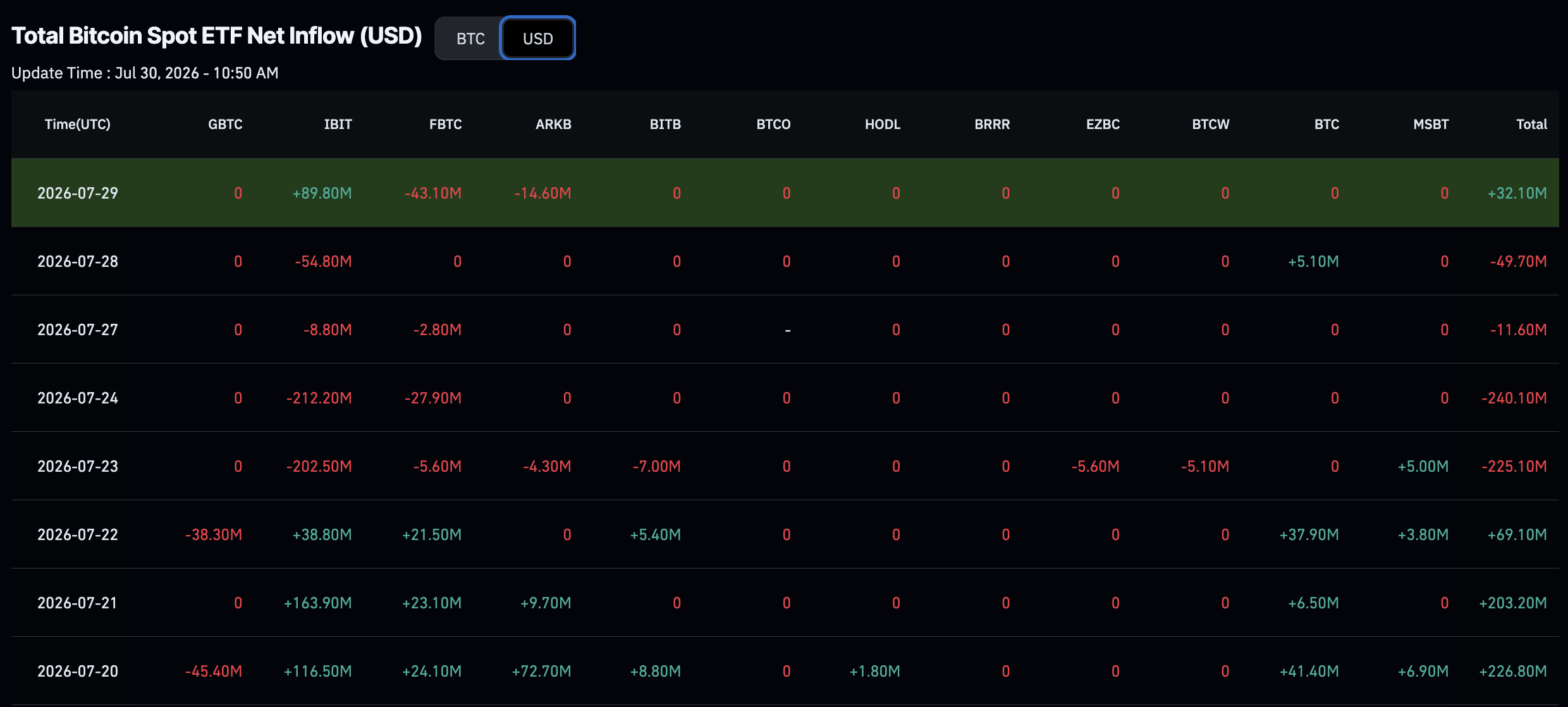
U.S.-listed Bitcoin ETFs have snapped a four-session outflow streak, and the timing matters for the Bitcoin price prediction. Bitcoin trades near $64,000, recovering after briefly slipping below that level during Wednesday’s session. The rebound in ETF flows is modest, yet the change in direction offers a clearer signal of institutional sentiment.

Wednesday’s net inflows reached $32.1 million, ending four straight sessions of outflows totaling more than $500 million. Monthly net inflows for US spot Bitcoin ETFs now stand above $220 million. Meanwhile, cumulative lifetime inflows remain above $51 billion, highlighting their growing role in Bitcoin demand.

Bitcoin price prediction. FOMC paused rates, Bitcoin shrugged off volatility, while Ethereum traded sideways as markets digested the decision.
Bitcoin ETF Flows, Coinglass

Spot Ether ETFs moved the other way on Wednesday, recording $18.65 million in net outflows. Even so, Ether ETFs still hold stronger monthly inflows than their Bitcoin counterparts. That contrast suggests institutions remain selective instead of pulling capital from digital assets altogether.

The Crypto Fear and Greed Index remains at 28, keeping sentiment firmly in the fear zone. Still, ETF inflows returned despite cautious retail positioning. That gap between institutional buying and hesitant retail traders is the key setup heading into the FOMC decision.

Discover: The Best Token Presales

Bitcoin Price Prediction: Can BTC Reclaim $65,000 as ETF Flows Stabilize?

Bitcoin is trading near $64,000, holding within a technically important range. The session low around $63,300 tested a support zone that has repeatedly attracted buyers. Meanwhile, the intraday high near $64,400 remains intact, showing sellers are still defending overhead resistance.

ETF flows are once again acting as a real-time gauge of institutional sentiment. Earlier this year, a 13-session outflow streak erased roughly $4.3 billion before inflows finally returned. A similar pattern has emerged again on a smaller scale. BlackRock’s IBIT has led buying during each reversal, and Wednesday’s return to net inflows follows that trend.

btc logo
Bitcoin (BTC)
24h7d30d1yAll time

The bullish case sees daily ETF inflows consistently exceeding $50 million, while a less hawkish Fed helps Bitcoin reclaim $65,500. That would put $68,000 into focus. The base case keeps Bitcoin between $63,000 and $65,500, allowing the price to build a stronger foundation before the next breakout.

The bearish scenario appears if the Fed surprises with a hawkish stance or ETF outflows resume. In that case, Bitcoin could lose $63,000 support and revisit the $60,000 to $61,500 demand zone. Until then, ETF flows remain one of the market’s clearest signals.

Trade Bitcoin on Bybit and Get a Chance to Win Our $1,000 USDT Airdrop

Bitcoin Hyper Targets Early Mover Upside as Bitcoin Tests Key Levels

Bitcoin’s mid-$64,000 consolidation reflects an asset at full price discovery, and $51 billion in cumulative ETF inflows already priced in. The asymmetric upside for most traders is narrowing as each ETF flow reversal generates diminishing surprise. That’s where the risk/reward calculation shifts toward earlier-stage infrastructure plays built on Bitcoin’s own rails.

Bitcoin Hyper ($HYPER) is positioning itself as exactly that. It is the first Bitcoin Layer 2 with full Solana Virtual Machine (SVM) integration, targeting the core limitations that have historically kept developers off Bitcoin: slow throughput, high fees, and limited programmability.

The architecture delivers sub-second finality and low-cost smart contract execution while inheriting Bitcoin’s security model, or a combination no other L2 has shipped. The presale has raised close to $33 million at a current price of $0.0136839, with staking already live.

Research Bitcoin Hyper as a satellite position to a core BTC holding, not a replacement for it.

Discover: The Best Crypto to Diversify Your Portfolio

The post Bitcoin Price Prediction: Bitcoin ETFs End 4 Day Outflow Streak appeared first on Cryptonews.

XRP Price Stabilizes as Korean Police Arrest Three in Fraudulent Scam

XRP price is trading around $1.08 after slipping over the past 24 hours. Even so, the market stayed relatively steady despite a major fraud case in South Korea. Authorities arrested three suspects linked to a fake XRP staking scheme that stole 3.4 million XRP, worth about 12.3 billion won, from 71 investors. An Interpol Red Notice remains active for a fourth suspect overseas.

The Seoul Metropolitan Police Agency said the group operated the fraudulent website Fxrpntwork.com. It promised monthly returns of 1.5% to 1.8% through blog posts, online articles, and YouTube videos. Investigators tracked the stolen XRP on-chain and froze the suspects’ wallets within three days of receiving the first report. The alleged ringleader was arrested after returning to South Korea, while two accomplices were caught fleeing within the country.

BREAKING: Seoul police arrested three suspects in XRP staking scam, seizing 3.4 million XRP from 71 victims.

— MSB Intel (@MSBIntel) July 30, 2026

Meanwhile, the case reflects South Korea’s tougher approach toward crypto-related fraud. Investigators continue to pursue scams that target retail investors through fake investment platforms. Authorities have also highlighted blockchain’s transparency, as transaction records helped trace the stolen funds quickly.

Despite the headlines, XRP avoided a sharp selloff and continued trading near recent levels. That suggests traders viewed the incident as an isolated criminal case rather than a network issue. Even so, market sentiment could change if similar enforcement actions increase across the region.

Discover: The Best Crypto to Diversify Your Portfolio

Can XRP Price Hit $1.20 This Week?

XRP price is trading around $1.08 after breaking below its recent trading range. The token hit an intraday high near $1.09 and found support around $1.05. The narrow trading range points to consolidation rather than a decisive trend, while recent price action shows sellers still hold the upper hand.

Support now sits in the $1.05 to $1.06 zone, where buyers have repeatedly stepped in. Initial resistance has shifted to $1.08, while $1.10 remains the first major barrier. A sustained move above that level could reopen the path toward $1.20, although stronger buying volume would be needed.

xrp logo
Xrp (XRP)
24h7d30d1yAll time

The bull case sees XRP reclaiming $1.10 on convincing volume before attempting a move toward $1.20. The base case remains sideways trading between $1.05 and $1.10 as investors wait for a fresh catalyst. On the downside, losing $1.05 could expose the psychological $1.00 level.

Meanwhile, the South Korean fraud arrests removed a source of negative headlines without affecting the XRP Ledger itself. Traders largely treated the incident as a criminal case rather than a protocol issue. For now, XRP price remains more sensitive to macroeconomic expectations and overall risk appetite than isolated enforcement actions.

Trade XRP on Bybit and Get a Chance to Win Our $1,000 USDT Airdrop

LiquidChain Targets Early Mover Upside as XRP Tests Key Levels

XRP at $1.08 is not a bad place to be long, but the upside math from current levels is incremental. A move to $1.20 is a 11% gain. That’s where early-stage infrastructure plays enter the conversation, not as a replacement for XRP exposure, but as a different risk-return profile entirely.

LiquidChain ($LIQUID) is a Layer 3 infrastructure project positioning itself as the cross-chain liquidity layer. It fuses Bitcoin, Ethereum, and Solana liquidity into a single execution environment.

Consider this your invitation.

The age of isolated chains is ending. 👁 pic.twitter.com/Iaeuk01uPI

— LiquidChain (@getliquidchain) July 29, 2026

The core architecture centers on a Unified Liquidity Layer with single-step execution and deploy-once architecture, meaning developers ship once and access all three ecosystems without fragmented bridge risk.

As of today, the presale is priced at $0.01485 with $920K raised.

Research LiquidChain before committing capital.

Discover: The Best Token Presales

The post XRP Price Stabilizes as Korean Police Arrest Three in Fraudulent Scam appeared first on Cryptonews.

Crypto News, July 30: FOMC Holds Rates, Bitcoin ETFs Flip Green, Ethereum Dominance Falls

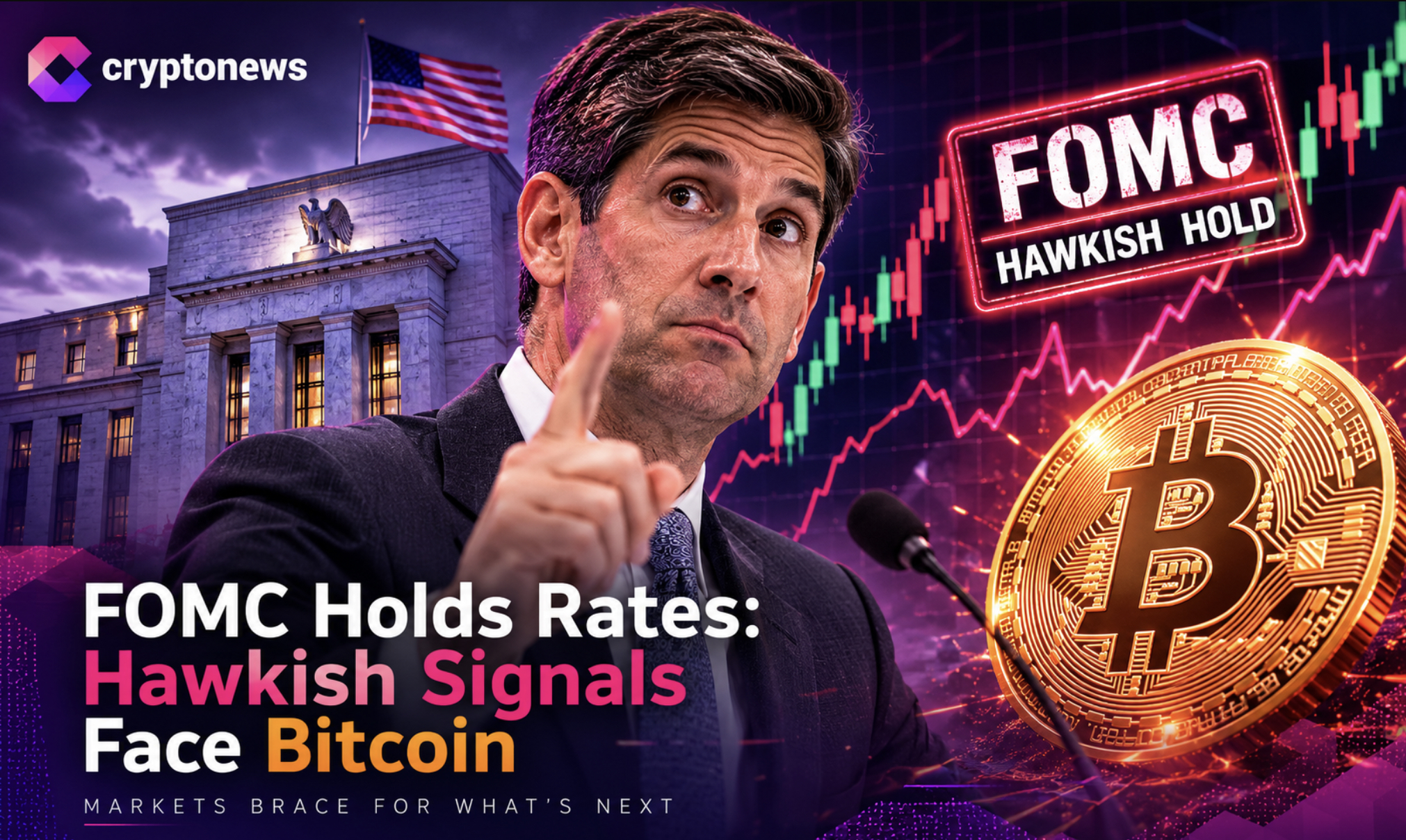
A quiet tension settled across global markets after the Federal Reserve delivered its latest policy decision. The FOMC held interest rates steady, but investors quickly realized the pause carried a distinctly hawkish tone. Treasury yields climbed, equities split direction, and Bitcoin, Ethereum, and crypto were left searching for the market’s next catalyst.

Bitcoin ETFs finally returned to net inflows, offering a welcome sign of demand, while Ethereum continued losing its dominance as capital rotated back to Bitcoin. Meanwhile, fresh security incidents and political headlines reminded investors that crypto never sleeps.

Federal Reserve Chair Kevin Warsh: "Our committee decided to vote by a 9-3 vote to maintain the target range for the federal funds rate at 3.5-3.75%." #FOMC pic.twitter.com/uLe3D4z5vy

— CSPAN (@cspan) July 29, 2026

Hawkish FOMC Hold Keeps Markets on Edge

The FOMC held the federal funds rate at 3.50% to 3.75% in a narrow 9-3 vote on July 29. Three regional Fed presidents, Beth Hammack, Neel Kashkari, and Lorie Logan, favored another 25 basis point hike, marking the first time since 2016 that three hawkish officials dissented together. Policymakers cited persistent inflation around 4.1% alongside resilient economic growth, reinforcing expectations that rates could stay elevated longer.

Bitcoin initially welcomed the decision, jumping from $63,700 to nearly $64,700 before giving back most of the gains as traders digested the hawkish language. It later stabilized around $64,000, while Ethereum traded near $1,900 with little conviction. Traditional markets delivered a mixed performance, with the Nasdaq advancing as the Dow weakened, leaving crypto largely range-bound.

The uncertainty sparked heavy liquidations, erasing between $280 million and $316 million across nearly 90,000 to 96,000 traders. Both long and short positions were caught in the crossfire, highlighting widespread indecision. At the same time, US publicly held debt surpassed 100% of GDP for the first time since World War II, adding another layer of macro concern for investors.

Politics also entered the spotlight. Senator Cynthia Lummis briefly lost control of her verified X account after hackers promoted a fake Solana meme coin, $USA Token, through a pump.fun link. The posts disappeared within minutes, but the incident arrived as lawmakers continued negotiations over the CLARITY Act ahead of the August recess, with ethics provisions and crypto-related amendments still under debate.

Senator Cynthia Lummis' X account was compromised. Do not engage! pic.twitter.com/l7mV8O3kiS

— BSCN (@BSCNews) July 29, 2026

Discover: The Best Crypto to Diversify Your Portfolio

Bitcoin Holds Firm as ETF Flows Reverse

Before the Fed announcement, Bitcoin had already recovered from weekly lows near $62,400 following weakness in South Korean equity markets. Although the post-decision rally faded, the cryptocurrency continued defending the psychological $64,000 level while finding support above $63,500. Even so, Bitcoin remains roughly 3% to 4% below recent highs near $66,000 as July consolidation continues after last year’s rally.

btc logo
Bitcoin (BTC)
24h7d30d1yAll time

Institutional demand offered an encouraging signal. Spot Bitcoin ETFs recorded $32.1 million in net inflows on July 29, led by IBIT, ending a multi-day streak of outflows. Ethereum ETFs, however, posted roughly $18.65 million in net outflows, while Solana ETFs attracted around $19 million and XRP products added approximately $0.58 million. The divergence reinforced the ongoing rotation across digital assets and contributed to Ethereum’s declining market dominance.

FOMC paused rates, Bitcoin shrugged off volatility, while Ethereum traded sideways as markets digested the decision.
Bitcoin ETF, Coinglass

Elsewhere, crypto markets continued navigating operational risks. Ostium disclosed a $24 million off-chain breach while confirming its smart contracts remained uncompromised. Hyperliquid welcomed its first Japanese corporate buyer despite reports of reduced US fund exposure, and Luno announced another round of job cuts as restructuring efforts continued across the industry.

Despite elevated yields, political uncertainty, and mixed macro signals, Bitcoin has shown notable resilience. The defense of the $64,000 level, improving ETF demand, and the absence of panic selling suggest buyers remain active beneath the surface. If institutional inflows continue building and policy expectations stabilize, Bitcoin could be positioning itself for its next decisive move.

Trade Bitcoin and Ethereum on Bybit and Get a Chance to Win Our $1,000 USDT Airdrop

The post Crypto News, July 30: FOMC Holds Rates, Bitcoin ETFs Flip Green, Ethereum Dominance Falls appeared first on Cryptonews.

Microsoft Copilot AI Just Dropped the Most Bullish XRP Prediction of 2026

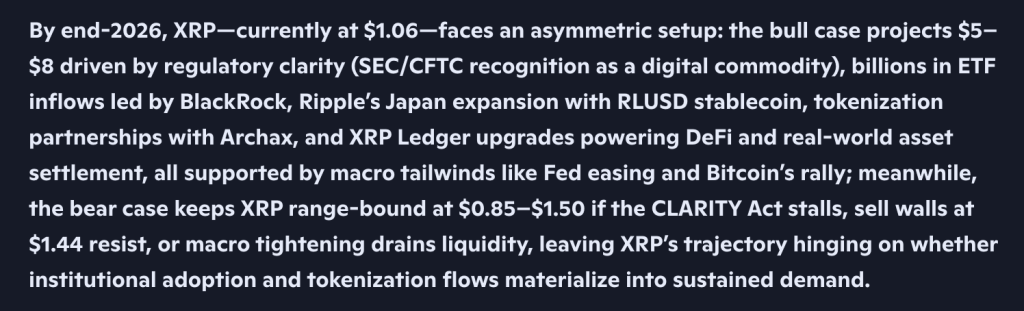
Microsoft Copilot AI is not easing into this predicts. By the end of 2026, XRP at $1.06 faces a bull case projecting $5 to $8, a level that treats regulatory approval as the trigger for a genuine repricing rather than a gradual climb.

Regulatory clarity sits at the center of the case. SEC and CFTC recognition of XRP as a digital commodity would remove the legal fog that has followed this asset for years.

Billions in ETF inflows, led by BlackRock, are identified as the second pillar. That kind of institutional entry point did not exist in any prior XRP cycle.

Source: Copilot AI XRP Price Prediction

Ripple’s own business expansion adds real-world weight. Japan’s expansion with the RLUSD stablecoin, tokenization partnerships with Archax, and XRP Ledger upgrades powering DeFi and real-world asset settlement all point toward genuine utility rather than speculative volume.

Macro tailwinds round out the bull case. Fed easing and a Bitcoin rally are cited as examples of broader conditions that tend to lift every major asset at once, including XRP.

The bear case is specific about where the price gets stuck. If the CLARITY Act stalls, XRP stays range-bound at $0.85 to $1.50, with a sell wall at $1.44 acting as the ceiling that keeps rejecting advances.

Macro tightening that drains liquidity from the system is named as the other real risk. Copilot frames the entire outcome as hinging on one question: whether institutional adoption and tokenization flows actually materialize into sustained demand rather than staying announcements.

xrp logo
Xrp (XRP)
24h7d30d1yAll time

XRP Is Sitting Right On The Floor Of Its Own Bear Case

Price closed at $1.05989, down 0.50%, in a session ranging between $1.04395 and $1.06630. That places XRP almost exactly at the lower boundary of the range this same prediction describes as the bear scenario.

Zoom out and the decline since December has been long and largely uninterrupted. XRP peaked near $2.40 in January, then broke down through February in a sharp single move, gapping from above $2.10 to under $1.70 in a matter of days.

Since that crash, price spent months compressing within a slowly narrowing range between roughly $1.30 and $1.60, then broke lower in June, sliding toward $1.00. The recovery attempt in July has been shallow, stalling near $1.20 before rolling back to current levels.

Support sits right here at $1.00, the psychological floor XRP is testing directly. Below that, there is little chart history to lean on before price would be trading in territory not seen this entire period.

Resistance stacks at $1.20, then $1.30, then the heavier ceiling near $1.44 that Copilot’s own bear case names as the sell wall. Momentum here is weak, with price grinding along its lows rather than building any base for a reversal.

For any part of this bull case to gain traction, XRP first needs to reclaim $1.44, a level it has not closed above since May. Until that happens, this chart is doing exactly what the bear case describes, sitting on the floor rather than building toward the ceiling.

Here is what Copilot AI Predicts For LiquidChain’s Near Future

Every cycle has a moment where waiting becomes the most expensive decision you can make. That moment is now.

Bitcoin, Ethereum, and XRP are all pinned under the same resistance they have been testing for weeks. The macro unlock is perpetually one data point away. The institutional money keeps arriving next quarter. Large-cap traders waiting for a breakout are queuing for a decision that belongs to someone else entirely.

Grok AI has identified what experienced cycle traders already act on. Capital that registers as statistical background noise at Bitcoin’s market cap can completely reprice a small, undiscovered project.

The asymmetry is not complicated. It lives in the distance between what something is genuinely worth and what the market has currently assigned it. The moment that distance gets noticed, it collapses. Before that moment, it is fully open.

Cross-chain fragmentation has been quietly taxing every DeFi participant since the first bridge went live. Bitcoin, Ethereum, and Solana were engineered independently with zero shared infrastructure and no design intent to communicate.

Every transaction crossing those ecosystem boundaries absorbs the cost of that decision in fees, failed execution, and slippage that hits before settlement even begins. The bridge industry did not fix this problem. It built a business model on top of it.

LiquidChain removes the business model entirely. Three networks unified inside a single execution layer. One deployment reaches all of them simultaneously. No cross-chain tax is extracted from any interaction anywhere.

Copilot AI predicts it as a coin worth watching. The presale sits at $0.01454 with just over $860,000 raised.

Execution is unproven. Adoption is an open question. Established assets offer a smoother path toward a ceiling that the entire market can already see. LiquidChain is the entry point that stops existing once the market finds it.

LiquidChain Here.

The post Microsoft Copilot AI Just Dropped the Most Bullish XRP Prediction of 2026 appeared first on Cryptonews.
Russia Charges Against Pavel Durov Push GRAM Down as Founder Risk Deepens

Russia’s FSB formally charged Pavel Durov with facilitating terrorist activities and placed him on an international wanted list. The move sent GRAM, formerly known as Toncoin, lower in early trading and added to its recent weekly losses. The case marks a major escalation from France’s ongoing investigation, shifting the focus from platform moderation to terrorism related allegations.

JUST IN: Telegram CEO Pavel Durov is now internationally wanted after Russia charged him with “facilitating terrorism,” Reuters reports.

Russia’s FSB alleges Telegram failed to remove material used by Ukrainian intelligence and extremist groups to coordinate attacks inside… pic.twitter.com/1KphdSFbBv

— Coin Bureau (@coinbureau) July 29, 2026

The FSB said the charges stem from Telegram’s alleged failure to remove material used by Ukrainian special services and terrorist or extremist groups to coordinate sabotage, mass killings, and cyber fraud operations inside Russia. Telegram’s official X account responded by posting an image of Durov making an obscene gesture but issued no written statement.

pic.twitter.com/7LEvOWAI3L

— Telegram Messenger (@telegram) July 29, 2026

Durov’s whereabouts remain unclear. A May 16 Telegram post placed him in Dubai, while a July 23 update suggested he was in Georgia and expected to return soon. He holds Emirati and French passports and has not lived in Russia for more than a decade.

Discover: The Best Crypto to Diversify Your Portfolio

Muted Price Drop Masks a Bigger Pavel Durov Risk

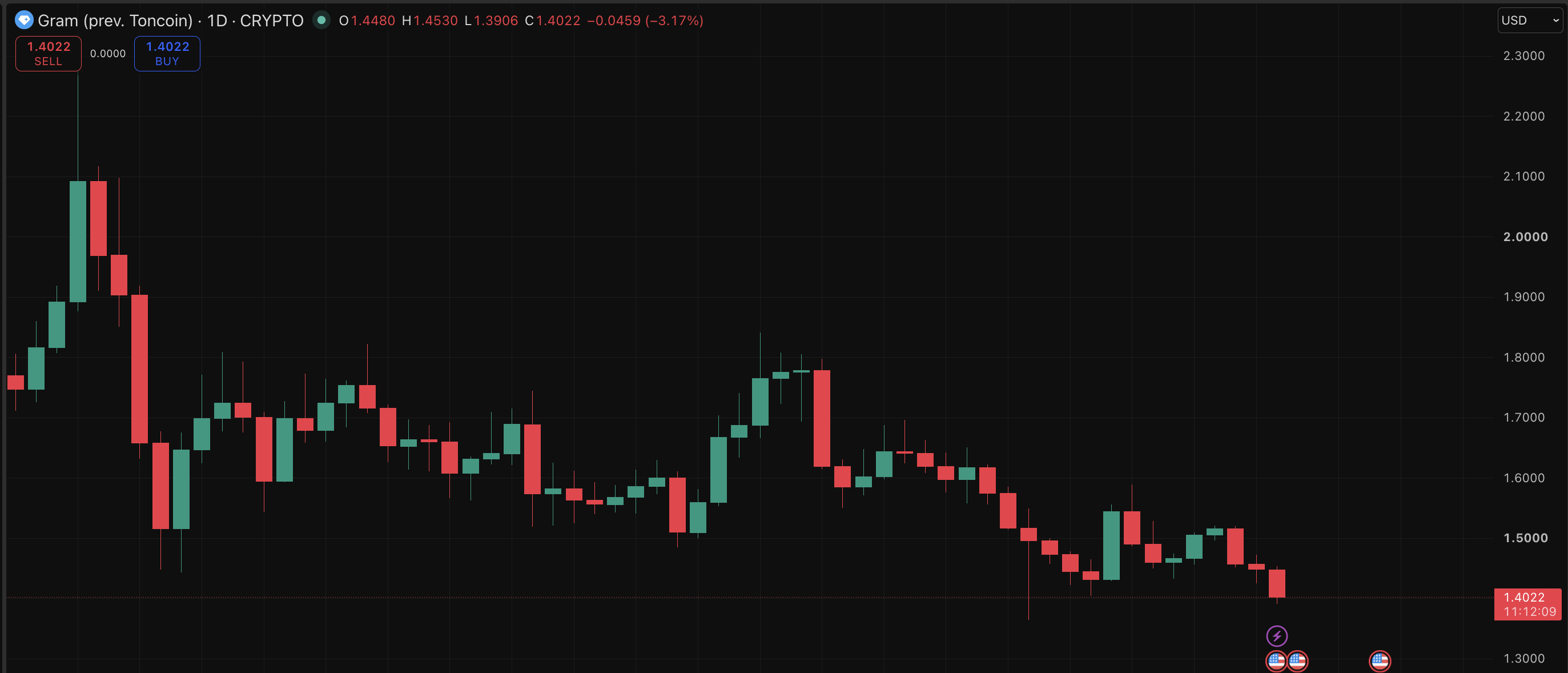
GRAM’s initial decline looked relatively contained compared with the market reaction to Durov’s 2024 arrest. When French authorities detained him at Paris Le Bourget Airport in August 2024, Toncoin plunged sharply before the token’s later rebrand to GRAM, wiping billions of dollars from its market value. The smaller reaction suggests investors had already priced in some founder-related risk.

Russia's FSB charged Pavel Durov with facilitating terrorism on July 29, issued an arrest warrant, and sent GRAM sliding 12% on the week.
GRAM USD, Tradingview

However, the terrorism allegations create a very different situation. Even without publicly released evidence outside Russia, the charges raise new concerns for banks, fiat on ramps, and exchanges supporting GRAM. The 2026 rebrand revived the token’s original identity and tied it more closely to Durov’s long-term vision, leaving less separation between the founder’s legal troubles and the token’s narrative.

Discover: The Best Token Presales

What Happens Next for GRAM and Telegram

Unlike the French investigation, which focuses on Telegram’s alleged cooperation with law enforcement, Russia’s case is framed around state security and wartime terrorism allegations. Russia has placed Durov on an international wanted list, although whether other countries act on it remains uncertain. The development follows months of mounting pressure, including reports that he was already under terrorism related investigation and an April summons delivered to a former Russian address.

Pavel Durov
Pavel Durov. Source: a video screenshot, DW Shift

The political backdrop adds another layer of uncertainty. Russia has repeatedly tried to restrict Telegram since 2018 while continuing to use the platform for official communications. In April, Durov said authorities appeared to accuse him of defending constitutional protections for free speech and private correspondence, adding that he was proud to be guilty of doing so. He has not publicly commented on the latest charges.

The immediate question for GRAM is whether the terrorism allegations prompt compliance-driven restrictions from exchanges or payment providers operating under AML and CFT rules. Telegram’s reported user base of more than one billion could still support adoption, but the founder’s legal situation is likely to remain a persistent source of headline risk. For now, markets appear more focused on continued uncertainty than on a quick resolution.

Trade Crypto on Bybit and Get a Chance to Win Our $1,000 USDT Airdrop

The post Russia Charges Against Pavel Durov Push GRAM Down as Founder Risk Deepens appeared first on Cryptonews.

Elon Musk Grok AI Just Predicts This Shocking SpaceX Stock Prediction for 2027

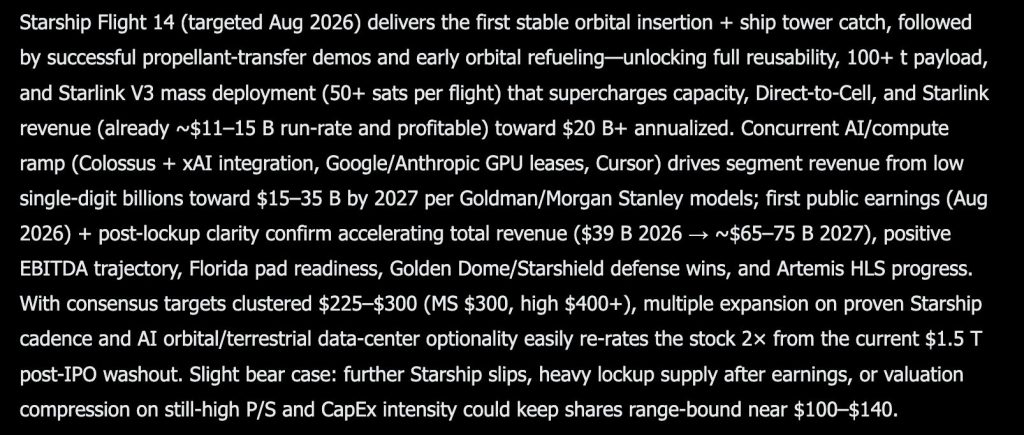
Elon Musk Grok AI predicts a major re-rating for SpaceX, and this price prediction leans entirely on execution catching up to hype. Flight 14, targeted for August 2026, is expected to deliver the first stable orbital insertion plus a ship tower catch, the milestone that finally proves the vehicle works the way the whole valuation assumes it will.

Successful propellant transfer demos and early orbital refueling are named as the next dominoes. Unlocking those pieces means full reusability, payloads above 100 tonnes, and mass deployment of Starlink V3 satellites at more than 50 per flight.

That kind of cadence supercharges more than just launch volume. Direct to Cell and Starlink revenue, already running at an estimated $11 billion to $15 billion annualized and reportedly profitable, are projected to push past $20 billion.

Source: Grok AI SpaceX Price Prediction

A second growth engine sits alongside the rocket business entirely. AI and compute infrastructure, through Colossus, xAI integration, and GPU leases with Google and Anthropic, is expected to grow segment revenue from low single digit billions toward $15 billion to $35 billion by 2027, based on modeling from Goldman and Morgan Stanley.

First public earnings in August 2026, combined with clarity after lockup expirations, are framed as the events that confirm the bigger picture. Total revenue is projected to accelerate from $39 billion in 2026 to roughly $65 billion to $75 billion in 2027, alongside a positive EBITDA trajectory, Florida pad readiness, Golden Dome and Starshield defense contract wins, and continued Artemis HLS progress.

Consensus targets cluster between $225 and $300, with Morgan Stanley at $300 and some models running above $400. Grok frames that gap as the setup for a straightforward 2x re-rating from the current $1.5 trillion valuation following the post IPO washout.

The bear case is narrower by comparison. Further Starship slips, heavy lockup supply hitting the market after earnings, or valuation compression on an already high price to sales ratio and heavy capital spending could keep shares range bound near $100 to $140.

SpaceX Price Prediction: SPCX Shares Are Down Nearly 45 Percent From Their June Peak

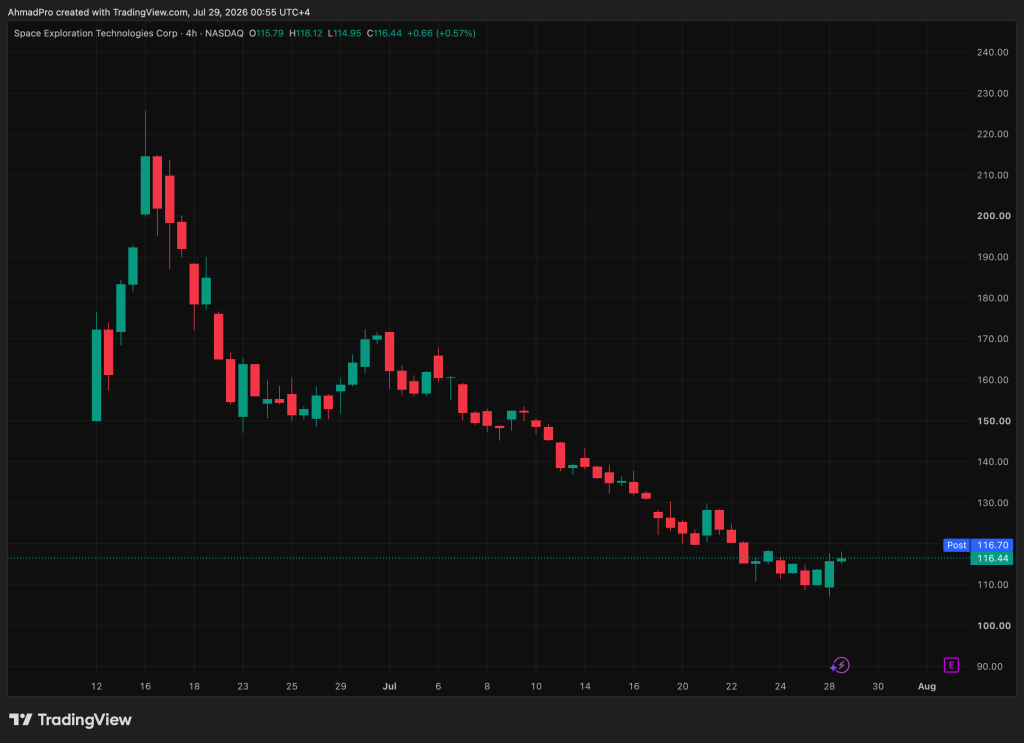
Price closed at $116.44, up 0.57%, in a session ranging between $114.95 and $118.12. That is a small green candle sitting near the bottom of a decline that has been almost uninterrupted since mid June.

Shares spiked to a peak near $217 in mid June, then rolled over hard, falling in a long, steady staircase with barely any relief rallies along the way. A brief bounce attempt in late June and early July stalled just above $170 before the selling resumed and dragged price down to current levels near $110.

Source: SpaceX Price / Tradingview

That kind of persistent, low volatility grind lower is different from a sharp crash. It suggests steady distribution rather than panic selling, which lines up with the bear case concern about lockup supply working through the market.

Support sits right around $110, the recent low this stock just tested. Below that, there is little recent chart history before price would be moving into territory not seen in this window.

Resistance stacks at $130, then $150, then the heavier ceiling near $170 where the early July bounce failed. Momentum here is tentatively stabilizing after weeks of decline, but nothing on this chart yet suggests the selling pressure has fully broken.

For Grok’s bull case to gain any real footing, shares first need to reclaim $170, a level this stock has not closed above in a month. Until that happens, the current price sits far closer to the bear case range than to anything resembling the path toward $225.

Don’t Miss Out on Our $1,000 USDT Airdrop on ByBit

LiquidChain Is Catching the Attention of SpaceX holders: Grok AI Predicts It’s the Next 100x

The rotation is already happening. Most people will only see it in hindsight.

Large-cap crypto is not failing. It is capped. Bitcoin, Ethereum, and XRP have been pressing against the same resistance bands for weeks. The macro tailwinds keep getting delayed.

The institutional inflows keep getting pushed to next quarter. Holding assets where the upside depends on catalysts you cannot control is not a strategy. It is waiting.

A capital that has navigated enough cycles does not wait at resistance. It moves before the destination becomes obvious.

Early-stage infrastructure plays operate on different math entirely. A small enough market cap means a modest rotation produces dramatic price movement. The asymmetry exists because the market has not priced in what is being built yet. That gap between current valuation and what the project is actually worth is where the returns come from.

Multi-chain fragmentation costs DeFi real money every single day. Bitcoin, Ethereum, and Solana run completely isolated liquidity systems with no native way to connect them. Every user moving value between ecosystems absorbs that cost directly in fees, slippage, and failed transactions.

LiquidChain collapses all 3 networks into a single execution layer. One deployment. Full ecosystem access. No cross-chain tax on every interaction.

The market has not found this yet. That is the entire point.

The presale is at $0.01454 with just over $820,000 raised. Ground floor is not a marketing phrase here. It is a description of where this actually sits in its lifecycle.

Execution is unproven. Adoption is unknown. Those risks are real and worth naming directly. Established assets offer a smoother ride toward a ceiling that is already visible. This offers an earlier seat at a table that has not been set yet.

Explore the LiquidChain Presale

The post Elon Musk Grok AI Just Predicts This Shocking SpaceX Stock Prediction for 2027 appeared first on Cryptonews.

Perplexity AI Just Dropped a Bitcoin Predicts That Has Traders Worried

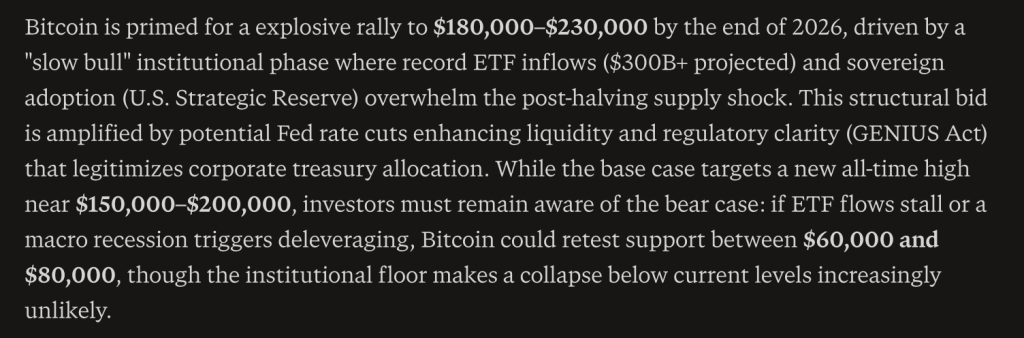
Perplexity AI predicts an explosive rally for Bitcoin, and this Bitcoin price prediction does not hold back on the number. The call is $180,000 to $230,000 by the end of 2026, a target built on what the model calls a slow bull institutional phase rather than a sharp speculative spike.

Record ETF inflows are projected to top $300 billion, layered against sovereign adoption through a US Strategic Reserve. That combination is framed as overwhelming the post-halving supply shock entirely, meaning demand simply outpaces the reduced flow of new coins hitting the market.

Potential Fed rate cuts add a second structural bid on top of that. Enhanced liquidity tends to push capital toward risk assets, and Bitcoin has historically been a major beneficiary of exactly that kind of environment.

Source: Perplexity AI Bitcoin Price Prediction

Regulatory clarity through the GENIUS Act rounds out the case. Perplexity frames this as the piece that legitimizes corporate treasury allocation, effectively giving more companies permission to hold Bitcoin on their balance sheets the way a handful of early movers already have.

Even the base case here is aggressive. A new all time high near $150,000 to $200,000 is treated as the expected outcome rather than the stretch scenario.

The bear case is not dismissed though. If ETF flows stall or a macro recession triggers deleveraging, Perplexity sees Bitcoin retesting support between $60,000 and $80,000.

The model still frames a collapse below current levels as increasingly unlikely, arguing the institutional floor beneath this market has genuinely strengthened compared to prior cycles.

btc logo
Bitcoin (BTC)
24h7d30d1yAll time

Bitcoin Price Prediction: BTC Has Spent Six Months Retracing The Same 20,000 Dollar Range

Price closed at $63,835, up 0.22%, in a session ranging between $62,684 and $64,035. That modest green day sits inside a chart that has been repeating itself since spring.

Zoom out and the shape is unmistakable. Bitcoin topped near $128,000 in October 2025, then broke down hard through January, gapping from above $96,000 to under $72,000 in a matter of weeks.

Since that crash, price built a rounded recovery through spring that peaked near $82,000 in May, then rolled over into a sharp flush back to $60,000 in June. The climb since that June low has been steady, and it has now pushed BTC price back to almost exactly where the May rally first started.

Support sits at $60,000, the level defended through June. Below that, $52,000 marks the last major shelf from earlier in the cycle.

Resistance stacks at $66,000, then $70,000, then the heavier May ceiling near $82,000 that has already rejected one full rally attempt this year. Momentum here is mildly positive but not extended, consistent with a market grinding sideways rather than breaking out in either direction.

For Perplexity’s base case to gain real traction, Bitcoin needs to clear $82,000, a level this exact chart has already failed at once this year. Until that happens, this remains the same range it has been trading since May, just retraced from a different direction.

Don’t Miss Out on Our $1,000 USDT Airdrop on ByBit

Here is What Perplexity AI Predicts About LiquidChain

The rotation has already happened. Most people will realize it too late.

Large caps are boxed in. Bitcoin, Ethereum, and XRP keep testing the same ceilings with nothing giving way. Every macro catalyst has a new date. Every institutional wave arrives next quarter. Waiting on someone else’s timeline is not a trade.

A capital that has navigated enough cycles moves before the destination has a name.

Small market cap infrastructure plays on different physics entirely. A modest rotation that vanishes as noise at Bitcoin’s scale can reprice an undiscovered project by multiples. The returns live in the gap between what something is genuinely worth and what the market has assigned it. That gap closes permanently the moment discovery happens.

Multi-chain fragmentation bleeds DeFi every single day. Bitcoin, Ethereum, and Solana run as completely isolated systems. Every user crossing those boundaries pays in fees, slippage, and failed transactions. Every single time.

Perplexity AI predicts LiquidChain fixes that will entirely fix it. All 3 networks inside one execution layer. One deployment. Zero cross-chain tax anywhere.

The presale is at $0.01454 with just over $900,000 raised. The market has not found this yet. That is exactly the point.

Execution is unproven. Adoption is unknown. LiquidChain is an entry point that disappears the moment the market looks up.

Visit LiquidChain.

The post Perplexity AI Just Dropped a Bitcoin Predicts That Has Traders Worried appeared first on Cryptonews.

Registry Model, 13 Chains: How 1inch Aqua Tackles DeFi’s Fragmented Liquidity

1inch has moved its Aqua liquidity protocol from developer preview to full public release, covering 13 EVM-compatible networks simultaneously, a scope that puts it in direct contact with most of the chains where professional market makers and retail liquidity providers already operate.

The launch addresses one of DeFi’s most persistent structural problems: capital that sits idle across fragmented pools on separate chains, earning suboptimal yields and forcing providers to manage positions across incompatible interfaces.

Discover: The Best Crypto to Diversify Your Portfolio

How Aqua’s Registry Model Differs from Standard AMMs

Aqua does not use conventional pool deposits. Instead, it operates on a registry-based allowance model: a liquidity provider registers a wallet balance as backing, and that balance can support multiple simultaneous quoted positions without the assets leaving custody.

A swap executes only when it matches the position’s stated terms, at which point the protocol pulls the required assets directly from the provider’s wallet.

Liquidity providers: it’s time to wake up.

Use 1inch Aqua to find more activity in more markets, without letting your tokens out of your wallet.

Risk-controlled execution meets full self-custody.

No, you aren’t dreaming.

Here’s how it works:

⬇ pic.twitter.com/F7CJeikteJ

— 1inch (@1inch) July 28, 2026

The capital efficiency implication is significant in theory. According to the research context, 1inch has cited a scenario where a $100,000 wallet balance backs positions quoting a combined $300,000, but that figure reflects quoted inventory, not available capital.

Actual fill capacity is still constrained by whatever the wallet holds at execution time, so providers carrying concentrated positions or low on-chain balances will hit limits that the quoted figure obscures.

This custody-preserving design contrasts sharply with standard AMMs, where depositing into a pool transfers asset control to a smart contract and exposes the provider to impermanent loss on every price move.

Aqua’s model keeps the asset in the provider’s wallet, which is structurally cleaner for professional market makers who need balance-sheet flexibility, though execution still depends on verified counterparties and on-chain balance checks at fill time.

Chain Coverage and Incentive Structure at Launch

The public release covers Ethereum, Arbitrum, Base, BNB Chain, Optimism, Polygon, and Robinhood Chain, among seven others, all EVM-compatible.

That breadth matters because liquidity on EVM chains remains heavily fragmented, with meaningful depth concentrated on Ethereum mainnet and Arbitrum while newer chains struggle to attract professional providers without dedicated incentive programs.

1inch Network has added 10M 1INCH tokens in incentives for LPs on 1inch Aqua, with a further 500k USDC boost from the 1inch DAO.

And we’re launching with @BNBCHAIN as our first co-incentive partner.

The 1inch Network incentives run for 3 months through @merkl_xyz: 5M 1INCH in… pic.twitter.com/QugGxOqOWb

— 1inch (@1inch) July 28, 2026

To bootstrap depth across all 13 networks, 1inch is launching a parallel incentives program backed by 10 million 1INCH from the 1inch Foundation and 500,000 USDC from the 1inch DAO.

Rewards are distributed through Merkl and administered by Degensoft Ltd (BVI). The size of the package is meaningful, 10 million 1INCH at current market rates represents a real incentive floor, but the distribution mechanism and lockup terms will determine whether it attracts sticky liquidity or mercenary capital that exits once rewards dry up.

Trade Ripple XRP on Bybit and Get a Chance to Win Our $1,000 USDT Airdrop

The post Registry Model, 13 Chains: How 1inch Aqua Tackles DeFi’s Fragmented Liquidity appeared first on Cryptonews.

Cardano Price Prediction: Has Hoskinson’s Vision Become Crypto’s New Roadmap?

ADA price is trading at $0.163, and the bigger question is whether Cardano design philosophy is quietly winning a debate the market once dismissed in this bearish prediction environment. Our analysis at Cryptonews suggests that formal verification, selective privacy, proof of stake, and broad token distribution are increasingly gaining traction across major blockchain networks. With ADA holding above $0.16, long-term price forecasts have once again caught retail attention.

The argument is not a victory lap. Instead, we see it as evidence of a structural shift across the industry. More than $2.5 billion has been lost to bridge hacks over the past five years, making the “ship first, patch later” approach increasingly difficult to justify. We also note AI-assisted bug discovery at Zcash and Ethereum validator software as signs that formal verification is becoming an operational necessity.

Cardano design philosophy is quietly winning a debate that the market once dismissed in this bearish price prediction environment.

We also observe that Ethereum’s updated multiyear roadmap now includes formal verification as a key priority. Based on current development timelines, that transition could take around four years. Meanwhile, Ethereum’s Layer 2 roadmap reflects how much the competitive landscape has changed since Cardano first embraced these ideas.

Still, whether narrative convergence leads to price gains remains the harder question. Markets often take time to reward long term thesis validation. For now, ADA’s chart shows limited momentum despite renewed interest in Cardano’s technology and Charles Hoskinson’s vision.

Discover: The Best Crypto to Diversify Your Portfolio

Cardano Price Prediction: Break $0.20 Before the Next Altcoin Rotation?

Cardano price is pressing against a ceiling and a prediction that has been tested but not cleared. The recent 24-hour range of $0.1660 to $0.1742 keeps the price in a tight band. Meanwhile, the seven-day range of roughly $0.1570 to $0.1919 shows sellers still defending the area below the $0.20 resistance zone.

That leaves $0.175 as an important level to watch. A rejection there could send ADA back toward recent weekly lows. On the other hand, a clean move above it would strengthen the case for another run at $0.20, where selling pressure has repeatedly emerged.

ada logo
Cardano (ADA)
24h7d30d1yAll time

Longer-term forecasts remain mixed despite improving sentiment. Binance projections place ADA’s average August target near $0.29, although estimates vary widely. Coinbase remains more conservative, targeting about $0.49 in 2026 and $0.59 in 2030. Meanwhile, Changelly still expects ADA to trade between $0.148 and $0.161 during parts of 2026.

The bullish case depends on sustained altcoin rotation pushing ADA above $0.175 with stronger trading volume. Otherwise, the base case remains a sideways move between $0.16 and $0.175 as governance developments support demand. A drop below $0.157 could expose another test of recent lows if on-chain activity fails to improve.

Trade ADA on Bybit and Get a Chance to Win Our $1,000 USDT Airdrop

Bitcoin Hyper Targets Early-Mover Upside as Cardano Stalls Below Key Resistance

ADA’s 2.19% daily gain is real, but holding below $0.20 while waiting for a four-year thesis to reprice is a specific kind of trade. Traders rotating out of range-bound large caps into earlier-stage infrastructure plays are finding a different risk/reward profile in the Bitcoin Layer 2 segment.

Bitcoin Hyper ($HYPER) is a Bitcoin Layer 2 integrating the Solana Virtual Machine with sub-Solana latency with Bitcoin-native security. The presale has raised $32.9 million at a current price of $0.0136838, with staking available for early participants.

The project’s core proposition is removing Bitcoin’s three structural bottlenecks like slow throughput, high fees, and absent programmability, while preserving the base layer’s trust model. A Decentralized Canonical Bridge handles BTC transfers natively.

For traders who track Bitcoin infrastructure momentum, this is worth diligence.

Research Bitcoin Hyper before the next stage closes.

Discover: The Best Token Presales

The post Cardano Price Prediction: Has Hoskinson’s Vision Become Crypto’s New Roadmap? appeared first on Cryptonews.

Uniswap v4 Fee Maths Under Scrutiny as Adams Defends LP Impact Claims

Uniswap founder Hayden Adams pushed back publicly against criticism of the protocol’s newly activated v4 fees on Tuesday, arguing that claims the change reduces liquidity provider earnings rest on flawed assumptions. The rebuttal follows Uniswap governance’s approval of protocol fee activation across selected v4 pools on multiple blockchains.

Tons of FUD and misunderstanding around the v4 fee switch:

"LP fees are getting reduced" – False. Protocol fees are additive, not subtractive. LPs earning 30bp per swap still earn 30bp

"The protocol is taking 25% of LP profits" – Made-up math. On a 30bp pool the protocol fee is…

— Hayden Adams 🦄 (@haydenzadams) July 28, 2026

Adams used a 30-basis-point pool as his reference case: a 5-basis-point protocol fee, he said, represents roughly 14% of total swap fees, not a reduction in what LPs earn. His central argument is that protocol fees are additive to the existing fee structure rather than deducted from LP allocations.

Discover: The Best Crypto to Diversify Your Portfolio

The Technical Dispute at the Center of the Controversy

That framing is where the controversy sharpens. Critics and portions of the DeFi governance community have pointed to Uniswap’s own v4 documentation, which describes protocol and LP fees as applied sequentially, protocol fee first, then LP fee on the remaining input.

Under that sequential structure, any positive protocol fee mathematically narrows the base on which LP fees are calculated, even if swap volume holds constant.

Adams’ “additive” characterization and the sequential-application mechanics described in protocol documentation represent genuinely different claims about how the fee stack operates.

Only to explain its 20x cheaper

— Hayden Adams 🦄 (@haydenzadams) July 28, 2026

The primary source does not elaborate on Adams’ technical reasoning for reconciling the two, and no further detail from his X post is available in the sourced reporting. That gap is the live dispute, not whether protocol fees exist, but whether their structural effect on LP returns is material or negligible in practice.

It is also worth noting that Adams’ arithmetic deserves a brief examination: 5 basis points out of 30 basis points is 16.7% of total swap fees by simple division, not 14%. Whether Adams is applying a different calculation method, perhaps referencing effective LP take after some adjustment, is not explained in the sourced report. The 14% figure is his, and it has not been independently verified in the available sourcing.

Uniswap Scale and the Stakes for LPs

The stakes here are meaningful. Uniswap holds approximately $3.06 billion in total value locked, making it the largest decentralized exchange by TVL according to DefiLlama. Fee structure changes at that scale carry direct consequences for concentrated liquidity providers managing positions across the protocol’s major pools.

Source: DefiLlama

The broader tension sits between UNI tokenholders who benefit from protocol revenue capture and LPs who supply the liquidity that generates those fees.

As Ethereum’s dominant DEX, and as ETH price dynamics continue to influence DeFi activity broadly, Uniswap’s ability to retain competitive liquidity depth while extracting protocol revenue is the central economic question that governance has effectively reopened with this activation.

For active LPs, the practical question is whether the actual net yield on deployed capital shifts once protocol fees are live across a broader pool.

Adams’ position is that it will not. The math embedded in the protocol’s own documentation suggests the answer is more nuanced than a flat denial. Governance votes to extend v4 protocol fees to additional deployments are expected to continue, meaning this dispute is unlikely to resolve on founder messaging alone; it will resolve on LP performance data as it accumulates.

Trade Ripple XRP on Bybit and Get a Chance to Win Our $1,000 USDT Airdrop

The post Uniswap v4 Fee Maths Under Scrutiny as Adams Defends LP Impact Claims appeared first on Cryptonews.

Dogecoin Co-Founder Billy Markus Revives Viral Vegas Loop Payment Memory

Dogecoin is trading near $0.07, up 0.3% over the past day after another quiet session. However, the muted move hides a weaker weekly trend. Billy Markus just reminded the market why people embraced DOGE in the first place. The full context offers another look at Dogecoin’s real-world utility.

Markus, posting as Shibetoshi Nakamoto on X, replied to a prompt from crypto retirement platform iTrustCapital about the most crypto thing he had done. He answered, “I bought a ride in the Vegas Loop with Dogecoin.” He added it was not that weekend, but it remained his favorite crypto experience. The comment referenced The Boring Company’s 2022 decision to accept DOGE through BitPay.

i bought a ride in the vegas loop with dogecoin

(tho that was not this weekend but still it was the most crypto thing xD)

— Shibetoshi Nakamoto (@BillyM2k) July 27, 2026

At launch, a single ride cost about $1.50, while a day pass cost $2.50. Elon Musk also backed the payment option, saying he would support Dogecoin wherever possible. Markus, still pointing to that purchase years later, says more about DOGE’s everyday appeal than many marketing campaigns.

Meanwhile, the post arrived during another difficult stretch for crypto markets. The Senate delayed further consideration of the Clarity Act before the August recess. At the same time, roughly $604 million in crypto positions were liquidated during a sharp market selloff. That combination kept pressure on risk assets, including Dogecoin.

Discover: The Best Crypto to Diversify Your Portfolio

Can Dogecoin Price Break Back Above $0.10 Before the Clarity Act Deadline?

At $0.07064, DOGE is holding just above the $0.07 floor, but only by a slim margin. The session low reached about $0.0693, showing sellers are still pressing that support. A decisive break below $0.07 could expose the $0.064 to $0.068 range, where buyers previously stepped in.

Futures open interest has eased alongside the recent price decline, suggesting leveraged longs continue leaving the market. That points to more than a simple spot weakness. Still, price has not confirmed a breakdown, leaving the current support level in focus for the next move.

doge logo
Dogecoin (DOGE)
24h7d30d1yAll time

The previous reference to $0.40 VWAP support is no longer relevant at current prices. Instead, analysts are watching whether DOGE can reclaim $0.08 before discussing a stronger recovery. Until then, the market remains well below major resistance, and momentum still favors caution.

If the Clarity Act advances before the August recess, sentiment could improve. Fresh catalysts from Elon Musk or renewed payment integrations may also help. In that case, a move back above $0.08 could reopen the path toward $0.10.

The base case remains a consolidation between $0.07 and $0.08 as traders weigh regulation and macro risks. However, a daily close below $0.07 with rising volume would strengthen the bearish outlook. Until DOGE creates a clear distance from that level, the utility story remains stronger than the chart.

Trade Dogecoin on Bybit and Get a Chance to Win Our $1,000 USDT Airdrop

Maxi Doge Targets Early Mover Upside as DOGE Tests Key Levels

DOGE at $0.07 with a multi-billion-dollar market cap means the math on a 10x from here requires a full bull cycle and sustained retail inflows. Traders rotating capital for higher-asymmetry exposure are looking earlier in the lifecycle, which is exactly where Maxi Doge ($MAXI) sits.

The Clarity Act delay and broader risk-off pressure are squeezing established meme coins hardest; early-stage presales carry their own risks but aren’t subject to the same open-interest unwind dynamics.

Friday night: "I'll keep it chill and won't stay up all weekend trading"

Monday morning: pic.twitter.com/OGFfZNxdNe

— MaxiDoge (@MaxiDoge_) July 27, 2026

$MAXI is a meme token built on Ethereum (ERC-20) positioned around a 240-lb canine mascot embodying 1000x leverage trading culture, think gym-bro meets trading desk, which lands well with the retail demographic that drives meme coin volume.

The presale has raised $4.8 million at a current price of $0.0002831, with dynamic staking APY live for holders. Features include holder-only trading competitions with leaderboard rewards and a Maxi Fund treasury earmarked for liquidity and partnerships. DYOR applies harder here than on listed assets.

Research Maxi Doge here.

Discover: The Best Token Presales

The post Dogecoin Co-Founder Billy Markus Revives Viral Vegas Loop Payment Memory appeared first on Cryptonews.

Ethereum Price Prediction: L2 Ecosystems Lose Their TVL as Robinhood Chain Activity Drops

Ethereum is trading at $1,920, but while price action remains relatively calm, the underlying picture looks more complicated for its prediction. Total value locked across Ethereum Layer 2 networks has slipped to roughly $5 billion, wiping out much of the 2024 expansion and returning to levels last seen in 2023. If L2s were meant to drive Ethereum’s next growth phase, that slowdown raises fresh questions.

The Robinhood Chain story captures that tension. The Arbitrum-based Layer 2 bridged roughly $141 million in ETH during its first two weeks. It also briefly overtook Ethereum L1 and Base in 24-hour DEX volume, reaching about $877.6 million. However, the network returned only around $4,000 in fees to Ethereum during its first week, fueling debate over how much value L2s actually sends back.

Ethereum is trading at $1,920, but while price action remains calm, the underlying picture looks more complicated for its prediction.

Some analysts argue Robinhood Chain’s $4.5 billion in DEX volume during its first week reflects activity shifting away from Ethereum’s base layer. Meanwhile, Optimism, Base, and Arbitrum still account for about $4.8 billion, or 96%, of the remaining Layer 2 TVL. Even so, the steady decline in total TVL remains difficult to ignore.

Meanwhile, the Ethereum Foundation has lost several senior leaders this year. At the same time, institutions including DTCC and JPMorgan continue expanding tokenization efforts across multiple blockchains instead of focusing only on Ethereum. ETH also remains range-bound, while derivatives positioning has cooled, suggesting traders still lack conviction for a decisive breakout.

Discover: The Best Crypto to Diversify Your Portfolio

Ethereum Price Prediction: Reclaim $2,050 Resistance This Week?

At $1,920, ETH is trading slightly above the $1,850 to $1,900 short term demand zone that many analysts identified as key support. The latest session ranged between $1,880 and $1,930, highlighting continued price compression. Meanwhile, derivatives positioning remains subdued, reflecting limited conviction from both bulls and bears.

The first resistance zone sits around $2,036 to $2,050. A decisive move above that could expose the 0.236 Fibonacci level near $2,134. Beyond that, $2,377 and $2,572 remain the next technical milestones. On the downside, $1,780 remains the key support, while $1,742 is the next major level if sellers regain control.

eth logo
Ethereum (ETH)
24h7d30d1yAll time

The bullish case remains straightforward. Holding above $1,900, improving derivatives sentiment, and stronger institutional activity on Layer 2 networks could support a move toward $2,050 and eventually $2,134. However, buyers still need fresh momentum before that scenario gains traction.

The base case still favors consolidation between $1,850 and $2,050. Layer 2 TVL remains a headwind, while no clear catalyst has emerged to break the current range. A daily close below $1,780 would weaken the short-term outlook and shift attention toward $1,742.

Robinhood’s prediction markets add another perspective. Only 22% of participants expect ETH to finish above $3,500 this year, while 54% anticipate a move below $1,500 at some point. That split highlights genuine uncertainty rather than one-sided bearish sentiment. Macro conditions also remain capable of reshaping the technical picture with little warning.

Trade Ethereum on Bybit and Get a Chance to Win Our $1,000 USDT Airdrop

LiquidChain Targets Early Mover Upside as Ethereum Tests Key Levels

ETH hovering below key resistance while L2 value leakage accelerates is exactly the environment where infrastructure capturing cross-chain activity, rather than betting on a single chain’s dominance, becomes a more interesting allocation question. The L2-versus-L1 value capture debate is real, and it does not resolve neatly in Ethereum’s favor in the short term. That dynamic is worth watching for rotation setups.

LiquidChain is positioning directly against the fragmentation problem at the root of this debate. The project is a Layer 3 infrastructure play, and its core proposition is fusing Bitcoin, Ethereum, and Solana liquidity into a single execution environment through what it calls a Unified Liquidity Layer.

The view is different from the third layer. 👁

You’ll understand soon. pic.twitter.com/P2WOELSTjI

— LiquidChain (@getliquidchain) July 27, 2026

With Liquid, developers only deploy once and access all three ecosystems; settlement is verifiable; execution is single-step. The presale is currently priced at $0.01484, with $920K raised to date.

Features like Deploy-Once Architecture address the exact developer fragmentation that the Robinhood Chain / Arbitrum / Base proliferation keeps making worse. Ethereum’s own infrastructure consolidation trends underscore why cross-chain abstraction has a credible thesis here.

Research LiquidChain further here.

Discover: The Best Token Presales

The post Ethereum Price Prediction: L2 Ecosystems Lose Their TVL as Robinhood Chain Activity Drops appeared first on Cryptonews.

Polymarket Odds on CLARITY Act Crash to 28% as Senate Misses August Deadline

The Digital Asset Market Clarity Act will not receive a Senate floor vote before the August 7 recess, with Senate Majority Leader John Thune acknowledging the chamber lacks time to complete debate, amendments, and a cloture vote before lawmakers leave Washington.

The admission is not merely a scheduling inconvenience, it compresses an already tight legislative calendar and forces the market-structure bill into a September session that carries far less political momentum, while prediction markets are pricing in a sharply diminished probability of enactment this year.

Source: Polymarket

Polymarket odds on the CLARITY Act becoming law in 2026 have fallen to approximately 28%, down from a peak of 82% in February.

Each missed deadline, a White House-floated July 4 signing ceremony, a late-July practical window, and now the August recess, has eroded confidence that Congress can deliver a comprehensive crypto regulation framework before election-cycle gridlock takes hold.

Discover: The Best Crypto to Diversify Your Portfolio

Competing Priorities Crowd Out Floor Time

The Senate’s pre-recess schedule has been consumed by a Russia sanctions package and a backlog of executive, intelligence, and judicial nominations, leaving no viable window for the multi-step procedural requirements the CLARITY Act demands.

The bill requires floor debate, a potential amendment process, and a 60-vote cloture threshold before any final passage vote, a sequence that cannot realistically be compressed into the days remaining before August 7.

Republicans currently hold enough seats to bring the bill forward but need approximately 10 Democratic senators to clear the filibuster threshold.

JUST IN: 🇺🇸 SEC says it is ready to create crypto rules if Congress fails to pass the Clarity Act.


— Watcher.Guru (@WatcherGuru) July 28, 2026

That math alone made a late-July push difficult; the displaced floor calendar makes it impossible. Thune previously indicated he hoped to at least begin consideration of the legislation before recess, a formulation that itself signals how far expectations have receded from outright passage.

The CLARITY Act cleared the House on July 17, 2025, with a 294–134 vote and now sits on the Senate Legislative Calendar as Calendar No. 423 with no cloture motion filed and no floor time formally allocated. That means all remaining execution risk sits entirely on the Senate side, and it is substantial.

Ethics Language and Enforcement Authority Remain Unresolved

Senator Cynthia Lummis introduced amended legislation designed to merge the versions approved by the Senate Banking and Agriculture committees, and the updated text includes ethics clauses targeting digital asset transactions by public officials.

Under the amendment, public officials and the president would be prohibited from issuing or sponsoring digital assets, with existing holdings subject to blind trusts, divestment, or equivalent procedures. Those restrictions would expire on January 20, 2029.

The ethics language was a direct response to concerns over cryptocurrency business ventures linked to President Trump and his family, but seven Democratic senators, Catherine Cortez Masto, Angela Alsobrooks, Cory Booker, Ruben Gallego, John Hickenlooper, Mark Warner, and Raphael Warnock, said the revised provisions do not go far enough.

Cynthia Lummis

Their demands cover stronger consumer protection, illicit finance safeguards, and market integrity measures, and none of those objections has been resolved ahead of the recess.

Enforcement authority presents a separate but equally intractable dispute. The updated bill centralizes enforcement responsibility with federal agencies – primarily the SEC and CFTC – rather than preserving parallel state-level authority.

New York Attorney General Letitia James warned that the framework could restrict states from applying their own investor protection laws to digital asset fraud cases, a concern that resonates particularly in states with aggressive securities enforcement traditions. The core disagreement is whether federal jurisdiction would preempt or merely supplement state enforcement schemes, and neither side has moved significantly toward the other.

Stablecoin yield provisions and the treatment of decentralized finance protocols remain open as well. These technical sections carry direct commercial implications for exchanges, stablecoin issuers, and DeFi protocols, making rapid compromise unlikely.

The scale of industry lobbying behind the CLARITY Act, including significant political spending from crypto-aligned PACs, reflects how much is at stake commercially, but lobbying intensity has not translated into the bipartisan vote count supporters need.

Trade Ripple XRP on Bybit and Get a Chance to Win Our $1,000 USDT Airdrop

The post Polymarket Odds on CLARITY Act Crash to 28% as Senate Misses August Deadline appeared first on Cryptonews.

❌