Ethereum price rose nearly 2% on July 29 as US spot ETF inflows and short liquidations helped ETH defend its rising support structure before the Federal Reserve’s rate decision. Ethereum price returns above $1,900 According to data from crypto.news, Ethereum…
The crypto market rarely stays still for long. This Wednesday, the Clarity Act, Morgan Stanley, Bitcoin, and Ethereum price are driving the conversation as investors prepare for the Federal Reserve’s policy decision. Like an ecosystem sensing a change in season, traders are watching carefully before making their next move.
Recent volatility has done little to quiet institutional interest. While short-term sentiment remains cautious, large financial firms continue expanding their presence in digital assets. That contrast is becoming one of crypto’s defining themes this year.
Meanwhile, regulators are working to reshape the landscape from another direction. Clearer rules and broader institutional access may not remove volatility, but they could change how capital flows through the market over time.
Morgan Stanley Expands Access as Bitcoin and Ethereum Price Stabilize
Here we see another step in crypto’s gradual evolution. Morgan Stanley has launched Ethereum and Solana exchange-traded products, giving investors broader exposure through familiar investment vehicles. The move signals growing confidence that digital assets are becoming a lasting part of traditional finance rather than a temporary experiment.
JUST IN: Morgan Stanley launches Ethereum and Solana ETPs with staking on NYSE Arca.
MSSE and MSOL charge a 0.14% expense ratio, with all staking rewards passed to investors.
The firm’s Ethereum Trust and Solana Trust debuted with competitive fees and staking features from launch. Investors receive most staking rewards, while validator services are handled by Figment. Instead of simply tracking the assets, the products offer an additional source of returns without requiring investors to manage staking themselves.
The launch builds on Morgan Stanley earlier Bitcoin investment product, which already attracted substantial assets. At the same time, European banks continue expanding blockchain infrastructure for tokenized settlements. Together, these developments show established financial institutions steadily adapting to blockchain technology rather than resisting it.
Despite Tuesday’s market weakness, the Bitcoin price has recovered after briefly slipping below recent support. Ethereum price has also regained stability following the broader selloff. The recovery remains measured, reflecting cautious positioning ahead of the Federal Reserve rather than renewed market optimism.
Clarity Act Gains Support as ETH Chart Reflects Institutional Confidence
Attention is also turning toward Washington. SEC Chair Paul Atkins has renewed his support for the Clarity Act, arguing that durable legislation offers greater certainty than temporary regulatory guidance. His comments reinforce the growing belief that long-term investment depends on clearer rules.
I am committed to supporting Congress in advancing the CLARITY Act, including providing technical assistance.
American leadership in the digital finance revolution means matching the energy of American innovators with a regulatory framework worthy of them. pic.twitter.com/7JiHDUbLqS
The Clarity Act aims to define responsibilities between the SEC and CFTC, reducing years of uncertainty for crypto businesses. Congress faces a limited legislative window before the August recess. Even so, Atkins has pledged technical assistance to help move the proposal forward.
The growing involvement of Morgan Stanley highlights why regulatory clarity matters. As more established firms enter the market, consistent oversight becomes increasingly important for both institutions and investors. The Clarity Act could provide that foundation if lawmakers reach an agreement.
For now, Bitcoin price remains steady while Ethereum price trades within a relatively stable range after recent volatility. Investors continue monitoring key support and resistance levels, but the Federal Reserve’s decision will likely determine near-term direction across digital assets.
Bitcoin (BTC)
24h7d30d1yAll time
A less hawkish outcome could strengthen Bitcoin price and encourage renewed demand for risk assets. Likewise, Ethereum price may benefit as institutional products attract additional interest. Markets often reward patience during periods of uncertainty, and this week appears no different.
The next chapter will depend on both policy and participation. Morgan Stanley continues expanding institutional access, while the Clarity Act promises a clearer regulatory framework. Whether those developments immediately lift the market remains uncertain, but together they reflect an industry steadily maturing rather than standing still.
It’s down more than 50% from the top. Gold is eating its lunch. Stablecoins quietly stole its original job. But the story everyone’s arguing about is the wrong one.
Naked Market breaks down macro finance, blockchain infrastructure, AI systems, and automated trading to help you understand the future of global finance before the mainstream catches up.
Picture a screen glowing in the dark. Doesnt matter where a phone in Lagos, a laptop in Jakarta, a bedroom in Manila. Same numbers everywhere.
Bitcoin, July 2026: around $60,000.
A year ago it was near $109,000. Last October it touched $126,000 and half the internet was shouting that six figures was the new floor that it could only go up from here.
Its not the floor anymore. It hasnt been for months.
And heres the strange part. The price falling isnt even the interesting bit. Prices fall. Prices rise. Thats literally the one thing prices do.
The interesting bit is that Bitcoin is quietly losing something worth far more than dollars.
Its losing the narrative.
First — what does “losing the narrative” even mean?
Let me back up, because this word gets thrown around constantly and almost nobody stops to define it.
Every asset on earth is really two things at once. Theres the thing itself — the coin, the share, the bar of metal. And theres the story people tell about the thing. The story is what makes you hold it through a bad week, buy more when its down, or try to explain it to your uncle at a family dinner.
Gold’s story: “it has held its value for 5,000 years.” The dollar’s story: “the whole planet accepts it.” A hot tech stock’s story: “this company owns the future.”
Clean. One line each.
Bitcoin never had one story. It had four. And in 2026, three of them cracked right down the middle.
Let me show you the autopsy. (Sorry thats dark. But it fits.)
Story 1: the “digital gold” that didn’t act like gold
For years the pitch was beautifully simple. Bitcoin is “digital gold.” When the world gets scary and money runs for safety, it runs to gold and it would run to Bitcoin too. Same job as gold, just younger and faster.
2026 ran that experiment live, in public, for everyone to watch.
Late January. President Trump starts firing tariff threats at NATO allies and floating the idea of taking Greenland. Textbook fear moment exactly when a safe haven is supposed to shine.
So what did Bitcoin do?
It fell 6.6%. Gold rose 8.6%. They ran in opposite directions during the precise kind of chaos Bitcoin was built to survive.
And it gets worse. That same month, the 30-day correlation between Bitcoin and the Nasdaq 100, the index stuffed with risky tech stocks hit 0.80. The tightest in almost four years.
Quick translation, because “0.80 correlation” means nothing until someone explains it. It basically means: when tech stocks sneeze, Bitcoin catches the cold. They move together — up together, down together, nearly in lockstep.
That is the exact opposite of a safe haven. A safe haven is supposed to zig when everything else zags. Bitcoin zigged when tech zigged, then crashed when tech crashed.
Meanwhile the boring old rock it was supposed to replace? Gold ripped past $5,600 an ounce, up 23% in a matter of weeks. And the biggest buyers werent nervous day traders. They were central banks. A record 45% of them, the highest reading in the history of the survey said they plan to buy more gold this year.
Sit with that for a second. The most powerful money managers on the planet had a straight choice between digital gold and actual gold.
They chose the rock.
Story one: cracked.
Story 2: the cash job that got stolen
Rewind to the very beginning. In 2008, a person or group nobody actually knows calling themselves Satoshi Nakamoto published a short paper. Its title described Bitcoin as a peer-to-peer electronic cash system.
Cash. Money you spend. That was the founding dream, send value to anyone, anywhere on earth, with no bank in the middle taking a cut and taking its time.
Now heres the brutal irony of 2026. That dream came true. Bitcoin just isnt the thing that made it happen.
Something else did. Stablecoins.
And this is the single most important idea in this whole piece, so let me make sure it lands even if youve never touched crypto in your life.
A stablecoin is a digital token pegged to a normal currency almost always the US dollar. One token is meant to always equal one dollar. It lives on a blockchain, so it moves like crypto: instantly, globally, around the clock, no weekends, no “please allow 3–5 business days.” But because its tied to the dollar, it doesnt lurch up and down like Bitcoin does. Its basically a dollar that learned how to teleport.
And people are using them. Not a little. A staggering amount.
In February 2026, stablecoins did something that honestly should have been front-page news everywhere and somehow wasnt. In a single month they moved $7.2 trillion beating ACH, the decades-old plumbing behind American bank transfers, for the first time ever. Across all of 2025 they settled roughly $33 trillion. Thats more than Visa and Mastercard combined.
Heres the cleanest way I can put it. The dollar is the cargo. The blockchain is just a faster truck.
The world never actually wanted a brand new kind of money to spend. It wanted its existing money — dollars, the thing it already trusts to move at the speed of a text message. Stablecoins delivered exactly that. Bitcoin, swinging 5% on a random Tuesday, was never going to be the thing you buy groceries with in Buenos Aires or send home to family in Manila.
Story two: stolen, right out from under it.
Story 3: the frontier that moved on
For about a decade, if you were an investor who wanted a slice of “the future” the wild frontier, the thing your friends didnt understand yet and kind of mocked you for you bought Bitcoin. It was the frontier-technology trade. The rebel bet.
Then, in 2023, three letters walked into the room and took the entire table.
A.I.
By 2026, the frontier isnt crypto anymore. Its artificial intelligence. The money that used to chase “the next big technology” now chases chips and models and AI startups. Bitcoin went from being the daring outsider to being, lets be honest a ten-year-old asset your bank now sells you in a neat little ETF wrapper.
Nothing ages a frontier story faster than becoming mainstream. And nothing makes yesterday’s frontier look dull faster than a shiny new one moving in next door.
Story three: replaced.
The twist: the one story Bitcoin is quietly winning
Okay. Three stories cracked. So Bitcoin is finished, right? Pack it up, nothing to see?
No. And this is exactly where almost everyone bulls and bears both gets it wrong.
While those three narratives were falling apart, a fourth one quietly got stronger. Not “money you spend.” Not “safe haven for a scary Tuesday.” Something slower, heavier, and far less exciting to post about:
A reserve asset for governments.
In March 2025, the United States created a Strategic Bitcoin Reserve. Today the US government sits on somewhere around 325,000 Bitcoin. El Salvador holds it as official national policy. Bhutan quietly mines it with hydro power off its mountains. Pakistan announced a reserve of its own.
Look at what all these buyers have in common. Theyre not trying to buy coffee. Theyre not trading in and out on a Tuesday afternoon. Theyre parking value for the long haul — the US reserve literally comes with a 20-year holding rule.
And that is a completely different story from the other three. Better yet, its the one job Bitcoin is genuinely good at: a scarce, hard-to-seize, borderless thing a country can hold when it doesnt fully trust the dollar or cant fully get access to it.
So the honest scoreboard for Bitcoin in 2026 looks like this:
Three losses. One win.
And yet the crowd keeps reacting to the price of the whole bundle screaming either “its dead” or “its going to a million” when the truthful answer is: it completely depends on which story youre talking about.
Zoom out: it was never one coin
Now step all the way back. Because this is where Naked Market actually lives not in the price, but in the structure humming underneath it.
For years, one tribe of Bitcoin believers held a very specific dream. One coin. One deflationary money. Bitcoin would swallow the dollar, the euro, the yen, and become the single money of the internet. One coin to rule them all.
2026 quietly put that dream to bed. But and this is the part that matters most it proved something far bigger true.
If youve been reading this newsletter for a while, you know the thread running through all of it: One Earth, One Currency. The idea that the world is slowly, structurally rebuilding money on shared, neutral, borderless rails. (New here? Start with this its the whole thesis in one place.)
Heres what people keep misreading. “One Earth, One Currency” was never going to be one coin winning a cage match. Its shared rails winning. A common settlement layer that dollars can ride, that tokenized bonds can ride, that in time many national currencies can ride, all at once, all on the same open network.
Now look at what actually won in 2026. Not a single coin. The rails. Stablecoins moving $33 trillion isnt proof that “crypto beat the dollar.” Its proof that money itself is climbing onto blockchain infrastructure and the dollar simply got there first by hitching a ride.
So Bitcoin losing three of its four narratives isnt evidence against the future of digital money. Its the strongest evidence yet for what that future actually is. It was never one coin. It was always the rails.
Bitcoin is one passenger on those rails. An important one, with a real, permanent seat the “hard reserve” seat by the window. But it was never the whole train. The people in real pain right now are the ones who bet it was. (Thats the misconception that keeps costing people money.)
Your tool: The Narrative Ledger
So how do you avoid becoming one of those people? How do you look at any hyped asset or any dumped, left-for-dead one and actually see clearly, while everyone around you is either euphoric or terrified?
Heres the tool. Im calling it the Narrative Ledger. Take it with you. Its yours now.
A ledger, in plain accounting terms, is just two columns: what you own (assets) and what you owe (liabilities). The Narrative Ledger does the exact same thing but for stories instead of money.
When you look at any asset, company, coin, or trend, dont ask the crowd’s lazy question (“is it going up or down?”). Ask a sharper one:
“Which of its stories is winning, and which is losing?”
KEEP THIS · THE NARRATIVE LEDGER
List every story. Not the loudest one. All of them. (Bitcoin had four.)
Write the evidence next to each. Real numbers, real behavior, real money flows. Not vibes, not headlines, not what a guy screamed on YouTube.
Mark each one. Asset (evidence backs it up) or liability (evidence kills it).
Read the net — never the loudest line.
Run Bitcoin through it and the fog burns off in about thirty seconds. Three liabilities, one asset. Not “dead.” Not “to the moon.” Just a specific thing thats quietly excellent at one job and has clearly lost three others.
And heres why this little tool is worth more than any price prediction youll ever read: it works on everything. Run it on an AI stock everyone swears is infinite. Run it on gold. Run it on the next coin your cousin promises is a 100x at the next family dinner. The crowd will always react to the whole. Youll read the lines.
Thats the entire game.
Rich reacts. Wealthy reads the rails.
Theres a difference between being rich and being wealthy, and it shows up right here, in exactly this kind of moment.
The rich person sees Bitcoin at $60,000, sees a screen full of red, feels the fear thick in the room and reacts. Sells at the bottom, or panic-buys the top, yanked around by whichever story is loudest that particular week.
The wealthy person doesnt look at the price first. They read the ledger. They notice that one quiet narrative got stronger while three noisy ones fell apart. And they understand that “Bitcoin” and “the future of money” were never the same sentence. They were watching the rails the entire time.
Bitcoin didnt lose the narrative. It lost three narratives, kept one, and in the process accidentally revealed what the real story was all along.
The rails are being laid. Right now, under all the noise. The only question that actually matters is whether youre reading them or reacting to them.
If you want to understand where money is heading before it gets obvious before the headlines, before the crowd, before your bank sends you that polite little email about its exciting new digital-asset product this is the place.
Has Bitcoin Lost the Narrative? was originally published in Coinmonks on Medium, where people are continuing the conversation by highlighting and responding to this story.
What gas fees are, why they exist, how Ethereum calculates them, and how to pay less.
Before Ethereum’s Dencun upgrade in March 2024, a single token swap on a busy day could cost more in gas than many people were moving. Within days of the upgrade, Layer 2 fees fell by as much as 98 percent, and a basic transfer today often costs a fraction of a cent.
Crypto gas fees are the payment you make to a blockchain network to process your transaction. Here is crypto gas fees explained in full: what they are, why you pay them, how Ethereum calculates them, and how to pay less. You pay them because block space is limited and the validators who process and secure transactions need to be compensated.
The biggest lever on what you pay is which network you transact on, and that is where most of the savings live.
A gas fee is the charge to run a transaction, paid to the validators who process and secure it, priced in gwei.
What are gas fees?
Gas fees are the fee you pay to run a transaction on a blockchain, similar to postage on a letter. The fee compensates the validators who process and secure your transaction. On Ethereum it is quoted in gwei, a small unit of ether equal to one billionth of one ETH.
Every action consumes a measurable amount of gas, from a plain transfer to a multi-step contract interaction. The heavier the computation, the more gas it uses.
You pay gas to compensate validators, ration limited block space, and deter spam.
Why do you pay gas fees?
You pay gas fees for three reasons: to compensate validators for the computing work and security they provide, to ration limited block space so fees decide whose transaction is processed first, and to deter spam that would otherwise flood the network.
Without a fee attached to every action, nothing would stop endless junk transactions from filling each block. The fee makes block space a resource people spend deliberately.
Crypto gas fees explained: how they are calculated
An Ethereum gas fee is the gas your transaction uses multiplied by the gas price. Since the EIP-1559 upgrade, that price is a base fee the network sets and burns, plus an optional priority fee that tips a validator to include you sooner, as the Ethereum documentation describes.
Transaction fee = gas used × gas price
More complex transactions use more gas, and higher demand pushes the price up. The base fee adjusts automatically with how full recent blocks are, and because it is burned rather than paid to anyone, every transaction permanently removes a little ether from circulation.
Transaction fee equals gas used times gas price; since EIP-1559 the price is a burned base fee plus an optional priority tip.
What makes gas fees high or low?
Gas fees rise and fall with four things: network congestion, transaction complexity, timing, and which network you use. Congestion is the largest short-term driver, because the base fee climbs when blocks fill during busy periods such as a major token launch or a sharp market move.
Average Ethereum gas fell from about 72 gwei before Dencun to roughly 1 gwei in 2026.
How to reduce gas fees
The most effective way to reduce gas fees is to use a Layer 2 network, then to time transactions for quiet periods and combine actions. In rough order of impact:
Use a Layer 2 network such as Base, Arbitrum, or Optimism, where fees are routinely a fraction of a cent.
Transact at off-peak times, since the base fee drops when the network is quiet.
Batch or consolidate actions so fewer transactions use less total gas.
Set an appropriate priority fee instead of overpaying a large tip during calm periods.
Choose the right network for the task, since baseline fees differ widely between chains.
Five ways to reduce gas fees, biggest lever first: Layer 2, off-peak timing, batching, the right priority fee, and a cheaper network.
Why Layer 2 is the biggest lever
A Layer 2 is a faster, cheaper network that processes transactions off the Ethereum mainnet and settles them back to it for security. After Dencun let rollups post their data in low-cost blobs, Layer 2 fees dropped sharply and now often sit below one cent.
Do stablecoin transfers cost gas?
Yes. Moving or using stablecoins consumes gas like any other transaction, so it can be pricey on Ethereum mainnet during congestion and is usually cheap on a Layer 2. The token holding its value at a dollar does not change the network cost of moving it.
When you use an onchain app, including supplying or redeeming stablecoins through Sky.money, you pay network gas, which is separate from any app fee. If you move stablecoins often, doing it on a low-fee network keeps the cost close to trivial.
Moving stablecoins costs network gas like any transaction; it is cheap on a Layer 2 and separate from any app fee.
Frequently asked questions
What are gas fees? The fee you pay a blockchain network to process a transaction. It goes to the validators who process and secure it, and on Ethereum it is quoted in gwei.
Why do I pay gas fees? To compensate validators for their work and security, to ration limited block space, and to deter spam that would clog the network.
How are Ethereum gas fees calculated? Gas used multiplied by the gas price, which since EIP-1559 is a base fee that is burned plus an optional priority fee, all quoted in gwei.
How can I reduce gas fees? Use a Layer 2 network, transact at off-peak times, batch your actions, and pick a cheaper network for the task.
What is a Layer 2? A faster, cheaper network that processes transactions off the Ethereum mainnet and settles them back to it for security.
Do stablecoin transfers cost gas? Yes. They are usually cheap on Layer 2 networks and can be costly on Ethereum mainnet during congestion.
What is gwei? A small unit of ether used to price gas, equal to one billionth of one ETH.
Final thoughts
If I had to reduce crypto gas fees explained to one habit, it would be to match the network to the transaction. Keep large, occasional moves on Ethereum mainnet when you value its settlement security, and run everyday stablecoin activity on a Layer 2 where the fee is a rounding error.
Check a live gas tracker before you confirm anything costly, and treat the fee as payment to a public network doing real work for you, not a charge from a middleman. Once you pick the right network, gas stops being something you worry about.
Ethereum price fell 5% from $1,973 to $1,873 on July 28 after another rejection below $2,000 triggered forced selling and pushed ETH into a key technical support zone. Ethereum price falls below $1,900 after $2,000 rejection According to data from…
Lido has introduced a major upgrade to its Ethereum staking infrastructure that supports higher validator balances and projects a one-third reduction in validator count through its new Curated Module v2. According to a Monday update from Lido, the latest version…
Reading Ethereum improvement proposals is not most traders’ idea of market research. They are dense, technical, and frequently contain jargon that requires significant background to parse correctly. The process of reading them is slow. Most of what they contain is not directly tradeable information in any near-term sense.
And yet, over the course of several weeks, I made my way through every significant EIP and upgrade proposal from the past four years. Not because I expected to find a hidden trading edge buried in the technical documentation, but because I had grown frustrated with my understanding of Ethereum being almost entirely derived from secondary sources: Twitter summaries, YouTube explanations, newsletter digests.
Secondary sources have a specific problem. They are produced by people who have read the primary documents and then filtered, simplified, and interpreted them for an audience. That filtering process necessarily involves choices about what matters and what does not. The trading community’s version of Ethereum’s development story reflects those choices, and those choices are shaped by what generates engagement, which is not always the same as what is most important for understanding where the asset is headed.
What stood out most to me was not a specific technical proposal. It was a consistent pattern in how upgrades are developed, debated, and eventually implemented that has direct implications for how protocol development timelines should be weighted as a factor in Ethereum’s valuation narrative.
The Gap Between Proposal and Implementation
The first thing that becomes clear from reading the proposals directly is how long the path from an idea to a shipped upgrade actually takes.
The most significant upgrades to Ethereum over the past several years have had gestation periods that would be surprising to anyone whose understanding comes from community announcements and price-movement coverage. By the time a major upgrade receives significant media attention and is reflected in market discussions as a near-term catalyst, it is often already deep into an implementation cycle that began years earlier.
The Merge, which received enormous market attention as an upcoming catalyst in 2021 and 2022, was the subject of active EIP discussion from 2018 onward. The staking mechanism that preceded the actual Merge was deployed in late 2020. When the market was treating the Merge as a future event with uncertain timing in 2021, significant portions of the technical infrastructure had been live and tested for over a year.
This pattern, where the visible market narrative about an upgrade’s timing is substantially later than the actual development timeline, has a specific implication. By the time an Ethereum upgrade becomes widely discussed as a market catalyst in retail crypto communities, most of the technical risk associated with the upgrade has already been addressed in earlier testnet and mainnet deployments that occurred without the same market attention.
What This Means for “Buy the Upgrade” Narratives
The crypto community has developed a general heuristic for upgrades: buy the anticipation, sell the news. This heuristic has some validity. Markets do tend to price in anticipated positive events, and the actual delivery of an event sometimes removes the uncertainty premium that had been sustaining elevated prices.
But reading the actual upgrade proposals reveals a nuance that the simple heuristic misses.
Because significant Ethereum upgrades are developed over years rather than months, the anticipation phase in the retail market narrative often begins when the technical risk is already largely resolved. The uncertainty that would justify a genuine anticipation premium, the uncertainty about whether the upgrade will actually work, has already been substantially reduced through the extended development and testing process that predated the retail market’s attention.
What this means practically is that the “buy the anticipation” narrative in crypto often begins at a point where the real anticipation was already priced by more technically sophisticated participants who had been following the EIP process. The retail community is not buying anticipation of a genuinely uncertain outcome. It is buying anticipation of an outcome that is already reasonably well-established technically.
This does not mean the upgrade has no price impact. It means the price impact is front-loaded toward the portion of the development cycle that predates retail attention, not the portion that generates the most discussion.
The Technical Detail That Most Analysts Glossed Over
Reading the EIPs directly also surfaced a specific technical dynamic that almost every secondary source I encountered either glossed over or described inaccurately.
The relationship between Ethereum’s supply dynamics and its fee burning mechanism is substantially more nuanced than the simplified description that circulates in most trading communities. The common narrative is something like: EIP-1559 introduced fee burning, which makes Ethereum deflationary, which is bullish. This is technically accurate as a skeleton and misleading as a trading thesis.
The actual relationship between fee burning, new issuance, and the net supply change is dynamic and depends entirely on network activity levels. At low network activity levels, new issuance exceeds the amount burned, which produces net supply increase. At moderate activity levels, burning roughly offsets issuance. At high activity levels, burning exceeds issuance, which produces net supply decrease.
The critical point that most community discussions miss is that the supply dynamics are a consequence of network usage, not a guaranteed feature of the protocol. Ethereum becomes deflationary when the network is heavily used. It is not inherently deflationary in the way a fixed supply asset is.
This creates a circularity that the simple bullish supply narrative does not acknowledge: for the supply dynamics to be bullish, the network needs to be extensively used, but extensive network usage requires Ethereum to be the preferred platform for significant activity, which is a competitive outcome that is not guaranteed regardless of the protocol’s technical properties.
What the Upgrade History Says About Execution Risk
One more pattern that stood out from reading the full upgrade history was the frequency and nature of delays.
Nearly every significant Ethereum upgrade has experienced timeline extension from its original estimates. Not because the development process is poorly managed, but because shipping consensus-critical code to a live network where errors have irreversible consequences requires caution that is not compatible with aggressive timelines.
The community’s response to delays is usually impatient. Delays generate negative sentiment, are cited as evidence of mismanagement, and sometimes produce price weakness in Ethereum relative to competitors who claim to move faster.
What the EIP history reveals is that these delays have consistently been the result of genuine technical prudence rather than organizational dysfunction. Upgrades that were delayed were delayed because testing revealed issues that needed to be addressed before deployment. In every case in the record I reviewed, the delayed upgrade was eventually delivered successfully.
The pattern of delays followed by successful delivery has a specific implication for how execution risk in Ethereum upgrades should be assessed. The fact that an upgrade is taking longer than originally announced is not, by itself, evidence that the upgrade is in trouble. It is evidence that the development process is maintaining the caution appropriate to consensus-critical code.
How to Use Technical Upgrade Research in an Investment Framework
None of the above produces a specific near-term trading signal. Ethereum’s upgrade trajectory is a long-horizon framework for thinking about the asset’s development, not a source of weekly or monthly actionable calls.
The practical use of understanding the upgrade process is in calibrating how to weight technical development as a factor against other factors in the overall investment thesis.
When the retail market narrative is excited about an upcoming upgrade and treating it as a near-term price catalyst, the technical reality is usually that the upgrade has already been de-risked through an extended development process and that much of the potential value associated with it has already been recognized by more technically informed participants.
When the retail market narrative is pessimistic about delays, the technical reality is usually that the delays reflect appropriate caution in an environment where errors are irreversible, and that the track record of successful delivery after delay is stronger than the pessimistic framing suggests.
Reading the primary technical documentation does not give you certainty about outcomes. Markets are uncertain and even technically excellent protocol development does not guarantee a specific price trajectory. But it does give you a more grounded perspective on the relationship between technical development and market narrative, which helps identify when the narrative has gotten ahead of the technical reality and when it has fallen behind.
Ethereum price rallied 5% to $1,966 on July 27 as surging spot demand, short liquidations, and tighter available supply pushed ETH toward the key $2,000 barrier. Ethereum price rally targets $2,000 According to data from crypto.news, Ethereum (ETH) price climbed…
Crypto has started the week with a completely different mood. Just days ago, traders were preparing for another round of geopolitical escalation. Instead, the United States and Iran have now held fire for a second consecutive day, oil prices have dropped by 5%, and risk appetite has returned. If you’re wondering why crypto is up today, this shift in sentiment is where the news and story begin. Today, we also see the ETH BTC ratio breaking higher, adding another bullish signal.
JUST NOW: The US paused its bombing of Iran after Omani officials visited Tehran Friday for talks.
Iran has since halted its own retaliatory strikes. Both sides have signaled interest in returning to ceasefire negotiations. https://t.co/2gGgG1Wmmu
Bitcoin climbed back above $65,000, Ethereum led gains among major crypto coins, and bearish traders were caught offside. More than $200 million worth of crypto positions were liquidated over the past day, with the vast majority coming from shorts forced to cover their positions.
For the first time in weeks, the rally feels supported by improving macro conditions instead of speculation alone.
The biggest catalyst behind today’s rally came from outside the crypto space. A second day without fresh military strikes between the United States and Iran pushed oil prices sharply lower, encouraging investors to rotate back into risk assets. Bitcoin reclaimed $65,000 while Ethereum accelerated even faster, reviving talk that the market may be entering the early stages of a recovery.
Bitcoin (BTC)
24h7d30d1yAll time
Institutional demand has also remained healthy. Spot Bitcoin, Ethereum, Solana, and XRP ETFs attracted a combined $152 million in weekly inflows despite minor Bitcoin ETF outflows earlier in the week. Meanwhile, attention is returning to Washington as reports suggest the final version of the CLARITY Act could arrive this week, although Senate hurdles still remain.
Another closely watched story involves Strategy. The company has now gone four straight weeks without purchasing additional Bitcoin as it builds cash reserves ahead of earnings. Michael Saylor has teased “another color” on social media, fueling speculation that another announcement could be approaching.
One of today’s more surprising headlines came from BitMart. The exchange announced plans to wind down operations after nearly nine years, following recent exits by AscendEX and BitMEX. We have noticed this pattern before. During previous bear markets, weaker exchanges often disappeared as liquidity dried up, with stronger platforms eventually emerging after the dust settled. Many still view exchange capitulation as a sign that the market may be moving closer to a long-term bottom.
EVERY BITCOIN BEAR MARKET ENDS WITH CASUALTIES.
2014 had Mt. Gox. 2018 had BitGrail. 2022 had FTX.
Now BitMEX and BitMart are shutting down within days of each other.
ΩETH BTC Ratio Breakout Puts Ethereum in the Spotlight
Bitcoin is trading around $65,300 to $65,500 after reclaiming the key $65,000 level. Today’s crypto recovery is being supported by improving sentiment, positive ETF flows, and heavy short liquidations rather than excessive leverage from buyers.
Ethereum has stolen the spotlight. The second-largest crypto is trading around $1,950 to $1,965 after gaining more than 4% in a day. More importantly, the ETH BTC ratio has climbed back toward 0.030 after breaking above a multi-month downtrend.
Bitcoin (BTC)
24h7d30d1yAll time
ETH BTC ratio has historically strengthened before capital rotates into the wider altcoin market. Previous bull cycles saw Ethereum outperform Bitcoin before gains spread across larger altcoins and eventually smaller projects. It is not a guarantee, but the pattern has repeated often enough to stay on traders’ radar.
Other signs of improving risk appetite are emerging. Shiba Inu has climbed roughly 25% over the past week, while long-term Bitcoin holders continue showing little interest in selling. At the same time, fresh discussion around quantum computing has resurfaced, although many experts argue governance remains a bigger challenge than any immediate technological threat.
Today’s crypto news reflects easing geopolitical tensions, falling oil prices, healthy ETF inflows, aggressive short liquidations, and a strengthening ETH BTC ratio. Together, they paint a much stronger picture than the market offered only a few days ago. If Bitcoin continues holding above $65,000 and the ETH BTC breakout extends, today’s rally could become the first chapter of a much broader recovery rather than another short-lived bounce.
First in a series: “Things I learned while building with DAML.”
I came to Canton the way a lot of blockchain engineers do: sideways.
I’d spent a lot of time thinking in Solidity storage slots, msg.sender, reentrancy, ERC-20 approvals, the occasional ZK circuit when privacy mattered. Then I built a prototype of something institutions actually care about: tokenized gold custody, dual-signature vault attestations, compliance-gated escrow, and fund subscription/redemption on the Canton Network, using DAML and the CIP-56 token standard.
I expected another smart contract language with different syntax.
What I got was a different question.
Ethereum asks: *What does everyone agree on?*
Canton asks: *Who actually needs to agree?*
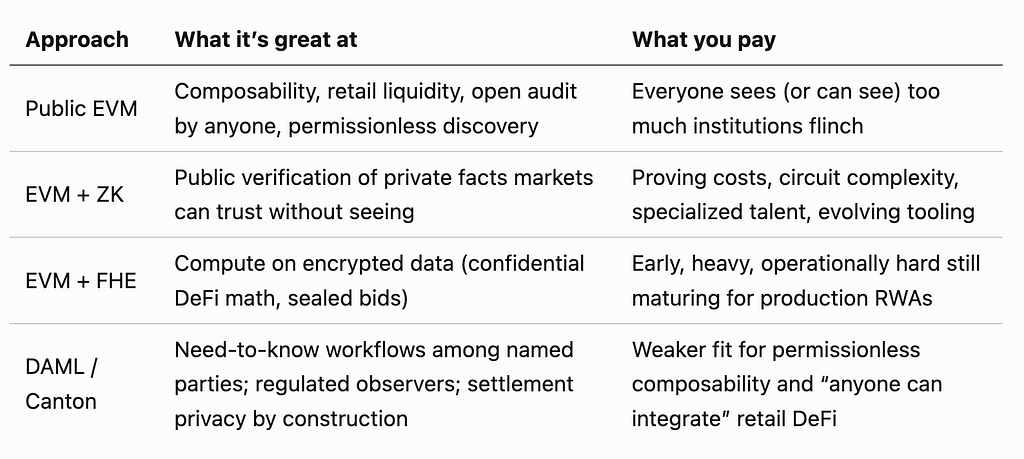
That shift completely changes how you model financial systems. This piece is about that shift and about being/ fair to both stacks when people reach for “Ethereum + ZK” versus “DAML on Canton” for real-world assets.
What I actually built (so this isn’t vapor)
Before the philosophy, the artifact.
The prototype covers a full custody-to-fund loop roughly like this:
- Vault layer: gold bars with serials, purity checks against system config, a serial registry (no contract keys Canton multi-domain reality), vault receipts for regulators.
- Operators & attestations: weighmaster + weigh device for dual-confirmed weight, assayers, transporters, auditors; permissions mapped exhaustively to attestation kinds.
- Token layer: GoldHolding implementing CIP-56 Holding / transfer-factory interfaces an issuance ledger so over-mint against a bar is structurally hard a small prototype CashHolding for settlement legs.
- Escrow propose → accept-and-fund → settle, with a list of compliance checks as data (KYC, limits, presence freshness, open movements, open discrepancies…).
- Fund ops share classes, NAV points, redemption gates, fees with banker’s rounding, in-kind redemption above a threshold.
- Off-ledger TypeScript connectors for NAV publishing, vault tablet attestations, and a thin ISO 20022 (setr.010/012) adapter.
The interesting part for an EVM person isn’t the feature list. It’s that almost every design decision was about parties, visibility, and workflows not about packing more logic into a globally visible bytecode blob.
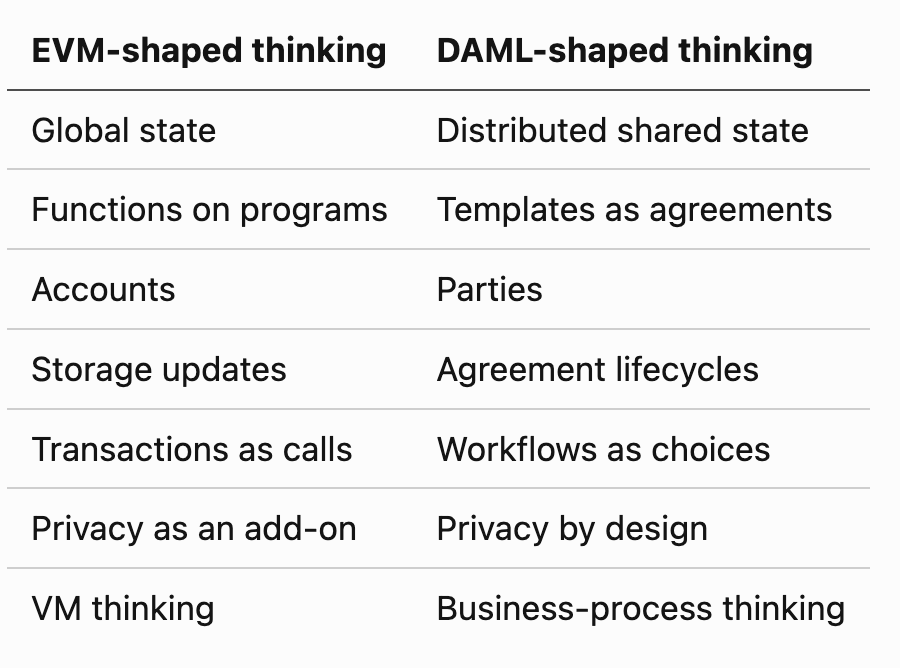
Smart contracts are templates, not programs
One thing that surprised me about DAML: you don’t think in terms of “contracts” the way Solidity trains you to.
In Solidity, a contract is often a long-lived program with mutable storage. You deploy it once. Callers poke functions. State variables update in place.
In DAML, you define templates schemas for agreements between parties. Creating a contract instantiates an agreement. Exercising a choice advances it. Many choices archive the old contract and create a new one. The ledger isn’t a bag of storage slots; it’s a set of active agreements with lifecycles.
It feels closer to modeling a business process or even, oddly, closer to HTML than to writing EVM bytecode. You describe who must sign, who may see, who may act. The runtime enforces that description.
Here’s a tiny slice from the vault layer:
template GoldBar
with
custodian : Party
regulator : Party
serialNumber : Text
weightGrams : Decimal
purity : Decimal
vaultLocation : Text
custodianRef : Text
where
signatory custodian
observer regulator
ensure weightGrams > 0.0
The custodian must authorize creation. The regulator can see the bar without being able to invent one. Purity thresholds against system config live in the registering choice because ensure can’t fetch other contracts but the authorization shape is already visible in the template.
Contrast the EVM reflex:
// Everyone who can call sees the same storage.
// Visibility is not part of the type; access control is bolted on.
mapping(bytes32 => GoldBar) public bars;
function registerBar(…) external onlyCustodian {
bars[serial] = GoldBar(…);
}
Both can be correct. They encode different defaults about who the system is for.
Solidity teaches you to think like a VM.
DAML teaches you to think like a lawyer drafting an agreement that happens to execute.
That was the biggest mindset shift for me.
Explicit parties beat ambient msg.sender
In Solidity, authorization often collapses to:
require(msg.sender == custodian);
In DAML, the language gives you three distinct roles in the model itself:
- signatory: must authorize creation (and typically archival consequences)
- observer: can see the contract without controlling it
- controller: may exercise a particular choice
Escrow settlement isn’t “anyone who knows the address.” It’s this buyer, under these checks, before this expiry, with cash-issuer authority threaded explicitly when holdings are archived because DAML authority doesn’t magically transit through nested fetches the way a careless Solidity onlyOwner might pretend to.
That verbosity is a feature when you’re modeling custody, dual control, and regulated observers. It’s overhead when you want a two-line meme coin.
Different optimization targets.
Shared execution vs shared agreements
Ethereum asks: what does everyone agree on?
DAML asks: who actually needs to agree?
That one-line swap is the whole article, if you’re in a hurry.
Ethereum optimizes for shared execution.
One canonical state. One global truth. Anyone can re-execute the same transaction history (in principle) and land on the same balances. That’s why DeFi composability feels magical: your vault can trust Uniswap’s pool the way it trusts math because both live in the same transparent machine.
DAML / Canton optimizes for shared agreements.
There isn’t a single global RPC that returns the world state. Each participant node sees the contracts it’s entitled to see. Settlement is about getting the right parties to the same conclusion on the slice of state they share not about broadcasting every position to every stranger on the network.
When we wrote end-to-end privacy scripts for the gold prototype, the assertions weren’t “the chain shows X.” They were:
- Investor B sees none of investor A’s holdings, subscriptions, or KYC contracts.
- The regulator sees vault-layer facts without seeing investor cash books.
- The custodian doesn’t get NAV methodology internals beyond what’s disclosed.
Banks rarely want global transparency. They want shared truth between the parties involved and a clean story for supervisors who are observers.
That doesn’t make Ethereum wrong. It makes “public by default” a product choice with consequences.
Privacy by default vs privacy as an add-on
On Ethereum, privacy is something you add.
- Private mempools and encrypted orderflow for MEV.
- ZK proofs so you can convince a public verifier of a private statement.
- FHE so you can compute on ciphertext when even intermediate plaintext is too hot.
Those are serious technologies. They’re also expensive in engineering surface area: circuits, provers, trusted setups or transparent alternatives, key management, auditability of the crypto, gas, latency.
In DAML, visibility is part of the data model from day one. If you’re not a stakeholder on a contract, you don’t get the payload. Privacy isn’t a bolt-on proving system; it’s how the ledger partitions knowledge.
Neither approach is free.
A fairer unpack of the add-ons:
ZK on EVM is not “DAML but worse.” It’s a different primitive. You keep a public settlement substrate and attach a proof that a private computation or private data satisfies a public predicate. That’s incredibly powerful when strangers must coordinate: LPs in a pool, holders of a tokenized fund share trading on an open venue, journalists checking a reserve claim. The cost is real circuits, prover ops, audit surface but the social payoff is “the market can verify without being invited into the room.”
FHE on EVM (or adjacent confidential compute) attacks a harder problem: let multiple parties compute on encrypted inputs without decrypting mid-flight. Think sealed-bid auctions, confidential risk scoring, or shared analytics over positions nobody wants to reveal. It’s earlier than ZK for production RWA stacks, and the performance/ops tax is steep. When it matures, it will matter most where even the operators shouldn’t see plaintext something DAML’s stakeholder model doesn’t automatically give you if a party is itself a curious intermediary.
DAML’s privacy is closer to “need-to-know messaging with enforceable rights” than to “ciphertext on a public bulletin board.” That’s usually what a custodian, fund admin, and auditor want for operating the book. It is not automatically what a secondary market wants when price discovery depends on many anonymous participants trusting the same rules.
The question I hear too often is:
Should institutions use Ethereum + ZK?
Sometimes yes. A better question is often:
When does proving something publicly make more sense than simply sharing it privately?
If the audience that must be convinced is the open market holders, LPs, journalists, on-chain analysts ZK on a public substrate is a natural fit. Proof of reserves. Solvency. Correctness of a dark-pool matching rule without revealing orders.
If the audience that must be convinced is the counterparties and the regulator and everyone else should see nothing DAML’s need-to-know model is often the shorter path. You’re not proving a statement to the world; you’re sharing the agreement with the people in the agreement.
Both are “privacy.” They answer different social questions.
Finality, not TPS
Crypto Twitter obsesses over throughput.
Institutions obsess over deterministic settlement.
Did the DvP complete? Are both legs final? Can operations book it? Can legal point to a single outcome if something blows up at 4:01pm?
Canton is excellent at institution-to-institution settlement workflows for exactly that reason: the unit of design is the multi-party transaction over shared contracts, not “how many Uniswap swaps fit in a block.”
That doesn’t mean EVM chains can’t settle RWAs — they do, increasingly. It means if your KPI is TPS theater, you’re measuring the wrong thing for custody and fund ops. If your KPI is *irreversible agreement among the right parties*, you’re closer to how banks already think.
When each stack is interesting for RWAs
Fairness means naming wins on both sides.
Prefer DAML / Canton when…
- The workflow is multi-party and regulated: custodian, investor, fund manager, auditor, transporter.
- Disclosure is asymmetric by law or policy (regulator sees vault; peer investor must not see your book).
- You need lifecycle fidelity proposals, acceptances, expiries, dual control, consuming choices that map to “this agreement is done.”
- Privacy is a requirement, not a roadmap item.
- Counterparties are known legal entities, not anonymous addresses competing in a public mempool.
Our gold prototype lived here: presence freshness that can “self-freeze” settlement if attestations go stale; movement checks that block escrow while a bar is in transit; discrepancy reports that halt site settlement until write-down or resolve. Those are *process* controls. They want to be first-class in the model.
Prefer public EVM (and EVM + ZK) when…
- You need permissionless secondary markets and DeFi collateral composability.
- Success depends on anyone integrating wallets, aggregators, lending markets without bilateral onboarding.
- You must prove a fact to the world (reserves, NAV integrity, compliance predicates) while keeping underlying data hidden ZK shines.
- Retail distribution and liquidity bootstrapping matter more than bilateral confidentiality.
Prefer hybrid when…
- Primary issuance and institutional ops need private shared state, but public representation or a ZK attestation of that state feeds open markets.
- You want Canton (or similar) for the agreement layer and an EVM venue for the liquidity layer with a deliberately designed bridge and disclosure policy.
Hybrid is where a lot of serious RWA architecture is heading. Tribal “EVM vs DAML” posts miss that.
Concrete lessons from the gold build
A few engineering notes that stuck.
1. Compliance as data, not as a rewrite
Escrow took a list of compliance check contract IDs. The same escrow template settled with [KYC, Limit] and failed with [KYC, Limit, Presence] when presence was stale without changing Escrow.daml.
On EVM you’d reach for a strategy pattern or a modular hook. it’s doable. In DAML it felt native: the agreement says “run these checks,” and checks are themselves agreements with providers and subjects.
2. Dual-signature weight
A weight attestation wasn’t “confirmed” until a human weighmaster and a weigh device agreed within tolerance and the same attestor twice was rejected. Dual control isn’t a comment in a PR; it’s a template choice with negative tests.
3. Tokens that can freeze themselves
Pass time beyond attestationMaxAge with no fresh presence attestation and settlement paths that require PresenceFreshnessCheck fail. Fresh attestation unlocks them again. That’s operational reality for physical gold, encoded as workflow not as an admin pause() god-key (though god-keys exist in many EVM systems for worse reasons).
4. CIP-56 as the ERC-20 mindset bridge
Coming from ERC-20, CIP-56’s Holding / TransferInstruction interfaces were the familiar part: standardize how wallets and apps talk to holdings without caring which registry implemented them. The unfamiliar part was everything around who sees the holding.
Consuming choices (a favorite concept)
Exercising a choice can archive a contract and create its successor.
That’s closer to how legal agreements evolve “this SOW is superseded by amendment #3” than to
balances[alice] -= x;
balances[bob] += x;
in place. Escrow that settles doesn’t flip a status = Settled enum in eternal storage (though you can model that). It consumes the escrow agreement and produces the resulting holdings under new owners. Failed settle leaves both legs intact partial state is a bug you test for.
Once you see consuming choices, a lot of DAML design clicks. Once you miss them, you write DAML like Solidity and fight the language.
What DAML is not (yet) great at
Honesty matters if you want engineers to trust the comparison.
- Ecosystem gravity. Most crypto talent, tooling, auditors, and memes are EVM-native. Hiring and open-source velocity still favor Solidity.
- Permissionless composability. Uniswap-style “plug any token into any pool” is not Canton’s home game. If your RWA product’s moat is DeFi money legos, start on EVM (with ZK where needed) and be honest about disclosure.
- Retail UX myths. Canton is excellent at institution-to-institution settlement. The interesting question isn’t whether that works it does for the workflows it’s built for. It’s whether the same principles can eventually simplify payments for everyone else. That’s a product and policy problem, not a language flex.
- Public verifiability without disclosure. If your stakeholder is “the internet,” ZK on a public L1/L2 is often clearer than explaining participant-local ledgers.
- Tooling familiarity. Foundry, Hardhat, Tenderly, open auditors — EVM engineers drown in options. DAML’s loop (SDK, Script, LocalNet, JSON Ledger API) is coherent, but smaller. Expect a learning tax; budget for it.
None of that makes DAML “worse.” It makes it specialized. Specialization is how serious infrastructure usually wins.
And the reverse honesty: public EVM is not “institutions can’t use this.” They can and do especially when liquidity, distribution, or public attestation dominate. Pretending banks only want Canton is as unserious as pretending every gold custody workflow belongs on a public mempool.
Mental models, not tribal banners
Instead of Ethereum vs DAML, compare the lenses:
Ethereum optimizes for shared execution.
DAML optimizes for shared agreements.
They sound similar. They’re solving different problems.
I’m not done with either. The more I work on RWAs, the more I believe the interesting systems will be bilingual: public where the market must see or verify, private where the counterparties must settle.
If you write Solidity and you’ve never modeled a multi-party workflow in DAML, try one thin vertical escrow with two compliance checks, or a dual-control attestation and notice what becomes easy and what becomes annoying. That annoyance is usually a clue about which problem you were actually solving.
What’s next in this series
Topics I want to dig into next, still from an Ethereum engineer’s notebook:
1. Consuming choices as a first-class design tool (with escrow war stories).
2. Parties vs accounts and why allocateParty` feels alien until it doesn’t.
3. Finality and deterministic settlement what institutions measure that TPS dashboards ignore.
4. CIP-56 for ERC-20 natives mappings, traps, and where the analogy breaks.
If this was useful, model one RWA workflow both ways and tell me which lies you had to tell each stack.
That’s usually where the real architecture starts.
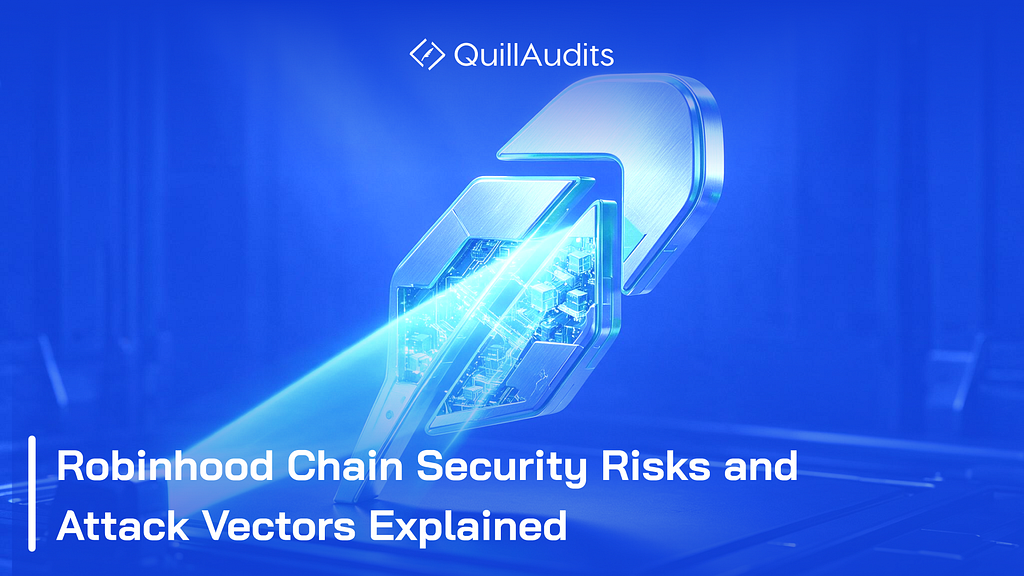
Robinhood Chain crossed $311M in TVL in under three weeks. Growth like that is exactly when security gets skipped.
A rollup carrying tokenized stocks, stablecoins, and open lending markets is not just another L2 to review. The token itself is the giveaway: a Stock Token can have flawless code and still be wrong if the price feed lags, the issuer’s reserve does not match onchain supply, or the legal agreement behind the token does not say what the marketing says it does. Our RWA Handbook breaks this wider surface into five categories: asset-token mismatch, mint and burn exploits, privilege and admin risk, oracle failures, and custody and legal risk. Robinhood Chain touches all five within its first month live.
Some of the risk is just standard Arbitrum Orbit territory. Sequencer centralization, since a single sequencer orders every transaction. A seven-day fraud-proof withdrawal delay. Address aliasing on L1-to-L2 calls. Data availability gaps if blob posting is delayed. Upgrade keys controlling the rollup contract. None of this is unique to Robinhood, and all of it still applies.
Other risk is specific to this chain. Stock Tokens use ERC-8056, scaling value through a uiMultiplier() function instead of rebasing balances, so any protocol that reapplies the Chainlink feed’s built-in multiplier will double count it. An oraclePaused flag signals an unreliable price around dividends and splits, but it is advisory, not enforced onchain. A single Authorised Participant controls the entire mint and redeem pathway for every tokenized stock, sitting outside the smart contract layer entirely.
Then there is agentic trading, live now for equities and options through Robinhood’s brokerage stack, not the chain itself. Robinhood CEO Vlad Tenev has said every capability a human can do will be available to an AI agent. Crypto support is coming next, and that is when this risk surface starts sharing a trust boundary with Robinhood Chain: prompt injection through the research tools an agent reads, session and credential compromise through the MCP connection, autonomous mode removing human review by default, and correlated trading behavior across thousands of agents running similar strategies at once.
None of this makes the chain unsafe today. It makes Robinhood Chain a rollup already carrying real securities and real stablecoin liquidity, with a closely adjacent AI agent risk surface about to merge with it, exactly the kind of shift that rewards independent review before it happens.
Ethereum price has retreated to $1,880 after failing to clear $2,000, as profit-taking, rising derivatives leverage and a sharp U.S. technology-stock sell-off weakened market sentiment. According to data from crypto.news, Ethereum (ETH) price traded near $1,882 at press time, down…
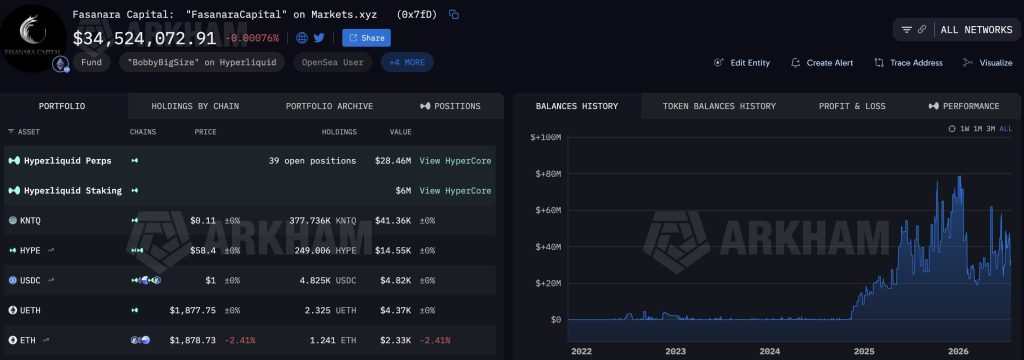
In Ethereum news today, Fasanara Capital, a London-based quantitative asset manager, is holding a $67M ETH short on Hyperliquid via an on-chain wallet labeled “BobbyBigSize,” and the directional bet is almost beside the point.
What matters is that institutional-grade capital is now executing complex, multi-leg crypto derivatives strategies entirely on a decentralized venue, in full public view, in a way that would have looked implausible just two years ago.
The position is visible through Hyperliquid’s on-chain explorer at wallet address 0x7fda..17d1. On-chain analytics providers including Arkham Intelligence and Nansen have linked the wallet to Fasanara Capital.
The short sits on Hyperliquid, one of the most closely watched decentralized perpetuals exchanges in the market, a venue that has grown rapidly by offering execution quality and liquidity depth that professional traders previously expected only from centralized exchanges.
The instinctive read- large ETH short, therefore bearish signal does not survive contact with how quantitative funds actually operate. A short of this size can be a directional bet, but it can equally be a hedge against spot ETH holdings, an offset against options book exposure, one leg of a basis trade, or part of a market-neutral spread.
Fasanara runs systematic, multi-strategy books where relative pricing, funding rates, liquidity, and volatility relationships matter far more than a clean up-or-down call on ETH.
Supplementary on-chain data, reported by Phemex and attributed to Arkham Intelligence, adds another layer: holds an additional ~$41M ETH short on Hyperliquid, and should be treated as supplementary attribution, but if accurate, it reinforces that this is coordinated institutional positioning across multiple regulated managers, not a lone prop desk swing.
This includes approximately $11Bn in cumulative trading volume on Hyperliquid in ETH, BTC, AVAX, HYPE, and other tokens. That is the profile of a systematic, high-frequency institutional book, not a retail trader making a leveraged directional bet.
The current ETH leverage environment and funding dynamics give that short context: in a market where funding rates and open interest are already elevated, a large institutional short of this kind can function as a structural offset rather than a conviction trade.
In adjacent Ethereum news, Hyperliquid has compressed the quality gap between on-chain derivatives and centralized exchange execution to the point where a fund managing multi-billion-dollar mandates is comfortable running nine-figure notional exposure natively on-chain.
Fast matching, deepening order book liquidity, and a familiar perpetuals interface have done what earlier DeFi derivatives platforms could not: attract serious derivatives flow rather than just yield farmers chasing incentives. The Hyperliquid trading interface features advanced charting and real-time order book data.
The structural consequence is a new kind of market signal. Centralized exchange positioning has always been inferred indirectly, through funding rates, open interest, liquidation data, and exchange-reported metrics.
Institutional DeFi trading on Hyperliquid makes wallet-level positioning directly observable. Analysts can track when Fasanara adds to or reduces its size and monitor collateral and position changes. That transparency is what DeFi trading was theoretically supposed to create, and now it is arriving at institutional scale.
The fund reportedly holds a concurrent BTC long entered around $75,950, plus shorts across TON, AVAX, and DOGE, a cross-asset relative-value book executed entirely on a decentralized perpetuals venue.
That breadth signals that Hyperliquid is functioning as primary execution infrastructure for at least one major quant manager, not a peripheral experiment running alongside the real book on Binance or OKX.
Grayscale Staking Payout Proposal Could Reshape Ethereum And Solana Trusts
Grayscale is proposing changes that would allow staking rewards from its Ethereum and Solana products to be paid out to investors in cash, a move that could make crypto staking exposure easier to understand for traditional fund holders.
The proposed amendments apply to Grayscale’s Ethereum and Solana trust structures, with cash distributions of staking proceeds expected on a quarterly basis if the changes take effect. The target date identified in the validation materials is around August 7, 2026.
That matters because staking has always been one of the awkward pieces of regulated crypto products.
Ethereum and Solana are both proof-of-stake networks, meaning holders can earn rewards for helping secure the network. But once those assets sit inside trust or ETF-style products, the question becomes more complicated: who earns the staking rewards, how are they handled, and can investors receive them without breaking the structure of the product?
Grayscale’s proposal is an attempt to answer that question in a more investor-friendly way.
TL;DR
Grayscale has proposed staking reward cash payouts for Ethereum and Solana products.
The plan would distribute staking proceeds quarterly if implemented.
The change could make ETH and SOL trust products more attractive, but payouts are not guaranteed.
Why Staking Rewards Matter
Staking is not a side feature for Ethereum or Solana. It is part of how the networks operate.
Validators lock tokens, participate in consensus, and earn rewards for helping secure the chain. For direct holders, staking can be a way to generate native yield. For institutional products, the situation is more complicated.
A trust or ETF-like vehicle may hold ETH or SOL on behalf of investors, but that does not automatically mean investors receive staking rewards. Custody rules, tax treatment, product documents, liquidity needs, and regulatory expectations all affect what a sponsor can do.
That is why Grayscale’s proposed change is important.
If staking proceeds can be distributed in cash, investors may get a cleaner way to benefit from network rewards without needing to manage validators, wallets, slashing risk, or direct staking operations themselves.
That could make the products easier to explain to advisers and institutions.
Instead of saying the fund holds a proof-of-stake asset but does not pass through staking economics, the structure could offer a more visible link between the underlying asset and its yield potential.
Ethereum And Solana Are Different Staking Stories
The proposal also matters because Ethereum and Solana do not carry identical staking narratives.
Ethereum is the deeper institutional asset, with larger validator infrastructure, more established custody integrations, and a broader ETF conversation. Solana is faster-moving, more retail-heavy, and often trades as a high-beta layer-1 asset with strong ecosystem activity.
Both networks offer staking rewards, but investors may interpret those rewards differently.
For Ethereum, staking payouts could strengthen the argument that ETH is not just a price-exposure asset but also a productive network asset. That has been central to the institutional case for ETH for years.
For Solana, staking payouts could make regulated exposure more competitive by showing that SOL products can also capture network-level economics. If traditional investors are looking at Solana as a major layer-1 allocation, staking distributions may make the product structure more appealing.
Still, the details matter.
Cash payouts depend on actual rewards, expenses, timing, and product terms. They should not be treated as fixed-income payments or guaranteed dividends.
The Regulatory Angle Is The Real Test
The staking debate has always had a regulatory shadow.
US regulators have spent years scrutinizing staking services, especially when they involve intermediaries pooling assets or offering yield-like products. For fund sponsors, the challenge is to capture staking rewards without creating a product structure that regulators view as problematic.
That is why formal amendments matter.
Grayscale is not simply adding staking casually. It is proposing changes through product documents and SEC-facing processes. That gives investors a clearer paper trail and gives regulators a chance to assess the structure.
If approved or allowed to proceed, the move could influence how other crypto product sponsors think about staking.
Ethereum and Solana products that pass through rewards could become more attractive than products that simply hold the asset without capturing yield. That may create pressure across the market for staking-enabled structures.
But the outcome is not automatic.
The proposal still depends on implementation, product approvals, operational execution, and whether the final terms are acceptable to regulators and investors.
Payouts Are Useful, But Not Guaranteed
Investors should treat the proposal carefully.
Quarterly cash distributions sound appealing, but staking rewards vary. Network reward rates can change. Validator performance matters. Fees and expenses reduce proceeds. Tax treatment can affect what is distributed and when.
There is also slashing and operational risk, even if professional custodians and validators reduce that risk.
So the correct framing is not that Grayscale is creating a guaranteed yield product. It is that the firm is trying to pass through staking economics in a regulated wrapper.
That is still significant.
Crypto investment products are becoming more sophisticated. The first generation focused on access: can investors get exposure to Bitcoin, Ethereum, or Solana through familiar channels? The next generation is about whether those products can reflect more of the underlying network economics.
Grayscale’s proposal sits inside that second phase.
If it works, staking-enabled crypto products could become a larger part of institutional portfolios. If it runs into regulatory or operational friction, the market will learn where the limits are.
Either way, the proposal shows that staking is moving deeper into the regulated investment-product conversation.
This article is based on Grayscale SEC filing materials.
This article was written by the News Desk and edited by Samuel Rae.
This report is based on information released by SEC. at SEC
Vitalik Buterin’s Aztec Demo Shows Why Ethereum Privacy Still Matters
Vitalik Buterin has released an experimental anonymous message board built on Aztec Network, using zero-knowledge technology to show how public participation and privacy can coexist on-chain.
The project is small by design. It is not a polished consumer application or a production-ready social platform. But that is exactly why it matters. It shows how Ethereum developers continue to test privacy-preserving systems in practical, understandable ways rather than only discussing them in theory.
The demo uses zero-knowledge proofs, Poseidon2 hashing, rate limits tied to ETH deposits, and a local AI moderation component. In plain English, it explores whether users can post anonymously while still giving the system tools to reduce abuse.
That is one of crypto’s hardest design problems.
Users want privacy. Communities need moderation. Public blockchains expose too much by default. The Aztec experiment sits right in the middle of those tensions.
TL;DR
Vitalik Buterin released an experimental anonymous message board using Aztec technology.
The demo explores zero-knowledge posting, rate limits, and local AI moderation.
It is not production-ready, but it highlights Ethereum’s continued focus on privacy infrastructure.
Why A Toy Demo Can Still Matter
Crypto prototypes are often more important than they look.
A small demo can show whether an idea is technically possible, where the friction is, and what developers may build next. In this case, Buterin’s message board is not trying to become the next major social app. It is exploring a pattern: anonymous participation with some protection against spam or abuse.
That pattern has obvious uses.
Private forums, whistleblowing systems, DAO voting discussions, anonymous surveys, public-good coordination, and censorship-resistant communication all need some version of the same trade-off. Users should not have to expose their full identity to participate, but systems also need ways to limit spam, Sybil attacks, and malicious behaviour.
Zero-knowledge tools are one way to approach that problem.
Instead of revealing everything about a user or transaction, a zero-knowledge proof can show that certain rules were followed without exposing all underlying data. That makes it possible to design systems where participation is verifiable but identity remains protected.
That is the core idea behind the demo.
Ethereum’s Privacy Problem Is Still Unsolved
Ethereum is transparent by default.
That transparency has benefits. It allows public verification, on-chain analytics, open DeFi composability, and easier auditing. But it also creates serious privacy issues. Wallet activity can be tracked. Balances can be mapped. DeFi usage can reveal trading behaviour. On-chain identity can become permanent and difficult to escape.
For mainstream adoption, that is a problem.
Most people do not want every payment, vote, or public interaction tied to a visible wallet history. Businesses do not want competitors watching every treasury move. Developers do not want privacy to exist only through centralized intermediaries.
Aztec and similar projects are trying to solve parts of that problem by bringing stronger privacy tools into the Ethereum ecosystem.
But privacy alone is not enough. Fully anonymous systems can be abused. That is why moderation and rate limiting matter. Buterin’s demo is interesting because it does not treat privacy and moderation as enemies. It tries to show how both can be designed together.
Local AI Moderation Is The Controversial Piece
One of the more unusual parts of the demo is the local AI moderation component.
Moderation is difficult in any online system, and crypto makes it harder. A fully open message board can quickly become unusable if spam or harmful content overwhelms it. But centralized moderation can undermine neutrality and censorship resistance.
A local moderation daemon offers one possible route.
Instead of forcing all users to trust one central moderation service, moderation logic can run locally or closer to the user. That does not magically solve every problem, but it gives developers another design space to explore.
This is where the experiment becomes timely.
AI tools are increasingly being used to filter, classify, and manage content. At the same time, crypto communities are deeply sensitive to censorship and control. Combining local AI moderation with zero-knowledge posting is an attempt to find a middle ground.
It is early, but it is the kind of experiment Ethereum needs.
Privacy Infrastructure Will Shape The Next Crypto Cycle
Privacy has often been treated as a niche sector in crypto, but that may not last.
If blockchains are going to support payments, identity, social apps, institutional settlement, gaming, governance, and real-world asset markets, privacy becomes essential infrastructure. Not every transaction needs to be private, but users need options.
The challenge is building privacy that is usable, compliant where needed, and resistant to abuse.
Buterin’s Aztec demo does not answer every question. It does not prove that anonymous social systems are ready for mass adoption. It does not remove regulatory concerns around privacy technology. It does not solve moderation at scale.
But it does show continued progress.
Ethereum’s long-term value is not only in ETH price or DeFi liquidity. It is also in the developer culture that keeps testing hard problems. Anonymous posting with proof-based constraints is one of those problems.
The demo is small. The theme behind it is not.
This article is based on Vitalik Buterin’s GitHub repository and Aztec Network materials.
This article was written by the News Desk and edited by Samuel Rae.
This report is based on information released by GitHub. at GitHub
BNB Chain has reached a new high in tokenized real-world assets, with RWA.xyz data showing roughly $5.2 billion in tokenized assets on the network.
That is a significant figure because real-world asset tokenization is no longer just an Ethereum story. Ethereum still leads the sector by a wide margin, but the growth of BNB Chain as a major RWA venue shows that tokenized finance is beginning to spread across multiple networks.
The available source material points to a 32.26% monthly increase for BNB Chain, making it the second-largest network for tokenized RWAs behind Ethereum. The tracker also shows hundreds of tokenized assets across categories including U.S. Treasuries, real estate, commodities, and equities.
That mix matters. RWA is not only about one product class. It is becoming a broader market for putting traditional financial exposure on-chain.
BNB Chain RWA TVL has reached about $5.2 billion, according to RWA.xyz.
The network is now one of the largest venues for tokenized real-world assets.
The growth shows that RWA activity is expanding beyond Ethereum into other major chains.
Tokenization Is Becoming A Multi-Chain Market
Ethereum has been the natural home for much of the RWA market.
It has deep liquidity, institutional familiarity, large stablecoin markets, and a long history of DeFi infrastructure. Many of the biggest tokenized Treasury and credit products either launched on Ethereum or stayed closely tied to its ecosystem.
But tokenization does not have to remain Ethereum-only.
If issuers, users, and applications want lower fees, different distribution, or access to a specific community, other networks can compete. BNB Chain has the advantage of a large retail footprint, exchange-linked liquidity, and a broad base of users already familiar with on-chain assets.
That makes its RWA growth notable.
A $5.2 billion figure is large enough to put the network into the serious part of the conversation. It suggests tokenized assets are not only living in institutional Ethereum environments but also finding traction on chains with wider retail and exchange ecosystem ties.
For BNB Chain, this is a credibility boost. RWA growth gives the network a more mature narrative than pure DeFi farming or exchange-linked activity.
Why RWA Growth Matters
Real-world assets are one of the strongest long-term crypto narratives because they connect blockchain rails to familiar financial products.
Tokenized Treasuries, credit, commodities, real estate, and equities all point toward the same idea: traditional assets can move, settle, and interact with DeFi infrastructure more efficiently if they exist on-chain.
That does not mean every RWA product is useful. Some are thin, experimental, or heavily permissioned. But the category itself has become difficult to ignore because it speaks directly to institutional adoption.
A bank, asset manager, or fintech company may not care about meme coins. It may care a lot about tokenized cash, collateral, settlement, and access to Treasury-like products.
BNB Chain’s growth in this area therefore matters because it shows RWA demand can move outside the most obvious institutional lanes. If tokenized assets can grow on a network with BNB Chain’s user base, the addressable market may be broader than expected.
The question is whether that growth is sticky.
The Next Test Is Quality, Not Just Size
TVL is useful, but it does not tell the whole story.
A network can attract assets quickly through incentives, partnerships, or a handful of large deployments. The more important test is whether those assets remain, generate real usage, and become part of broader on-chain financial activity.
For BNB Chain, the quality of the RWA base will matter. Are users actually interacting with these products? Are they being used as collateral? Are they integrated into DeFi? Are issuers credible? Are the assets transparent and properly structured?
Those questions become more important as the headline number grows.
There is also the regulatory side. Tokenized real-world assets can involve securities, commodities, fund interests, and regulated financial products. Networks may provide the rails, but issuers still need to operate inside legal frameworks.
That makes RWA one of the more serious sectors in crypto. It has huge potential, but it also carries heavier compliance expectations than many purely crypto-native categories.
For now, the signal is positive for BNB Chain. Reaching $5.2 billion in tokenized assets gives it a stronger claim in a market that is attracting serious institutional attention.
Ethereum remains the leader, but BNB Chain is now harder to ignore. If tokenization keeps expanding across chains, the next phase of RWA growth may be less about one dominant network and more about where issuers can find the right combination of liquidity, users, cost, and compliance.
This article is based on RWA.xyz and DeFiLlama data.
This article was written by the News Desk and edited by Samuel Rae.
This report is based on information released by RWA.xyz. at RWA.xyz
BitMine Immersion Technologies has added a major Ethereum position to its balance sheet, but the market reaction shows investors are not automatically rewarding every corporate crypto treasury move.
The company disclosed the purchase of 42,197 ETH, valued at roughly $73 million, in a July 16 SEC filing. The acquisition expands BitMine’s Ethereum treasury strategy at a time when public companies are still experimenting with how far they can push crypto exposure as part of corporate balance-sheet management.
The headline sounds bullish for Ethereum. A public company buying tens of thousands of ETH is not a small move. But BitMine’s stock slid in the following session, suggesting equity investors may be looking at the strategy with more caution than enthusiasm.
That contrast is the story. Crypto investors may see treasury accumulation as conviction. Stock investors may see concentration risk.
BitMine disclosed a 42,197 ETH purchase worth about $73 million.
The acquisition expands the company’s Ethereum treasury strategy.
BMNR stock fell after the disclosure, suggesting investors are questioning the risk/reward of the move.
Ethereum Treasury Strategies Are Getting Bigger
Corporate crypto treasury strategies are no longer limited to Bitcoin.
Bitcoin remains the cleanest and most established balance-sheet asset in the sector, largely because it is easier to explain as digital scarcity or a macro hedge. Ethereum is more complicated. ETH has a broader utility story, but that also means investors have to understand staking, smart contracts, DeFi, network fees, regulation, and ecosystem risk.
That makes BitMine’s move interesting.
A $73 million ETH purchase is not just a symbolic allocation. It is a serious commitment to Ethereum as a treasury asset. According to the available filing and market data, the filing details the acquisition of 42,197 ETH and places it inside a much larger Ethereum-focused balance sheet.
For crypto-native readers, that may look like an aggressive bet on Ethereum’s long-term role. For equity investors, it may raise a different question: is BitMine still being valued as an operating company, or is it becoming a leveraged public-market proxy for ETH?
That distinction is important because the stock market does not always treat crypto treasury exposure the way crypto traders expect.
Why The Stock Reaction Matters
When a company announces a large crypto purchase and the stock falls, the market is sending a message.
It does not necessarily mean investors think Ethereum is weak. It may mean they are unsure whether the company’s treasury strategy improves shareholder value. Public-market investors care about dilution, financing terms, execution risk, custody, accounting treatment, and whether management is using capital efficiently.
If a company’s core business is already tied to crypto, adding more ETH can intensify the same risk rather than diversify it.
That is why BitMine’s stock move matters. It suggests the equity market may be less impressed by headline accumulation than the crypto market might be. Investors could be asking whether the company has enough operating strength to support the strategy, or whether the stock is now mostly a bet on ETH price performance.
This is the challenge every public crypto treasury company faces.
A rising crypto market can make the strategy look brilliant. A drawdown can make it look reckless. The difference often depends on timing, leverage, investor expectations, and whether the company can explain why holding the asset strengthens the business.
What It Says About Ethereum Demand
For Ethereum itself, corporate buying remains a constructive signal.
The more entities that treat ETH as a treasury asset, the stronger the argument that Ethereum is maturing beyond a trading token. ETFs, staking infrastructure, tokenization, and DeFi already support the institutional case. Treasury accumulation adds another layer.
But the BitMine reaction also shows that Ethereum treasury demand is not a one-way narrative.
Investors may support ETH exposure in some structures and reject it in others. A spot ETF may be easier for institutions to understand than a company stock with operational risks attached. A clean fund product may be preferable to a public miner or infrastructure company using its balance sheet to accumulate tokens.
That does not make BitMine’s strategy wrong. It simply means the market will judge it through more than the ETH price.
The next thing to watch is whether BitMine can show a clear reason for holding such a large Ethereum treasury. If the strategy is backed by a coherent capital plan, custody framework, and operating model, investors may become more comfortable. If it looks like a pure price bet, the stock may remain volatile.
For crypto markets, the purchase still matters. It is another example of ETH moving into corporate treasury discussions. For equity markets, the message is more cautious: buying Ethereum is not enough by itself. Public companies still have to prove the allocation makes sense for shareholders.
This article is based on BitMine’s SEC filing and BMNR market data.
This article was written by the News Desk and edited by Samuel Rae.
This report is based on information released by SEC. at SEC
A hacker tied to the Trusted Volumes exploit has returned 1,122 ETH to the protocol, closing part of a security incident that began with a multi-million-dollar exploit earlier this year.
The on-chain recovery is unusual because the attacker did not return everything. Instead, the wallet linked to the exploit sent back roughly $2 million worth of ETH while retaining another large amount as what now looks like a de facto bounty. That kind of outcome is familiar in DeFi, where projects sometimes negotiate with attackers after an exploit rather than risk losing the full amount forever.
The returned funds matter because they reduce the damage for the protocol and its users. But the structure of the settlement also shows how messy DeFi security remains. When smart contracts fail, the market often ends up relying on public pressure, wallet tracking, and informal negotiation rather than a clean legal process.
The Trusted Volumes attacker returned 1,122 ETH to the protocol inventory.
The exploit originally drained about $5.9 million through a smart contract vulnerability.
The attacker appears to have retained roughly $2 million as a bounty-style settlement.
What Happened With Trusted Volumes?
The exploit traces back to a vulnerability in Trusted Volumes’ RFQ swap proxy. According to the on-chain evidence, the May 7 attack drained approximately $5.9 million in assets through a signature-check bypass.
That is the kind of vulnerability that can be especially damaging in DeFi because it sits close to the execution layer of a protocol. If a swap proxy accepts an invalid or improperly checked instruction, an attacker may be able to move funds in a way the system was never meant to allow.
The important update now is the return of 1,122 ETH from the attacker wallet to protocol inventory. The primary source for the story is the wallet and transaction evidence on Etherscan, which shows the recovery leg of the movement.
This does not necessarily mean the protocol has been made whole. It means a meaningful part of the exploited funds has come back.
That distinction matters. A partial recovery can be better than nothing, but it still leaves users and the wider market asking why the vulnerability existed, how quickly it was detected, and whether the protocol has made changes to prevent a repeat.
Why DeFi Exploit Settlements Keep Happening
Crypto has developed a strange pattern around major exploits.
In traditional finance, a theft usually leads to police reports, frozen accounts, and court processes. In DeFi, the first response is often public wallet tracking. The attacker’s address gets labelled. On-chain analysts follow the movement of funds. Protocol teams may publish messages offering a bounty if the money is returned.
Sometimes attackers accept. Sometimes they disappear into mixers, bridges, or exchange routes. Sometimes they return a portion and keep the rest.
That appears to be the shape of this case.
The reason this happens is simple: blockchains make funds visible, but not always recoverable. If an attacker controls the private keys, the protocol cannot simply reverse the transaction. The best practical outcome may be to offer a settlement before the funds are moved further away.
That is uncomfortable, but it is also realistic.
For users, the lesson is that code risk is not abstract. Even protocols with real activity can suffer from a small implementation flaw that becomes a major loss. For developers, the lesson is even sharper: signature validation, access controls, proxy logic, and upgrade paths need aggressive review because attackers only need one weak point.
The Recovery Helps, But It Does Not Erase The Exploit
The return of 1,122 ETH is clearly positive for Trusted Volumes, but it should not be treated as a full reset.
An exploit still happened. Funds were still removed. The attacker still appears to have kept a significant sum. The protocol still needs to show that the underlying issue has been addressed and that users can trust the system going forward.
That matters because DeFi confidence is fragile after security incidents. Users may forgive a protocol that responds quickly, communicates clearly, and recovers funds. They are less forgiving when teams stay vague, downplay the incident, or fail to explain what changed.
The strongest next step for Trusted Volumes would be a clear post-mortem: what failed, how the attacker used it, how the contract logic has been fixed, and whether any user balances remain affected.
Until then, the market can recognise the recovery without pretending the episode is over.
This is also a useful reminder for the wider sector. DeFi security is not only about preventing hacks. It is about incident response, transparency, on-chain monitoring, and whether projects can recover enough trust after something goes wrong.
Trusted Volumes got some funds back. The harder job is proving the system is safer than it was before the exploit.
This article is based on Etherscan wallet and transaction data.
This article was written by the News Desk and edited by Samuel Rae.
This report is based on information released by Etherscan. at Etherscan
South Korea jolted financial markets with an unexpected interest rate hike, sending local stocks sharply lower and even briefly halting trading. Crypto, however, reacted differently. We shifted our focus to tomorrow’s Clarity Act hearing in Congress, while Bitcoin price hovers near recent highs and Ethereum continues to hold above a key support zone.
The House Financial Services Committee will meet on July 17 for a hearing titled “Building the Future of Finance: How the Clarity Act Unlocks Innovation.” With Congress set to begin its summer recess soon after, many in the industry see the discussion as one of the last meaningful chances to move crypto legislation before lawmakers leave Washington.
BREAKING: Tomorrow could decide the ENTIRE future of crypto in the United States.
The House is holding a field hearing on the CLARITY Act:
"Building the Future of Finance: How the CLARITY Act Unlocks Innovation."
These all explain the current market’s mood. Macro headlines still drive expectations, but they are no longer the only force steering digital assets. This week, the conversation has narrowed around one question. If the Clarity Act can bring enough regulatory certainty to keep institutional money flowing into the sector.
Bitcoin Price Holds Firm as Clarity Act Gets Closer
Bitcoin (BTC)
24h7d30d1yAll time
Bitcoin price spent Thursday hovering between $64,500 and $65,000, extending a recovery that has carried it to its highest level in about three weeks. After several months of choppy trading, the market finally looks willing to defend higher ground instead of selling at every rally.
Institutional demand remains part of that story, with BlackRock adding another $139 million worth of Bitcoin to its holdings, while the iShares Bitcoin Trust now custodies more than 733,000 BTC. Larry Fink also struck an optimistic tone this week, saying the current price of Bitcoin appears more stable than before and expressing confidence in financial markets over the next year.
BlackRock CEO Larry Fink: “There was too much leverage in #crypto. That’s why we had the wash out. There is more stability at these levels.” pic.twitter.com/MvLxVk2z6m
Although traders remain cautious, analysts note Bitcoin is approaching the short-term holder realized price, an area that has historically produced resistance as newer investors exit at break-even. At the same time, those levels have often marked the beginning of longer accumulation phases rather than the end of a recovery.
Another signal arrived from a wallet that had been inactive for eight years. About as much as 5,908 BTC, valued near $383 million, moved to a fresh address without touching an exchange. The transfer did little to disturb sentiment, showing that the market viewed it as a reshuffle instead of a liquidation. For now, Bitcoin price remains steady, with tomorrow’s Clarity Act hearing likely to set the next tone.
Ethereum is trading around the $1,900 price mark after reclaiming an important resistance level and triggering more than $30 million in short liquidations. The move was not explosive, but it continued a steady improvement that has quietly placed Ethereum among the stronger large-cap performers this week. And yes, the Ethereum price has been outperforming Bitcoin with a more than 17% jump in the ETH/BTC ratio.
Investor appetite is also beginning to recover. Spot Ethereum ETFs recorded $84 million in net inflows during the week ending July 11, breaking an eight-week streak of withdrawals. That turnaround has helped stabilize sentiment, while BlackRock’s ETHA has contributed to several of the strongest daily inflows. As a result, the price of Ethereum is once again finding support from institutional investors.
Away from the ETF market, development across the network continues. Robinhood Chain, an Arbitrum-based Layer 2, is attracting activity through tokenized assets, AI applications, and NFT projects, all of which rely on ETH for transaction fees. Growing usage may not move markets overnight, but it steadily strengthens the network beneath the surface.
The next catalyst now sits in Washington. A constructive outcome from the Clarity Act hearing could reinforce confidence, just as ETF flows improve and the Bitcoin price remains resilient. If that happens, we can, once again, believe that the Ethereum price has a realistic chance of reclaiming $2,000 in the weeks ahead.

 Login
Login


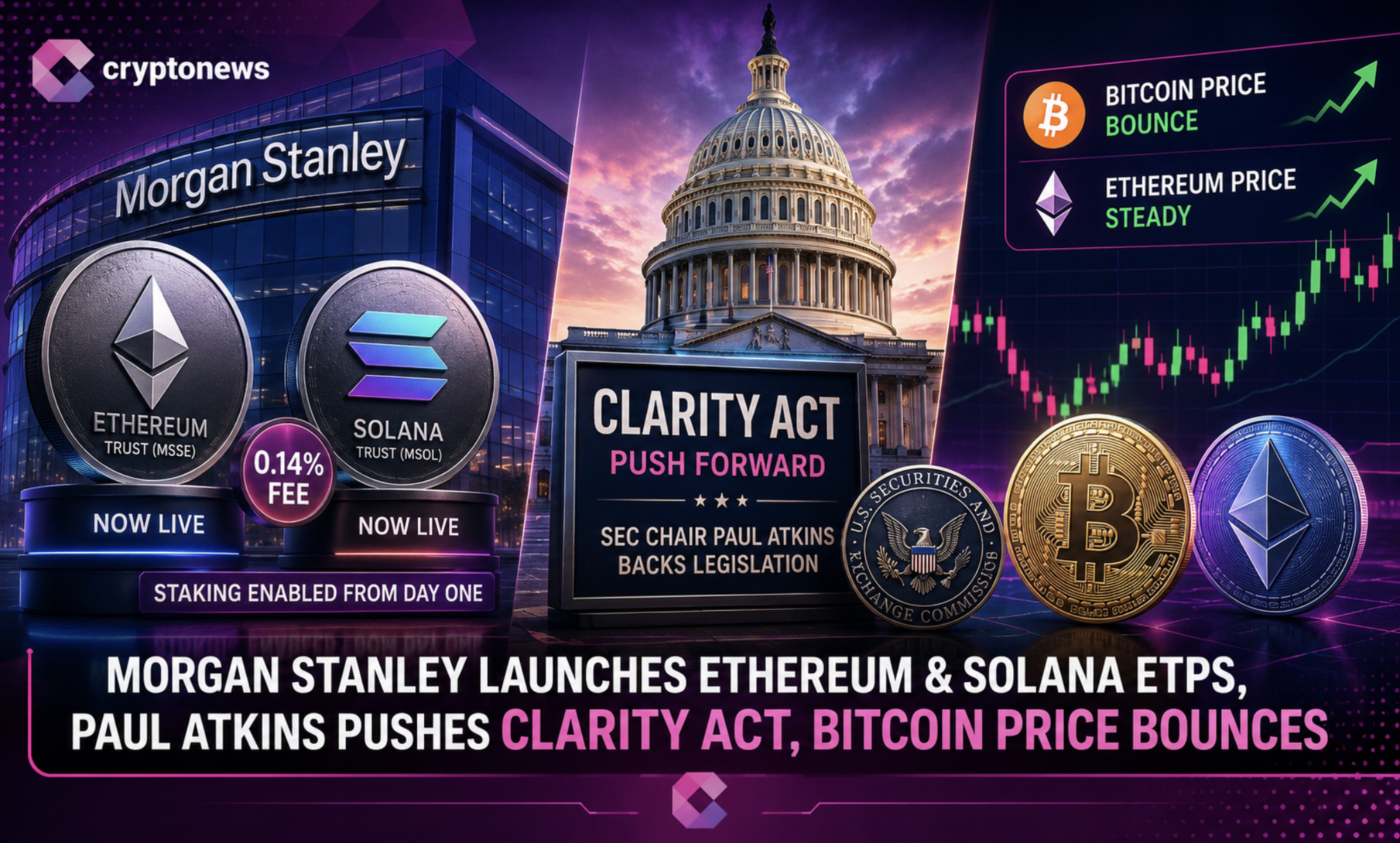
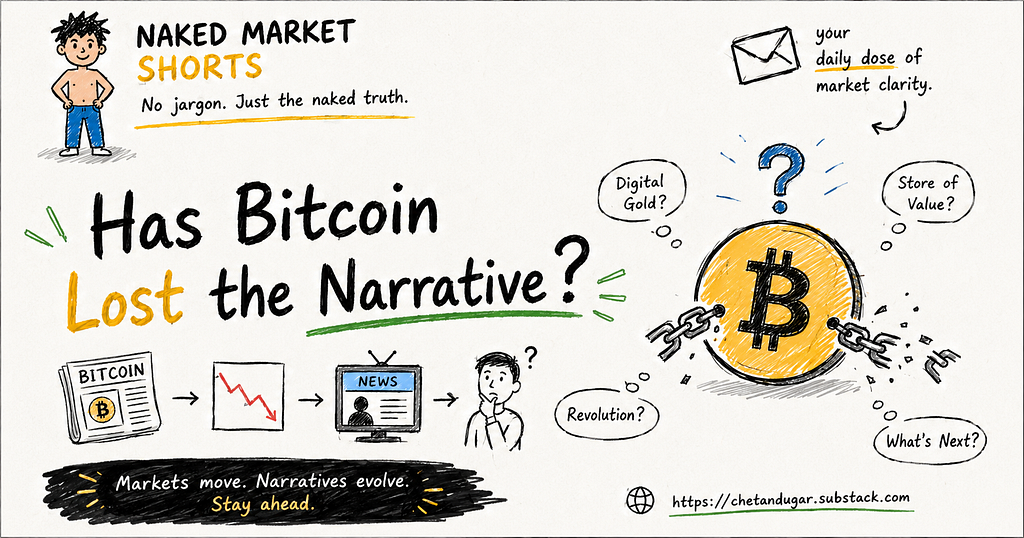
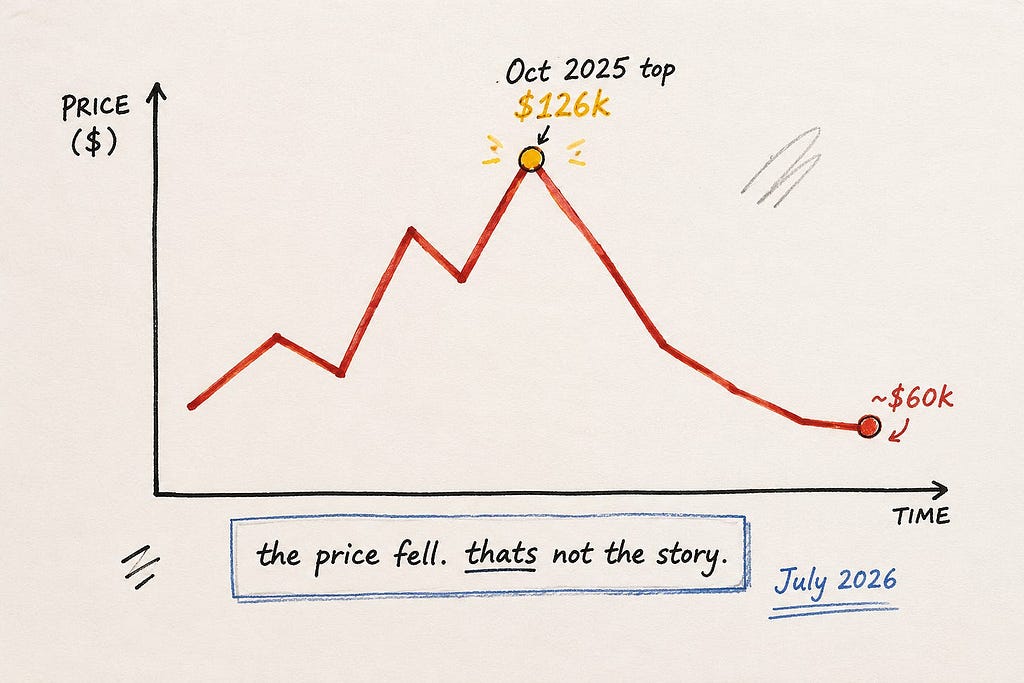
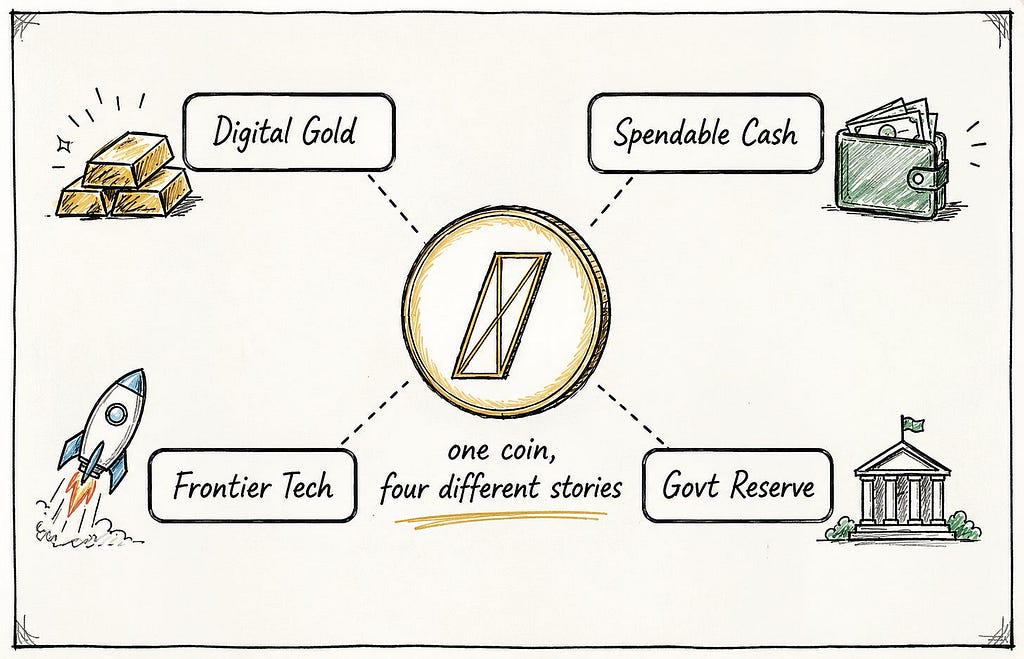
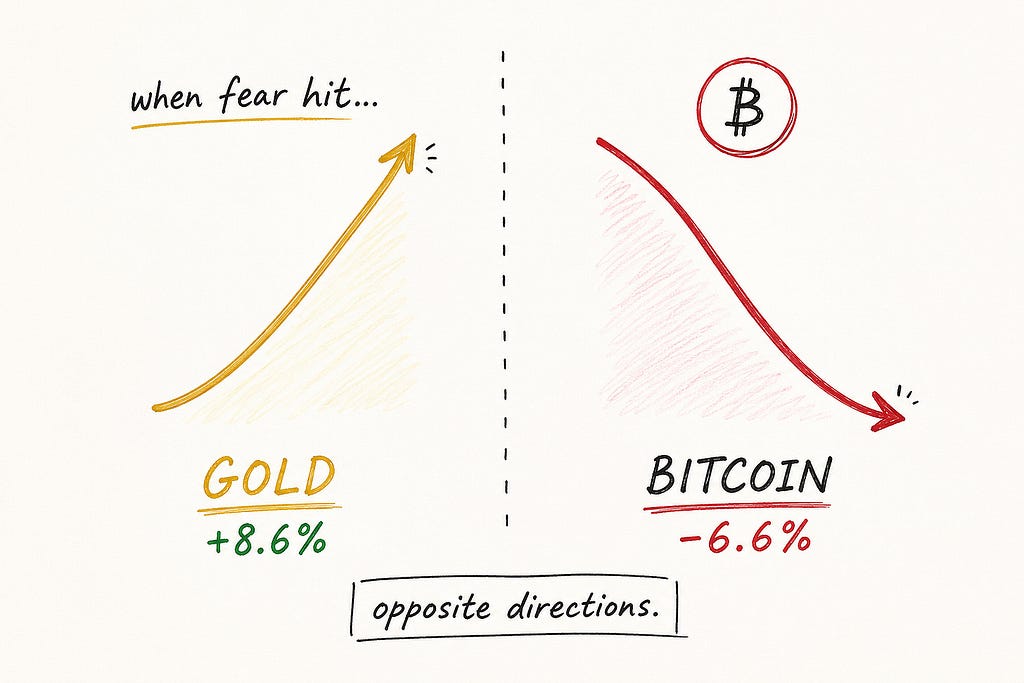
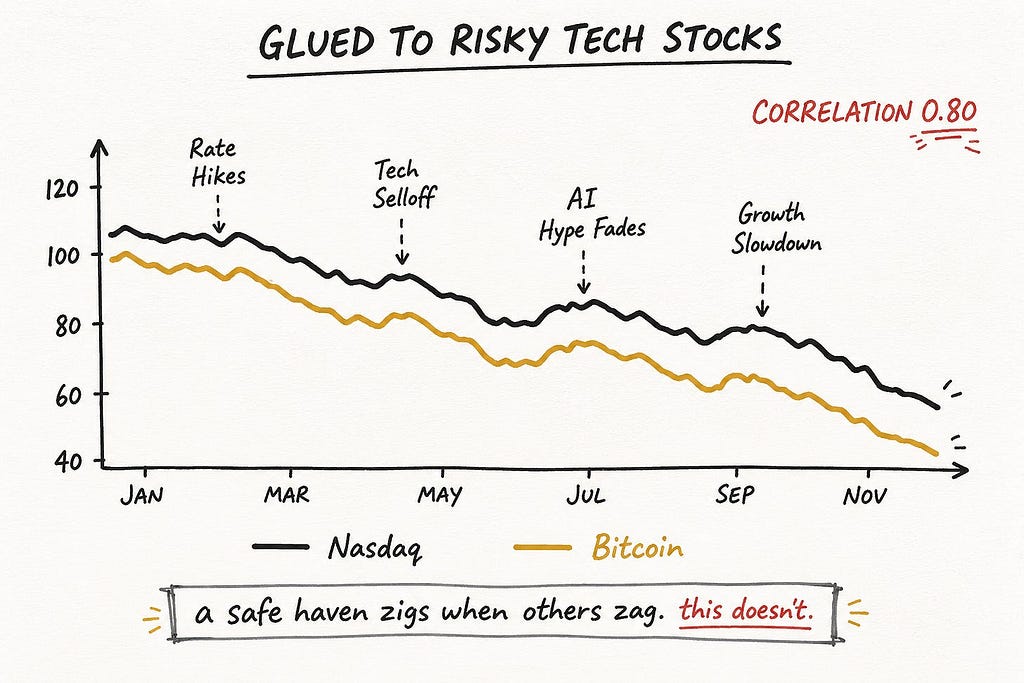
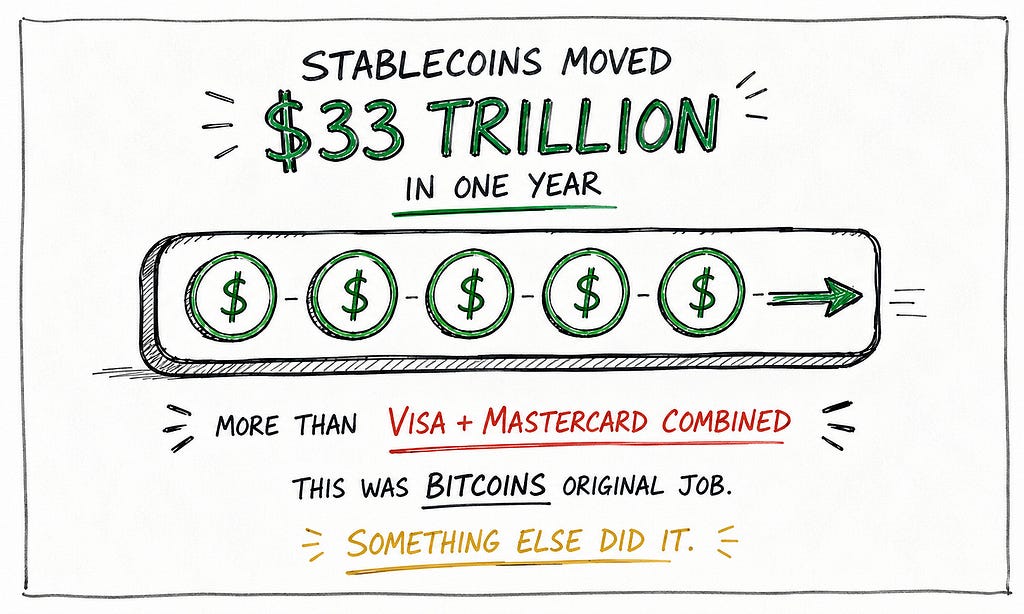
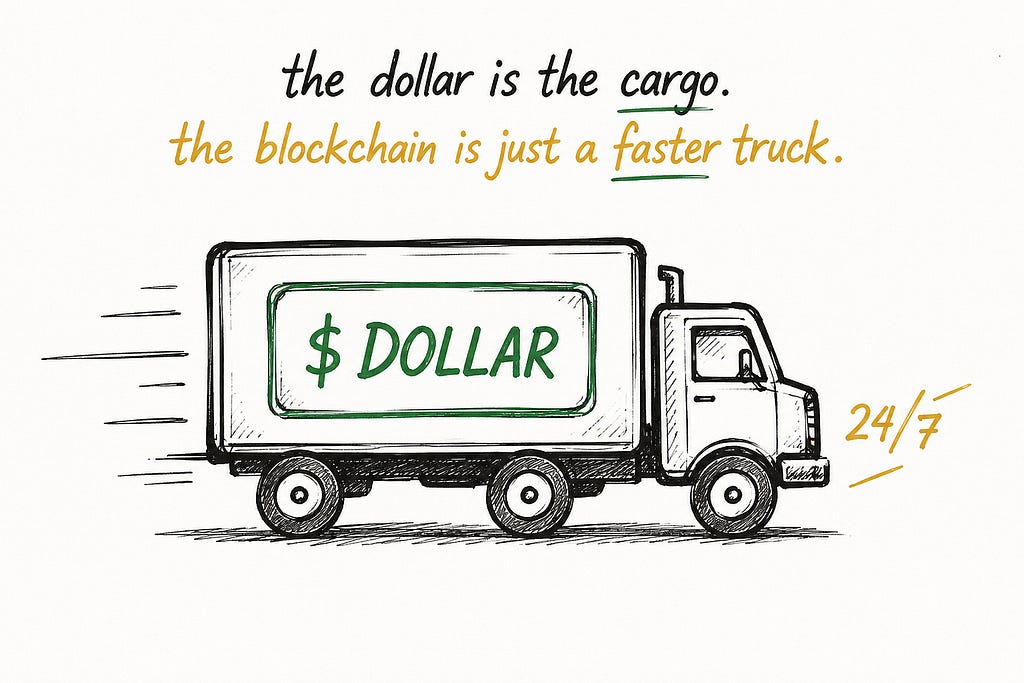

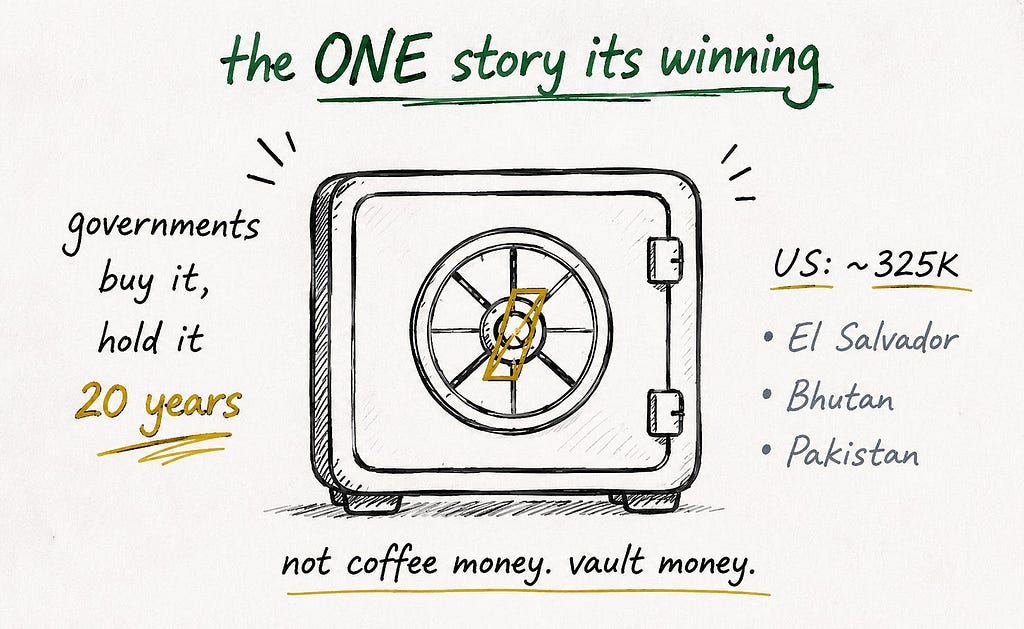
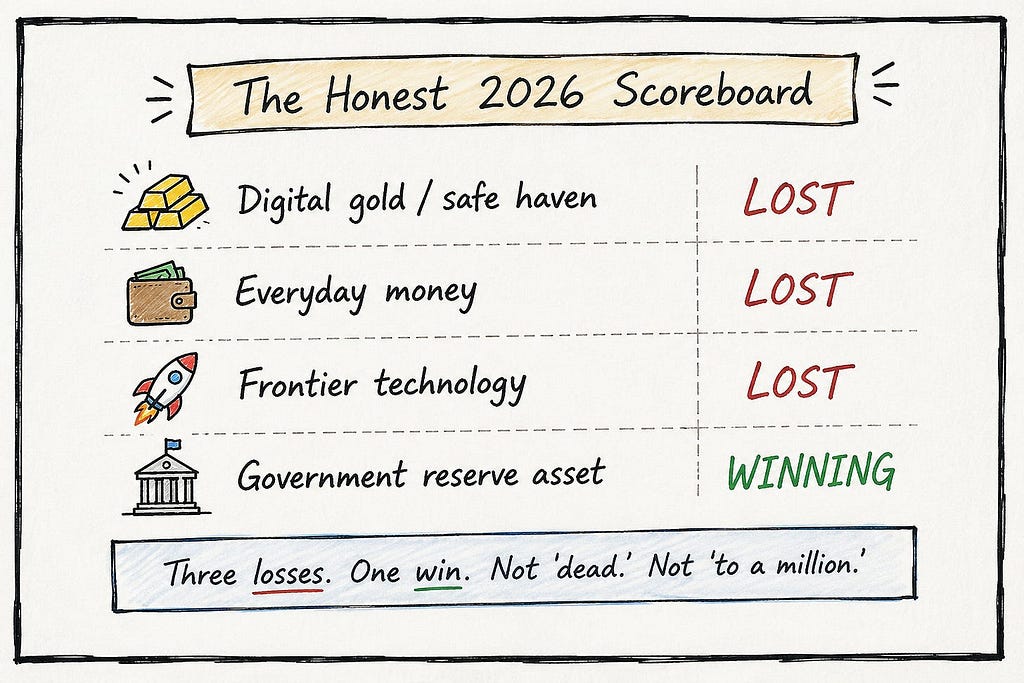
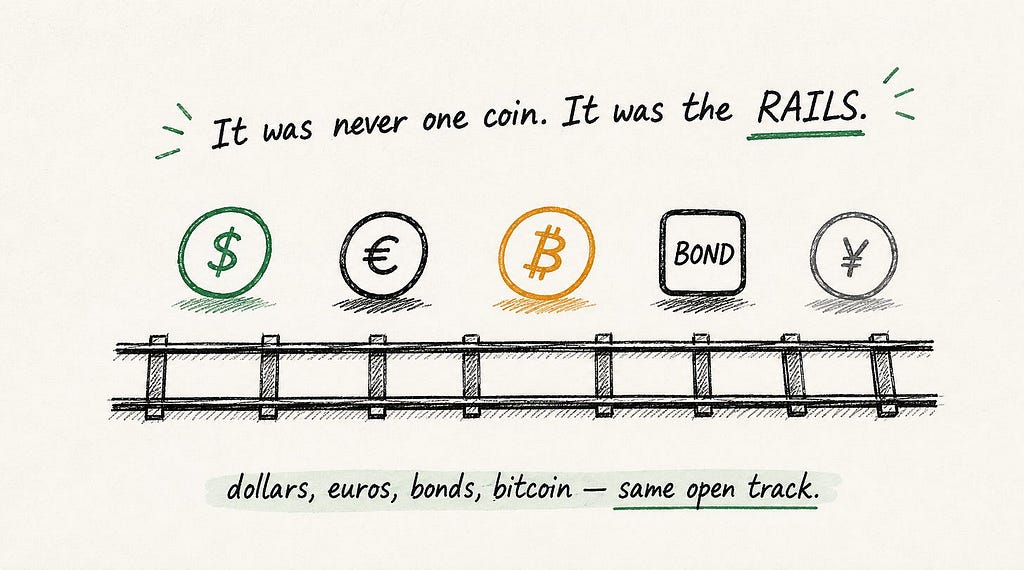
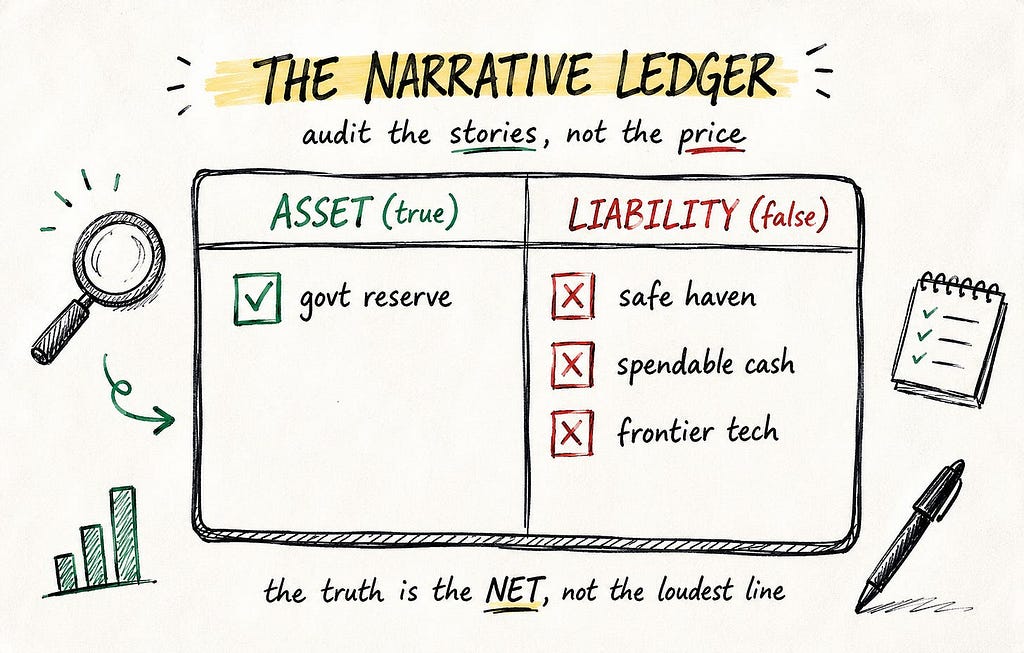
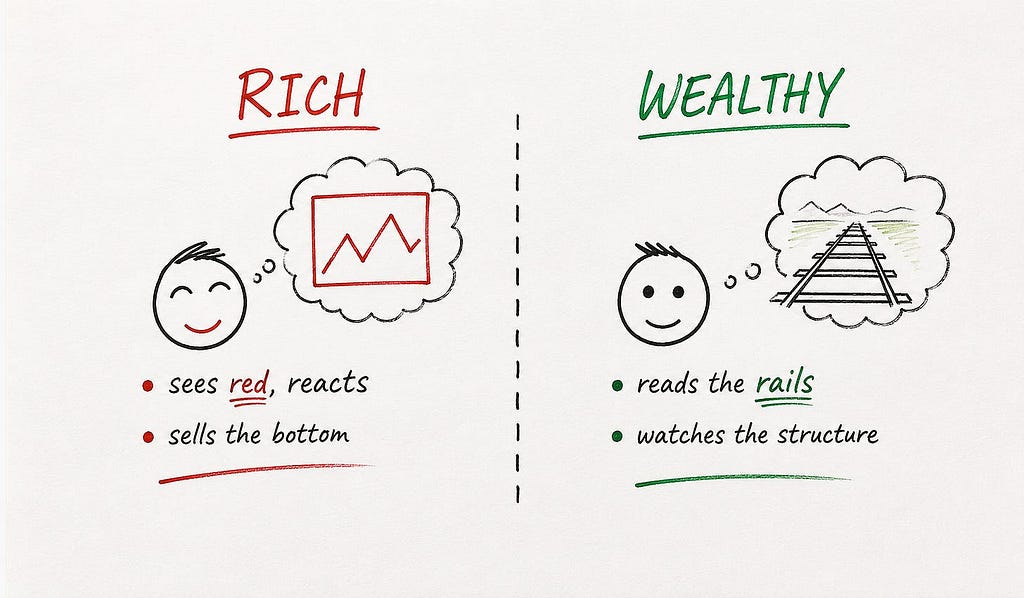

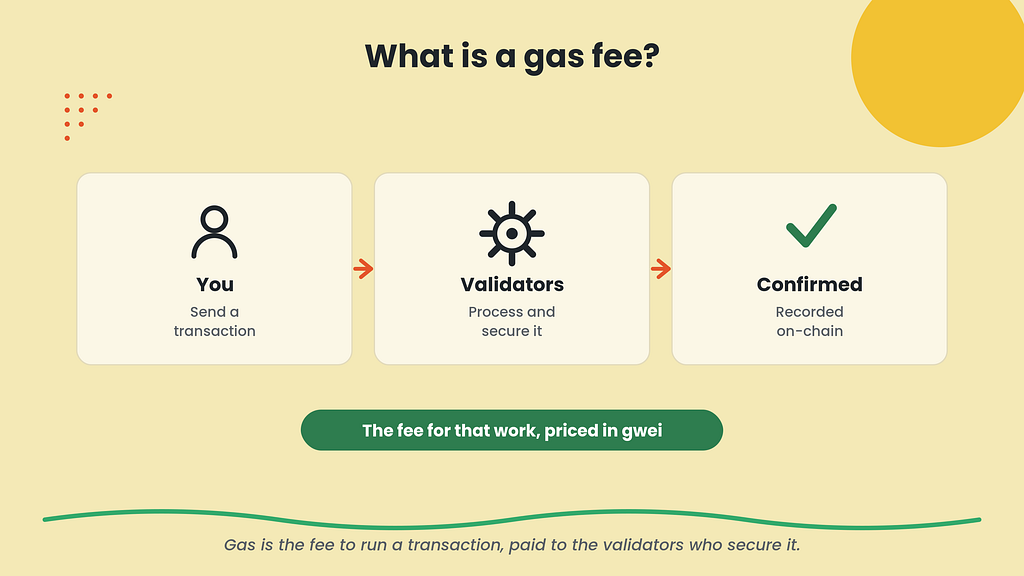
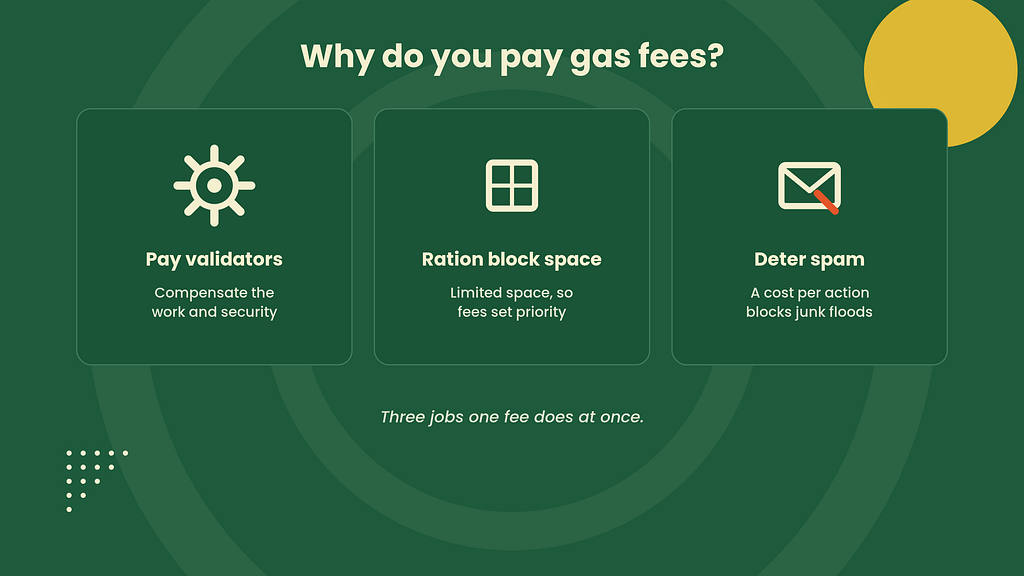
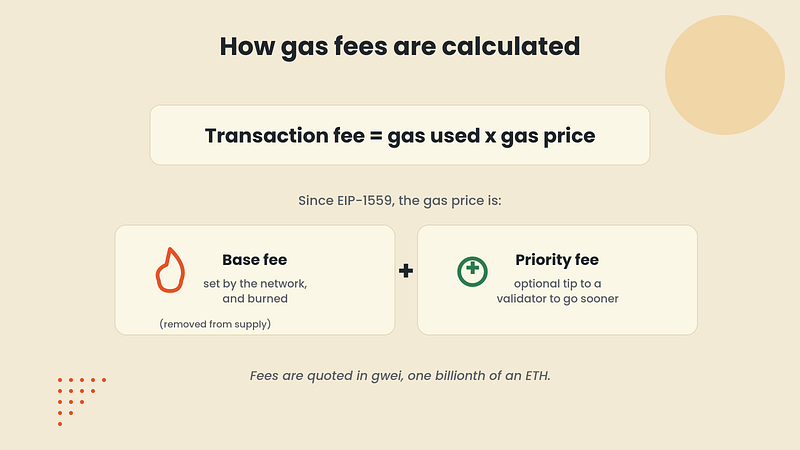
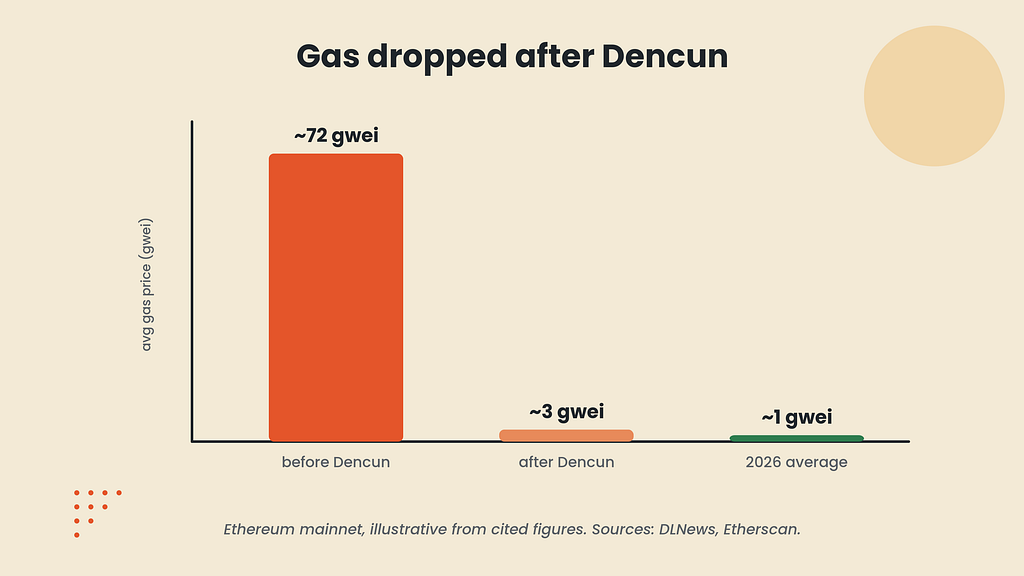
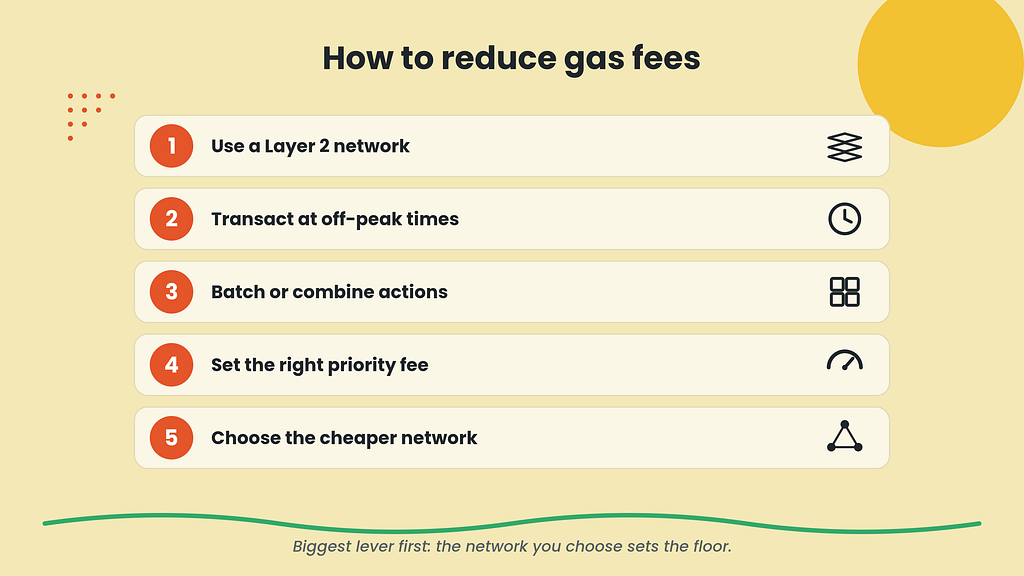
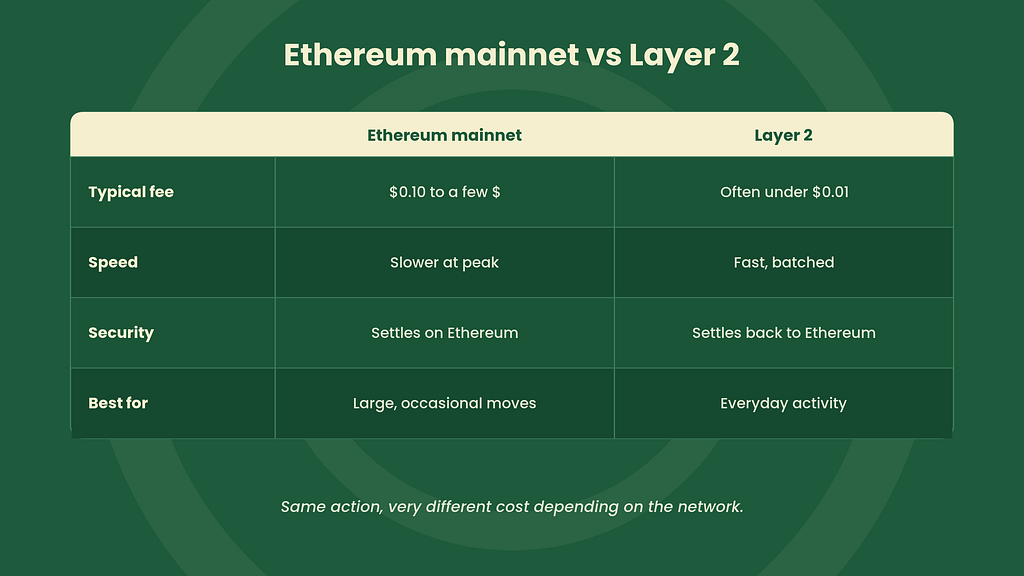
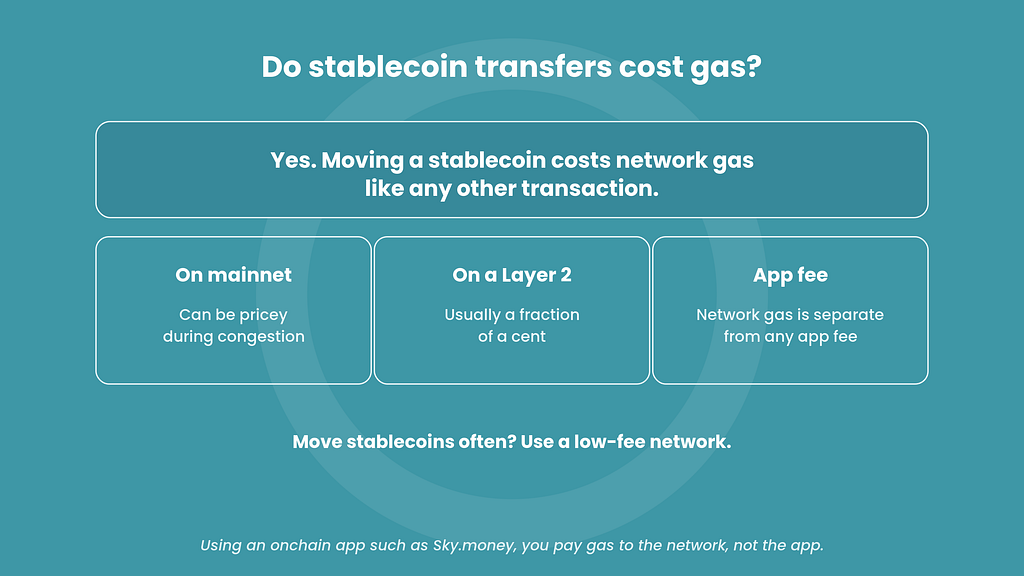






 JUST NOW: The US paused its bombing of Iran after Omani officials visited Tehran Friday for talks.
 EVERY BITCOIN BEAR MARKET ENDS WITH CASUALTIES.