❌

Reading view

There are new articles available, click to refresh the page.

Senator Bill Hagerty: Expanding the U.S. Strategic Bitcoin Reserve, & the Future of Dollar Hegemony


Bitcoin Magazine
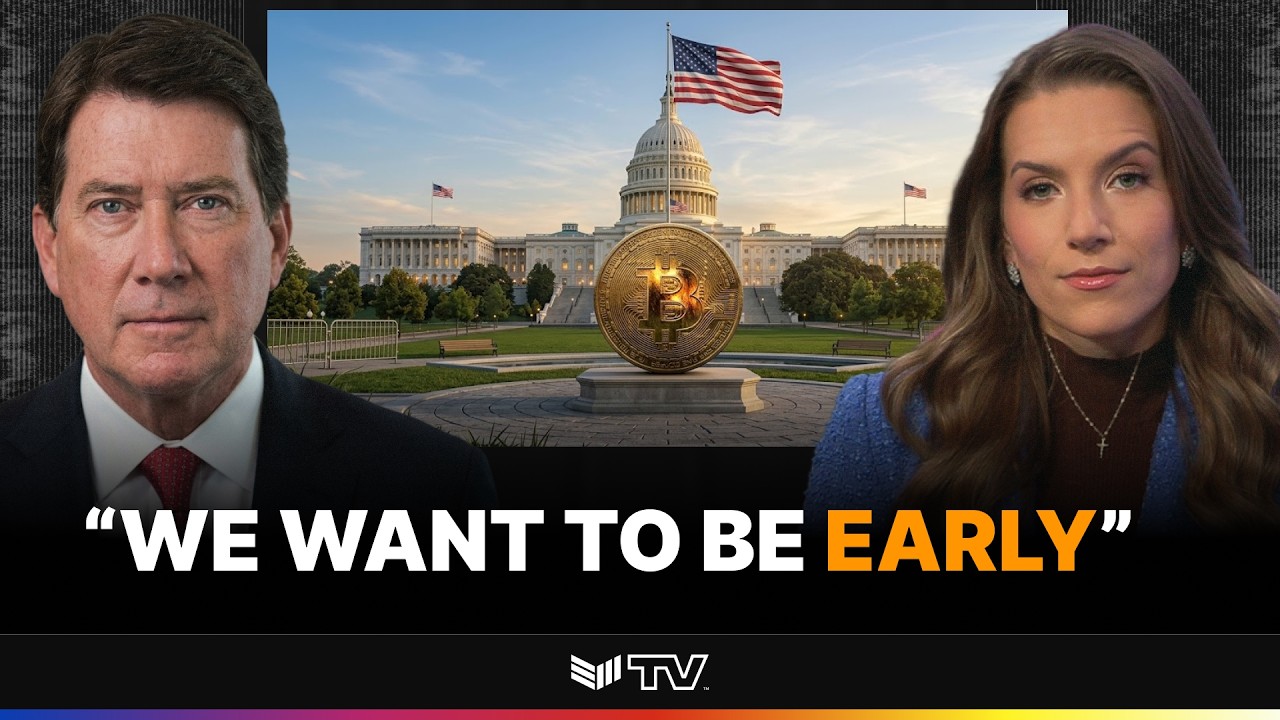
Senator Bill Hagerty: Expanding the U.S. Strategic Bitcoin Reserve, & the Future of Dollar Hegemony

Senator Bill Hagerty says the only answer some in Congress have is a central bank digital currency, and that’s “absolutely not consistent with freedom and liberty.” In this in-studio interview, he explains how uncertainty let former SEC chair Gary Gensler attack the industry, why a light government touch helps innovation thrive, and what Congress can realistically get done before the new session in January.

Chapters:
00:00 Senator Bill Hagerty on What’s Next for the Clarity Act
01:38 Democrats, Ethics Provisions and the Stablecoin Rewards Debate
03:04 How the SEC and CFTC Are Regulating Crypto Without Congress
04:43 How the GENIUS Act Will Change Payments and Settlement
07:08 Stablecoins, Treasury Demand and U.S. Dollar Dominance
08:31 The U.S. Strategic Bitcoin Reserve and 200,000 Bitcoin
10:54 Why Americans Are Still Skeptical of Crypto
13:18 Bitcoin Mining, TVA and Tennessee’s Energy Buildout
17:14 Bitcoin Businesses in Nashville and Why CBDCs Threaten Freedom
18:36 What Congress Can Pass Before the New Session in January

DISCLAIMER: The views and opinions expressed in this show are those of the participants and do not necessarily reflect the official policy or position of BTC Inc., Bitcoin Magazine, or any affiliated entities. This content is provided for informational and educational purposes only and should not be construed as investment, legal, tax, or accounting advice. Nothing contained in this show constitutes a solicitation, recommendation, endorsement, or offer to buy or sell any securities or financial instruments. Viewers should consult their own advisors before making financial or business decisions.

This post Senator Bill Hagerty: Expanding the U.S. Strategic Bitcoin Reserve, & the Future of Dollar Hegemony first appeared on Bitcoin Magazine and is written by Patrick Green.
U.S. Treasury Says U.S. ‘Will Win in the Digital Asset Stack’ as Clarity Act Stalls

Bitcoin Magazine

U.S. Treasury Says U.S. ‘Will Win in the Digital Asset Stack’ as Clarity Act Stalls

U.S. Treasury Secretary Scott Bessent said Tuesday that American leadership in digital assets could reinforce the dollar’s global position, even as Congress has stalled on the market-structure legislation meant to govern them.

Speaking at Ripple’s Swell conference in New York with CEO Brad Garlinghouse, Bessent argued that the foundations of reserve-currency power are shifting. For much of modern history, he said, the dollar’s dominance rested largely on military strength. 

“We will keep our military umbrella, but increasingly, it becomes a technological umbrella,” he said. 

He grouped digital assets with artificial intelligence and semiconductors as areas where the United States and China are competing to build dominant infrastructure, and suggested the financial rails countries choose will shape the dollar’s reach.

The most concrete link he drew runs through stablecoins, dollar-pegged tokens whose issuers typically hold reserves that include U.S. Treasury securities. Bessent said stablecoins could give people in countries with high inflation or volatile currencies easier access to dollars. 

CoinGecko data puts the share of stablecoins denominated in dollars above 98%, with Tether’s USDT and Circle’s USDC the largest. Bessent himself put the figure above 90%. The exact number differs, but the dollar clearly dominates the category.

NEW: 🇺🇸 Secretary Scott Bessent says the Treasury is moving on crypto regulation with or without Congress


He says they will “bring the SEC and CFTC together to close the gaps through regulation.” pic.twitter.com/JnsT3oxVEn

— Bitcoin Magazine (@BitcoinMagazine) October 28, 2026

Bessent has also argued that stablecoin reserves could increase demand for Treasury debt. Last year he suggested stablecoins could generate $2 trillion in short-term demand for Treasuries and bills. That projection depends on how quickly stablecoin supply grows, what reserve rules apply, and how issuers choose to invest.

Bitcoin traded around $80,000 to $81,000 this week ahead of the Federal Reserve decision. Bitcoin advocates have long argued that a neutral, non-issuer asset offers something different from dollar-pegged tokens.

Broader crypto legislation trends

The regulatory backdrop is more uncertain. The Comptroller of the Currency has finalized its rule implementing the GENIUS Act, which sets requirements for payment stablecoin issuers. The federal framework takes effect January 18, 2027. 

The broader CLARITY Act, which would establish market-structure rules for digital assets, failed a Senate procedural vote on September 15, 49 to 50, short of the 60 votes needed. Disputes included ethics provisions related to federal officials’ crypto interests and stablecoin yield. 

Banks and the White House clashed over those yield terms.

Treasury Bessent’s willingness to work around Clarity Act failure

Bessent called the setback disappointing. He said Treasury could work with the Securities and Exchange Commission and the Commodity Futures Trading Commission to address regulatory gaps. “At Treasury, we have a lot of convening powers,” he said, describing the agencies as “great partners.” 

He also said regulators could set guardrails to prevent banks from cutting off crypto firms, a practice known as debanking. 

“I think we can set up regulatory best practices, guardrails that will prevent that from happening again,” he said.

Those remarks did not set out a formal plan, working group, or timeline. Agency action can clarify rules within existing authority, but it lacks the permanence of an act of Congress, and it can be reversed by a future administration. 

Next week’s midterm elections could further stall the CLARITY Act, according to TD Cowen.

This post U.S. Treasury Says U.S. ‘Will Win in the Digital Asset Stack’ as Clarity Act Stalls first appeared on Bitcoin Magazine and is written by Micah Zimmerman.

Next Week’s Midterms Could Stall the CLARITY Act and Test Crypto’s Political Clout: TD Cowen 

Bitcoin Magazine

Next Week’s Midterms Could Stall the CLARITY Act and Test Crypto’s Political Clout: TD Cowen 

Washington’s crypto agenda hinges on next week’s midterm elections, according to a new policy note from TD Cowen, shared with Bitcoin Magazine. 

Analyst Jaret Seiberg warned in the note that the probable results could make it difficult for Congress to pass the CLARITY Act over the next two years. The bill would set the rules for bitcoin and other digital assets, and the industry has spent $176 million on more than 100 races to shape the outcome. Here are a couple of the results:

A Democratic sweep is the most probable outcome

Prediction markets cited in the report give Democrats a 90% chance of winning the House and a 62% chance of winning the Senate. TD Cowen considers this the most negative scenario for bitcoin and the broader crypto sector. Under it, Sen. Elizabeth Warren would become Senate Banking Committee chair. Seiberg describes her as a crypto skeptic who has led opposition to the CLARITY Act, and he expects her to conduct tough oversight of federal regulators.

Warren cannot stop regulators from adopting policies that favor the industry. Seiberg expects President Trump to remain favorable toward crypto, so he would veto any bill that limits his regulators’ authority. Democrats would lack the votes to override him. As a result, policy changes are expected to focus on tokenization, perpetual futures, and stablecoins.

A split Congress with Republicans holding the Senate

The second scenario keeps Democrats in control of the House while key Senate races stay close enough to break for Republicans. Sen. Tim Scott would keep his Banking Committee gavel. TD Cowen views this outcome as a better result for bitcoin, because Rep. Maxine Waters could trade support for parts of the market structure bill in exchange for investor protections and action on her other priorities. 

Adverse legislation would be blocked from reaching the president’s desk.

A Republican sweep is the least likely but best outcome for crypto

Kalshi gives Republicans a 10% chance to keep the House and a 35% chance to keep the Senate. TD Cowen calls this the best path for crypto policy, though the margins matter. A wider Senate majority would improve the odds that leaders advance the CLARITY Act in 2027 or 2028, and they could attempt a revival during the lame-duck session. 

A narrow majority, by contrast, would leave the bill stalled, as Democrats keep pushing ethics provisions that the president opposes. When the Senate blocked the bill, Bitcoin-related stocks tumbled.

For background, the CLARITY Act would create federal rules for digital assets. The House passed its version in July 2025 by a 294-134 vote. The Senate Banking Committee approved its own version in May 2026 by a 15-9 vote, with two Democrats joining Republicans.

On the Senate floor, a cloture vote failed 49-50 on September 15. Democrats want ethics language that would bar senior officials, including the president, from profiting from crypto ventures. Republicans and industry groups resist those limits. Stablecoin yield is another dispute. Each side says the other is blocking progress, and the bill is stuck.

This post Next Week’s Midterms Could Stall the CLARITY Act and Test Crypto’s Political Clout: TD Cowen  first appeared on Bitcoin Magazine and is written by Micah Zimmerman.

❌