There are plenty of “robot” projects out there that are really just a small remote control platform of some sort. We often like to think of robots of having some sort of autonomy though. [Luca Fagioli] demonstrates a great example of this with his explorer robot that uses Simultaneous Localization and Mapping (SLAM) to navigate its environment.
The robot is a built on a small plastic chassis, with one gear motor per drive wheel. Running the show is an Arduino Uno R4 Wi-Fi, paired with the Sensor Shield 5.0 and an L298N motor driver board. There’s also an HC-SR04 ultrasonic sensor module onboard, mounted atop an SG-90 servo motor so it can be panned around. The ultrasonic sensor determines the range between the robot and surrounding walls, and a map is constructed at the same time as the robot is localizing itself within it. There are also infrared sensors on the bottom of the robot for detecting tape marks on the floor for checkpointing purposes.
With AI progressing so fast, it’s only a matter of time before we start getting AI companions like the ones we used to see in movies like R2-D2, Wall-E, or Baymax. Now, Singapore-based OKA Technology has unveiled Mori, a cute little AI companion that looks less like a conventional home robot and more like someone […]
Granted, she was standing there for long enough that the police were eventually called, but still. Previous reporting indicates that Carolyn Marvin has a history of blocking delivery robots as a form of protest, but this is the first time law enforcement got involved. We’re not lawyers here at Hackaday, so we can’t say for sure whether or not blocking the progress of a robot engaged in commercial operation actually violates any laws. But we do know that refusing a lawful request from a police officer will get you in trouble, and that seems to be what Marvin was actually charged with when she refused to move.
From a robot stopped in its tracks to one that keeps on trucking, NASA is reporting that the odometer on the Perseverance Mars rover recently ticked over to 28.10 miles (45.22 kilometers). That might not seem like a lot, but it officially makes it the most traveled rover in the solar system, breaking the record set by Opportunity at 28.06 miles (45.16 km). One might expect that the Curiosity rover would hold the distance record as it had been rolling around on the surface for more than a decade before Perseverance dropped into the neighborhood, but the different scientific missions of the two nearly identical rovers have taken them on very different courses.
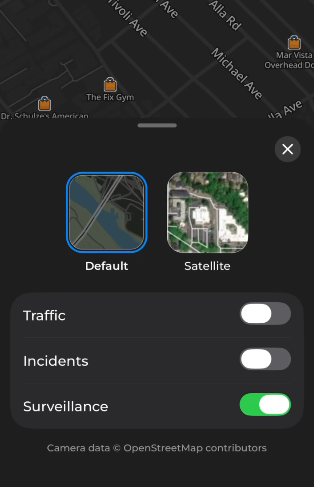
On the subject of navigation, MapQuest recently announced the availability of the “Surveillance Layer” in their smartphone application. When enabled, it shows the location of known license plate readers and cameras on the map, allowing the user to plan their route accordingly. A note in the application’s user interface mentions that they’re pulling at least some of this data from OpenStreetMap, though it’s not clear currently if other sources such as DeFlock are being used.
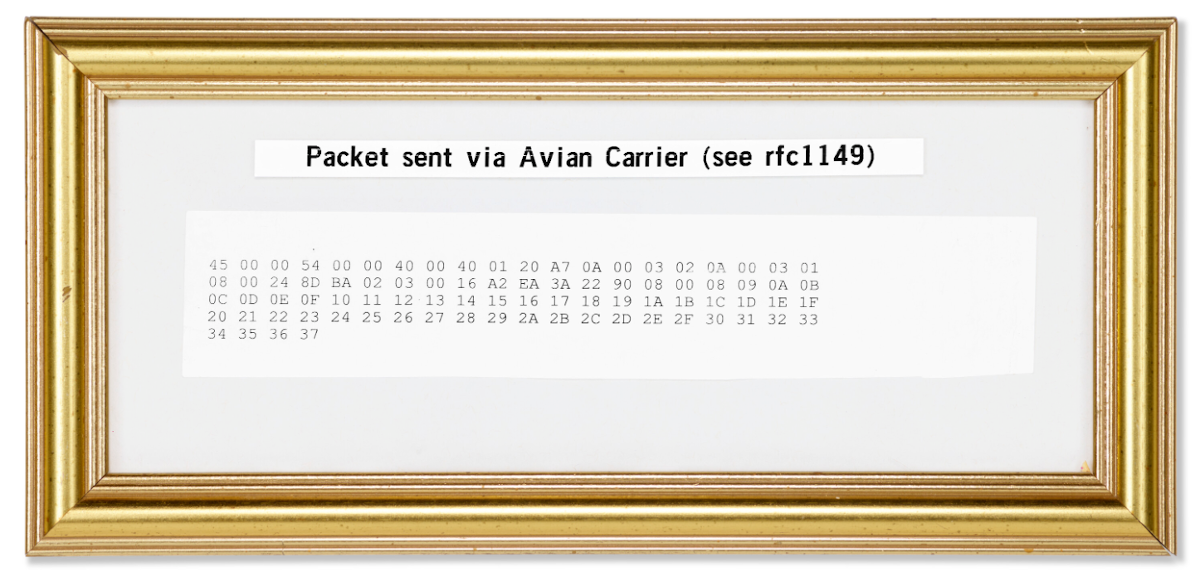
Finally, we have an update on the Christie’s auction for the carrier pigeon data packet sent back in 2001 by Norway’s Bergen Linux User Group. The auction house thought the framed datagram might fetch as much as $3,000 USD, but when the hammer finally went down earlier this week the winning bid was a staggering $20,480. Given all the weird gadgets we’ve picked up on a whim, we’re not in a position to lecture anyone else about how they spend their money…but damn.
See something interesting that you think would be a good fit for our weekly Links column? Drop us a line, we’d love to hear about it.
"A human defeated two of the three robots he faced in a cage fight recently held in San Francisco," reports the Los Angeles Times, noting that videos of the event drew more than 10 million views on YouTube.
But "the humans behind that fight could face a battle of their own — the legal type — if they want to hold another event like 'Human Vs. Robot,' the Sept. 18 competition that placed influencer Frankie LaPenna inside an octagon to battle three humanoid robots that were controlled remotely by a human operator in separate MMA-style fights..."
Wearing spiked gloves, a helmet and protective padding, the 5-foot-6, 205-pound LaPenna held his own against all three bots. He dominated his first opponent, referred to at the fight as "the child robot." Next came an imposing "Terminator"-inspired humanoid, which was listed on the fight video as 6-feet and 200 pounds with a kick force of 850 pounds. The robot landed several hard kicks, including one that knocked LaPenna across the mat and another with an impact that brought the humanoid to the ground and caused its head to come off — but the human seemed to gain strength as the match went on and eventually stood triumphantly with his foot on the machine's crumpled body.
LaPenna was dominant early in his final match, in which he faced a robot that resembled a "Predator" from the movies of the same name. After landing several punches and kicks and taking his opponent to the ground multiple times, LaPenna eventually became fatigued and called for the match to be ended. "He doesn't get tired. He doesn't stay down," LaPenna said in a postmatch interview.
"The crowd of about 100 (humans, not humanoids) was thrilled," writes the New York Times. (After beating his first robot opponent, LaPenna told his interviewer, "Clankers zero, humans one.")
But the New York Times adds that "Those who know humanoid robots best highly recommend against fighting them."
"It's very unfair to put a human in with a heavily motorized system that's only going to dominate," said Ken Goldberg, a professor who oversees the automation lab at the University of California, Berkeley. "There's nothing surprising about that...." He said he understood the appeal of the fights that Robot Entertainment Kombat (REK) was staging, noting that it tapped "into some of the fear and frustration with robots that people feel.... I mean, they love to see the human kick the robot's gearbox," he said. But the odds of that human fighter getting his gearbox kicked are much greater, Dr. Goldberg said, given that REK's humanoid robots can weigh several hundred pounds and are made of steel.
To be fair, it looked like sometimes the robot just fell over. (And the robots were human-controlled, not programmed with split-second reactions...)
But "Not everyone is a fan," adds the Los Angeles Times:
On Sept. 23, the California State Athletic Commission sent a cease-and-desist order to REK, its CEO Cix Liv and "all persons holding, promoting, advertising or sponsoring unsanctioned human versus humanoid robot cage fight." The letter states that "any boxing or mixed martial arts contest, match, or exhibition, involving any human in the State of California" requires the prior approval of the commission and that it is a misdemeanor to hold such an event without obtaining a license or permit from the state. A spokesperson for the California Department of Consumer Affairs, which oversees the CSAC, said in a statement emailed to The Times that the commission is "committed to protecting the safety of the public and integrity of combat sports."
"Unsanctioned activity puts the physical and financial well-being of all those involved at risk and such activity will not be tolerated," the statement said.
A Philadelphia newscast reports on a grey-haired lady who allegedly refused to move out of the path of a delivery robot as a form of protest because "I know they're taking the jobs of human delivery workers."
She was arrested, but says her actions were protected speech:
According to police, Marvin repeatedly blocked the robot's path and ignored multiple commands from officers to move... Marvin said she was protesting the use of delivery robots because she believes they are replacing human workers.... "I have been protesting them whenever I saw them by standing in front of them and preventing them from going forward," Marvin said...
Marvin said she has confronted delivery robots on multiple occasions... Ashley Baldwin of West Philadelphia said she witnessed one of those encounters. "I actually thought the robot hit her, so my original question was, 'Are you OK? Did the robot hit you?' And she said, 'No, I have to stop this. They're taking over the world,'" Baldwin said.
Asked whether she plans to continue protesting the robots, Marvin said she does.
She was charged with disorderly conduct.
Uber did not respond to their request for a comment.
Slashdot reader alternative_right shares a story that has drawn international attention for being potentially the first documented instance of a robot being used directly in a sexual assault. According to the Associated Press, German police have opened a sexual harassment investigation after a robot allegedly touched a 16-year-old girl's buttocks and made thrusting motions while two young men reportedly filmed and streamed the incident. Investigators seized the robot and the suspects' phones and are trying to determine whether the movements were preprogrammed or controlled in real time. From the report: Cologne police spokesman Christoph Bermel said the two male teenagers have not been charged but are considered suspects, and investigators were examining whether the robot's movements were preprogrammed or controlled in real time.
Police were unfamiliar with this type of incident, he said. "We have not been aware of this phenomenon so far," Bermel told The Associated Press, saying it was "new territory for us." [...] The robot, said to be 120 centimeters (about 3 ft 11 inches) tall, was dressed in a white tank top, black sweatpants and wearing a gold chain and sunglasses. It also had what appears to be a fake mustache. Videos circulated on the internet show two young men escorting the robot toward a group of women, bumping into one and hugging others, on a lively nighttime street.
Tally, an inventory robot, scans shelves at a Fred Meyer store in Seattle’s Greenwood neighborhood. (GeekWire Photo / Kurt Schlosser)
Shoppers navigating aisles of chips and cookies at a Fred Meyer store in Seattle’s Greenwood neighborhood are dodging more than carts — they’re also sharing space with a smooth-gliding, autonomous robot named Tally.
Equipped with an array of cameras, computer vision and AI, the slender machine pauses briefly near display shelves before beeping like a grocery-focused R2-D2 and zooming down the line to scan digital shelf tags.
During a GeekWire visit one morning last week, Tally sparked a mix of curiosity and pointed questions about the impact of retail automation from shoppers and workers alike.
“It’s kind of wild,” said a shopper named Mark, who, like others we encountered, preferred to give just his first name. “It’s the Jetsons happening right here, right now. If this is what the future is then I guess that’s what it is.”
The future apparently arrived a couple years ago, at least as far as Fred Meyer parent Kroger is concerned. The retail giant began piloting robotic technology in 2024 to “gain real-time insights on product inventory.”
According to a thread on Reddit, Tally robots have been spotted in Fred Meyer stores in Seattle as well as around Washington state, including in Lynnwood, Puyallup, Port Orchard and University Place. Kroger operates more than 50 multi-department grocery and retail stores across the state.
“At Fred Meyer and QFC, we are always exploring new and innovative ways to create a more convenient and friendly customer experience,” Tiffany Sanders, head of public affairs for QFC & Fred Meyer Divisions of Kroger, said in an emailed statement to GeekWire.
Sanders said the technology means “associates can more easily and quickly identify and address shelves where products are low or out of stock” and that teams gain more time “to do what they do best,” which is serve customers.
Sanders did not provide any details about how many stores in the region are using the robots, how many hours per day they roam the aisles, whether any human workers have been displaced, or what Kroger does to ensure customer privacy.
Cincinnati-based Kroger’s automation push does come amid plans announced Monday to slash roughly a third of its corporate workforce over the next three years under a sweeping restructuring led by CEO Greg Foran to lean heavily into technology and streamline operations.
“I move through the store politely and carefully so I won’t get in your way,” says a sign on a Tally robot. (GeekWire Photo / Kurt Schlosser)
Developed by San Francisco-based Simbe Robotics, Tally is an autonomous mobile robot engineered to help retailers track inventory, check pricing accuracy, and monitor product placement using computer vision and AI. Standing more than 6 feet tall with a slender frame atop a rounded Roomba-like base, the robot navigates store aisles at slow speeds using dozens of onboard sensors designed to safely weave around shoppers and displays.
Rather than sounding alarms or pinging workers in real-time, the robot feeds data into Simbe’s software platform, generating prioritized task lists for store employees to handle out-of-stock items.
Introduced to the market in 2015, Tally is part of a growing wave of automated inventory technology competing for space in grocery store aisles nationwide. Rival systems include autonomous machines from competitors such as Badger Technologies—whose googly-eyed robots are deployed in chains like Stop & Shop—as well as software platforms from companies like Brain Corp.
Simbe has scaled rapidly alongside competitors, recently surpassing a milestone of 3,000 autonomous units under contract globally, anchored by a 500-robot footprint within Kroger’s nationwide ecosystem.
Augmodo’s “Smartbadge” is passively worn by retail store employees to collect data as they move through aisles. (Augmodo Photo)
Autonomous robots like Tally may patrol grocery aisles on their own, but some tech companies argue that the best way to track inventory isn’t by adding another machine to the floor, but by empowering the humans already there.
One Seattle startup taking that approach is Augmodo, which develops spatial AI technology designed to capture shelf data through human movement rather than roaming robots.
“Augmodo started by knowing what is actually on the shelf, just like robots, but our vision is to augment the physical workforce,” said Augmodo founder and CEO Ross Finman. “People already go up and down the aisles hundreds of times a day, so enabling the existing workforce with simple, inexpensive smartbadges can provide more frequent, cheaper data while also building an AI assistant to add two years of experience to every associate across back of store, delivery, facility maintenance, and more.”
Unlike autonomous floor bots that have drawn privacy scrutiny from shoppers, Finman emphasized that Augmodo’s hardware focuses strictly on products rather than people.
“Regarding privacy, we focus on products, not people — we actively filter out any people before anything leaves the store,” Finman said. “We do not just filter out anything that could be a person, we filter out anything that is irrelevant.”
Digital shelf tags that Tally scans are seen at left as the robot moves down an aisle at Fred Meyer — and avoids a product floor display. (GeekWire Photo / Kurt Schlosser)
For all the futuristic promises of automated inventory, the machines still invite a mix of skepticism from those who share the floor with them.
During GeekWire’s Fred Meyer visit, a number of shoppers gave the robot a bit of side eye or muttered at it for being in the way while they shopped. At one point, Tally paused for several minutes in front of an aisle end cap stocked with Doritos. In other aisles it easily maneuvered around floor displays or paused for customers.
“Right now, it’s a curiosity,” said a Hershey sales rep named Mike who frequently stocks candy in grocery aisles and has watched Tally navigate the store. While he noted that the robot doesn’t personally bother him, he echoed rumors heard among workers about potential labor impacts.
Other shoppers looked past the novelty and expressed concern about broader privacy implications. Patrick, a Seattle resident who works in cybersecurity, said he usually tries to avoid the aisle when he spots Tally rolling past.
“First off, it’s taking jobs, but also it’s just more mass surveillance,” Patrick said. “Every time I pass it, I wonder: Is it collecting Bluetooth pings off your smart devices? … I’d be very surprised if it really was just doing cameras on the shelves versus trying to collect data on actual customers as well.”
The anxiety over data collection comes at a sensitive time for major grocers in the region. The Seattle City Council recently passed a groundbreaking ban on algorithm-based “surveillance pricing,” prohibiting retailers from using personal data and AI tracking to set individual, dynamic prices for shoppers.
Simbe’s Tally website features images of shoppers posing for selfies with the robots, under a headline that reads, “People are more likely to shop at retailers with in-store robots.”
While Tally is officially engineered for inventory management, shoppers like Patrick say roving robots only deepen distrust over how much corporate data is being gathered inside the aisles. Pointing to the cameras mounted on the robots and pairing them with modern AI tracking software, Patrick argued that it feels reminiscent the pushback against Flock automated traffic enforcement cameras.
“I think it’s just another way for them to cut the humans out of the labor force and steal more data from customers,” he said.

 Login