Cloud-based automation services such as Zapier and Make let you connect different services together to automate tasks without having to build everything from scratch. If you'd rather not have all your personal automations running in the cloud, n8n gives you a different option.
Claude and ChatGPT are where most of us started with AI, and once you discover what they can do, it’s only natural to put them to work beyond the chat window. That means plugging them into other tools and harnesses through their APIs. But once you do, Claude and ChatGPT stop being a simple $20 subscription and start behaving like metered utilities that can quietly run you hundreds of dollars a month, depending on what your automations are doing.
Paperwork used to be annoying, but at least there was an obvious place to put it. You bought a filing cabinet, labeled a few folders, and hoped you could remember where you filed something when you needed it. Today, most of that paperwork is digital. My wife and I have bills, receipts, records, manuals, and other documents scattered across our PCs, and finding a specific file isn't always as easy as it should be.
The fear of an AI apocalypse has persisted for decades in movies like WarGames and the Terminator series, but now that worry is becoming more than speculative fiction. Both current and recently-departed Anthropic researchers argue that there's a real possibility AI could kill humanity — although the issue is complex.
Google is one of the major players in AI (meaning machine learning) weather forecast model space. The models it and others generate have their strengths and weaknesses, but the main advantage is that they can have forecast performance similar to traditional models while requiring far less computing horsepower to run. That means they can be run more frequently.
Google recently released version 3 of its WeatherNext model, with the biggest change being that it now ingests some satellite weather data, shortening the lag time between current weather conditions and generating a new forecast. The update is detailed in a white paper.
Reanalysis
Many weather models make use of what’s called a “reanalysis,” which is a sort of model of its own. Reanalyses take in all kinds of weather data and combine them into a single, consistent global snapshot of the atmosphere. That requires that they provide estimates for conditions over locations without real-world measurements, because weather forecast models need to work with a global picture.
YouTube has become a worse place to learn from. The videos are longer than they need to be and are filled with ads. I am tired of sitting through 40 minutes of a video just for what is probably 10 minutes of real information. NotebookLM (Gemini Notebook) is actually a really good video converter with zero ads. It turns a fluffy video into something you can listen to or a video that stays on point, without any ads at all.
Every time you upload a file to a cloud AI service, you trust that they'll be responsible stewards of that information. When you're talking about medical data, financial records, personal details about your life, or any other sensitive information, that is a big ask.
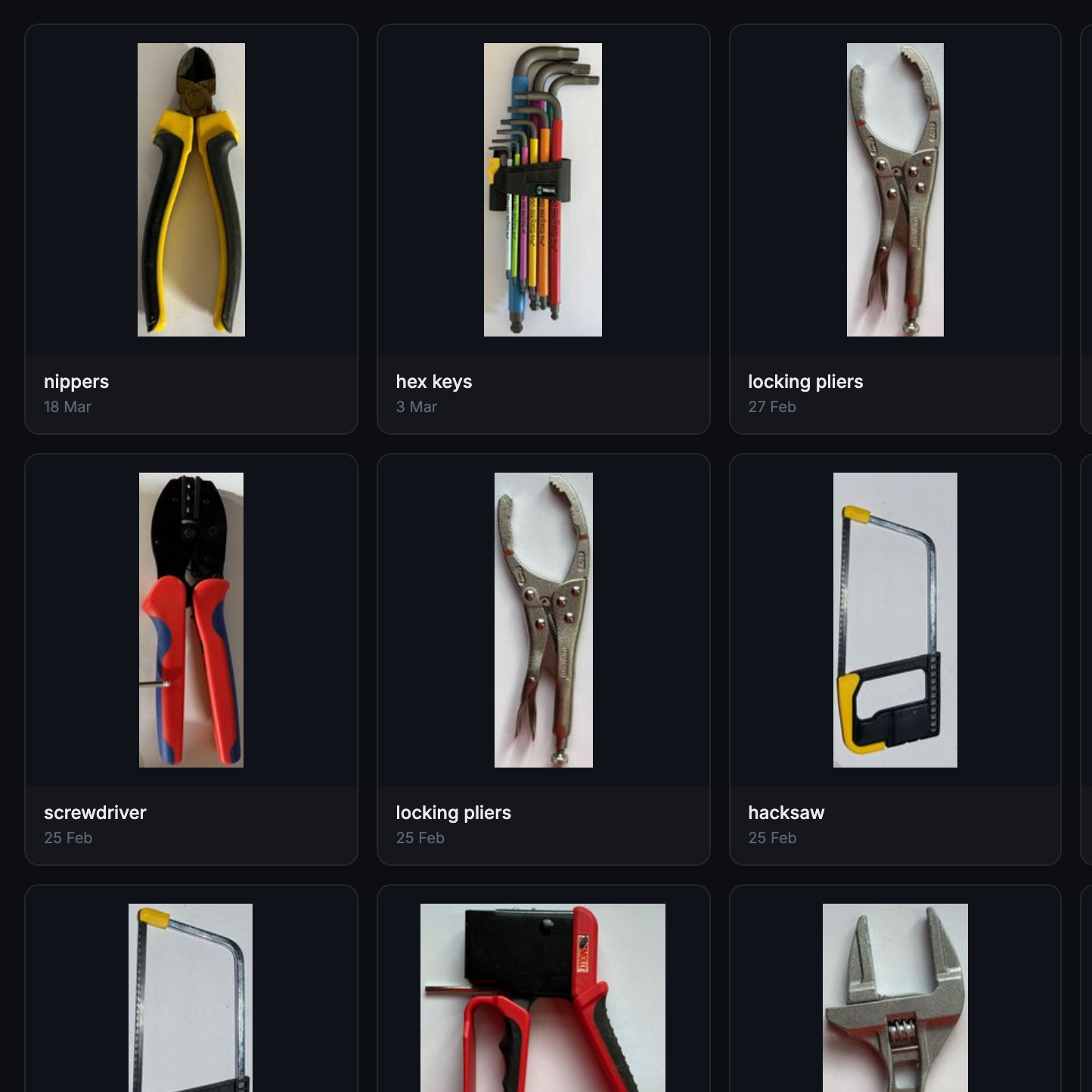
What if the organization and storage benefits of tool shadowing could be had and improved with a modular, semi-automated process? Tracefinity attempts that by generating custom Gridfinity bins from photos of tools, and has quite a few nifty features that are worth a look.
Maintaining a library of tools makes it easy to create project-based custom layouts.
The basic workflow is this: place one or more tools on a sheet of paper, take a photo, then upload the photo and have the system trace and save the outline and add it to a private tool library. When one is ready to create some bins, use the library of saved tool outlines to generate custom Gridfinity layouts.
If you’re unfamiliar, Gridfinity is a modular system of standardized bins and baseplates designed with 3D printing in mind, making it an ideal match for highly-customized organization tasks and a particularly natural fit for a tool-tracing system like this one.
The idea of taking a photo of a tool and generating a custom bin is a compelling one, and a couple years ago we covered a project that did just that. Tracefinity seems like a natural evolution of the idea, and includes handy features like easy design adjustments, optional magnet holes, and we really like the concept of a tool library from which individual tools are scanned once then later selected to create specific, project-based layouts.
Tracefinity takes advantage of new software capabilities like machine learning to improve and streamline the tracing process, but that doesn’t mean it relies on any external services. It can be entirely self-hosted and by default uses a local, CPU-friendly object detection model for tool tracing. There is an option to provide a API key to use Google Gemini instead, but it’s not required. It can come in handy for especially complex tool outlines or dealing with non-ideal source photos, however.
Fruit flies aren't exactly famous for their brainpower; you've probably drowned more than one in a wine glass left too long on the patio table. And yet, working with roughly 140,000 neurons—a brain smaller than a poppy seed—Drosophila can sort through a huge range of smells in a fraction of a second, and then retain the memory of that scent for a long time.
In this, they do much better than current "electronic noses." Even the most advanced ones on the market tend to be expensive, painfully narrow in what they can detect, and quick to forget an odor the moment they learn a new one.
So why not just copy the fly? That's the question a growing number of researchers have been asking—including Kevin Max and Yang Shen at the Okinawa Institute of Science and Technology, whose new algorithm, Spi-Fly, is described in a paper recently published in the journal Neuromorphic Computing and Engineering.
There are many ways to detect stress in an individual. You can use self-reporting checklists, you could try and measure various vital signs like respiratory rate and pulse and infer things, or you could observe the levels of hormones like cortisol in the blood.
Or… you could pull some parts out of a Playstation 4, and get hacking. Edwin Hwu did precisely that, creating a device that can image the skin down to the nanometer and potentially even determine fine details about an individual’s health status. He came to Hackaday Europe 2026 to tell us all about it.
Look Closely
Edwin’s background is very relevant to this project. He worked in a research institute in Taiwan where he collaborated with the German National Metrology Institute, working on atomic resolution imaging on silicon wafers. When you’re doing sub-nanometer calibration work for the semiconductor industry, that’s serious stuff, as is the X-ray microscopy that Edwin has dived into. When it comes to looking at things at very tiny scales, he knows his stuff. He’s also done plenty of work on real-time cell culture monitoring, skin assessments, and even high resolution 3D printing. It’s a broad skill base that all fed into the project he came to Hackaday Europe to talk about.
A single strand of DNA imaged with a DVD-based AFM setup. Credit: talk slides
There is a problem with optical microscopy that comes down to the diffraction limit of light—which means you can only image down to a resolution of around 1 micrometer. That’s why we use scanning electron microscopes for so many finer tasks, because the diffraction limit of electron beams is so much smaller. This allows the imaging of structures like carbon nanotubes or buckyballs, but with the limitation that the surface must be conductive and the imaging be done in a vacuum environment. A newer technology is the atomic force microscope (AFM), which involves using a very sharp probe with a tip of just 2-3 nanometers to actually touch molecules. This can be done without a need for a conductive surface or vacuum. When taking this approach to look at things on the nanometer scale, Edwin likens it to trying to poke a 1 euro coin with the tallest mountain on Earth. It’s a precise device with incredibly high resolution, but the average AFM costs half a million euros, and is incredibly bulky and slow at what it does. That is, unless… you find a way to build one on the cheap.
Atomic force microscopes were once incredibly expensive and cumbersome pieces of laboratory equipment. Now, it’s possible to build one yourself from an affordable kit, and it’s easy enough for children to put together. Credit: talk slides
Some time ago, Edwin created an atomic force microscope using the optical head of a DVD player, achieving a resolution of 0.39 nanometers. With this build, it was possible to image a single strand of DNA. Edwin also talks about how he used simple piezoelectric buzzers to create an ultrafine scanner for this work. The piezo elements are used for actuation, since they can be controlled to make incredibly minute movements. The work developed to the point where DIY AFM kits were made available at a mere fraction of the cost of traditional laboratory-grade installations.
The Playstation 4 proved to be the perfect donor for a high-quality AFM build thanks to the performance of the Blu-Ray optical head. Credit: talk slides
This work spawned a greater plan. Through his talk, Edwin explains how he figured out that e-waste gaming consoles could be turned into cutting-edge atomic force microscopes. Specifically, the Playstation 4 was the perfect candidate, with its high-end Blu-Ray optical head which is capable of reaching the diffraction limit of light. The Blu-Ray optical head is used to monitor the movement of the AFM probe, while scanning it is achieved with a piezo rig just like the earlier DVD-based build. It also has the benefit that the Blu-Ray hardware is built for higher data rates, meaning it’s possible to stream data from the optical head much faster for a quicker AFM scan. Edwin refers to his build as the HS-DAFM—for High Speed Dermal Atomic Force Microscope—since it’s 100 times faster than traditional laboratory atomic force microscopes.
By looking at the skin at a nanoscale level, the tool is useful for investigating conditions like atopic dermatitis, among others. Credit: talk slides
The word “dermal” is important—because Edwin has put the build to use in examining skin nanotexture, for diagnostic purposes. His talk explains how, combined with machine learning systems, the tool can be used to investigate skin conditions and help in the diagnostic process. It’s also become useful from the perspective of cosmetics, and looking at how the skin looks at the nanoscale due to factors like aging and UV exposure. With the aid of machine learning tools, Edwin has found that it’s even possible to determine if someone has asthma with 75% accuracy, just from a skin scan. There is even an exploration of mental stress versus skin nanotexture, albeit in a very preliminary stage.
If you’ve ever wondered about the finer details of doing atomic force microscopy on the cheap, or how skin texture holds the secrets of so many health-related matters, Edwin’s talk is a great one. Sometimes thinking outside of the box and the limitations of commercial laboratory equipment can lead to wonderous things, as it did here!

 Login
Login