❌

Normal view

There are new articles available, click to refresh the page.
Before yesterdayTech

Hackaday Links: October 25, 2026

By: Tom Nardi
25 October 2026 at 19:00
Hackaday Links Column Banner

Some disappointing, but perhaps not entirely unsurprising news this week out of Denmark — after announcing last year that they would transition away from Microsoft’s proprietary software, the realities of making it work seem to have caught the government off guard. The word is that a trial program immediately ran into problems when government employees that had been given Collabora tried to collaborate with their peers running Office, and has since been quietly abandoned.

Although there’s probably a joke to be made about different parts of the government not knowing what the other ones are talking about, the reality is that if one group of staffers can’t reliably access the data being produced by another, that’s a pretty big problem. Of course, had they simply asked us nerds, we could have advised them that these sort of issues are inevitable if you don’t fully commit to the effort.

Had the entire government moved to the Open Document Format (ODF) at once they would have avoided the issue, at least when it came to newly created documents, but obviously that’s a considerably larger undertaking than installing Collabora or OpenOffice on a few dozen machines and calling it a day. There’s no word yet on how this stumble will impact Denmark’s larger effort to free themselves of proprietary software, but we’d hazard a guess it’s not a great sign. Hopefully things go better for the Dutch.

Speaking of users trying to improve their personal software situation, The Verge has an interesting article on a recent trend of frustrated users pointing AI tools like Claude at their smart TVs, with a few success stories posted to social media showing off interfaces that have been stripped of ads or replaced with something else entirely. It’s compelling stuff for anyone who’s unhappy with their current smart TV experience, but the whole thing isn’t quite as technically impressive as it might seem on the surface.

As the TV’s in question are running Android, all the AI tools need to do is connect to them over Android Debug Bridge (ADB) and uninstall any offending packages that might be providing ads, and similarly creating a customized launcher interface is a matter of spinning up an Android app and installing it over the network. The results may look like arcane magic to the uninitiated, so we appreciate The Verge pointing out that it’s all pretty basic stuff for anyone familiar with Android development.

On the subject of extracting unwanted components, a delicate operation to remove the masts of the sunken WWII cargo ship SS Richard Montgomery was completed successfully earlier this week off the coast of Sheerness, England. To those unfamiliar with this particular vessel that might not sound like a big deal, but when you’re dealing with a wreck holding an estimated 1,400 metric tons of explosives that have been deteriorating since 1944, even approaching the area needs careful planning and coordination.

Masts of the SS Richard Montgomery in 2014. Image Credit: Christine Matthews

There was a concern that the masts and their supporting structures were on the verge of collapsing into the hull of the wreck, which experts warned could potentially trigger an explosion large enough to endanger life and property. Actually removing the explosives from the ship itself will be a far larger undertaking, but at least for the time being, removing the masts has helped stabilize the situation.

Finally, if you’re looking to learn about something a little more local than a potentially explosive situation in Sheerness (apologies to anyone in Sheerness), check out Local Wikipedia. Created by [Ed Jefferson], the site lets you filter Wikipedia pages by their distance from your location or whatever other landmark you wish. By default it shows results that are within 1.5 miles, but if you don’t have anything too exciting within range it will start opening up the radius to pull in more results.


See something interesting that you think would be a good fit for our weekly Links column? Drop us a line, we’d love to hear about it.
Hackaday Links: October 17, 2026

By: Tom Nardi
18 October 2026 at 22:00
Hackaday Links Column Banner

While Hackaday doesn’t maintain a crime blotter, we couldn’t help but start this week’s post off with a bit of civil disobedience — a retired professor from the University of Pennsylvania was arrested earlier this week for standing in front of a delivery robot.

Granted, she was standing there for long enough that the police were eventually called, but still. Previous reporting indicates that Carolyn Marvin has a history of blocking delivery robots as a form of protest, but this is the first time law enforcement got involved. We’re not lawyers here at Hackaday, so we can’t say for sure whether or not blocking the progress of a robot engaged in commercial operation actually violates any laws. But we do know that refusing a lawful request from a police officer will get you in trouble, and that seems to be what Marvin was actually charged with when she refused to move.

From a robot stopped in its tracks to one that keeps on trucking, NASA is reporting that the odometer on the Perseverance Mars rover recently ticked over to 28.10 miles (45.22 kilometers). That might not seem like a lot, but it officially makes it the most traveled rover in the solar system, breaking the record set by Opportunity at 28.06 miles (45.16 km). One might expect that the Curiosity rover would hold the distance record as it had been rolling around on the surface for more than a decade before Perseverance dropped into the neighborhood, but the different scientific missions of the two nearly identical rovers have taken them on very different courses.

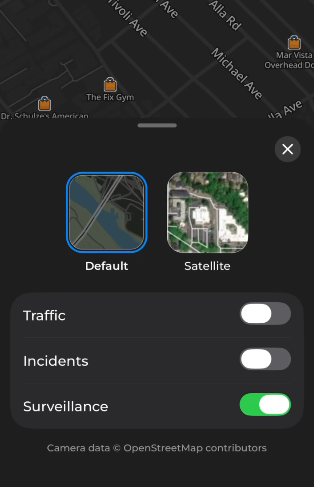
On the subject of navigation, MapQuest recently announced the availability of the “Surveillance Layer” in their smartphone application. When enabled, it shows the location of known license plate readers and cameras on the map, allowing the user to plan their route accordingly. A note in the application’s user interface mentions that they’re pulling at least some of this data from OpenStreetMap, though it’s not clear currently if other sources such as DeFlock are being used.

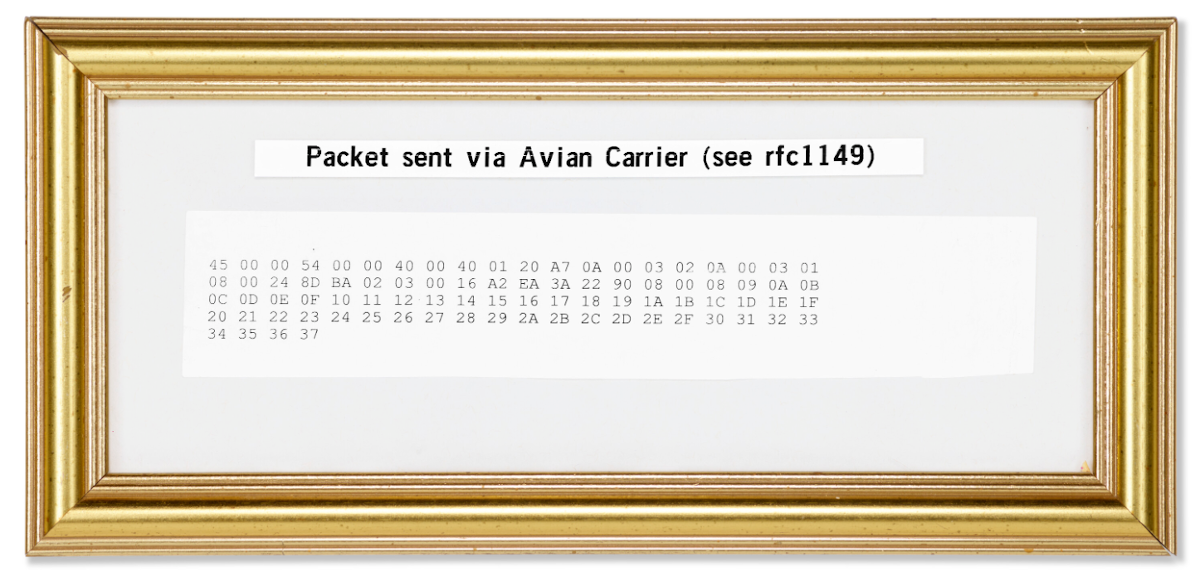
Finally, we have an update on the Christie’s auction for the carrier pigeon data packet sent back in 2001 by Norway’s Bergen Linux User Group. The auction house thought the framed datagram might fetch as much as $3,000 USD, but when the hammer finally went down earlier this week the winning bid was a staggering $20,480. Given all the weird gadgets we’ve picked up on a whim, we’re not in a position to lecture anyone else about how they spend their money…but damn.


See something interesting that you think would be a good fit for our weekly Links column? Drop us a line, we’d love to hear about it.
Hackaday Links: October 11, 2026

By: Tom Nardi
11 October 2026 at 19:00
Hackaday Links Column Banner

It probably goes without saying that if you send four humans to observe the Moon up close, they’ll see things that those of us stuck here on Earth have never noticed. Luckily for us, they took impeccable notes and brought plenty of cameras, which NASA has shared with the rest of the class as Artemis II: Sights & Sounds of Science.

Well, technically it’s called the Artemis II Preliminary Lunar Science Report, but we appreciate the space agency adding a little flair to it and formatting the findings for public consumption. Arguably the most significant observations detailed in the report are the impact flashes on the lunar surface. As you may recall, the trajectory of the Orion spacecraft meant the crew experienced a unique solar eclipse on the sixth day of the mission, giving them an unprecedented close-up view of the darkened Moon. During this time, they were able to see flashes of light with their unaided eyes, which NASA has since confirmed were small rocky fragments — perhaps no more than a few inches wide — slamming into the lunar surface at incredible speeds.

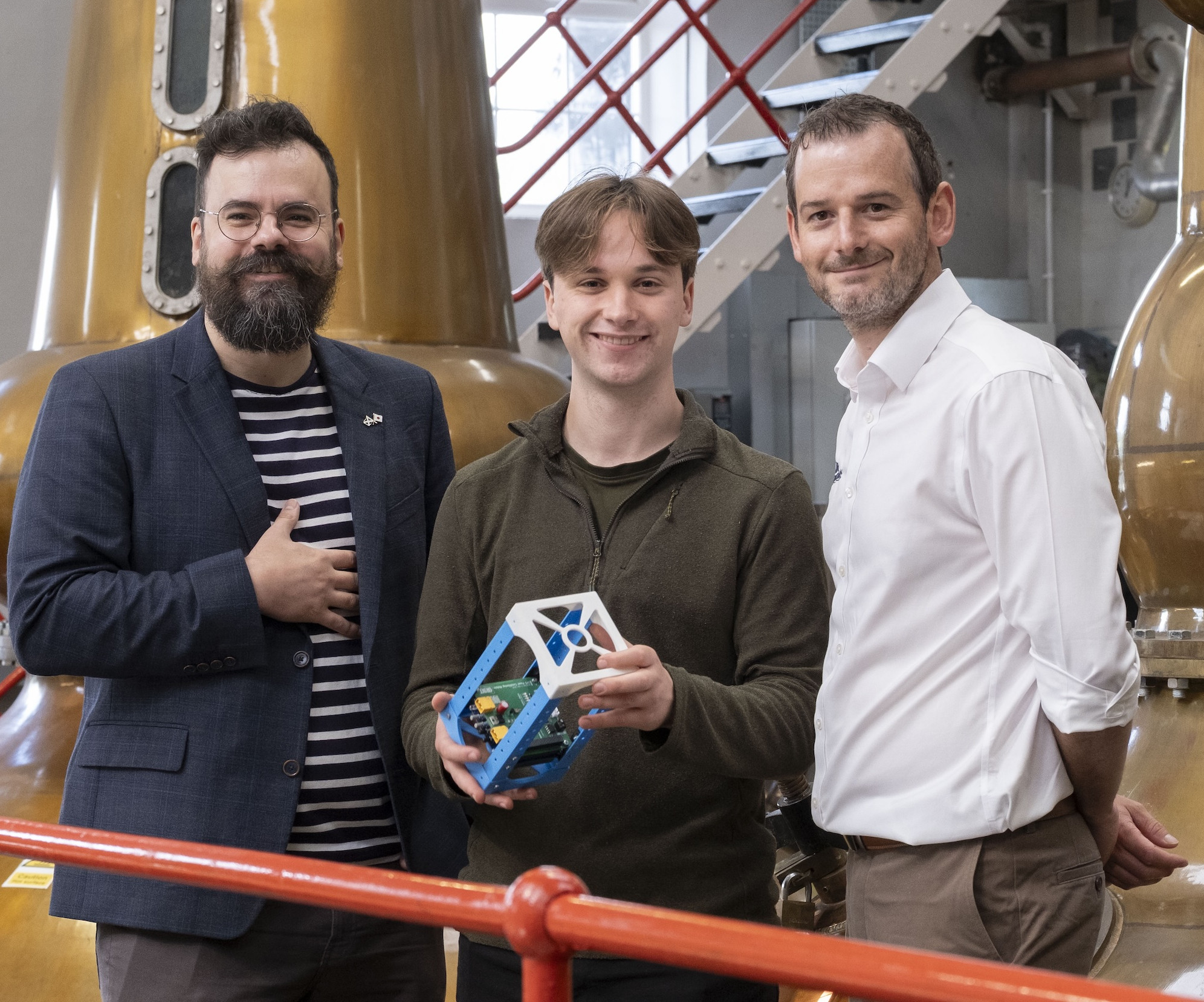
To boldly go where no whisky has gone before.

The Artemis II mission was one for the history books, for most of us the most significant space mission of our lifetimes. But as access to space becomes cheaper and more routine, it stands to reason that not all activities in orbit will be quite so momentous. For example, students from the University of Glasgow and Japan’s Kyushu Institute are currently collaborating on a planned mission to distill whisky in space for the first time.

Scheduled to launch in 2028, the CubeSat will carry 10 ml of fluid and spend five years in orbit studying how its chemical composition changes, with a special interest in how the frequent changes experienced as the spacecraft travels around the Earth could influence the maturing process. While this might not seem terribly interesting to teetotalers, it offers an opportunity to gain more practical experience with orbital manufacturing which will likely inform future missions.

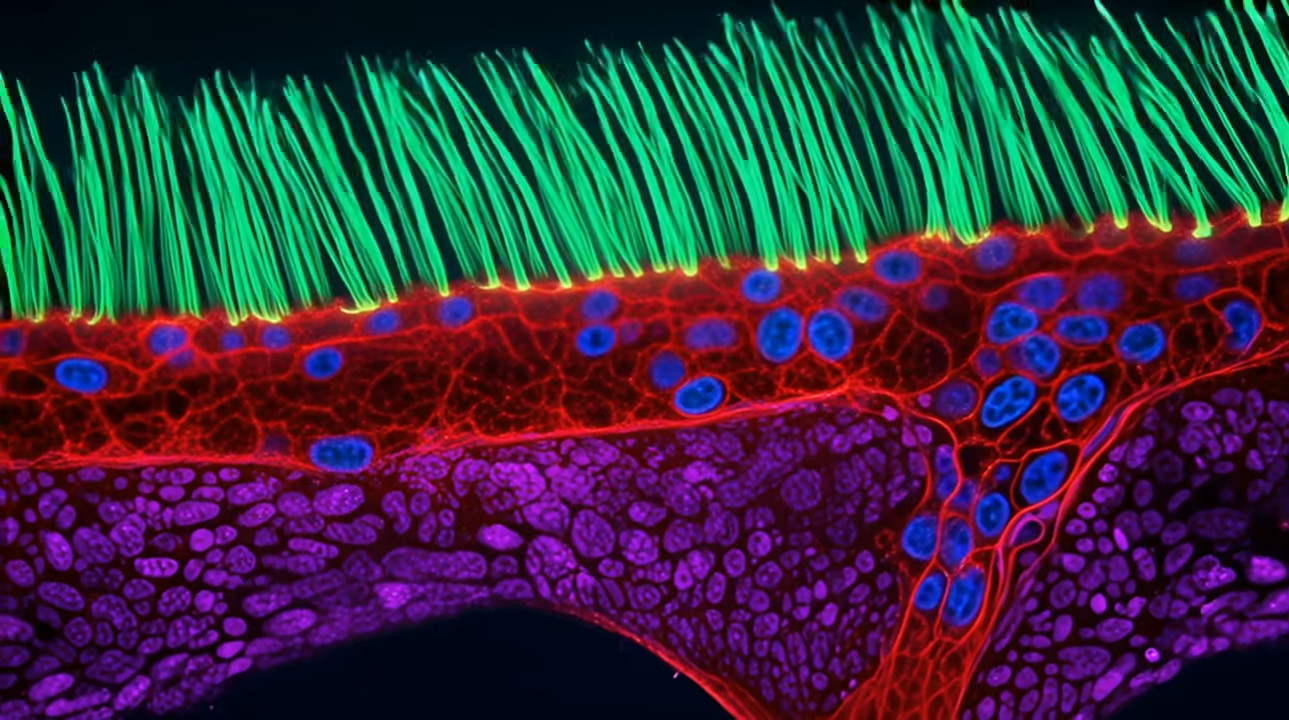
Speaking of studying how things behave — or perhaps how they don’t behave, as the case may be — we have an update on the controversy around this year’s Nikon Small World in Motion competition. After several experts in the field raised the alarm last week, Ning Xu’s winning video supposedly showing cilia in airway tissue samples taken from a child with primary ciliary dyskinesia (PCD) has been disqualified for using generative AI. This shifted all the previous winners up a rank, so Nguyen Nam Nhat of Vietnam now takes the top spot with a video of a roundworm and a single-celled Dileptus.

According to experts, Dr. Ning Xu’s entry was literally too good to be true.

Xu had previously claimed that AI was only used for post-processing the original images, which would have already put the entry into something of a gray area as far as the competition was concerned. But according to researchers familiar with PCD, the structures shown in the video don’t look like anything they’d ever seen in a patient, prompting suspicion that the admittedly fascinating visuals were actually the result of an AI hallucination.

Finally, on the subject of beautiful images, we’d like to point you to ascii.rest. As you’ve probably noticed, we appreciate minimal web design around these parts, so this collection of ASCII animations and art immediately caught our eye. Some of the pieces, like “aurora fjord” shown here, can be exported as a GIF or video clip. But there’s also the option to embed them in your HTML with a couple of lines, which also gives you the opportunity to customize and manipulate them in various ways. If you do anything cool with these designs, we’d love to see it.


See something interesting that you think would be a good fit for our weekly Links column? Drop us a line, we’d love to hear about it.
❌
❌